Riding Etiquette at a Mud Event
A Louisiana mud event can turn from a great weekend into a frustrating one when riders crowd a recovery, ignore one-way signs, or send mud flying into a campsite. Good etiquette keeps everyone safer and gives other riders room to enjoy the event. This guide covers what to do before you unload, how to share trails and obstacles, and how to handle camp and recovery situations respectfully.
Before You Ride at a Louisiana Mud Event
Learn the event rules before unloading
Every park and organized ride can set its own rules for check-in, riding areas, noise, passengers, alcohol, camping, and recovery. Don’t assume that a rule from one venue carries over to another. Read the posted requirements, listen during any rider briefing, and ask staff if something is unclear. A quick question at the gate is much easier than an argument after you’ve entered a closed area.
This matters at both dedicated parks and special event weekends. The layout at Muddy Bottoms may not match the setup at Louisiana Mudfest, and an event can temporarily change routes or access. Follow the signs and staff directions for the specific day, even if you have visited before. For a broader comparison of venue differences, see Louisiana Private Mud Parks Compared.
Also make sure everyone in your group understands the rules—not just the person who registered. A passenger, friend on another machine, or family member walking around the riding area can affect other people’s safety. If your group is splitting up, agree on a meeting spot and a way to communicate before anyone heads out.
Plan your route and ride within your group’s ability
A little planning can prevent a lot of trail confusion. Check the event map, identify the areas you want to ride, and agree on a turnaround point or regrouping location. If you use onX Offroad to help organize a route, treat it as a planning aid rather than permission to ride anywhere. The park’s current signs, staff instructions, and official event map take priority.
Don’t follow another machine blindly just because it looks like the rider knows the way. They may be heading to a private staging area, a closed section, or a route that doesn’t suit your machine. Keep your group together at forks and intersections, and wait until everyone has cleared a turn before moving on.
The right route is also the one that matches your experience and equipment. A deep, rutted mud hole that looks manageable from the edge may be beyond a smaller machine’s ability, or it may conceal a sharp drop or submerged obstacle. If you’re unsure, stop well clear of the trail and watch how others approach. The general habits in Louisiana Trail Etiquette Locals Expect apply just as much at an event as they do on a quieter trail.
Keep staging and arrival areas clear
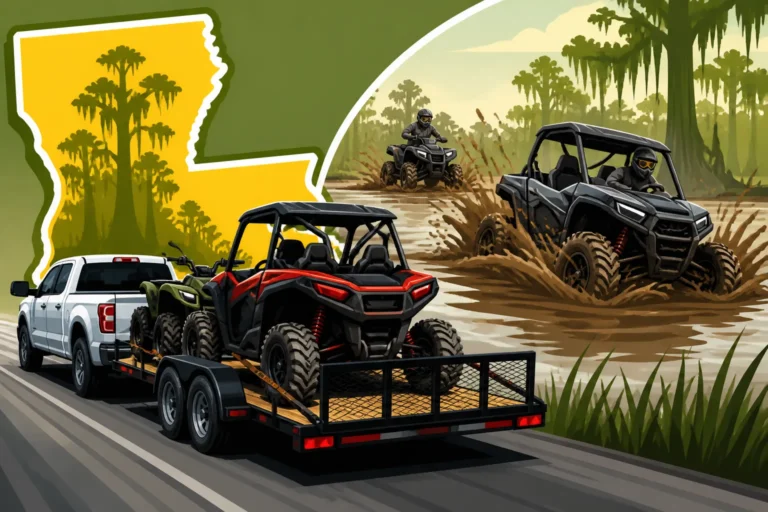
Arrival can be hectic: trailers are backing in, people are checking in, and riders are eager to get moving. Follow staff directions, move your truck and trailer out of travel lanes as soon as you can, and avoid unloading where other vehicles need to pass. If you need extra time to gear up, use a designated staging space rather than blocking the entrance or a busy path.
Before riding, secure loose gear and check that your machine is ready. A dropped strap, cooler, or tool can become a hazard in a shared area. Keep children and spectators away from machines that are starting, warming up, or being loaded. For a smoother trip from home to the park, Trailering to a Mud Park covers practical hauling preparations.
Sharing Trails, Mud Holes, and Recovery Space
Ride predictably and leave room for others
At a crowded mud event, predictable riding is courteous riding. Keep a controlled speed around camps, staging areas, and groups of people. Leave enough distance to stop if the rider ahead slows suddenly or gets stuck. Don’t tailgate, race through a queue, or spray mud toward people who are standing beside the route.
Give the machine ahead of you time to clear an obstacle before entering it. If riders are taking turns at a mud hole, wait your turn rather than squeezing past the line or entering from an unexpected direction. A shortcut can put you directly in another rider’s path, especially where banks, water, or parked machines limit visibility.
Be especially careful near intersections and narrow trails. Slow down, make eye contact when possible, and let the rider with the clearer path proceed. If someone is stopped, don’t assume they’re simply taking a break; they may be checking the route, dealing with a mechanical problem, or waiting for a passenger. When you’re planning a group outing, Louisiana Group Ride Planning offers useful ways to agree on pace, regrouping, and communication.
Don’t crowd a recovery
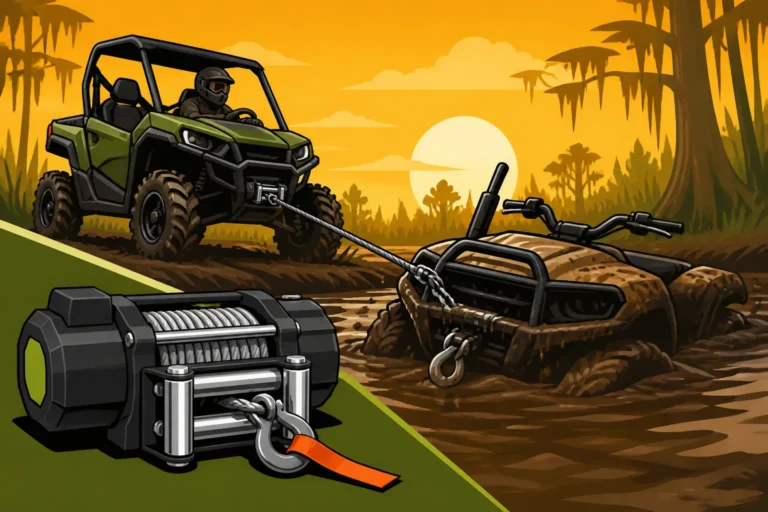
Getting stuck is part of mud riding, but a recovery can become dangerous when too many people gather around the machine. If someone needs help, ask from a safe distance whether they want assistance. Don’t grab a winch line, tow strap, or machine without the rider’s agreement. A loaded line can move suddenly, and people standing in its path can be seriously hurt.
If you are helping, let one person coordinate. Everyone else should stay clear of the vehicle, recovery line, and likely direction of movement. Use recovery points and equipment as intended, and follow the park’s rules. Avoid standing between machines or stepping over a tensioned strap. If the rider has a plan and doesn’t need help, give them room rather than turning the moment into a crowd.
The same courtesy applies when you’re the one who’s stuck. Signal your group, keep bystanders out of the hazard area, and avoid blocking the trail longer than necessary. If the machine can’t be moved safely, contact event staff or use the park’s designated recovery process. Don’t cut a new track around the obstacle unless staff say it’s allowed; that can damage the property and create a confusing route for everyone behind you.
Protect the trail and respect closures
A muddy event doesn’t mean every wet patch is open for riding. Stay on marked routes and approved riding areas. A closed section may be blocked for safety, maintenance, private use, or environmental protection. Going around a barrier can widen a trail, damage vegetation, or put riders into an area that staff cannot monitor.
Avoid digging up banks or repeatedly spinning tires in one spot just to make a hole deeper. That can leave a dangerous edge, expose hidden obstacles, and make the route harder for the next rider. If staff ask riders to stop using an area, move along without debate. A closure can be inconvenient, especially if you came specifically for that obstacle, but ignoring it can put the whole event at risk.
Navigation tools can help your group stay oriented, but don’t rely on a saved route as proof that a trail remains open. If you use onX Offroad, compare what you see with the event’s current map and posted signs before proceeding. Conditions and access can change, so staff guidance should always win over an old track or a route shared by another rider.
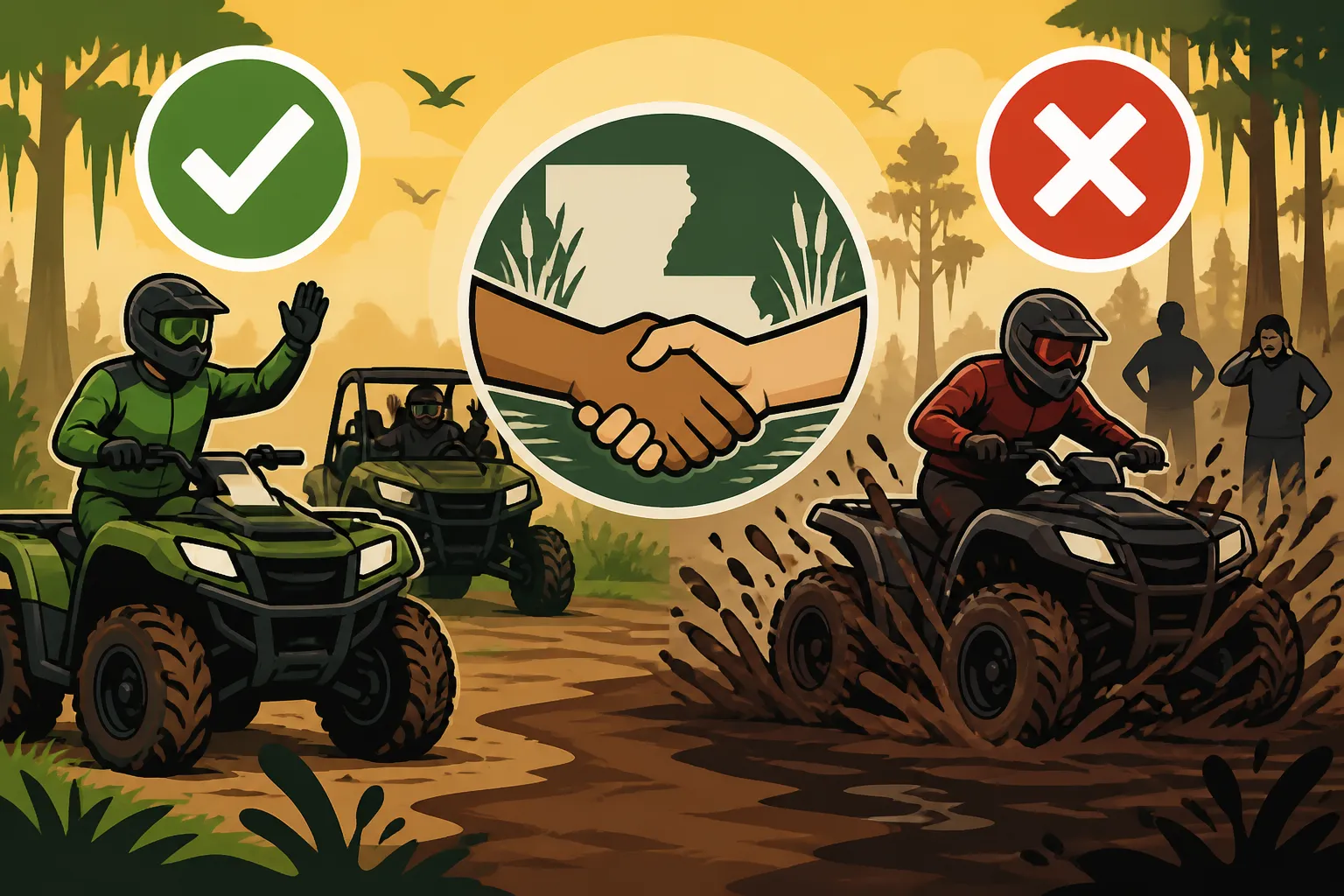
| Situation | Courteous choice | What to avoid |
|---|---|---|
| Waiting for a mud hole | Queue where riders and staff can see you | Cutting in or entering from the side |
| Someone is stuck | Ask whether help is wanted and keep clear of recovery lines | Crowding, grabbing equipment, or shouting instructions |
| A route is blocked | Turn around and follow the marked alternative | Riding around barriers or making a new trail |
| A rider is moving slowly | Leave space and pass only where it is safe and allowed | Tailgating or forcing a pass |
| A machine is stopped | Slow down and check that the route is clear | Assuming the rider will move without warning |
Respecting Campsites, Staff, and Other Guests
Keep noise and mud under control around camp
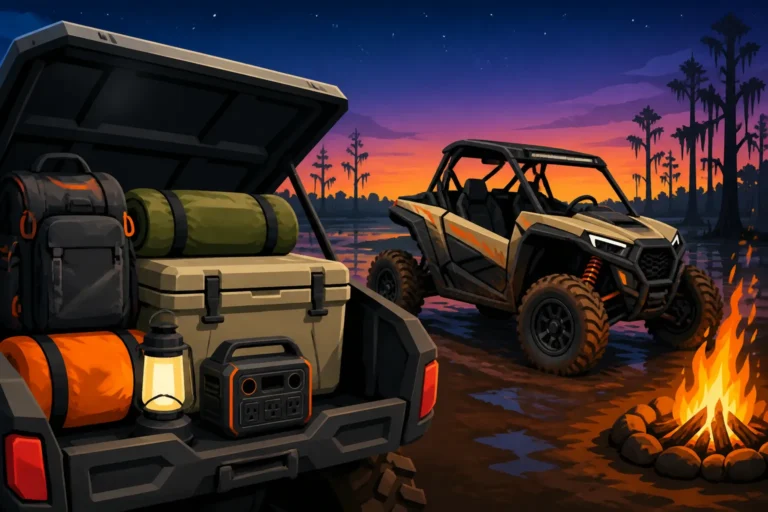
A campsite is someone else’s place to rest, eat, and get ready for the next ride. Keep machines at a low speed near tents, RVs, and common areas. Avoid unnecessary revving, repeated test runs, and late-night riding where it is not permitted. Quiet-hour rules vary by venue, so check the posted policy rather than relying on what another rider remembers.
Mud belongs on the riding area—not on someone’s tent, vehicle, food, or clean gear. Choose routes that don’t send a rooster tail through occupied camps. If your machine is coated in mud, use the designated wash area if one is available, and follow any rules about water use or washing near campsites.
Be considerate with generators, music, lights, and shared facilities. Keep walkways open and pick up trash, including small items such as zip ties, broken straps, and food packaging. At a busy weekend, one person’s “just for a minute” parking or loud music can affect a whole row of campers. For camp and trail preparation, Packing for Humid Heat can help you think through comfort and practical gear without relying on campsite neighbors to lend essentials.
Take care of spectators and less experienced riders
Not everyone at an event is an experienced mud rider. Some guests may be watching from the edge of a route, walking between camps, or learning how the park works. Slow down around people, give them room, and don’t assume they understand where machines might appear from. If your passenger or a child is walking near the riding area, stay close and use designated pedestrian routes.
Avoid showing off near spectators. A fast approach, sudden turn, or aggressive burst of throttle can send mud into the crowd and leave little room to react if the machine slides. If you’re riding with someone new, choose a manageable route and explain basic signals and stopping points before you head out. Don’t pressure a beginner to attempt a hole or hill just because others are watching.
When someone falls or appears hurt, stop only if you can do so safely, signal approaching riders, and get event staff or emergency help. Keep the area clear for responders. Knowing where the event’s first-aid point is can save time; First Aid at a Mud Park discusses the practical side of being prepared.
Be respectful when staff intervene
Staff members are responsible for managing access, safety, and event operations. If someone directs you to slow down, leave an area, or change routes, comply first and ask questions afterward in a calm way. Arguing in a busy riding area distracts staff and can create a hazard for riders approaching from behind.
If you think a direction is mistaken, move to a safe place and explain the concern without blocking traffic. Be specific: mention the sign, route, or situation you’re asking about. Staff may know about a temporary closure, recovery operation, or hazard that isn’t obvious from where you are standing. A cooperative approach usually gets you a clearer answer than escalating the disagreement in front of other guests.
It also helps to remember that event workers may be handling check-in, parking, medical calls, and trail issues at the same time. Give them room to do their jobs. If a problem involves immediate danger, flag it promptly and clearly rather than relying on a social-media post or assuming someone else has reported it.
A Simple Etiquette Routine for the Whole Weekend
Before each ride
Take a minute to check the route, weather, machine condition, and group plan. Confirm that every rider knows where to regroup and what to do if someone gets separated. Ask whether any trails or obstacles have been closed since your last ride. If you’re using onX Offroad to keep your group oriented, use it alongside—not instead of—the park map and staff directions.
Make sure your machine is appropriate for the route you intend to ride and that any loose items are secured. Pack drinking water, basic supplies, and a way to contact your group. Agree on a simple signal for stopping or turning around, particularly if engine noise makes conversation difficult. Planning ahead avoids the common frustration of discovering halfway through a ride that one person expected a fast loop while another thought the group was taking an easy route.
During and after the ride
Stay alert at blind corners, slow down around camps, and leave space at obstacles. If you stop, move out of the main riding line where it is safe to do so. Check on riders who appear to need help, but keep a recovery area clear and follow the event’s process. A little patience at a crowded crossing or mud hole is better than creating a collision or a dispute.
At the end of a ride, return to camp carefully and use designated wash areas. Look over your machine and gear for damage, and pick up anything you brought out on the trail. If you notice a hazard, damaged sign, or unsafe condition, tell staff directly and identify its location as clearly as possible. Don’t assume the next group has already reported it.
When a problem turns into a disagreement
Most event tensions begin with a small misunderstanding: someone thinks a rider cut the line, a parked machine blocks a route, or mud lands in a campsite. Step away from the immediate riding path before discussing it. Keep your voice calm, describe what happened, and focus on what would fix the problem rather than assigning blame.
If the issue involves a safety rule, property damage, or repeated behavior, bring it to event staff instead of trying to enforce the rules yourself. Don’t retaliate by blocking a trail, damaging equipment, or confronting someone while they are operating a machine. Clear communication and staff involvement are safer for everyone.
A mud event is more enjoyable when riders treat the park as shared space: follow the rules, give others room, protect the trails, and help without making a risky situation worse. Those habits matter whether you’re riding a short loop with friends or spending a full weekend at a busy Louisiana event.
Disclaimer
This article is for general informational purposes only and does not constitute professional advice. Laws, prices and regulations vary by location and change over time. Consult a qualified professional for guidance on your specific situation.