First Aid at a Mud Park
A small cut can be easy to miss when everyone is muddy, tired, and eager to get back on the trail. But a rollover, heat illness, or eye injury can turn a Louisiana mud-park day serious fast. This guide explains what to pack, how to handle common injuries, and when to stop riding and get emergency help.
Prepare for first aid before you unload
Pack a kit for mud, heat, and rough terrain
A first-aid kit in the truck is useful, but it may be too far away when someone gets hurt on the other side of a riding area. Keep a compact kit in a sealed, waterproof bag on the machine or with the group. Check that the container closes securely and that supplies are clean and usable before each ride.
Include disposable gloves, sterile gauze, adhesive bandages in several sizes, medical tape, antiseptic wipes, tweezers, small scissors, and a triangular bandage. Add an elastic wrap for supporting a minor sprain, a CPR face shield, and a few instant cold packs. Pack a large bottle of clean water for rinsing small wounds, plus a separate supply for drinking. A basic kit cannot replace training or professional care, but it can help you manage a minor injury while you decide what to do next.
Mud-park conditions call for a few practical extras. Bring a clean towel, hand sanitizer, a small flashlight, and a written list of emergency contacts and relevant medical information for each rider. A phone can be hard to use with wet hands, and its battery may run down while you’re navigating or taking pictures. Keep essential contact details somewhere accessible without a screen.
Before leaving home, review First Aid at a Mud Park alongside your kit and make sure everyone knows where the supplies are. A kit that stays zipped inside a locked truck doesn’t help the rider who has scraped a hand at a remote trail crossing. If your group has children or anyone with a known medical condition, ask them or their caregiver what they may need in an emergency.
Make a simple communication and location plan
Mud parks can be noisy, wooded, and difficult to navigate, especially when machines are running and several groups are spread across the property. Before riding, agree on a meeting point and a plan for what to do if someone gets separated. Make sure every rider knows the park’s name, the entrance or staging area you used, and how to describe your location to park staff or emergency responders.
Save the park’s address and phone number in your phone before you arrive, and ask staff how to report an emergency from the trails. Find out whether the park has an office, designated first-aid point, or staff who can guide responders to an injured rider. Cell coverage can vary, so don’t assume a call or text will work everywhere. If your group is large, choose one person to stay with the injured rider while another goes for help, if it’s safe to do so.
A mapping tool such as onX Offroad can help you review an area and mark a planned route or meeting point before the ride. If you use it, confirm that the map and location tools work for the area and prepare for the possibility of poor reception. A map app is a planning aid, not a substitute for a park’s directions or emergency procedures. Tell someone in your group how to share your location and how to guide a staff member to your trail.
For additional day-of planning, check Louisiana Trail Conditions After Rain before you tow. Heavy rain can change trail conditions, make access more difficult, and affect how long it takes to reach a rider. A clear plan before the first lap is far easier than trying to coordinate one after an accident.
Handle common riding injuries safely
Cuts, scrapes, and eye irritation
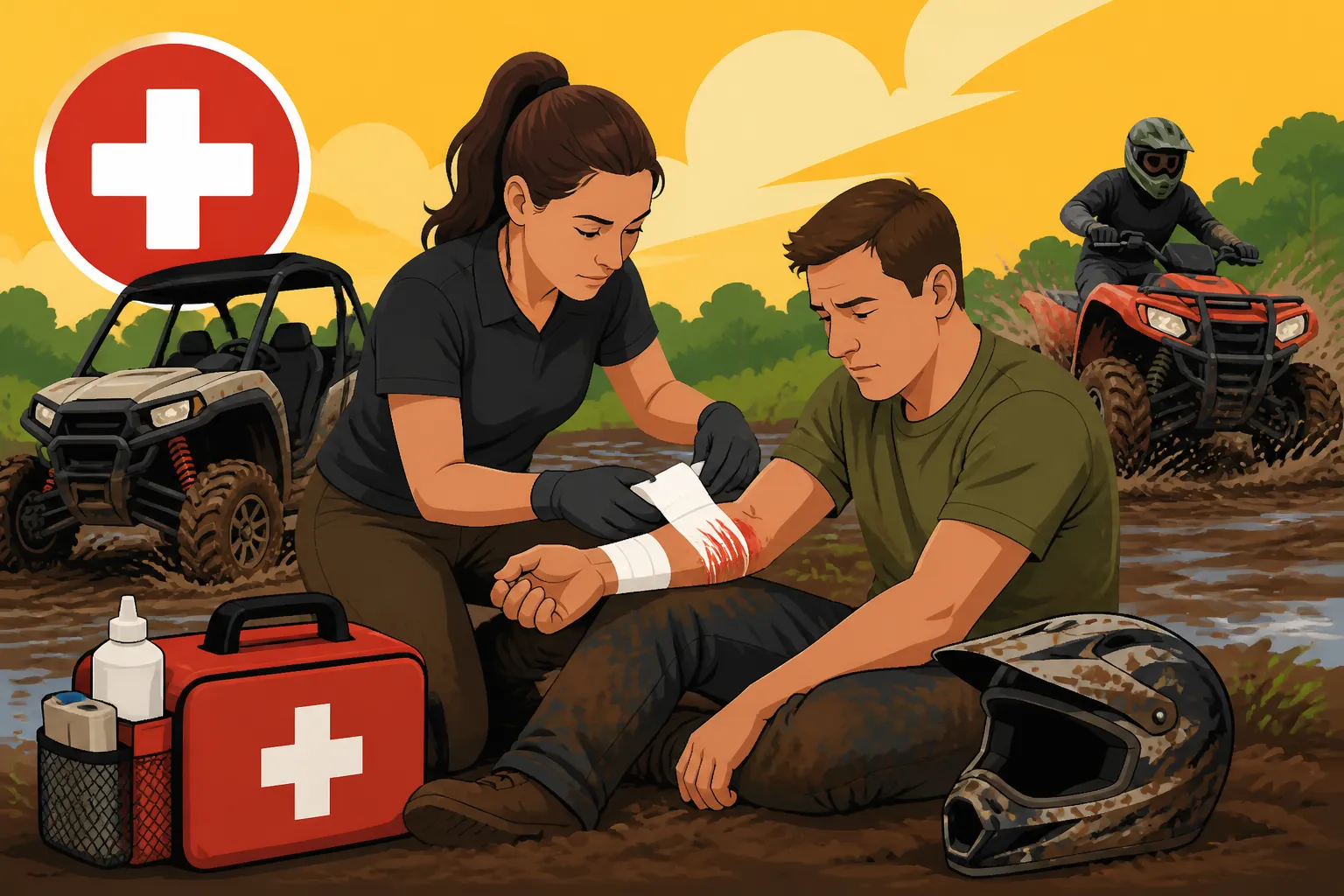
Small cuts and scrapes are common when riders climb on and off machines, handle gear, or brush against branches. First move the rider away from traffic and moving machines. Put on gloves if you have them, then rinse the wound with clean water to remove visible dirt. Apply gentle pressure with clean gauze if it is bleeding, and cover the injury with a clean dressing once bleeding is controlled.
Seek medical care for a deep or gaping wound, bleeding that does not stop with steady pressure, an embedded object, or a wound that is heavily contaminated. Don’t dig into a wound to remove something that may be stuck inside. If an object is embedded, protect the area with padding and get professional help. Keep an eye on the injured person, especially if they feel faint, unusually weak, or confused.
Mud and grit can also irritate eyes. If something gets into an eye, encourage the rider not to rub it. Rinse gently with clean water or sterile saline if available. Get prompt medical attention for ongoing pain, blurred vision, significant redness, light sensitivity, or an object that appears lodged in the eye. A scratched eye can be more serious than it first feels, and trying to remove a stuck object can make the injury worse.
For more on caring for gear and equipment after the ride, see Washing a Machine After a Mud Weekend. Cleaning the machine is important, but keep contaminated gloves, towels, and first-aid supplies away from drinking water, food, and clean dressings.
Sprains, suspected fractures, and head or neck injuries
A rider who falls or is thrown from a machine may have a sprain, fracture, or injury that isn’t obvious at first. Stop riding and assess the person where they are, unless they’re in immediate danger from fire, water, or moving traffic. Don’t ask them to stand or “walk it off” if they have severe pain, visible deformity, numbness, or difficulty moving a limb. Support the injured area in the position found and arrange medical evaluation.
A suspected head or neck injury deserves extra caution. Warning signs can include confusion, loss of consciousness, repeated vomiting, worsening headache, unusual behavior, weakness, or trouble staying awake. Call emergency services for concerning symptoms. Unless the scene is unsafe, avoid moving the person’s head, neck, or back. Keep them still and warm, and follow the dispatcher’s instructions. If they are wearing a helmet, don’t remove it unless you need to manage their airway and know how to do so safely.
For a severe injury, have someone meet park staff or responders at a known entrance or staging area. Give clear details: the rider’s location, the type of injury, whether they’re conscious and breathing, and the safest route in. Don’t send an injured rider back to camp alone, and don’t let embarrassment or a group’s wish to keep riding delay care. If you’re unsure whether an injury is serious, treat it cautiously and seek professional guidance.
Recognize heat illness and dehydration early
Know the signs before a rider gets overwhelmed
Louisiana heat and humidity can make a ride exhausting even when the sky is cloudy. Protective clothing, physical effort, and repeated stops in the sun can add up. Early heat stress may look like heavy sweating, headache, nausea, muscle cramps, dizziness, unusual fatigue, or irritability. A rider who seems unsteady or unusually quiet may need a break even if they insist they’re fine.
Stop the ride and move the person to shade or a cooler area. Loosen unnecessary outer layers, cool the skin with water and airflow, and offer small sips of water if the person is alert and able to swallow. Don’t force fluids. A rider who is confused, fainting, having a seizure, or becoming difficult to wake needs emergency help. Heat stroke is an emergency; call 911 and begin cooling while help is on the way. Follow the dispatcher’s instructions rather than waiting to see if the person improves.
It can be hard to recognize heat illness when someone is covered in mud and already uncomfortable. Pay attention to changes from their normal behavior: stumbling on level ground, struggling to answer simple questions, or repeatedly refusing water can be more telling than how much they’re sweating. A friend who knows the rider’s usual energy and manner can often spot a problem sooner.
Read Heat Illness on a Summer Ride and Hydration at a Mud Event before a hot-weather outing. Those topics can help your group build breaks and water access into the day, instead of waiting until someone feels too sick to continue.
Set a pace that makes stopping normal
Plan regular breaks in shade, especially for children, new riders, and anyone who isn’t used to riding in hot weather. Bring more drinking water than you expect to need, and keep it separate from water intended for rinsing equipment or wounds. Encourage everyone to drink throughout the day rather than trying to catch up after they become thirsty.
A simple group rule helps: anyone can call for a stop without being teased or pressured to keep up. If one rider is struggling, the whole group should pause, move to a safe spot, and reassess. It’s better to shorten a ride than to have a tired rider make a poor decision at a muddy crossing or on a crowded trail.
Wear breathable clothing that still protects against scrapes, use sun protection, and avoid treating energy drinks or alcohol as a substitute for water and rest. Schedule the most demanding riding for cooler parts of the day when practical, and watch for weather changes. Use Packing for Humid Heat as a checklist for comfort and preparation, but remember that clothing and supplies don’t make it safe to push through symptoms.
Decide when to stop riding and get help
Use clear thresholds for calling emergency services
Call 911 for a rider who is unconscious, having trouble breathing, experiencing severe bleeding, showing signs of a serious head or neck injury, or displaying severe heat-illness symptoms such as confusion or collapse. Also seek urgent help for chest pain, a seizure, or a major injury involving a rollover or high-impact collision. When in doubt, call and describe what you see; the dispatcher can help you decide what to do next.
Stay with the injured rider and keep the rest of the group and machines at a safe distance. Don’t give food or drink to someone who is unconscious, confused, vomiting repeatedly, or unable to swallow safely. If the person stops breathing normally, start CPR if you’re trained and follow the emergency dispatcher’s instructions. Use an AED if one is available and you know how to operate it, or follow its prompts.
Tell responders what happened, when it happened, what symptoms you noticed, and what first aid you provided. Mention any known allergies or medical conditions if you have that information. If the injured rider is transported for care, make sure someone else can look after their machine, keys, phone, and belongings.
Keep the whole group safer on Louisiana trails
Many accidents start with fatigue, poor visibility, unfamiliar terrain, or a rider following too closely. Leave enough room between machines to react to sudden stops, slow down around blind corners, and give other riders space at crossings. Don’t ride beyond your ability just because friends are watching. A cautious walk-around before entering a deep mud hole can reveal ruts, hidden debris, or a route that isn’t safe to attempt.
Use Louisiana Trail Etiquette Locals Expect to think through how your group shares narrow trails and busy staging areas. If you’re riding near a popular Louisiana destination such as Muddy Bottoms ATV Park in Louisiana, review the park’s rules and emergency procedures before unloading. Private parks may have different access arrangements, riding areas, and services, so confirm details directly with the location.
For navigation, onX Offroad may help you organize a route and identify a planned meeting point, but don’t let a phone distract you while riding. Set it up before you start, protect it from water and mud, and carry a backup way to communicate when possible. If the park offers a map or staff guidance, use that information too. The best emergency plan is the one every rider understands before the machines start up.
Disclaimer
This article is for general informational purposes only and does not constitute professional advice. Laws, prices and regulations vary by location and change over time. Consult a qualified professional for guidance on your specific situation.