Booking a Six-Person Cabin for an Event Weekend
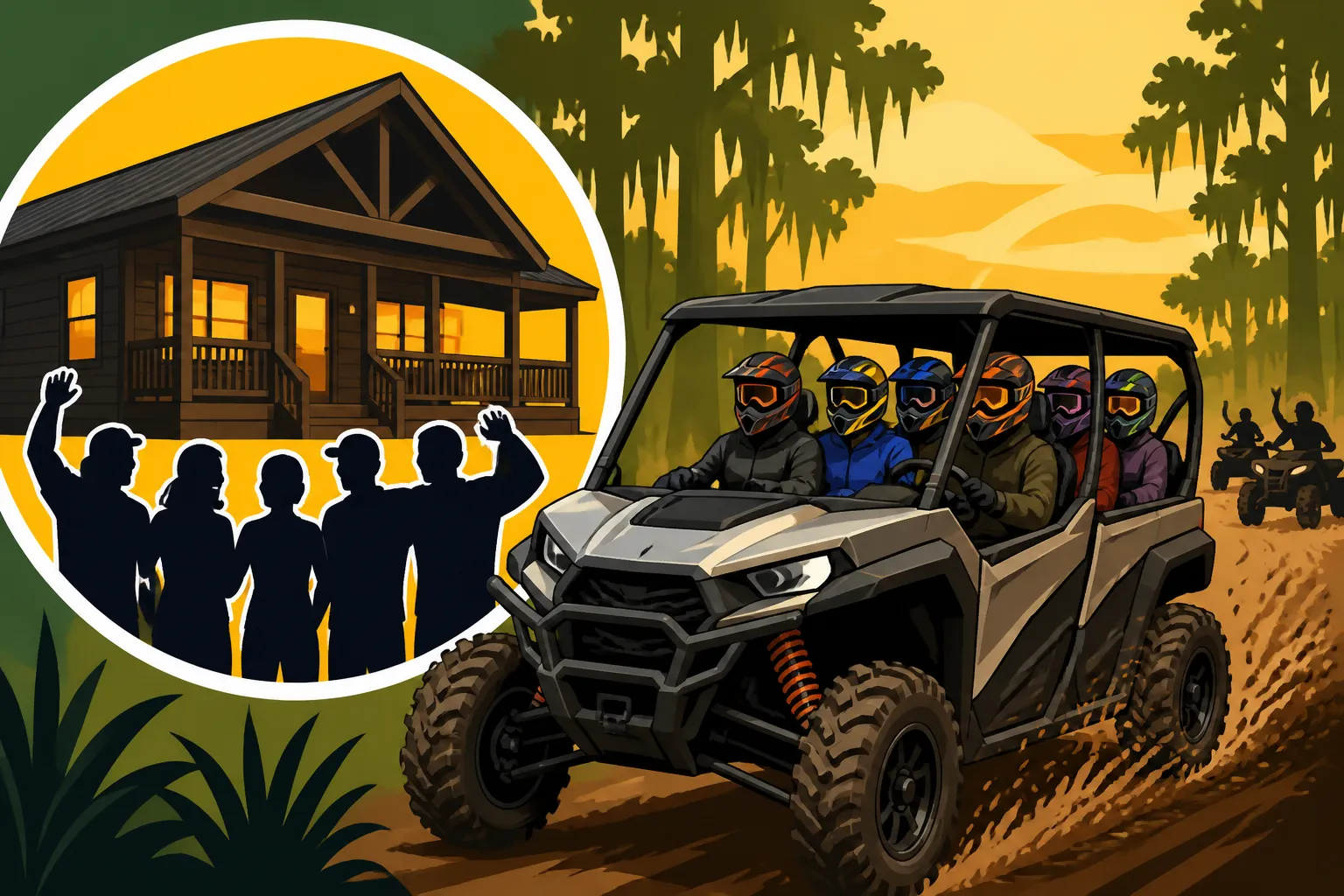
A six-person cabin can make an ATV or UTV event weekend much easier than juggling several tents, a trailer, and a muddy change of clothes. The hard part is matching the cabin to your group, event dates, sleeping needs, and riding plans before availability tightens. This guide walks through what to check before you reserve and how to arrive prepared.
Start with the event dates, not the cabin
Confirm the riding weekend first
At a private riding park, an event weekend may follow a schedule that differs from ordinary park access. Confirm that the event is happening on the dates you want, that the park is open to riders, and that your group can attend before committing to lodging. A cabin reservation does not necessarily mean event admission is included, so check what each booking covers.
Muddy Bottoms, near Sarepta in Webster Parish, is one Louisiana destination where planning around the event calendar matters. Review Muddy Bottoms’ Event Calendar in Louisiana and confirm the event details directly with the park. Check the start and end dates, arrival window, riding access, and any rules that could affect your group’s plans.
It also helps to ask whether the cabin reservation covers the whole event period or only particular nights. If your crew expects to arrive late after work, find out whether late check-in is possible and what arrangements are required. These details are easy to overlook when everyone is focused on trail time, but they can turn a smooth arrival into a stressful one.
Verify that the cabin suits six actual people
A listing that describes a cabin for six people does not automatically tell you how comfortable six people will be. Before booking, ask how the sleeping spaces are arranged and whether bedding is supplied. A group of six adults may have different needs from two adults traveling with children, even if both groups fit the stated capacity.
Ask about the practical basics, too: bathroom access, cooking arrangements, refrigerator space, power, air conditioning or heating, and whether towels or linens are provided. Do not assume the cabin has the amenities you are used to at home. If anyone in your party has mobility needs, ask about steps, doorways, parking distance, and the path from the cabin to shared facilities.
A simple group conversation can prevent awkward surprises. For example, if two riders are bringing children, confirm who is sharing sleeping space and who is bringing a travel crib or extra bedding. Get the details from the park before you pay rather than relying on assumptions based on a cabin’s capacity label. For a broader look at lodging choices, see Muddy Bottoms’ Cabins in Louisiana.
Ask what the reservation includes
The word “cabin” describes the lodging, not necessarily the full event package. Ask whether the booking includes parking, event access, utilities, or access to shared amenities, and whether any of those require a separate reservation or payment. Check whether there are restrictions on visitors, pets, cooking equipment, generators, or quiet hours.
Also ask what happens if plans change. Understand the park’s cancellation, transfer, and weather policies before you book. Mud events can be affected by conditions, and your group may have to adjust if a rider gets sick, a vehicle breaks down, or a storm changes travel plans. Keep the confirmation and any written answers somewhere the trip organizer can find them.
| What to confirm | Why it matters | Useful question to ask |
|---|---|---|
| Event dates and riding access | A cabin stay may not guarantee event entry | Is this cabin booking for the same dates as the event, and what does it include? |
| Occupancy and bed setup | Six-person capacity does not explain sleeping arrangements | How many beds are there, and what size are they? |
| Linens and towels | You may need to pack your own | Are bedding and towels supplied? |
| Bathroom and kitchen access | These affect comfort and meal planning | What facilities are inside the cabin and what is shared? |
| Check-in and check-out | Arrival or departure may overlap with riding plans | What are the arrival and departure procedures? |
| Cancellation and weather rules | Plans may change unexpectedly | What are the rules if our group cannot attend or the event changes? |
Plan the group before you reserve
Choose one person to coordinate the booking
With six people, details can get scattered across group texts: one person assumes the cabin has linens, another thinks admission is included, and someone else has not confirmed whether they are bringing a machine. Pick one trip organizer to communicate with the park, keep the confirmation, and share the final plan.
Before booking, ask each person to confirm their arrival and departure dates, whether they are bringing a passenger or child, and what equipment they need. Make a list of machines, trailers, and tow vehicles so you can ask about parking and unloading. If someone is arriving separately, find out whether they need a name added to the reservation or other check-in instructions.
Send the group a short written summary after the reservation is confirmed. Include the dates, check-in instructions, lodging rules, what is and is not included, and who is bringing shared supplies. That one message can save repeated questions as the weekend approaches.
Decide how your group will sleep and eat
Even if six people fit in the cabin, comfort depends on how the spaces are used. Ask about the bed layout, then assign sleeping arrangements before departure. If people have different expectations about sharing a bed or room, sort that out early rather than leaving it for the first night.
Meal planning deserves the same attention. Find out whether the cabin has cooking facilities and what equipment is available. If the kitchen setup is limited, plan simple meals that do not depend on a full stove or large refrigerator. Pack food in containers that travel well, and keep a cooler secured so it cannot slide around in the truck or trailer.
A riding weekend is not the time to discover that six people brought six separate coolers but nobody packed a can opener, trash bags, or a way to make breakfast. Assign shared items to specific people. If the cabin does not provide linens, choose one person to coordinate bedding rather than leaving everyone to guess.
Match the lodging to the machines and trailers
Cabin space and vehicle space are different questions. Confirm where tow vehicles and trailers can be parked, whether unloading is allowed near the cabin, and whether there are designated areas for staging machines. A large group can arrive with several trucks even when everyone shares one cabin.
Ask whether there are restrictions on washing machines, storing fuel, or using generators. Do not assume that mud-covered gear can be rinsed anywhere on the property. Pack a tarp or washable floor covering for dirty boots and wet clothing, and keep machine-related supplies separate from bedding and food.
If your group is comparing cabin lodging with an RV or tent setup, check the options and their rules side by side. Muddy Bottoms’ RV Sites in Louisiana and What Primitive RV Camping Gets You at Muddy Bottoms can help you think through the trade-offs. For example, a cabin may simplify sleeping arrangements, while an RV setup may give a group more control over meals or personal space. The right choice depends on your crew and the facilities actually available for the dates you choose.
Get ready for arrival and riding
Build a realistic arrival plan
Event weekends can bring a rush of arriving vehicles, so agree on a meeting plan before leaving home. Share the park’s directions, the reservation details, and a backup contact method with everyone. If cell reception is uncertain, do not make the whole plan depend on a last-minute call from the entrance.
You can use onX Offroad to review routes and save useful map information before heading into an area where coverage may be limited. Treat the app as a planning aid, not a substitute for the park’s directions, posted signs, or staff instructions. Download or save the information you need while you have reliable service.
If different vehicles are arriving at different times, set a clear rendezvous point and tell the group what to do if someone is delayed. The organizer should know who has arrived, who still needs check-in information, and whether the group needs to wait before unloading. Clear plans are especially helpful when a convoy includes a truck and trailer, a separate support vehicle, and riders who are unfamiliar with the area.
Pack for a cabin and a muddy riding weekend
Cabin lodging reduces some of the work of camping, but it does not eliminate the need to bring practical gear. Pack riding clothes, sturdy footwear, rain protection, personal medications, toiletries, and any required safety equipment. Bring a separate bag for clean clothes so they do not end up mixed with wet gear.
For the cabin, confirm whether you need sheets, pillows, towels, cooking tools, drinking water, or cleaning supplies. Bring trash bags and a way to contain muddy boots. A small flashlight or headlamp can be useful when unloading after dark, but check the park’s rules before bringing equipment such as generators or outdoor cooking devices.
Use a written packing list that distinguishes shared supplies from personal items. Packing for a Night of Dry Camping at Mudfest is a useful companion if your group is also considering camping rather than staying in a cabin. A cabin and a campsite call for different gear, but both benefit from a plan for food, dirty clothing, and weather.
Check the ride plan and local conditions
Before you leave, confirm which riding areas or trails your group expects to use and whether they are open to the type of machine you are bringing. Private parks set their own rules, and trails can be affected by weather, maintenance, event scheduling, or capacity. Do not assume that a trail shown on an app is open or authorized for riding.
onX Offroad can help your group discuss routes and keep track of mapped areas, but verify access and current park rules with the riding destination. A saved track is not permission to ride, and map coverage does not replace signs or staff guidance. Keep riders together when possible, especially if some members are new to the park.
If your group plans to ride outside the private event grounds during the trip, check the rules for that specific location. Public forest trails, wildlife management areas, and parish roads can have different access requirements. Guides such as Louisiana ATV Trails: Where to Ride and [Louisiana Forest Trail Use Passes] can help you identify questions to resolve before taking a machine somewhere new.
Avoid common booking mistakes
Do not assume the cabin is held while you decide
If you find a cabin that appears to fit your group, ask how availability is confirmed and what steps complete the reservation. A conversation or inquiry may not hold a space. Follow the park’s stated booking process, keep confirmation details, and check that the dates and occupancy are correct before finishing.
Read the reservation information carefully, including any rules about deposits, remaining balances, check-in, cancellation, and extra guests. Do not rely on another group member’s recollection of a phone conversation. Save written details and share them with everyone who is contributing to the booking.
Event weekends can require more planning than a quiet overnight stay because lodging, riding access, and vehicle logistics all need to line up. It is sensible to start checking options early, but avoid treating an unconfirmed listing or old message as proof that a cabin is still available.
Avoid overpacking the cabin or underplanning the group
The stated capacity is a limit, not a guarantee that every extra guest, pet, or visitor is allowed. Confirm who is included in the reservation and ask before adding anyone. If the group grows after booking, contact the park rather than assuming the cabin can accommodate more people.
The opposite mistake is underestimating how much space six people need. Six riders may bring helmets, boots, rain gear, riding clothes, coolers, and bags. Ask what storage space is available and keep bulky gear in vehicles if permitted. Pack in smaller, clearly labeled bags so the cabin does not become a pile of wet equipment.
If the cabin will not comfortably fit your group’s needs, compare alternatives rather than forcing the arrangement. Louisiana Riding Areas That Take Reservations can help you consider other lodging options, while Louisiana Riding Areas With Bathhouses may be useful if your crew is weighing a campsite against a cabin.
Make the final confirmation before towing
Before departure, review the event dates, check-in instructions, cabin rules, and parking plan. Confirm that every rider knows what they are responsible for bringing and that any required documents or waivers are handled according to the park’s instructions. Make sure the person driving the tow vehicle has the address and directions saved.
Check trail or event updates close to departure and pack for the forecast without assuming conditions will stay pleasant. Louisiana weather can change quickly, and wet ground can affect both travel and riding. If your plans include a public forest trail, check the relevant status information rather than relying on a map saved months earlier.
Finally, give the group a simple arrival sequence: where to meet, who checks in, where trailers go, and when everyone should unload. It sounds basic, but having those answers ready makes it easier to settle into the cabin and enjoy the weekend instead of sorting out logistics in the parking area.
Disclaimer
This article is for general informational purposes only and does not constitute professional advice. Laws, prices and regulations vary by location and change over time. Consult a qualified professional for guidance on your specific situation.