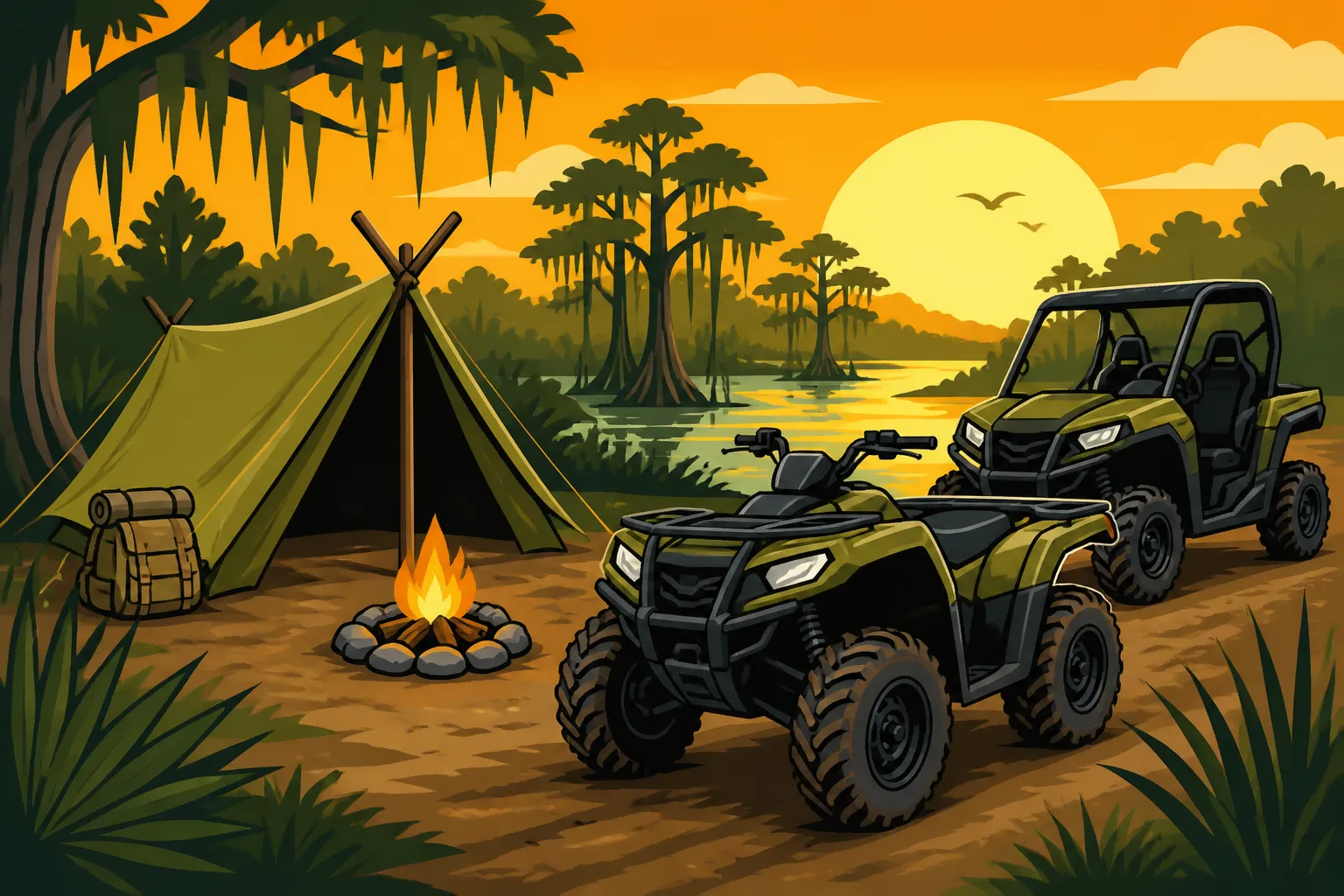
Free Primitive Tent Camping
A primitive tent site can sound like the easiest way to make a Louisiana ATV weekend affordable, until you arrive and discover the campground rules, water access, or trail schedule are different from what you expected. This guide explains what “free primitive tent camping” usually means, how to check the details before you tow, and how to camp responsibly near riding areas.
What free primitive tent camping usually means
Free describes the campsite, not necessarily the whole trip
When a riding park or event advertises free primitive tent camping, it generally means there is no separate charge for a basic place to pitch a tent. It does not automatically mean the entire visit is free. Riding access, event admission, parking, showers, hookups, or other amenities may have separate requirements or charges. Confirm what the offer covers before you plan around it.
This distinction matters at event-based parks such as Muddy Bottoms, where the calendar and event arrangements can shape what is open and what is included. Check the park’s own current event information and ask whether tent camping is included with the admission or requires a separate arrangement. If you are comparing overnight options, [Louisiana OHV Camping With Trail Access] and [Louisiana Campgrounds Next to a Riding Area] can help you think through the trade-offs.
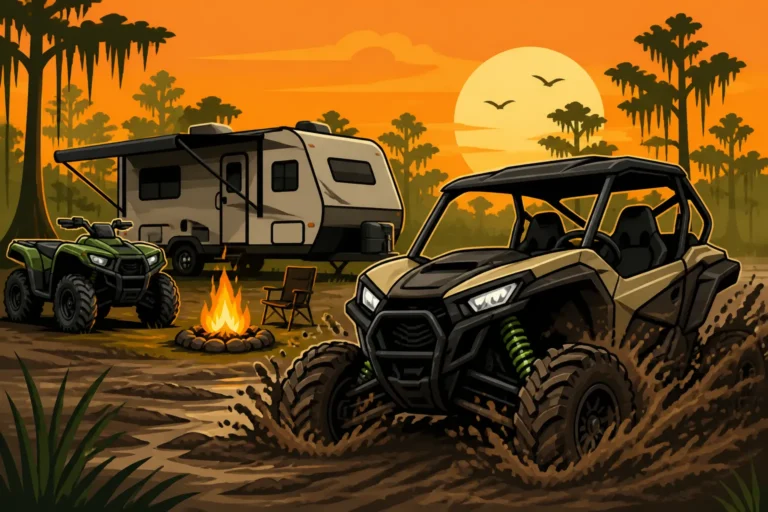
“Primitive” also means you should not assume you will have a developed campsite. A tent area may lack electric hookups, water at each site, a picnic table, a fire ring, or a private restroom. Ask what facilities are available and whether they are close to the tent area. A campsite can be free and still require careful planning.
Confirm what “free” applies to
Before packing, find out whether the offer applies to every visitor or only to people attending a specific event. Ask whether you need to register in advance, check in at a gate, display a wristband, or follow a designated camping-area assignment. Those details can change the experience from “pull in and set up” to a more organized process.
Also ask whether camping is permitted on every riding weekend or only on selected dates. A venue may operate on an event calendar rather than as a campground that is open every day. If you arrive when the property is closed or the event has ended, a free camping offer will not help you. Verify the event dates directly instead of relying on an old social post or a map pin.
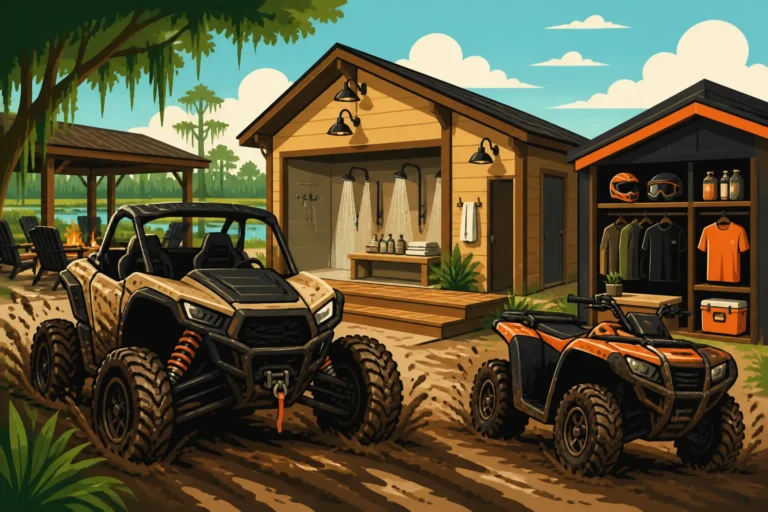
Make the overnight plan fit the whole group. A family with young children may need a restroom nearby, while a large group may need to know whether tents can be set up together. If basic facilities are important, compare the primitive option with developed stays listed under [Louisiana Trails With Camping]. The right choice is the one that fits your comfort needs, not just the one with the fewest campsite costs.
How to check a Louisiana riding area before you go
Verify the event, campground, and trail schedule separately
Camping access and riding access are not always the same thing. A campground might be available while some trails are closed, or riding may be allowed only during an event. Ask the venue which areas are open to machines, whether trail access is included in your visit, and whether riding hours or vehicle rules apply. Get the information from the property or event organizer rather than assuming that a campsite booking gives you permission to ride everywhere.
Trail conditions also matter in Louisiana, where heavy rain can change a route quickly. Low-lying ground, standing water, and muddy approaches can affect both the ride and the spot where you plan to pitch a tent. Check for closures, access restrictions, and weather-related updates before leaving home. [Louisiana Trail Closures and Seasons] and [Checking a Trail Status Page First] are useful reminders to verify more than just the campground address.
Mapping tools can help you orient yourself, but they are not permission to enter private land or a substitute for current venue rules. onX Offroad can help you plan routes and understand the surrounding area, but confirm that a trail is open and authorized with the land manager or park. If your route crosses different types of property, verify each section before treating it as one continuous ride.
Don’t confuse public-land access with private-park camping
Louisiana has different rules for private parks, national forest trails, and Wildlife Management Areas. A campsite or riding permission at one location does not authorize overnight camping or riding on another property. Public land may have designated routes, seasonal restrictions, or separate permit requirements. Check the rules for the specific place you plan to use, not just the parish or nearest town.
Kisatchie National Forest, for example, has its own trail and access information. Before making it part of a camping trip, review [Kisatchie National Forest OHV Trails in Louisiana] and confirm which routes are open to your vehicle. Do not assume that a nearby primitive campsite allows overnight parking or camping at a trailhead. Those are separate questions that need separate answers.
Wildlife Management Areas also have their own access requirements and restrictions. Rules for overnight parking, machine use, and designated routes can differ from those at a private riding park. If you are considering a WMA, check [Louisiana WMA Overnight Parking Rules] and the relevant permit requirements before you unload. A simple call or status-page check can save you from discovering at the gate that your plan does not fit the property’s rules.
Planning a comfortable primitive-camping weekend
Pack for a site without hookups
Treat primitive camping as a self-supported overnight, even if the park has some shared facilities. Bring enough drinking water for everyone, plus extra for warm weather and cleanup. Pack food that does not depend on refrigeration, a reliable light source, a first-aid kit, and a way to keep phones or essential devices charged. If you are unsure whether potable water is available, plan to bring your own.
Louisiana’s humidity can make a tent feel warmer and damper than expected. Choose a tent with good ventilation, bring a groundsheet, and pack bedding that stays comfortable if the air is muggy. A spare dry layer and a bag for wet clothes can make a big difference after a muddy ride or a rainy evening. Keep food and rubbish secured so they do not attract animals or make a mess around the campsite.
Think about the ride as well as the campsite. Bring the machine’s required documents, basic repair supplies, and the tools you know how to use. A map downloaded before you lose cell service can be useful; onX Offroad may help with route planning, but keep an offline or paper backup where practical. The best campsite setup is the one that lets you handle a minor problem without turning it into a late-night drive home.
Choose a campsite with riding and rest in mind
When you arrive, use the area designated for tents and follow staff directions. Avoid setting up beside active vehicle routes, trail entrances, or places where machines need room to pass. A spot that looks convenient in daylight can become noisy or unsafe once riders are moving around after dark. Keep tents, vehicles, and gear within the areas where camping is allowed.
Ask about quiet hours, generators, fires, pets, and where to dispose of rubbish. Primitive camping does not mean there are no rules. A fire may be restricted during dry conditions, and a generator can disturb neighboring campers even if it is technically allowed. Leave the site as clean as you found it and respect nearby campers who may be trying to sleep before an early ride. [Louisiana Trail Etiquette Locals Expect] offers useful principles for sharing space responsibly.
Build in time to rest. It is tempting to ride until the last possible moment, especially when the group has driven a long way, but fatigue and heat can make a second day less enjoyable and less safe. Plan meals and water breaks, keep an eye on the weather, and agree on a meeting point in case riders get separated. If cell service is unreliable, tell someone in your group where you are going and when you expect to return.
A practical checklist before you leave home
Questions to ask the park or event organizer
A quick confirmation call or message can clear up the details that matter most. Ask whether primitive tent camping is available on your dates, whether advance registration is required, and what the camping arrangement includes. Then ask about riding access, hours, trail conditions, check-in procedures, and any vehicle or passenger rules. If you are bringing a large group, confirm whether everyone can camp in the same area.
Ask specifically about restrooms, showers, drinking water, trash disposal, and fire rules. Do not rely on the word “primitive” to tell you exactly what is on site. Also confirm whether tents are allowed in the same area as RVs or whether the park assigns separate zones. If your group includes children, ask about age rules and supervision requirements before arrival.
Use a navigation app such as onX Offroad as a planning aid, not as the final authority on access. Confirm the destination address and entrance with the venue, especially if a large event changes traffic flow or directs visitors to a different gate. Save the organizer’s instructions before leaving, since reception may be limited in wooded or rural areas.
Pack and plan for an easy arrival
Before you go, check that your machine is ready for the terrain and that your trailer is secure. Bring the camping essentials you would need without hookups: tent, stakes, bedding, water, food, lighting, weather-appropriate clothing, and a way to manage rubbish. Keep riding gear and camping gear organized separately so muddy equipment does not end up inside the tent.
A simple checklist helps prevent the common last-minute misses:
- Confirm the event dates and camping rules directly with the venue.
- Verify which trails are open and what riding access requires.
- Check weather, closures, and the route to the correct entrance.
- Pack water, lighting, first aid, food, and wet-weather gear.
- Share the plan and meeting point with everyone in your group.
- Follow posted rules and leave the campsite clean.
Free primitive tent camping can be a useful way to keep an ATV or UTV weekend simple, but it works best when expectations are clear. Verify what the offer includes, confirm that the trails are open, and arrive ready to be self-sufficient. That little bit of planning can prevent a long tow, a frustrating check-in, or a night spent wishing you had packed one more thing.
Disclaimer
This article is for general informational purposes only and does not constitute professional advice. Laws, prices and regulations vary by location and change over time. Consult a qualified professional for guidance on your specific situation.