Why Farm Tread Tires Are Banned on WMAs
Farm-tread tires can look like a sensible choice for a Louisiana ATV used on a farm, but riding onto a Wildlife Management Area changes the rules. WMA tire restrictions are meant to protect designated trails and the land around them. Knowing what counts as farm tread, and checking your machine before you unload, can help you avoid being turned away or cited.
What the farm-tread ban means on a WMA
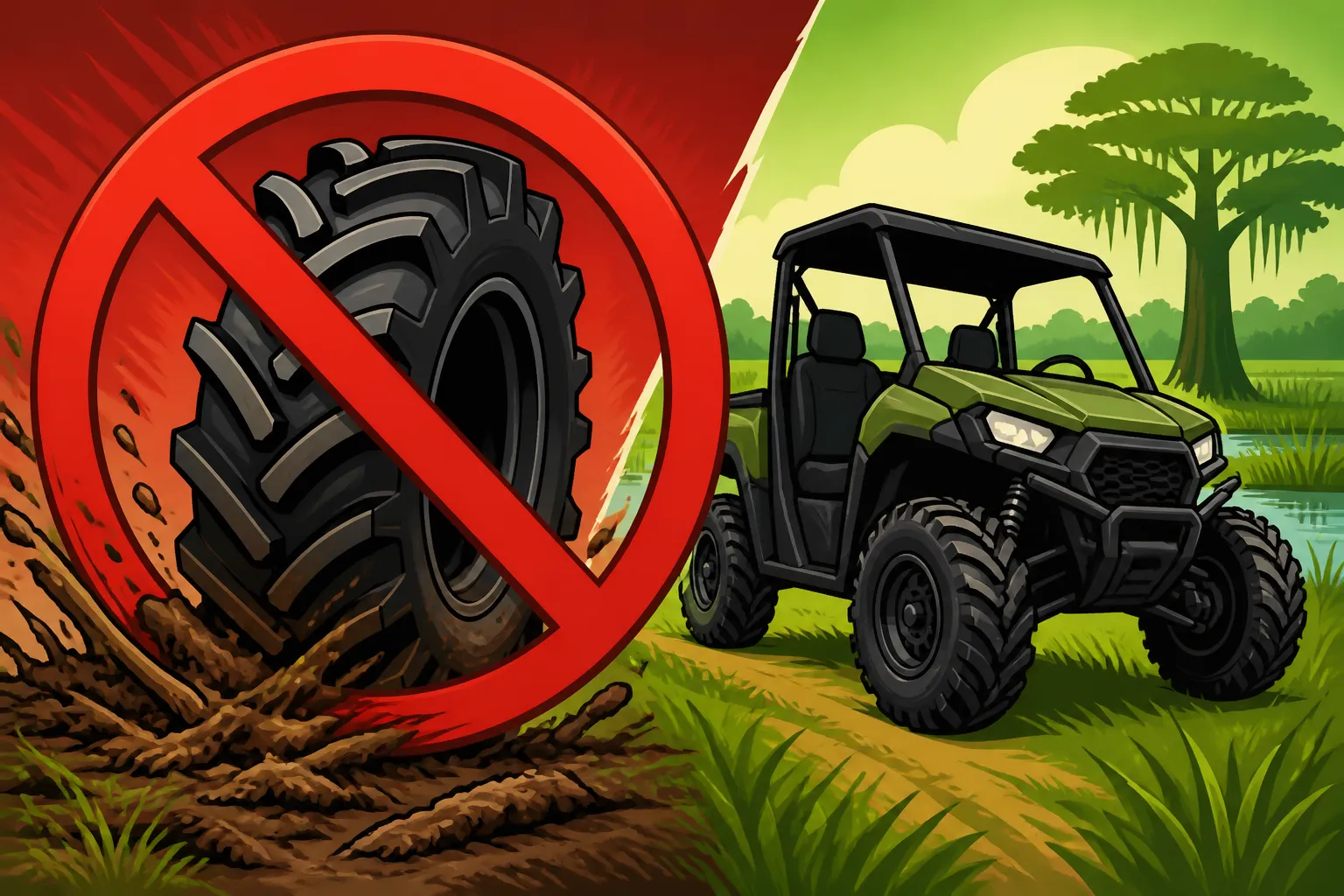
A tire’s intended use on private property does not determine whether it is allowed on a Louisiana WMA. The relevant question is whether the tire and machine meet the rules for that WMA and the trails open to motorized use. Louisiana WMA riding rules prohibit farm-tread tires; the restriction applies even if the machine is otherwise suitable for trail riding.
Farm-tread tires are designed to gain traction in soft ground and agricultural conditions. Their tread may have prominent, widely spaced lugs or a pattern intended to grip soil, rather than a more modest ATV tread. That aggressive design can make the tire unsuitable for designated public-land trails, where repeated traffic and spinning tires can damage the surface and surrounding ground.
The restriction is about the tire, not whether the rider plans to use the machine for farm work. A quad that is normally an agricultural tool still has to meet WMA requirements when taken onto a WMA. Likewise, calling a tire a “mud tire” or “utility tire” does not settle the question. The tread pattern and the applicable rules matter more than the label on a sales page.
The farm-tread prohibition is only one part of WMA access requirements. Riders may also need to use designated trails, meet equipment limits, and follow seasonal closures and permit procedures. Check Louisiana WMA Riding Rules for Quads before planning a trip, and read Louisiana WMA Designated Trails Only if you are unsure where machines may travel.
| Tire or machine detail | Why to check it before entering a WMA |
|---|---|
| Tread type | Farm-tread tires are prohibited under WMA rules |
| Tire size | Applicable rules may limit the tire dimensions |
| Lug height | A tire can exceed the allowed tread-height limit even if its overall size seems suitable |
| Tire pressure | WMA rules may specify a maximum pressure |
| Trail location | Only designated trails may be open to machines |
Do not treat this table as a substitute for the rules for the specific area. Limits and access conditions can change, and the requirements may cover several separate parts of the machine. Louisiana WMA Tire Rules Explained gives a broader overview of the tire restrictions.
How to tell whether your tires count as farm tread
There may not be a simple label that lets you decide at a glance. Product descriptions use broad terms, and different tread patterns can look similar in a photo. If you are uncertain, examine the tire itself and compare it with the current WMA requirements rather than relying on a retailer’s category or a seller’s assurance.
Look for a deep, widely spaced pattern built to bite into soil. A tire intended for agricultural work may have large lugs that stand well above the tread surface. That appearance can be a warning sign, but it is not a reliable legal test by itself: a tire can be disallowed because it is farm tread, because it exceeds a separate dimension or lug limit, or for more than one reason.
Check the sidewall for the tire’s size, then inspect the tread and measure it if the rules call for a specific limit. A size marking alone does not tell you whether the tread type is permitted. Similarly, a tire that meets a size limit may still be prohibited if it is farm tread.
When inspecting tires, take these steps:
- Find the rules for the WMA you plan to visit and confirm the current tire requirements.
- Read the size information on each tire’s sidewall.
- Check the tread pattern and measure lug height if the rules specify a maximum.
- Confirm any pressure limit, using a suitable gauge rather than judging by appearance.
- If the tire still seems borderline, ask the relevant wildlife or WMA office before travelling.
A photo can help when asking for clarification, but it may not show lug height or tread details well enough to settle the question. Take clear pictures of the full tread and sidewall, and be ready to provide the tire’s make, model, and size. For related limits, see What Happens If Your Lugs Top 1 Inch and Why Tires Over 26 by 12 Are Turned Away. Those limits are separate checks; passing one does not automatically mean the tire is allowed.
If you are shopping for replacement tires, do not rely only on search terms such as “trail tire” or “ATV tire.” Retail listings can use those descriptions loosely. For example, if comparing options on Amazon or another retailer, verify the exact model and tread pattern against the WMA requirements before ordering. Ask the manufacturer or seller for precise specifications when the listing is unclear.
Why the restriction matters beyond tire wear
A WMA is not the same as a private riding park or a farm. Public-land access is managed for particular uses, and motorized travel is limited to the places and conditions set for that area. A tire that works well in a field or deep mud may cause more ground disturbance when ridden aggressively on a designated trail.
Deep, widely spaced lugs can dig into a soft surface, especially when a rider spins the tires, turns sharply, or tries to power through a wet section. The resulting ruts can make a trail harder to maintain and can affect people using the route after it dries. Leaving the marked route to avoid a rut or find a better line can create additional damage—and may violate trail-use rules regardless of tire type.
This does not mean every farm-tread tire will damage every surface every time it is used. The practical point is that WMA rules set a clear equipment standard for access. Riders should follow that standard instead of deciding that a particular route or riding style makes a prohibited tire acceptable.
A machine that meets tire requirements still needs to stay within the other rules. Confirm that the route is open, follow the posted trail boundaries, and check any weight or machine restrictions that apply. Louisiana WMA Weight Limits Explained covers another equipment check, while Reading a WMA Map Before You Unload can help you confirm where riding is permitted. A tire that is compliant does not make an undesignated trail legal.
What to do if your machine has farm-tread tires
If your ATV or UTV has farm-tread tires, the simplest choice is not to take it onto a WMA until you have confirmed that its tires comply with the current requirements. Do not assume that reducing pressure, avoiding mud, or staying on a hard section of trail makes a prohibited tire acceptable. Those steps do not change the tread type.
You may be able to use the machine on private land where you have permission, subject to any other applicable rules. For WMA riding, consider fitting tires that meet the specific requirements for the area and the machine. Before buying, verify the permitted tread type, dimensions, lug height, and pressure limits. If a seller cannot confirm the tread specifications, look for clearer documentation or ask the manufacturer.
After changing tires, make sure each tire is correctly installed and inflated as required. Keep the product details and measurements available in case you need to answer questions about your setup. This is especially useful when a pattern is not obviously agricultural but may appear similar to a restricted tire.
Plan the rest of the trip at the same time. Confirm that the WMA is open to riding, review any seasonal restrictions, and check whether you need a permit or must complete a self-clearing permit process. Rules can vary by location and can change, so check the relevant official information before loading the machine. Louisiana WMA Season Closures and Louisiana Permit Questions Riders Ask cover two other common parts of that preparation.
If you are already at a WMA and realize the tires may be prohibited, do not ride onto the trail to test whether anyone objects. Contact the appropriate WMA office for direction, or take the machine somewhere it can be used legally. Checking before the trip is easier than trying to resolve an equipment question at the trailhead.
Disclaimer
This article is for general informational purposes only and does not constitute professional advice. Laws, prices and regulations vary by location and change over time. Consult a qualified professional for guidance on your specific situation.