Why Raccoon Hunters Can Ride After Dark
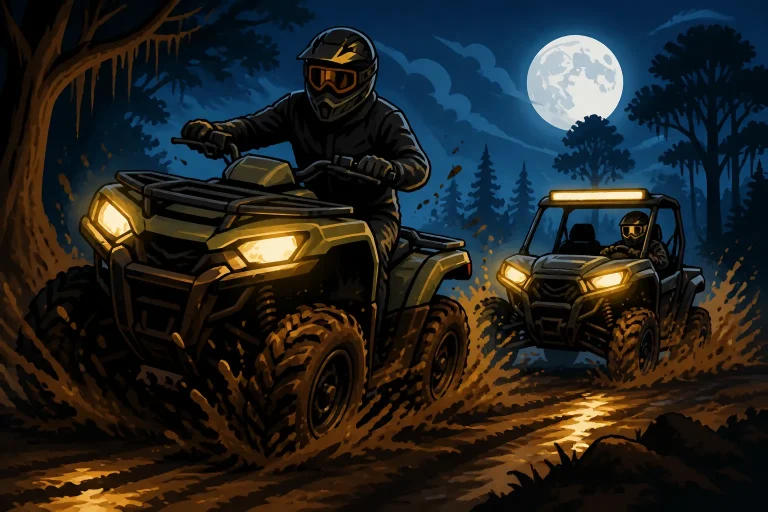
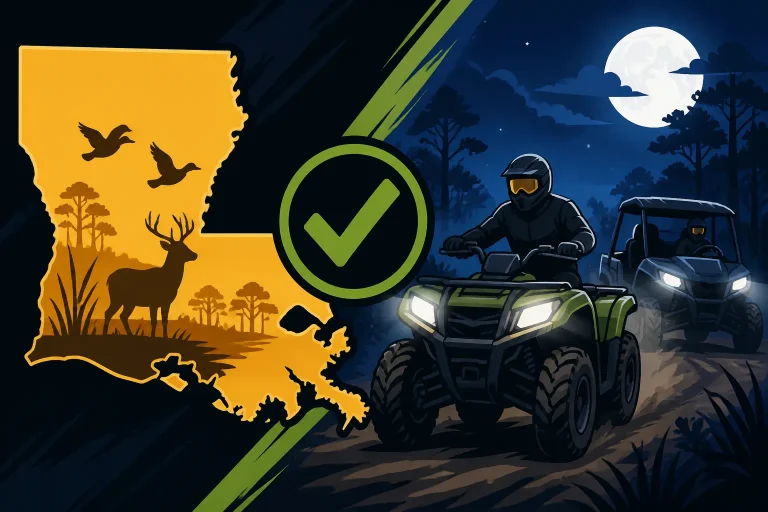
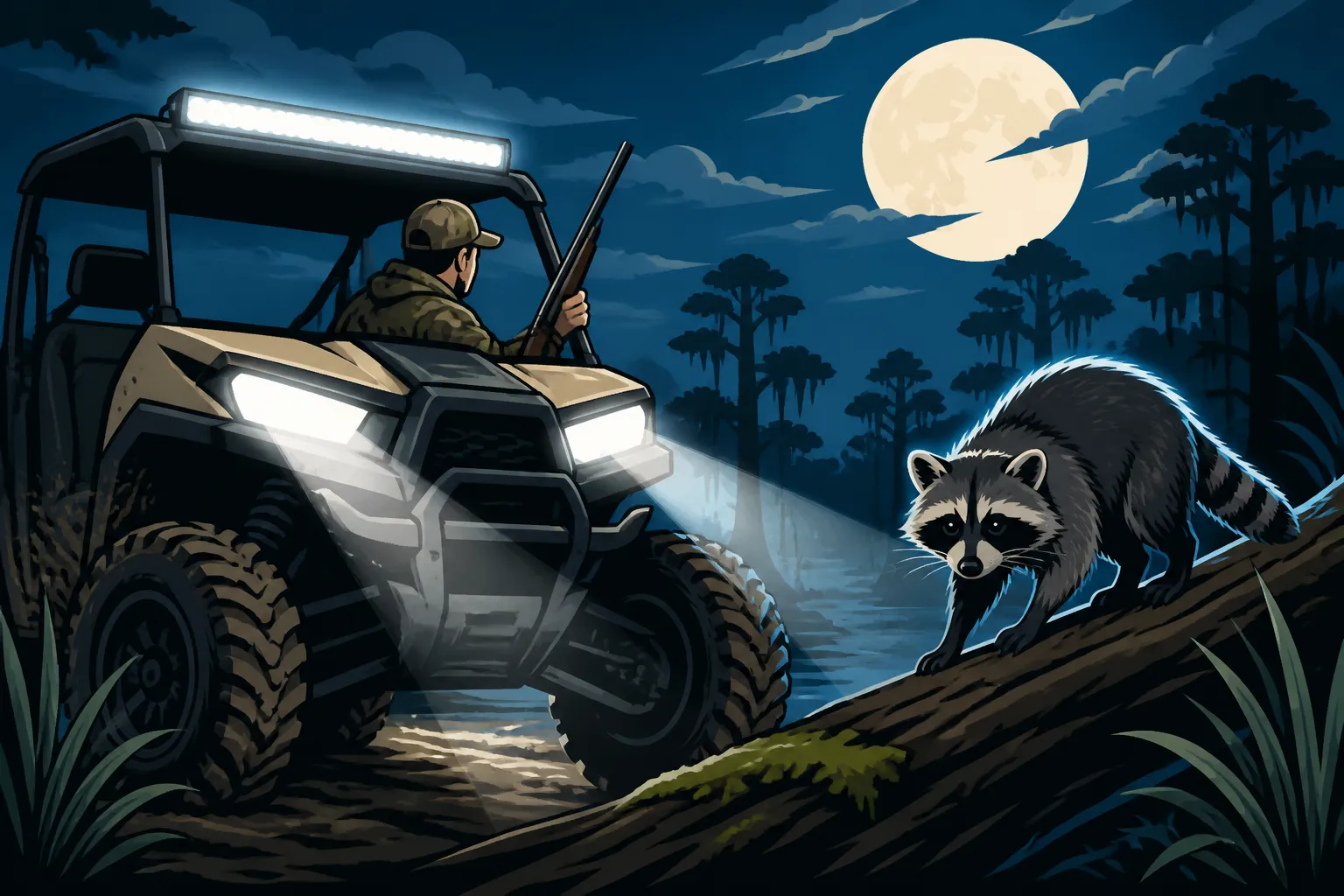
A WMA rule that limits ordinary ATV riding after sunset can seem to conflict with raccoon hunting, which often happens at night. The key is that an after-dark exception is narrow: it may allow a hunter to use a machine for a specific hunting purpose, but it does not turn every WMA trail into an all-night riding area. Check the rules for the exact WMA before unloading.
Why the After-Dark Exception Is Limited
Louisiana WMAs generally place time, route, and purpose limits on machine use. Ordinary riding may be restricted to set hours, and machines may be allowed only on designated trails. Raccoon hunting is different because it is a nighttime activity. A specific exception can let hunters use an ATV or other permitted machine to support that activity after dark.
That exception is not a general extension of riding hours. It does not mean a rider can stay out late for recreation, take an unrelated night ride, or assume every route is open. The hunting connection matters, as do the WMA’s current regulations, seasonal restrictions, and any machine-specific requirements.
A useful way to think about the exception is that it applies to a particular activity under particular conditions, not to the machine itself. Owning an ATV, having a WMA permit, or being on a raccoon hunt does not automatically make every route or use lawful. The details can vary by area and season, so verify the rules for the WMA you plan to visit.
Ordinary riding hours still matter
Time restrictions are meant to keep machine traffic predictable and limit conflicts with other WMA users. During normal riding hours, hunters and other visitors may be sharing access routes. Outside those hours, most recreational machine travel may be prohibited even if the trail is physically open.
The standard hours and exceptions are separate questions. A hunter should not assume that a general riding window controls every special hunting situation, nor assume that a hunting exception erases all time limits. Read both the general machine rules and the raccoon-hunting provision that applies to the WMA. For more on the regular schedule, see Why WMA riding starts at 4 a.m. and Louisiana WMA Night Riding Exceptions.
If a rule is unclear, ask the managing agency before the trip. A quick confirmation is much easier than trying to explain a nighttime ride during a field check.
The hunting purpose must be genuine
A nighttime ride does not become raccoon hunting just because a hunter is carrying hunting gear or has a license. The machine use should be connected to the lawful hunt and stay within the exception’s terms. Recreational riding before or after the hunt may still be subject to ordinary hours and route limits.
This distinction is important when a group includes people who are not participating in the hunt. A passenger, friend, or family member does not necessarily qualify to ride under a hunting exception simply by accompanying someone who does. Check whether the rule applies to the hunter, the hunting party, the machine, or a specific kind of travel.
An exception does not open every trail
Night access also does not automatically authorize off-trail travel. A WMA can limit machine use to marked or designated routes regardless of the time or purpose. Stay on routes that are open to your machine, and do not treat a field edge, fire lane, woods road, or worn track as an approved trail unless the rules or map identify it as such.
The route requirement is an especially important part of planning a nighttime hunt. Reduced visibility makes it easier to miss a junction, turn onto a closed route, or travel beyond the area where machine use is allowed. Review Louisiana WMA Designated Trails Only and use the current WMA map rather than relying on memory or an old track on a phone.
What to Confirm Before a Night Hunt
WMA regulations can be specific to the area, the season, the activity, and the kind of machine. Before leaving home, identify the exact property and check its current rules. Do not rely on a general statement about raccoon hunting across Louisiana as proof that a particular WMA allows the same access.
Use this checklist:
- Confirm that raccoon hunting is allowed on the WMA during your planned visit. Check the current hunting rules and dates for that property.
- Read the machine-use rule and its night exception. Confirm whether the exception covers an ATV, UTV, or another type of machine, and what hunting-related use it permits.
- Check which routes are open. Use the current map or posted information to identify designated routes and any closures.
- Confirm permit requirements. Find out whether a WMA access permit, self-clearing permit, or other authorization applies to each person in your party.
- Review vehicle restrictions. The property may set limits on machine size, weight, tires, or other equipment.
- Check hours and seasonal restrictions separately. A nighttime hunting exception may not override a seasonal riding ban, a closure, or a restriction on a particular route.
- Ask the managing office if the wording is unclear. Keep a note of what you confirmed and when, especially if the rule is not obvious from the published materials.
The permit question deserves attention. A hunting license and permission to use an ATV are not necessarily the same thing. Some public lands require a separate access permit or a self-clearing permit, even when the visitor’s main reason for being there is hunting. See Louisiana WMA Permit Requirements and Louisiana Self-Clearing Permit Steps before planning the trip.
For rules that change by season, use the current information for the specific WMA rather than an older brochure, saved screenshot, or advice from a past visit. You can also review Louisiana WMA Seasonal Riding Ban to understand why machine access may be restricted during part of the year.
| Question | What to verify |
|---|---|
| Is raccoon hunting open? | The current season and property-specific hunting rules |
| Is nighttime machine use allowed for the hunt? | The exception’s purpose, hours, and conditions |
| Where may the machine travel? | Routes designated and open to that machine |
| Is a separate permit needed? | WMA access and self-clearing requirements |
| Is the machine eligible? | Applicable size, weight, tire, and equipment limits |
| Is the route currently open? | Current closures and seasonal restrictions |
How to Ride Responsibly After Dark
Even when an exception applies, a night ride calls for a more conservative approach than daylight travel. It is harder to spot branches, washouts, gates, other hunters, and posted boundaries. Reduced visibility also makes it harder for other people to judge your speed and distance.
Stay on the permitted route
Plan the route before dark. Mark the trailhead, intended route, and turnaround point on a current map, and make sure everyone in the group understands the plan. Keep a paper map as a backup in case a phone loses service or power. On unfamiliar ground, stop at junctions and confirm the route instead of guessing.
Do not follow another machine simply because its lights are visible ahead. The other rider could be heading to a different area or could have taken a wrong turn. If you cannot confirm that a route is open, turn back and check with the property manager rather than continuing in the dark.
Make your machine visible
Use the lighting equipment required for your machine and the rules of the property. Check that lights are working before leaving the staging area, and bring a backup light for navigating if the machine’s main lighting fails. A headlamp can help with maps, equipment checks, and setting up at a stop, but it does not replace the machine’s required lights.
If you are buying a headlamp or other small safety gear through Amazon, check that it suits outdoor use and can be secured comfortably with your helmet. Bring spare batteries or a charged backup, and keep the light where it is easy to reach. The goal is to avoid being stranded without a usable light, not to add gear that distracts from riding.
Use a speed that lets you stop within the distance you can see. Dust, fog, rain, vegetation, and uneven ground can shrink that distance quickly. Avoid shining auxiliary lights into another rider’s eyes, and dim or redirect lights when approaching people or parked machines.
Keep the group together
Before setting out, agree on a lead rider, a last rider, and a plan for stopping if someone gets separated. Keep enough space between machines to avoid riding in another person’s dust or being caught by a sudden stop. At intersections, wait until the group is accounted for before moving on.
A simple communication plan helps. Tell someone outside the group where you are going and when you expect to return. Carry a charged phone or radio if appropriate, but do not assume there will be cell service throughout the WMA. If someone has a mechanical problem, stay with the person and use the route you already planned to get help.
Respect other hunters and wildlife
Night hunting can involve people on foot, hunting dogs, and other parties using the same area. Travel quietly and cautiously near parking areas, gates, and trail intersections. Do not assume that a person or animal ahead is visible just because your headlights are on.
Avoid unnecessary engine noise and do not use the machine to pursue wildlife. The exception is for the permitted hunting activity, not for unrestricted travel or harassment of animals. Follow firearm and hunting-safety rules, and do not ride in a way that puts other hunters at risk.
If the purpose of the trip changes, the machine-use exception may no longer apply. For example, finishing the hunt does not necessarily permit a recreational ride around the property after dark. Return by a route and within a time allowed by the applicable rules.
Common Misunderstandings and What to Do if You Are Unsure
The most common mistake is treating “raccoon hunters can ride after dark” as a blanket rule. It is safer to read it as a limited exception whose conditions must be met. The following assumptions can lead to trouble:
- “I have a hunting license, so I can ride anywhere.” A hunting license does not itself authorize machine use on every route.
- “The trail is open in daylight, so it must be open at night.” Hours and route access are distinct restrictions.
- “The exception applies to every person in my group.” Check who qualifies and whether passengers or non-hunters are covered.
- “A map app shows a road, so it is a legal trail.” A visible track is not necessarily designated or open to machines.
- “The rule was the same last season.” Regulations and closures can change; check the current information before every trip.
- “If the hunt is over, I can finish riding later.” The hunting-related exception may not cover travel after the activity ends.
If the published rule does not clearly answer your question, do not guess. Contact the WMA manager or the agency responsible for the property. Describe the machine, the planned activity, the time, and the route you intend to use. A specific question is more likely to produce a useful answer than asking only whether “night riding” is allowed.
If an officer or property manager asks about your trip, be prepared to explain your hunting purpose and show any required permits or documents. Follow directions promptly. Keeping your route narrow, your paperwork in order, and your group within the applicable rules makes it easier to demonstrate that the ride fits the exception.
For broader machine requirements, review Louisiana WMA Riding Rules for Quads. If your trip includes retrieving legally taken game, that activity has its own limits; see Louisiana Game Retrieval by Quad rather than assuming the raccoon-hunting exception covers every kind of game retrieval.
The practical bottom line is simple: raccoon hunting may provide a narrow reason to use a machine after dark, but it does not erase WMA rules. Confirm the current exception for the specific property, stay on approved routes, carry the required permits, and end the ride when the exception no longer applies.
Disclaimer
This article is for general informational purposes only and does not constitute professional advice. Laws, prices and regulations vary by location and change over time. Consult a qualified professional for guidance on your specific situation.