What Happens If Your Lugs Top 1 Inch
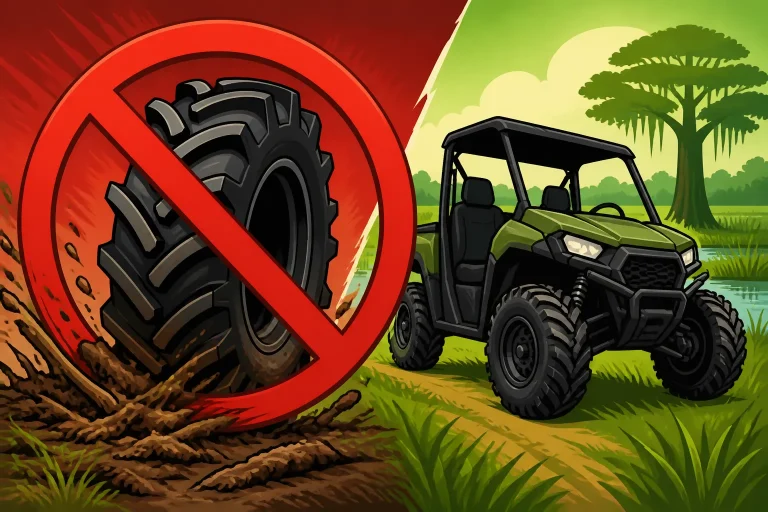
If your ATV or UTV has aggressive mud tires, check the tread before hauling it to a Louisiana Wildlife Management Area. WMA rules limit tire lug height, and a machine that exceeds the limit may not be allowed on the riding area. Here’s how to check the tread, what to do if it is too tall, and which other rules to verify before you unload.
Louisiana’s 1-inch lug limit and where it applies
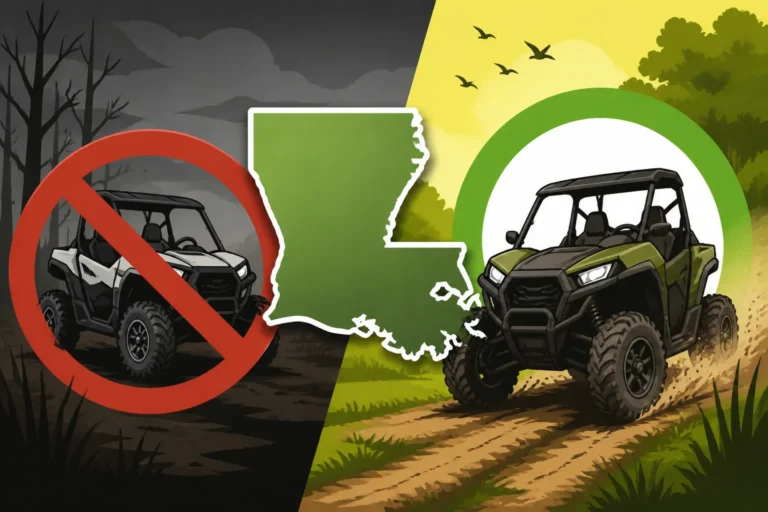
Louisiana WMA riding rules limit tire lug height to 1 inch. The limit is part of the requirements for using machines on designated WMA trails; it is not a general rule that makes every tire over 1 inch illegal everywhere in Louisiana. A private mud park, a private trail, and a WMA can each have different access conditions.
That distinction matters if you ride in more than one kind of place. A tire that is accepted at a private park may not meet WMA requirements. Likewise, being within the lug limit does not automatically make a machine eligible to ride: other WMA rules may cover tire size, vehicle weight, tire pressure, the trails you can use, permits, and seasonal closures. See Louisiana WMA Tire Rules Explained for the broader requirements.
The lug limit is a practical access check, not a recommendation about what tires to buy. Deep lugs may suit some mud riding, but they can prevent access where the WMA limit applies. If your riding plans include public land, check the rules for that site before choosing tires or loading your machine.
| If your tire lugs are… | Practical next step |
|---|---|
| Clearly below 1 inch | Check the other WMA requirements and trail access rules |
| Close to 1 inch | Measure carefully and confirm how the site applies its limit |
| Over 1 inch | Do not assume the machine will be admitted; use compliant tires or choose another riding area |
| Hard to measure because of wear or an unusual tread | Ask the relevant land manager before making the trip |
The limit also does not mean you can ride any road or track on a WMA. Machines are generally restricted to designated routes, and an open-looking path is not proof that it is open to ATVs or UTVs. Review Louisiana WMA Designated Trails Only and the site map before setting off.
How to check lug height before you leave
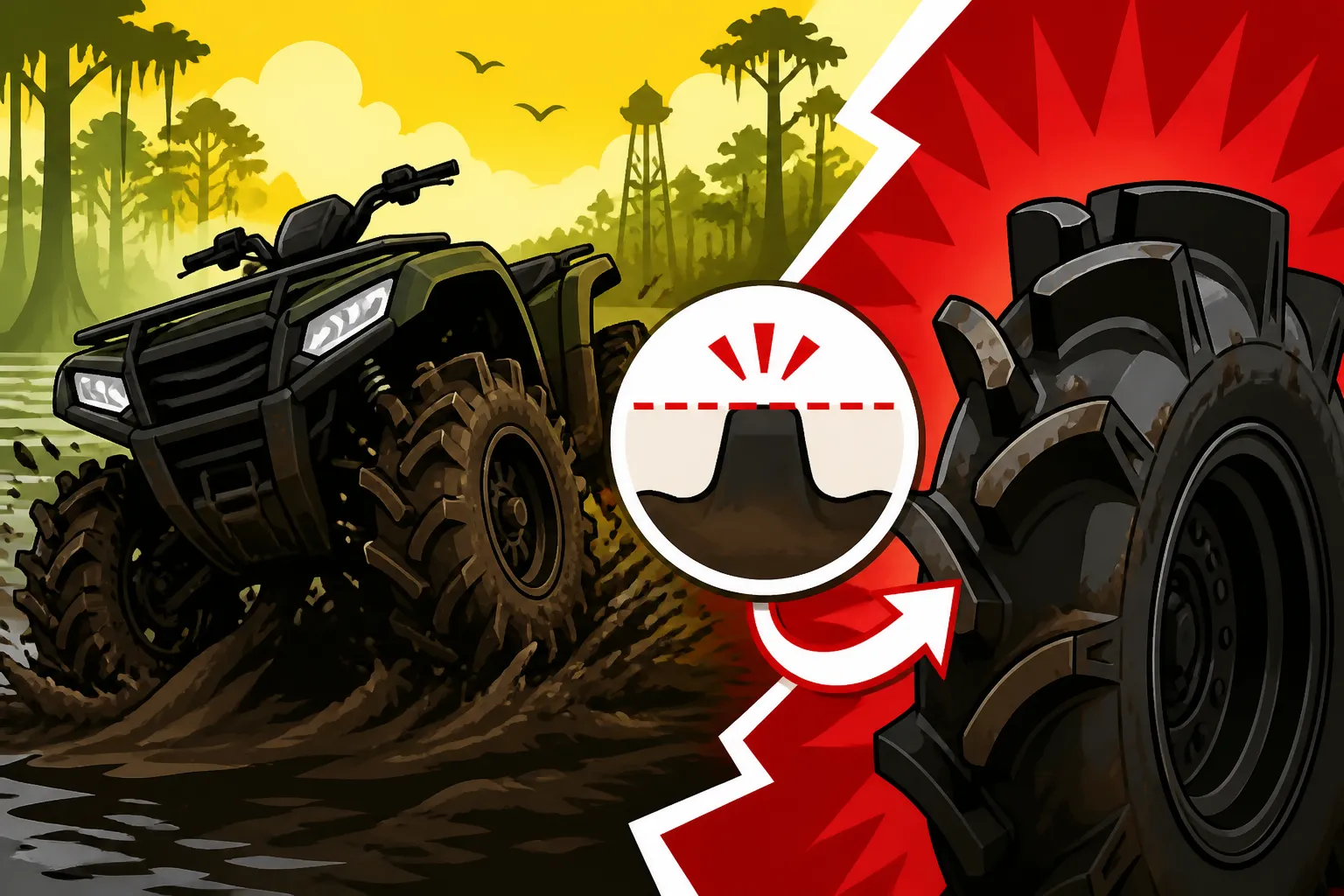
A quick visual check can tell you whether a tire is obviously aggressive, but it is not a reliable way to judge a tire that is near the limit. Measure the tread rather than guessing from the tire’s overall size or appearance. A tire’s diameter and width are different measurements from lug height.
Measure the tread, not the tire size
Use a tread-depth gauge or another suitable measuring tool to check from the bottom of a tread groove to the top of the adjacent lug. A simple gauge from an auto-parts store or Amazon can help, but make sure you know how to read it and that it can measure the depth you need. A ruler can work in a pinch if you can position it squarely, though a gauge is usually easier to use consistently.
Check several places around each tire. Mud tires may have different tread patterns across the center and shoulders, and wear can vary from one part of the tire to another. For a conservative check, pay attention to the tallest lugs rather than relying on a worn or shallow spot. If readings are close to the limit, do not treat a borderline measurement as a guarantee of access; confirm with the WMA or managing agency.
Measure with the tire clean enough to see the groove bottom and lug edge. Packed mud, stones, or debris can hide the actual tread surface and lead to a misleading reading. Check the gauge against a known measurement if you are unsure it is reading correctly.
Do not use the tire’s printed size as a substitute. A size marking describes dimensions such as diameter and width, not the height of the tread blocks. A tire can fit within the machine’s size limits and still have lugs that exceed the WMA limit. The reverse can also be true: acceptable lug height does not establish that the tire’s overall size complies. Louisiana WMA Machine Size Limits explains why those checks are separate.
Check all tires and keep a record
If your machine has more than one tire, check every tire, not just the front pair. A replacement tire or a different tread pattern on one axle can change the result. If you recently installed new tires, check them before the trip; new tread is often taller than worn tread of the same model.
Keep a note of the measurements and, if useful, take clear photos that show the gauge positioned in the tread. Photos are not a substitute for inspection or official approval, but they can help you remember what you checked and explain a question to the land manager before traveling.
If the tire has irregular wear, damaged tread, or deep grooves that make the measurement unclear, get the tire checked by a knowledgeable shop or ask the WMA contact how they interpret the limit. Avoid modifying or shaving a tire just to try to meet the rule unless a qualified tire professional confirms the work is safe. Removing tread can affect tire performance and may damage the tire.
What to do if your lugs are over 1 inch
If your measurements show that the tallest lugs exceed the limit, plan as though the machine will not qualify for WMA riding until you resolve the issue. The low-risk option is to install tires that meet the requirements, then recheck the machine’s other limits. If changing tires is not practical, choose a different riding area and confirm its rules directly. Do not tow to a WMA assuming that staff or an officer will make an exception.
Before changing tires, make a list of every restriction that applies to your intended site. The WMA rules may include limits beyond lug height, and a compliant tire alone does not guarantee entry. Check the machine’s weight, tire dimensions and pressure requirements, along with permit and route conditions. Louisiana WMA Riding Rules for Quads and Louisiana WMA Riding Rules for UTVs are useful starting points, but confirm the rules for the specific area you plan to visit.
A practical pre-trip check is:
- Identify the exact WMA and the trails or riding area you intend to use.
- Check the current WMA rules and map for machine access, open routes, and closures.
- Measure lug height on every tire, especially if the tread is aggressive or near the limit.
- Check tire size, machine weight, and any pressure requirements separately.
- Confirm the permit steps and carry any required permit or proof of compliance.
- If a measurement or rule is unclear, contact the managing agency before loading.
The distinction between “my machine meets the tire rule” and “my machine can ride here today” is important. A WMA may have seasonal restrictions or other access conditions even when your tires comply. Start with Louisiana WMA Season Closures and Reading a WMA Map Before You Unload, then verify the current status before you travel.
If you are comparing public-land requirements with a private park, ask the park what its own tire rules are. Do not assume the WMA limit automatically applies there—or that a private park’s more permissive policy applies on public land. Access rules depend on the location, and permission to ride in one place does not authorize riding in another.
The same care applies if you are visiting Louisiana from another state. An out-of-state machine still needs to meet the rules for the Louisiana riding area you enter. A home-state registration, decal, or tire setup does not by itself override local WMA requirements. Check Riding Louisiana Public Land on an Out-of-State Machine before planning a visit.
Disclaimer
This article is for general informational purposes only and does not constitute professional advice. Laws, prices and regulations vary by location and change over time. Consult a qualified professional for guidance on your specific situation.