Yielding on a Narrow Forest Trail
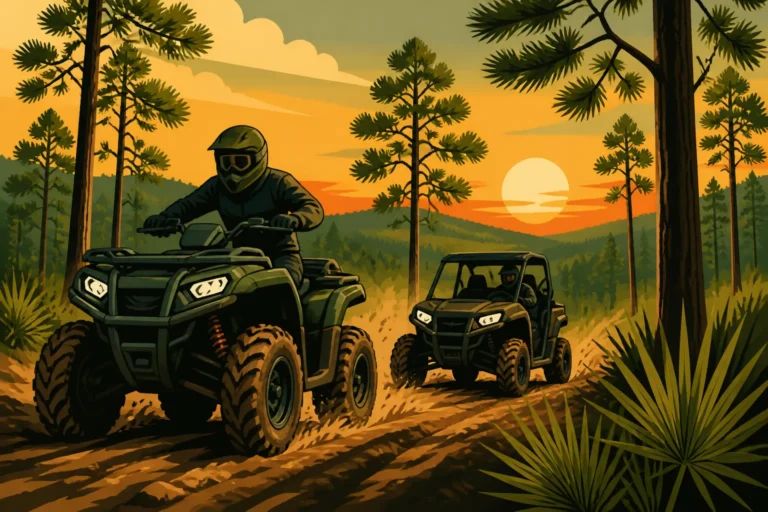
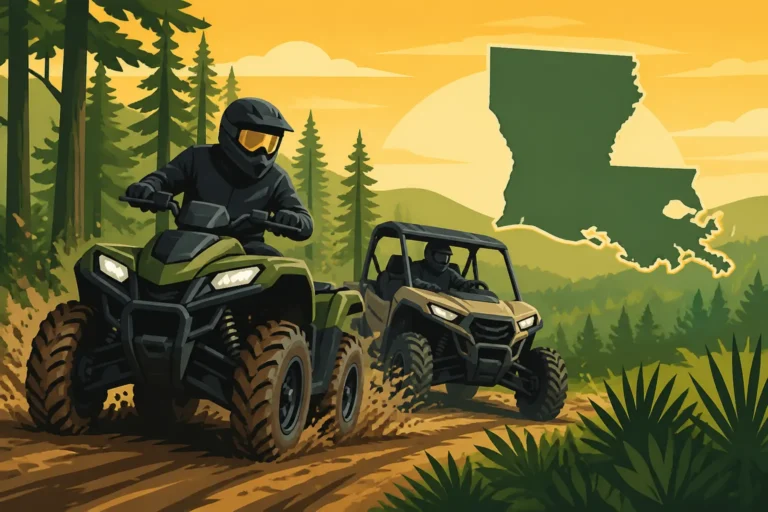
A narrow forest trail can turn a pleasant Louisiana ride into an awkward standoff when an ATV meets another machine, a horse, or a group of hikers around a blind bend. The safest approach is to slow early, communicate calmly, and make room only where the ground is firm and visible. This guide explains how to yield without causing a rollover, trail damage, or a more serious collision.
Why yielding matters on Louisiana forest trails
Narrow trails leave little room for mistakes
On a wide gravel road, two riders can often pass with space to spare. On a single-track or narrow forest trail, there may be no safe passing lane at all. Louisiana’s sandy soil, exposed roots, standing water, and soft shoulders can make a tempting-looking place to pull aside surprisingly unstable.
The danger is not limited to a direct collision. A rider who brakes hard on loose ground may slide, while a machine driven onto a soft shoulder can sink or tip. A sudden reverse or a hurried three-point turn can also put a rider into a tree, ditch, or another trail user’s path. The best response is usually to recognize a possible meeting early and stop somewhere both parties can see and negotiate.
This is especially important in wooded areas around Kisatchie National Forest, where trees and curves can block your view. Even when you know a trail, recent rain, fallen branches, or a parked vehicle can change what you encounter around the next bend. Check the route and its conditions before unloading, and review Checking a Trail Status Page First along with Louisiana Trail Conditions After Rain.
Different trail users need different kinds of space
A motorized trail may bring together ATVs, UTVs, dirt bikes, hikers, cyclists, and, on some shared routes, horses. The safest way to yield depends on who is approaching. A horse can startle at engine noise or sudden movement, while a group of hikers may need a moment to move to a stable spot. A UTV may need more room to pull over than a narrow ATV.
Follow posted rules and the land manager’s instructions first. Trail use can vary from one route to another, so don’t assume every forest road or multi-use trail has the same permitted users or passing expectations. For background on shared-use considerations, see Louisiana’s Sandstone Multiple-Use Trail and Sharing a Forest Trail With Horses.
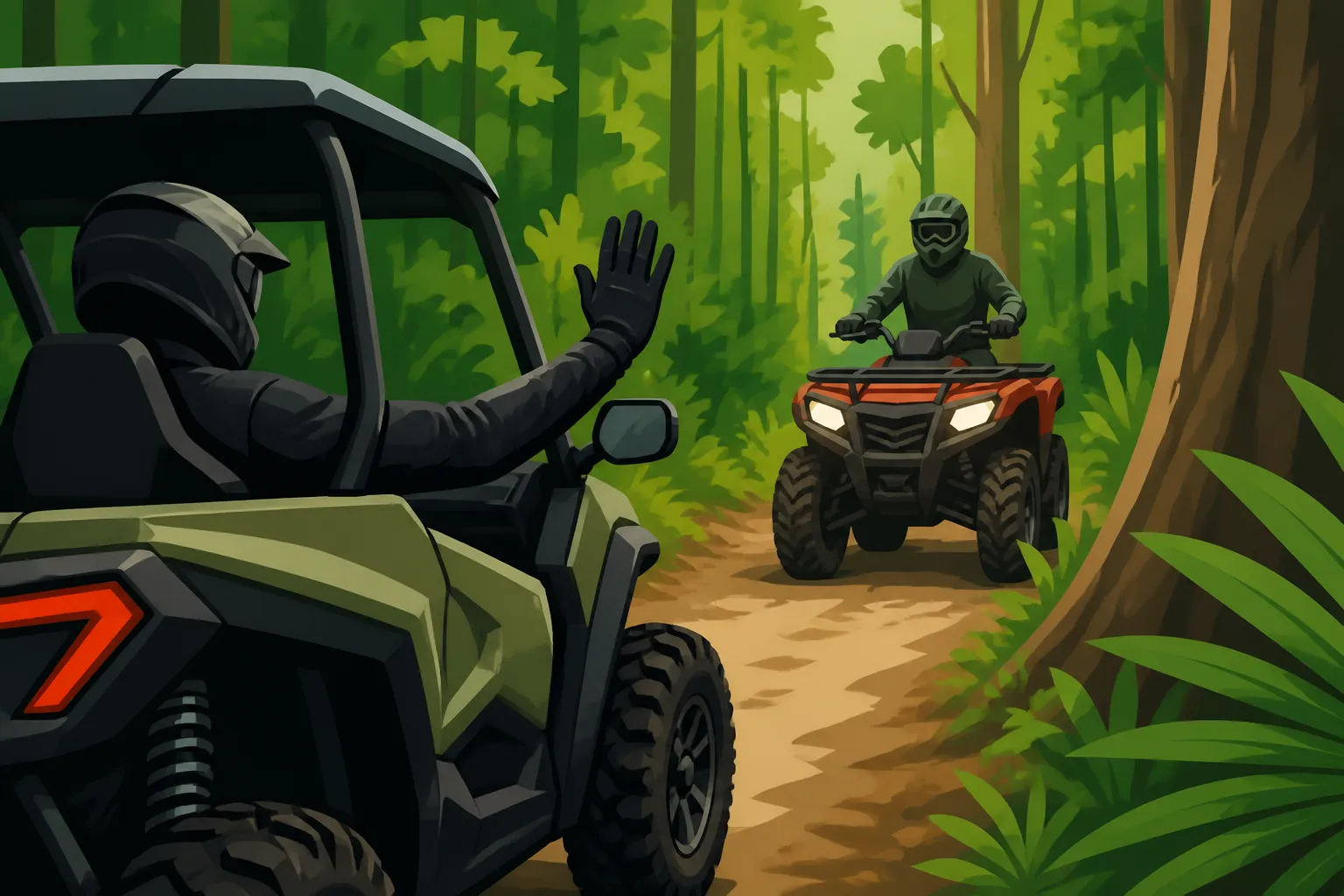
When you meet someone, keep your machine under control, avoid crowding them, and take a moment to agree on who will move and where. A wave or brief verbal check-in is more useful than silently edging toward a questionable shoulder.
How to handle an oncoming rider or vehicle
Slow down before the trail becomes a pinch point
Reduce speed as soon as visibility narrows. Approaching a blind bend quickly and relying on the other rider to stop is a poor bet, particularly if either machine is heavy or the ground is slick. Keep enough distance to stop without locking the brakes, and use a speed that lets you stay on your side of the usable trail.
If you spot an oncoming rider, stop in a place where they can see you. Avoid stopping just beyond a blind curve, over a rise, or in the middle of a steep section if you can safely reach a clearer, flatter spot first. Keep your wheels pointed in the direction you intend to travel so you are not forced into a sharp turn when the other rider arrives.
If the trail is too narrow for a safe pass, don’t squeeze past simply because both machines appear to fit. One rider should back up or move to a wider spot, but only if that maneuver can be done safely and without forcing anyone toward an unstable edge. A short, controlled repositioning is better than a rushed pass.
Make the passing plan clear
Once both parties have stopped, communicate plainly. A hand signal, a calm “I’ll back up to the wider spot,” or a quick agreement about who will move can prevent both riders from choosing the same direction at once. If one machine has a safer place to pull over, that rider can offer to yield—but no one should be pressured into a move that feels unstable.
On a slope, do not treat a common rule of thumb as a substitute for judgment. Some trail communities give preference to uphill traffic because starting again on a climb can be difficult. But trail conditions, posted guidance, visibility, and the ability to move safely matter more than an automatic rule. If the person on the slope is having trouble holding position, or either rider is unsure, stop and discuss the safest option.
Keep your machine stationary while the other rider moves. Don’t rev the engine, edge forward, or start backing up while they are deciding what to do. Those small movements can make a narrow encounter feel more pressured and can create a second hazard. The broader principles in Louisiana Trail Etiquette Locals Expect are useful whether you’re riding a marked OHV route or another permitted trail.
| Situation | Safer response | Avoid |
|---|---|---|
| You hear a machine near a blind bend | Slow early and stop where you are visible | Accelerating to reach the bend first |
| Two machines meet on a narrow flat section | Agree who will move to a wider, firm spot | Trying to pass with wheels on a soft edge |
| One rider is on a steep or slippery section | Pause and choose the safest controlled move | Applying an automatic uphill or downhill rule |
| A group of hikers approaches | Stop, give them room, and wait for a clear signal | Creeping past while they are moving |
| A horse approaches | Stop well ahead, keep the engine quiet, and ask the handler what to do | Revving, turning sharply, or passing without permission |
Yielding to hikers, horses, and other trail users
Give horses extra distance and time
A horse may react to engine noise or a machine that moves suddenly. When you see a horse and rider, slow well before reaching them and stop at a distance that gives the handler room to assess the situation. If practical, turn off the engine and wait for instructions. Don’t assume that moving behind a tree or edging past on the horse’s side will make the encounter easier.
Let the horse handler choose how to proceed. They may ask you to remain still, move to a particular side, or wait while they guide the horse past. Follow their directions calmly. Avoid revving, honking, accelerating, or making abrupt movements, and keep passengers from shouting or waving.
If the trail is so narrow that there is no obvious safe place to pass, wait for a wider area rather than trying to solve the problem while the horse is alongside you. A few extra minutes are far preferable to startling an animal near a drop, ditch, or slippery shoulder.
Make room for hikers and cyclists without rushing them
When hikers or cyclists approach, stop where they have room to see you and choose their own path. A group may need more space than a single person, and someone carrying a pack or walking with a child may not be able to step neatly into brush. Give people time to move to a stable place, and don’t ride close behind them while they decide.
Once they are clear, pass slowly and leave generous room. On a dusty forest road, moving too fast can throw grit and dust into someone’s face, even if the machine itself stays on the trail. A friendly greeting helps, but the priority is maintaining control and making the pass predictable.
For riders using a mapping app, a route line can help with orientation, but it doesn’t replace signs, gates, or land-manager directions. Apps such as onX Offroad may help you review a route before a ride; still, check current trail information and posted restrictions directly. Keep an offline map or paper backup in case your phone loses service. Carrying a Paper Map in the Forest covers why that backup can matter.
Prepare for narrow-trail encounters before you ride
Choose a route and pace that match your group
Before heading out, consider the experience and machine sizes in your group. A wide UTV may have fewer options for getting out of the way than a small ATV, and newer riders may need extra time to stop or reverse. Choose a route that suits the least experienced rider, not just the person leading the group.
Review the trail map and difficulty information before you go. Trail classifications and conditions can change how much room you have to maneuver, and a route that looks simple on a screen may include tight turns or uneven ground. See Louisiana Trail Difficulty Ratings and Kisatchie National Forest OHV Trails in Louisiana when planning a ride in the area.
If your group uses onX Offroad, save the route for offline access before leaving cell coverage and make sure every rider knows the planned route. Keep the device secured so the driver is not trying to study a screen while moving. A map is a planning tool—not permission to ride a closed route, cross a barrier, or ignore a posted sign.
Agree on group signals and spacing
A simple plan prevents confusion when the lead rider meets someone coming the other way. Before starting, decide how riders will signal a stop, warn the group of an approaching vehicle, and pass information back to the last rider. Use clear hand signals or a voice communication system your group understands.
Leave enough space between machines for each rider to stop without running into the person ahead. That gap also gives the lead rider time to react to a stopped hiker, horse, or oncoming machine. If the trail is dusty, increase spacing so riders can see obstacles and brake safely.
Assign someone to ride at the back of the group and confirm that everyone gets through each narrow encounter. The lead rider should not assume the group is clear just because the first few machines have passed. Pause in a safe spot after a difficult meeting and check that nobody was left behind or forced onto unstable ground.
Keep navigation and trail etiquette in perspective
A digital map can make route planning easier, particularly where forest roads branch or look alike. onX Offroad can be useful for reviewing mapped routes, but don’t rely on a phone display as the final word on whether a trail is open or suitable for your machine. Check local trail status, follow signs on the ground, and turn around if you reach a closure or a route that is unsafe for your group.
If you are uncertain where a route goes, stop in a safe place before checking your map. Don’t block a narrow trail while everyone gathers around a phone. A quick discussion at a wide turnout is safer and gives other trail users space to pass.
Before leaving home, review Louisiana Trail Closures and Seasons and make a plan for changing conditions. After heavy rain, a familiar trail may have washouts, deep mud, or soft shoulders that make yielding more difficult. If the only possible passing spot looks unstable, wait, communicate, and use a safer option—even if that means turning around.
A practical yielding routine
When you spot another trail user, reduce speed early and look for a place where both parties can see each other. Stop before the trail narrows, not after you have reached the tightest point. If a horse or a group of people is involved, give them extra time and follow their lead.
Then make a clear plan. Decide who can move safely, identify a firm and wide place to pass, and keep both machines still until the other person is ready. If neither side has a safe passing area, back up only when the route behind you is clear and the move can be made under control.
After the encounter, continue at a pace that lets you stop before the next blind corner. A careful yield is not a delay worth getting annoyed about; it is part of sharing the trail responsibly. On Louisiana’s narrow forest routes, a few calm seconds can protect riders, other trail users, and the trail itself.
Disclaimer
This article is for general informational purposes only and does not constitute professional advice. Laws, prices and regulations vary by location and change over time. Consult a qualified professional for guidance on your specific situation.