Riding Quietly Past Camps
A quiet pass can make the difference between a friendly nod and a campsite full of startled people. In Louisiana, trail traffic may share space with tents, RVs, hunting camps, and narrow wooded routes where engine noise carries farther than expected. This guide explains how to slow down, keep your distance, and pass camps respectfully without losing your way.
Why quiet riding matters near camps
Engine noise carries farther than you think
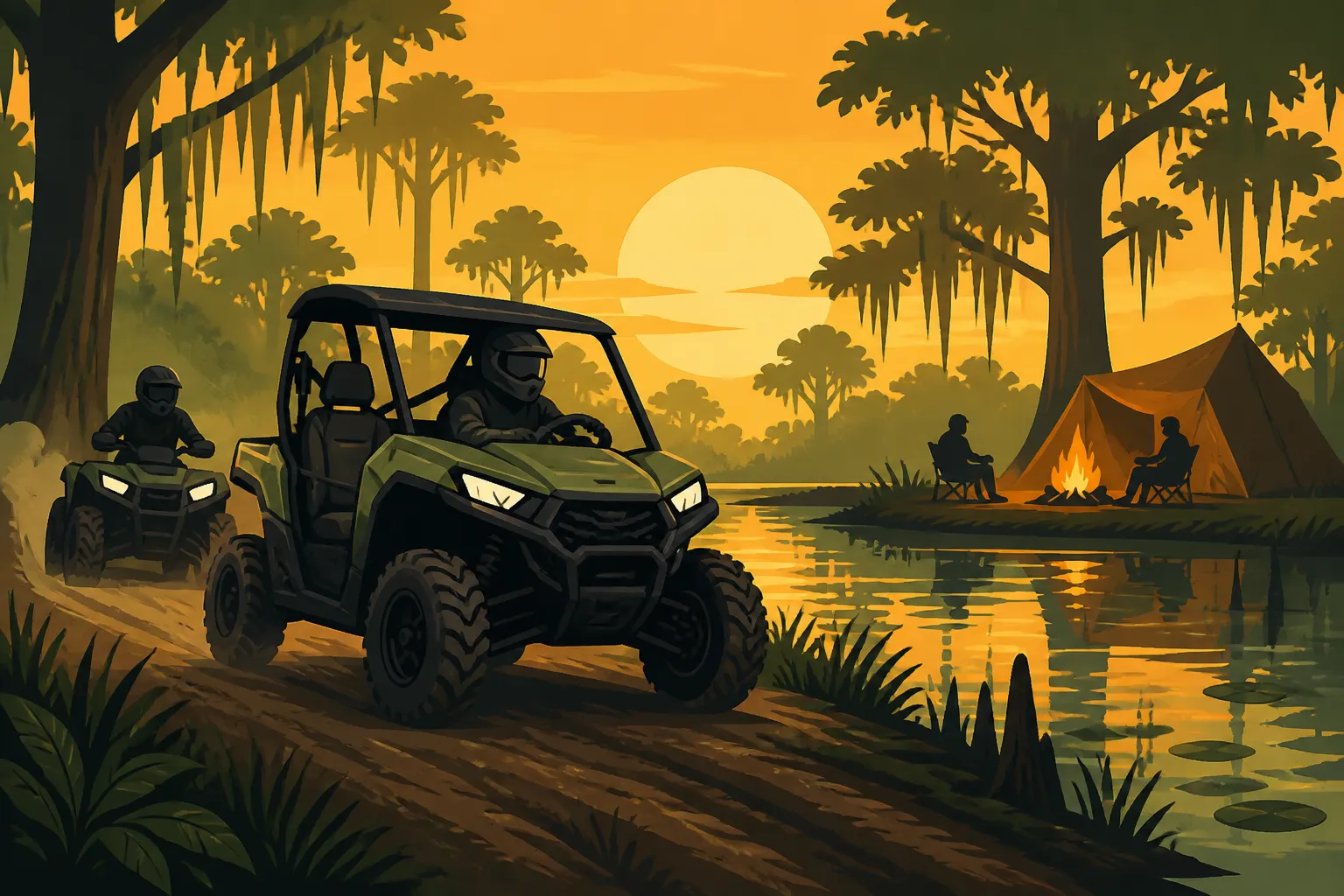
A camp can feel tucked away behind trees, but sound travels along open trails and across water or flat clearings. A rider may hear their own engine as ordinary background noise while someone in a tent hears it as a sudden roar right outside. In a group, several machines passing one after another can stretch that disturbance out for much longer than a solo pass.
The timing can make the difference, too. People may be eating, putting a child down for a nap, or trying to sleep after a long day outdoors. Early morning and late evening deserve extra care, even when a park or trail is open. If posted quiet hours apply, follow them; if you are unsure, ask the park staff rather than guessing.
Louisiana’s woods and riding areas can also be humid, leafy, and close-set, which makes it difficult to see who is in a campsite until you are nearly upon it. Around Kisatchie National Forest, a trail can pass through changing terrain and near places where other visitors are enjoying the area. A sensible pace gives you more time to notice tents, people, pets, and vehicles before you reach them.
Camps are shared spaces, not trail obstacles
It is tempting to think of a campsite as simply a spot beside the route. But people may have gear spread out, a dog on a long lead, or children moving between a tent and a parked vehicle. A rider who cuts close to a camp can raise dust, splash water, or send small debris toward people and belongings, even without intending to.
Give camps as much space as the route safely allows. Do not ride through a campsite, parking area, or access lane just because it looks like a shortcut. If the trail passes close to tents or RVs, stay on the marked route and slow down before you reach the occupied area. Respecting boundaries is part of the broader standard covered in Louisiana Trail Etiquette Locals Expect.
It also helps to remember that camping and riding may be happening on different schedules. The person relaxing at camp may not know a group ride is planned, and the riders may not realize someone is resting nearby. A little courtesy fills that gap: lower your speed, keep your voices down, and avoid revving or accelerating hard as you pass.
How to pass a camp without causing a disturbance
Slow down before you reach the site
Reduce speed well before you are beside tents, trailers, or people. Braking at the last second can be noisy and abrupt, while slowing early makes your approach calmer and gives you more time to react if someone steps toward the trail. Keep your throttle steady and avoid unnecessary bursts of acceleration.
If the trail is narrow, do not assume the people at camp can hear or see you coming. Ease off, look ahead for pedestrians and pets, and be prepared to stop. On a tight forest route, meeting another rider, hiker, or work vehicle may require patience; the guidance in Yielding on a Narrow Forest Trail is useful when there is not enough room for everyone to pass comfortably.
Avoid honking, shouting, or using a loud sound to announce yourself unless there is an immediate safety reason. A simple, calm greeting at a safe distance is usually enough. If a person is close to the trail, wait until they have moved clear before continuing. The goal is not to rush through quietly at any cost; it is to pass predictably and safely.
Keep the group compact and orderly
A long, spread-out group can make a brief pass feel like a parade through someone’s living space. Before reaching a camp, close unnecessary gaps and ride in a controlled sequence. Leave enough distance between machines to avoid dust and keep room for safe braking, but do not let the group stretch out so far that people at camp keep hearing engines for several minutes.
Choose one person to set a cautious pace and signal the rest of the group to follow it. A lead rider can point out camps early, while the last rider can make sure nobody accelerates to catch up. If riders are unfamiliar with the route, discuss the plan before setting off. Louisiana Group Ride Planning can help organize a ride so everyone knows how to communicate and respond when the group approaches a sensitive area.
Keep conversation low and save loud calls, music, and engine demonstrations for a suitable place away from camps. If someone is loading gear, walking a dog, or backing a vehicle, stop and give them time. A group that pauses briefly may be less disruptive than one that squeezes past while people are trying to move out of the way.
Stay on the route and avoid dust or spray
A wide shoulder can look like an easy way to give a campsite more room, but riding off the marked trail may damage vegetation, disturb other visitors, or put you on land where riding is not allowed. Do not create a new path around a camp. If the route is blocked or too tight to pass safely, stop and wait, or turn around if that is the safest option.
In dry conditions, speed can throw dust toward tents, open windows, food, and outdoor gear. After rain, mud and standing water can create a similar problem through splashes. Ease through the area rather than accelerating across loose ground or puddles. For route decisions after wet weather, see Louisiana Trail Conditions After Rain.
A map can help you understand where you are and avoid accidentally cutting through a camping area while looking for a way around. Riders sometimes use onX Offroad to review routes and orient themselves before heading out. Treat any digital map as a planning aid, not permission to leave a signed trail or enter a campsite. Check local signs and park guidance on the ground, and use Checking a Trail Status Page First when conditions or access may have changed.
Camps, quiet hours, and different riding areas
Public trails and forest routes
On public land, follow posted rules and designated routes. A trail’s presence on a map does not necessarily mean every nearby track is open to motorized use, and a camp may be close to a route without being part of it. Stop before entering an area that is signed, gated, or clearly being used as a campsite.
Be especially alert around trailheads, parking areas, and shared-use routes. People may be unloading machines, walking between vehicles, or setting up camp with limited visibility. If you encounter a work crew or a vehicle on a narrow route, slow down and give them room rather than trying to squeeze past. Meeting a Logging Crew in the Forest offers more guidance for handling those encounters.
Before leaving home, check the relevant trail or land manager information for closures, permitted uses, and seasonal access. Conditions can change after heavy rain, storms, or maintenance work. If you are using onX Offroad to plan a route, compare what the app shows with posted information and signs at the trailhead. A route line on a screen should never overrule a closure sign or a local instruction.
Private parks and event weekends
Private riding areas may have their own quiet hours, camping layouts, speed limits, and rules for riding near RV sites. Those details can differ from one park to another, so check the park’s rules before unloading. At a busy event, the number of machines and campers can make even a short route beside a campground feel crowded.
Follow the designated paths and any one-way directions. Do not idle beside tents while waiting for friends, and avoid using a campsite access road as a place to regroup unless the park permits it. When you need to stop, move to an approved staging area well away from occupied sites. For campground-specific guidance, review Louisiana Private Park Quiet Hours and the applicable park rules before your trip.
Noise management is not only about the engine. Music, shouting across a group, repeated revving, and late-night loading can all carry through a campground. If you are packing up early, organize gear quietly and move the trailer only when allowed. An event weekend can be exciting, but other visitors still need room to rest.
Camps on hunting leases and private land
A camp may sit beside a trail on private property, a hunting lease, or land managed under a separate arrangement. Do not assume that an open-looking track is public or that a camp is unoccupied because no one is visible. Gates, signs, and landowner instructions matter, and permission to ride one route does not automatically include permission to use nearby roads or camp areas.
If you are riding on land where you have permission, ask the owner or lease contact about routes that pass near camps. Find out whether there are times when riders should avoid the area, and whether any access roads are shared with vehicles or farm equipment. When a route seems unclear, stop and check rather than cutting through. The general advice in Getting Written Permission From a Louisiana Landowner is relevant whenever access is not obvious.
Navigation can be especially helpful when a group is moving through unfamiliar private land. onX Offroad may help riders keep track of a planned route, but it cannot replace permission from the landowner or instructions from the person managing the property. Keep your map available, stay together, and turn around if the route does not match what you were told.
A practical pre-ride checklist for quiet passes
Agree on the plan before starting
A quick conversation in the parking area prevents awkward decisions beside someone’s tent. Tell the group to reduce speed near camps, avoid unnecessary revving, and keep voices and music down. Decide who will lead and who will ride last, and agree on how the group will signal a stop or warn about people near the trail.
| Situation | Considerate response | Avoid |
|---|---|---|
| Tents or RVs beside the trail | Slow early and stay on the marked route | Cutting through the campsite |
| People or pets near the route | Stop or wait until the way is clear | Squeezing past at speed |
| Dry, dusty ground | Use a gentle, steady pace | Accelerating hard beside tents |
| Mud or standing water near camp | Pass slowly and avoid splashing | Charging through puddles |
| Narrow trail with no safe passing room | Pause and let people move safely | Forcing a close pass |
| Posted quiet hours | Follow the park’s stated limits | Assuming the trail’s open status overrides them |
If you are riding somewhere unfamiliar, review the route before departure and make sure everyone knows the planned stopping points. onX Offroad can be one tool for checking the route and keeping the group oriented, especially when trail junctions are easy to miss. Share the plan with the group, but also agree that posted signs and staff instructions take priority.
Make a calm choice when the route feels uncomfortable
Sometimes the best response is to wait. If someone is unloading a vehicle beside the trail, a dog is loose, or a campsite is crowded right up to the route, stop at a safe distance and give them time. A short pause is better than startling someone or making a rushed maneuver that sends a machine into camp.
If passing is not safe or permitted, turn back or find an approved route. Do not ride around a barrier, cross through a campsite, or take an unmarked shortcut to avoid waiting. If a group behind you is becoming impatient, keep your decision steady. Courtesy and control matter more than keeping the ride moving every second.
After passing, continue at a restrained pace until you are clearly away from the camp. Avoid immediately accelerating hard or revving once you think nobody can hear you; sound can carry farther than expected. If you would not want a machine doing the same thing outside your own tent, choose a quieter approach.
Keep the ride enjoyable for everyone
Quiet riding does not mean you have to avoid trails where people camp. It means recognizing that a riding area is often shared by people with different plans. Slowing down, staying on route, and giving camps a little space can make the experience better for riders and campers alike.
That courtesy also helps protect continued access. A careless pass may lead to complaints, conflict with staff, or tighter restrictions for everyone. When riders show that they can share a trail responsibly, they help preserve a more welcoming atmosphere at public riding areas, private parks, and camps throughout Louisiana.
Disclaimer
This article is for general informational purposes only and does not constitute professional advice. Laws, prices and regulations vary by location and change over time. Consult a qualified professional for guidance on your specific situation.