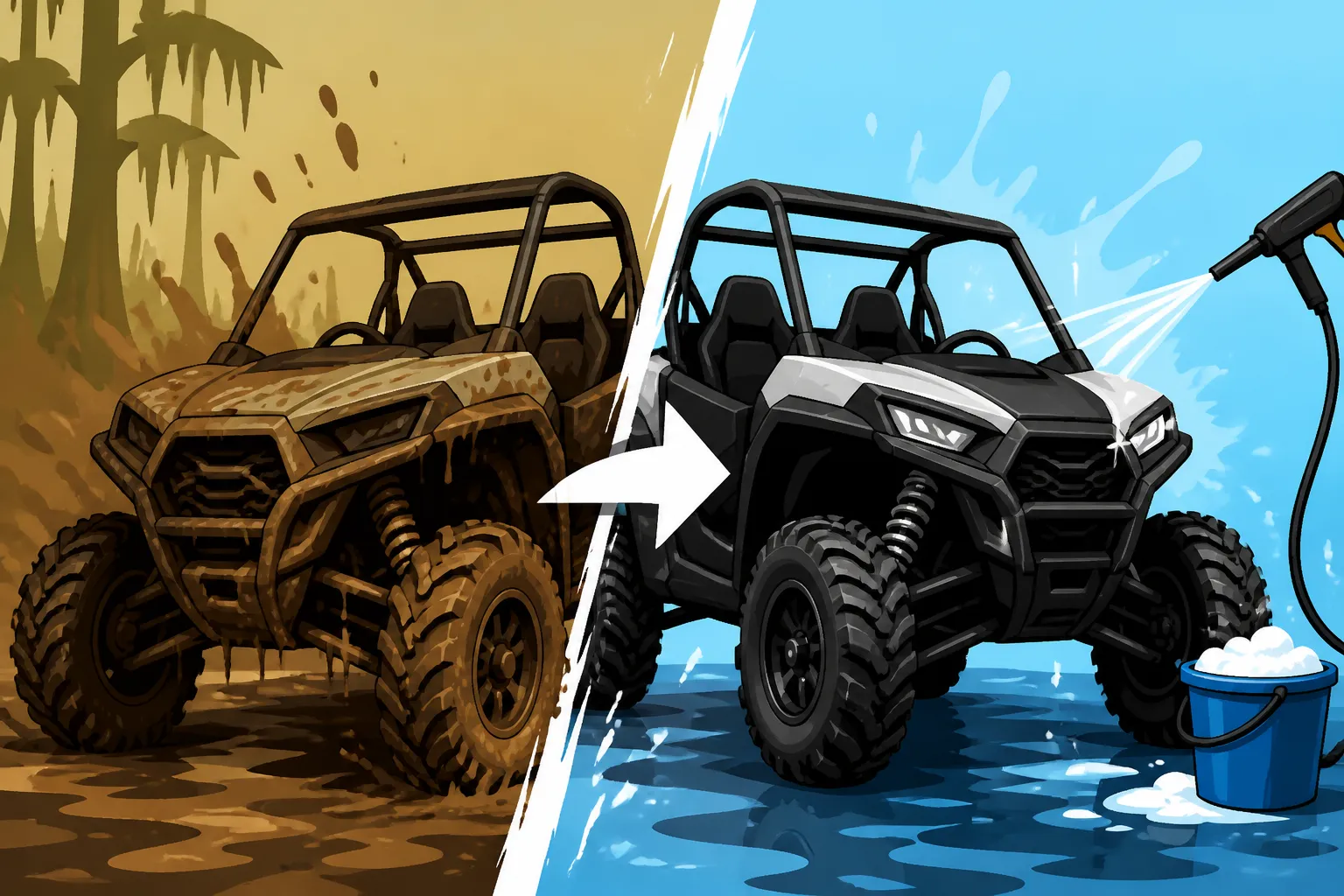
Washing a Machine After a Mud Weekend
A Louisiana mud weekend can leave clay packed around the radiator, caked beneath the skid plate, and hiding in places you cannot see from the driveway. A rushed rinse may make a quad or UTV look clean while grit and moisture keep working into parts. This guide walks through a careful post-ride wash, what to avoid, and how to check the machine before storing it.
Before You Wash Your ATV or UTV
A little preparation makes the wash safer and more thorough. Mud is easier to remove before it dries hard, but washing a hot machine or blasting it indiscriminately can create new problems. Give yourself room to work, gather the right tools, and check the owner’s manual for any model-specific cleaning instructions.
Let the machine cool and choose a sensible wash spot
After riding, park on firm, level ground and let the engine and exhaust cool. A sudden spray of cold water on hot components can cause thermal stress, and working around a hot exhaust is an easy way to burn yourself. If the ride home was long, unload the machine and give it time to cool before starting.
Pick a spot where muddy runoff will not wash into a storm drain, ditch, creek, or wetland. That matters after rides around Louisiana’s piney woods, wet fields, and low-lying trails, where wash water can carry soil, oil, and cleaner residue into nearby waterways. Follow any posted rules at a park or wash area, and do not assume that a trailhead has a wash station just because riders commonly clean up nearby.
Before leaving a park, scrape off thick clumps that could fall from the trailer on the highway. A plastic scraper or gloved hand can remove heavy buildup without sending a spray of mud across the parking area. For planning a future trip, note where you unloaded and whether a permitted wash area was available. Tools such as onX Offroad can help you keep trail and access notes together, but check with the riding area directly about its cleanup rules and facilities.
Gather tools before the mud starts coming off
You do not need an elaborate setup. A garden hose with adjustable flow, a bucket, soft brushes, microfiber towels, and a plastic scraper are enough for most routine cleanups. A low-pressure nozzle gives you control around seals, electrical connectors, and bearings. Keep a separate brush for tires and the dirtiest underbody areas so you do not drag grit across painted panels.
A pressure washer can save time on thick mud, but it is also the easiest way to force water past seals or damage delicate parts. If you use one, keep the spray moving and maintain distance from wheel hubs, suspension pivots, radiator fins, electrical connections, and visible seals. Use a broad spray rather than a concentrated pencil-like jet. When in doubt, use a garden hose and patience.
Have your owner’s manual handy if you are unsure where the air intake, electrical components, or designated wash points are located. Designs differ between machines, so a safe approach on one model may not be safe on another. If you ride deep mud often, Radiator Screens for Mud can help you think through how debris reaches the cooling system and why it deserves careful attention during cleanup.
A Careful Step-by-Step Wash
The aim is not to make every component look showroom-new. It is to remove mud and grit without driving them deeper into the machine. Work from the largest, easiest-to-reach areas toward the places that need a closer look, and pause if you notice damaged wiring, a loose panel, or a leak.
Remove heavy mud before rinsing
Start with the tires, fenders, floorboards, and underbody. Use a plastic scraper or soft brush to loosen thick clumps, especially around the skid plate and suspension. On a UTV, check the underside of the floor, the wheel wells, and the lower edges of the doors or body panels. Mud can pack into corners where it dries into a hard layer.
Do not pry against hoses, wiring, boots, or plastic panels. If a stubborn clump will not lift easily, wet it with a gentle stream and give it a moment to soften. On a muddy Louisiana ride, clay can cling tightly even when the surface looks wet. Scraping aggressively may damage a protective coating or push grit into a narrow gap.
For a machine that has been pulled out with a winch, take extra care around the winch line, fairlead, and mounting area. Mud and grit can hide damage or interfere with smooth line movement. Winches for a Buried Machine covers the equipment side of getting unstuck; after the ride, inspect the line and surrounding hardware rather than simply washing over everything and calling it done.
Rinse from the top down, then clean specific areas
Use a gentle rinse to remove loose soil from the bodywork, seat area, and accessible surfaces. Working from the top down keeps dirty water from running back over areas you have already cleaned. Avoid aiming water directly at the air intake, exhaust opening, electrical connectors, instrument panel, wheel bearings, suspension seals, and steering components.
Next, clean the underbody and wheel wells. Turn the handlebars to expose different areas around the front wheels, and inspect the rear suspension from more than one angle. On a side-by-side, look behind the tires and around the frame rails, where sticky mud can stay lodged out of sight. Do not crawl beneath a machine supported only by a jack; if you need to raise it for access, use equipment and procedures approved for the machine.
Pay particular attention to the radiator. Mud across the fins can restrict airflow, but a forceful jet may fold the fins and make the blockage worse. Rinse gently from the direction recommended in the owner’s manual. If the radiator is heavily clogged, do not jab it with a screwdriver or hard tool. A soft brush and careful rinsing are safer, and a shop can help if the fins are bent or the blockage will not clear.
A wash checklist can keep the job consistent:
| Area | What to do | What to avoid |
|---|---|---|
| Tires and fenders | Loosen clumps, then rinse | Scraping with a sharp metal tool |
| Radiator | Rinse gently and inspect airflow | A close, concentrated pressure-washer jet |
| Wheel hubs and bearings | Use low-pressure water nearby | Directly blasting seals |
| Electrical connections | Wipe or rinse gently as directed by the manual | Soaking connectors or forcing water into openings |
| Skid plate and frame | Remove packed mud and check for damage | Ignoring buildup hidden behind guards |
| Winch and line | Rinse carefully and inspect the line | Washing away signs of fraying without checking |
Once the heavy grime is off, wash plastic and painted surfaces with a cleaner suitable for the machine’s materials. Avoid household products that may leave a slippery film on seat surfaces, grips, or footwells. If you use a cleaning product, follow its label and rinse it away as directed.
Drying, Lubricating, and Checking for Hidden Problems
A machine can look clean and still hold water in crevices, joints, and connectors. Drying and a short inspection are part of the wash, not optional finishing touches. This is especially useful in Louisiana’s humid conditions, where moisture can linger after a cloudy afternoon or a late ride back to camp.
Dry the machine and service the points listed in the manual
Use clean microfiber towels on the seat, controls, dashboard, and other surfaces where standing water could collect. Let the machine air-dry in a well-ventilated place. If you use compressed air, keep the pressure controlled and avoid forcing water deeper into seals, electrical connectors, or bearings.
After drying, lubricate only the points specified in the owner’s manual. Do not spray lubricant broadly over the machine. Lubricants can attract grit, make foot controls slippery, or damage materials they are not designed for. If your manual calls for chain care or other post-wash maintenance, follow its product and application directions.
Pay attention to the air filter and intake area if the ride involved deep water, heavy mud, or water reaching higher than usual. Do not assume they are fine simply because the engine still runs. Check them using the manufacturer’s procedure, and do not restart the machine if you suspect water entered the intake or engine. That situation calls for careful inspection and possibly professional help.
A route note can make your next inspection more focused. If you marked a water crossing or muddy section in your ride notes, revisit that detail after washing and check the parts most exposed to it. onX Offroad may be useful as a place to keep personal route notes alongside your other trip planning. Treat those notes as a reminder, not a substitute for inspecting the machine itself.
Inspect for damage before putting the machine away
Look for loose fasteners, cracked plastic, bent guards, scraped hoses, frayed winch line, and wiring that has shifted out of place. Check the tires for embedded debris and visible damage. If you hear an unusual noise, feel unexpected steering resistance, or notice a new leak, do not dismiss it as leftover mud.
A useful habit is to inspect one area at a time: front end, underside, rear end, controls, then any accessories. For example, after a ride through deep ruts, check the skid plate and frame for fresh impact marks. After a long muddy stretch, inspect the radiator and cooling airflow. If you crossed water, give the intake area and electrical components extra attention according to your machine’s manual.
If your ride included public forest trails, review the riding area’s rules before your next visit as well as its condition updates. Louisiana Trail Conditions After Rain and Louisiana Trail Riding After Heavy Rain are useful topics to check when deciding whether conditions are likely to mean a quick rinse or a much more involved cleanup. onX Offroad can help you keep track of where you rode, while the land manager or park remains the place to confirm closures and access rules.
Make Cleanup Part of the Riding Plan
The easiest post-ride wash is the one you planned for before the machine was covered in mud. Build a few minutes for cleanup into the end of the day, and bring the small tools that make it manageable. That helps keep dried Louisiana clay from turning a simple rinse into an hour of scraping.
Prepare for the next ride before you leave home
Before towing to a trail system or private park, check whether the location allows washing on site and whether you need to bring your own hose or cleaning supplies. Louisiana Riding Areas With Wash Stations is a relevant starting point for planning, but contact the specific place before relying on a facility being available. Conditions and access arrangements can change.
If you expect deep mud, pack a scraper, gloves, towels, a small brush, and a container for dirty gear. A tarp can help keep mud and wet equipment contained in the trailer. After a ride near Sarepta, Colfax, or the Kisatchie area, conditions can vary greatly by location and recent rainfall, so it helps to check trail status before hauling. Save route details in onX Offroad or another note-taking tool if that makes it easier to remember which sections were especially wet.
Think about your machine’s setup, too. Tires suited to deep mud can bring more material into the wheel wells and underbody, and the extra cleanup is part of the tradeoff. Tires for Deep Southern Mud can help put that choice in context. If your machine routinely comes home packed with debris, consider whether a radiator screen or other protective accessory is appropriate for your model, while still checking and cleaning the radiator after muddy rides.
Know when a rinse is not enough
A routine wash cannot solve every problem. If the machine stalls after a water crossing, the engine behaves differently, a warning light appears, or you find water in a place where it should not be, stop and consult the owner’s manual or a qualified technician. Continuing to run a machine with a suspected intake or electrical problem can turn a manageable inspection into more serious damage.
Likewise, do not treat a clean exterior as proof that all is well. Mud can conceal cracked parts, loose hardware, and leaks. Take a few minutes to look underneath and around the wheels after washing. If you find damage or cannot tell whether a component is safe, ask a repair professional before the next ride.
A simple routine works well: cool the machine, remove heavy mud, rinse gently, inspect the radiator and underbody, dry it, lubricate only as directed, and check for damage. It is not the most exciting part of a weekend ride, but it is a lot easier than discovering a clogged radiator or hidden problem after you have unloaded at the next trailhead.
Disclaimer
This article is for general informational purposes only and does not constitute professional advice. Laws, prices and regulations vary by location and change over time. Consult a qualified professional for guidance on your specific situation.