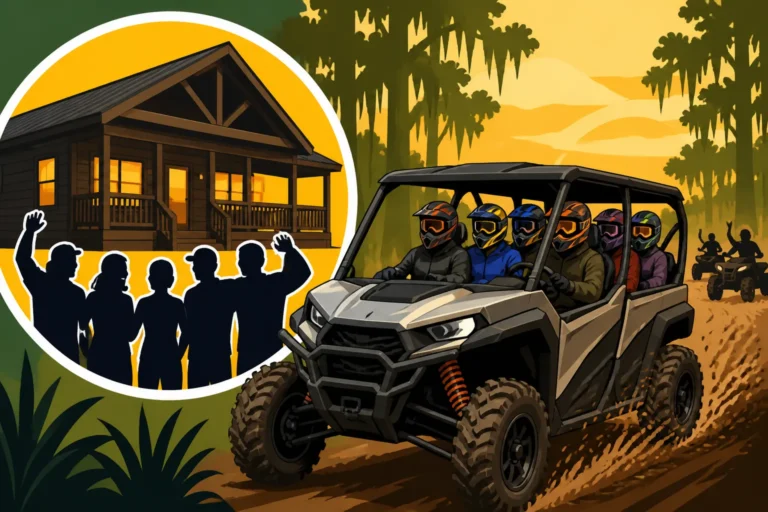
Muddy Bottoms’ Cabins in Louisiana
A Louisiana mud weekend can turn uncomfortable fast when your group has nowhere dry to sleep, change, or regroup after a long ride. A cabin at Muddy Bottoms may solve that lodging headache, but the best fit depends on your group size, event dates, booking details, and what the cabin actually includes. This guide explains what to check before reserving.
What to Know About Muddy Bottoms Cabins
Cabins are a different kind of mud-weekend base
A cabin can make a riding weekend easier when you want a solid roof, a place to rest between rides, and less gear to pack than a tent usually requires. It can also be helpful for a mixed-age group: not everyone needs to spend every hour on the trails, and a comfortable place to return to can make the outing feel manageable for children, older relatives, or friends who would rather take breaks.
That comfort does not mean you should assume a cabin is a hotel room. Lodging at a riding park is part of an outdoor event setting, so details that matter in a conventional vacation rental may be different here. Before you book, confirm sleeping arrangements, what bedding is supplied, whether there is a private or shared bathroom, and what kitchen or food-preparation facilities are available. Ask about check-in and departure procedures, too, especially if your group expects to arrive late after towing from another part of Louisiana.
Confirm the cabin’s capacity and setup
Muddy Bottoms has a cabin described as sleeping twelve, but a headline capacity does not tell you how comfortable that arrangement will be for your particular group. Ask how the sleeping spaces are laid out, whether the capacity counts children, and whether everyone needs to bring a sleeping bag, pillow, or other bedding. A group of twelve adults may have different expectations from a family group with several young children.
Think through the practical routine, not just the number of beds. How many people will need to shower or get ready at the same time? Is there enough room to store riding clothes, helmets, and bags without blocking the walking space? If some people will turn in early while others stay up, ask whether the sleeping area is separated from the common area. For a larger party, [The Muddy Bottoms Cabin That Sleeps Twelve] is a useful related read, but confirm the current layout and occupancy rules directly before planning around that capacity.
Planning Dates and Making a Reservation
Match your stay to the park’s event schedule
Do not plan a cabin stay around an assumption that the park operates like a daily campground. Muddy Bottoms is associated with event weekends, so the dates that work for your group need to line up with the park’s calendar and the lodging calendar. Check whether the specific event you want to attend is scheduled, whether the cabin is open for that event, and whether the reservation covers the same nights your group intends to stay.
It is worth checking dates before you ask friends to commit, arrange time off, or tow a machine across the state. A cabin can be unavailable even when a park event is happening, and an open cabin date does not necessarily mean riding access is included. Confirm the relationship between lodging, event admission, and machine access rather than treating them as one package. [Muddy Bottoms' Event Calendar in Louisiana] and [Why Muddy Bottoms Opens Only on Event Weekends] can help frame the timing questions to ask.
Reserve early and get the terms in writing
Cabins are limited compared with open space for general camping, so a group that wants a particular weekend should ask about availability as early as practical. Event dates can draw riders who are making the same plans, and larger groups need more time to coordinate who is staying, who is bringing a machine, and how everyone will get there. If you are considering an event weekend, ask whether the booking process or payment schedule differs from a quieter date.
Before paying, get the key terms in a message or reservation confirmation. Confirm the exact arrival and departure dates, maximum occupancy, cancellation rules, what is included, and whether any deposit or damage-related conditions apply. Ask how to handle changes if someone in the group can no longer attend. Keep a copy accessible to the person leading the trip, rather than relying on one person’s memory of a phone conversation. For an event-focused stay, [Booking a Cabin Months Ahead] is a useful reminder to treat lodging as an early planning item, not a last-minute detail.
Comparing Lodging Options for a Riding Weekend
Decide whether a cabin fits your group better than an RV or tent
A cabin is not automatically the right option for every Muddy Bottoms visit. An RV may suit a group that already owns a self-contained rig and wants to keep meals, sleeping, and gear in one place. Tent camping may appeal to riders who want a simpler setup and are comfortable with basic outdoor conditions. A cabin can be appealing when your priorities include a more solid sleeping space and less exposure to rain or humidity, but you still need to verify its facilities and rules.
Use the table as a planning aid, not a promise about what is available on a particular date. The precise amenities, booking terms, and access arrangements can change, so ask the park about the option you are considering before making travel plans.
| Lodging option | May suit you if | Confirm before booking |
|---|---|---|
| Cabin | Your group wants a roofed sleeping space and a place to regroup between rides | Capacity, sleeping layout, bedding, bathroom access, kitchen facilities, and event access |
| RV site | You have a suitable RV and prefer to bring your own sleeping and food setup | Site type, hookups, vehicle limits, reservation dates, and any event-specific conditions |
| Tent camping | Your group is comfortable bringing its own shelter and outdoor sleeping gear | Where camping is permitted, what facilities are available, and whether the dates are open |
If your group is weighing a cabin against an RV arrangement, [Muddy Bottoms' RV Sites in Louisiana] may help you prepare a more focused comparison. Ask whether the cabin location makes it easy to reach the parts of the park your group plans to use, and whether any walking or shuttle arrangements are needed. A lodging option that looks comfortable on paper can be inconvenient if it does not work with your group’s actual schedule and gear.
Consider who is coming, not just how many
A group’s needs can vary even when everyone is there for the same ride. A family with young children may value a quiet place to take a break, while a group of experienced riders may care more about a simple staging routine for machines and equipment. Someone with mobility concerns may need to ask about the route between the cabin, parking, and common facilities. Friends who are not riding may want to know what they can do during the day and whether they can remain at the lodging area.
Talk through those needs before you book. Ask who is bringing towels, toiletries, food, chargers, and sleeping items; decide who will share a room or sleeping area; and make a plan for storing muddy gear separately from clean clothes. If a child or non-rider will be staying with the group, review the park’s expectations and any event-specific access rules. [Muddy Bottoms' Bathhouse, Pro Shop and Amenities] can help identify facility questions to raise, but do not assume a listed park amenity is part of the cabin itself.
Getting Ready for the Stay
Pack for mud, humidity, and downtime
Louisiana riding conditions can leave clothes and equipment wet or dirty even when the weather starts out pleasant. Pack more than one set of riding clothes, and put clean sleepwear in a bag that stays closed until you are ready to use it. Separate muddy boots and gloves from bedding and food. Heavy-duty bags or plastic tubs can make it easier to keep a cabin’s sleeping area from becoming a drying rack for everything you wore on the trail.
Bring the items the reservation does not explicitly promise. That may include towels, toiletries, chargers, a flashlight, basic first-aid supplies, and any bedding the park says guests should provide. If you plan to prepare food, confirm whether you can do so in or near the cabin and pack accordingly. Do not count on being able to store a large quantity of perishables unless you have confirmed refrigeration. For more detailed packing ideas, [Packing for Humid Heat] and [Washing a Machine After a Mud Weekend] cover two common Louisiana ride-planning headaches.
Make a plan for food, fuel, and equipment
A cabin stay is easier when you decide in advance how the group will handle meals. Ask whether food preparation is allowed, what equipment is supplied, and where guests can eat. If the details are uncertain, plan simple meals that do not depend on a full kitchen. Bring drinking water and snacks for the day, and agree on who is responsible for shopping so you do not end up with six people arriving with the same items and nobody bringing the basics.
Also think about machine care and transport. Bring the tools and routine supplies your group normally needs, but do not assume that washing equipment, refueling, or storing fuel is allowed beside the cabin. Confirm where machines and trailers should be parked and whether there are designated areas for cleaning or staging. If your route through rural northwest Louisiana is unfamiliar, an app such as onX Offroad can be one navigation aid for reviewing your planned route and saving useful map information in advance. It does not replace posted directions, park instructions, or permission to ride on private land.
Making the Trip Smooth and Safe
Keep navigation and park access separate
Getting to Muddy Bottoms and riding within the park are two different planning tasks. For the drive, check your route, towing access, and arrival instructions before leaving. Rural roads may have turns, narrow sections, or limited places to stop safely with a trailer, so do not wait until the last mile to look for the entrance. Follow the park’s directions and signs rather than attempting shortcuts across unfamiliar land.
For riding, use the park’s own rules and event information as your authority. A mapping app can help you orient yourself, but it cannot confirm that a route is open, permitted, or suitable for your machine. onX Offroad may be useful for reviewing a broader route or keeping track of waypoints, but treat it as a planning tool rather than permission to ride. [Louisiana Private Park Waivers and Rules] and [Riding Etiquette at a Mud Event] are helpful reads before you unload.
Set expectations for the whole group
A smooth weekend often comes down to agreeing on a few small things before everyone arrives. Decide who is driving each vehicle, who is carrying the reservation details, and where the group will meet if people arrive separately. Make sure every rider knows what the park requires for admission and machine use, and ask whether waivers must be completed before arrival. If members of the party have different experience levels, plan breaks and riding groups accordingly rather than expecting everyone to follow the same pace.
Set basic cabin expectations, too. Agree on quiet hours, food storage, cleanup, and how muddy gear will be handled. Keep walkways clear of helmets, boots, and charging cables, and check the cabin before departure for belongings and trash. If your group uses onX Offroad or another mapping app, share the planned route or meeting location beforehand, but establish a simple backup plan in case phones lose service. Cell coverage can be inconsistent in wooded areas, so do not make a phone-only meeting plan your sole option.
Questions to Ask Before You Book
Confirm the details that affect comfort and cost
The most useful booking questions are specific. Ask for the maximum permitted occupancy, the sleeping arrangement, and what guests need to bring. Confirm whether a bathroom and shower are private or shared, whether towels and bedding are supplied, and whether cooking or food storage is available. If the cabin has house rules about pets, smoking, noise, or visitors, ask for those in advance so no one is surprised after arrival.
Ask separately about the complete cost and what it includes. Lodging, event admission, riding access, parking, and optional amenities may not be bundled together. Rather than relying on an old post or a friend’s previous trip, request the current terms for your dates directly from the park. If your booking includes a deposit, ask what conditions affect its return. Keep the response with your reservation so the whole group has the same expectations.
Confirm arrival, parking, and departure procedures
Find out when you can check in, where to report, and what to do if your group arrives outside normal check-in hours. Ask where to park the tow vehicle, trailer, and machines, and whether those spaces are included with the cabin. If you are bringing multiple vehicles, describe your setup when you call; a plan that works for one pickup and one trailer may not work for a larger convoy.
Before the weekend, write down the park’s contact instructions and share them with the trip organizer. On arrival, follow the designated route and staff directions, then inspect the accommodation and report any issue promptly. Before leaving, follow the stated checkout process, pack out personal belongings, and leave the space in the condition the park requests. [Planning an OMV Counter Visit So It Takes One Trip] is about a different kind of Louisiana errand, but the same practical principle applies here: getting the details together before you arrive can save avoidable delays and frustration.
Disclaimer
This article is for general informational purposes only and does not constitute professional advice. Laws, prices and regulations vary by location and change over time. Consult a qualified professional for guidance on your specific situation.