Louisiana WMA Machine Size Limits
A machine that fits comfortably on a private trail may still be turned away at a Louisiana Wildlife Management Area gate. Weight, width, tire size, lug height, and tire pressure can all affect access, and guessing from a model name is risky. This guide explains the common WMA size limits, how to measure your ATV or UTV, and what to check before loading up.
Louisiana WMA machine size limits at a glance
Common limits for ATVs and UTVs
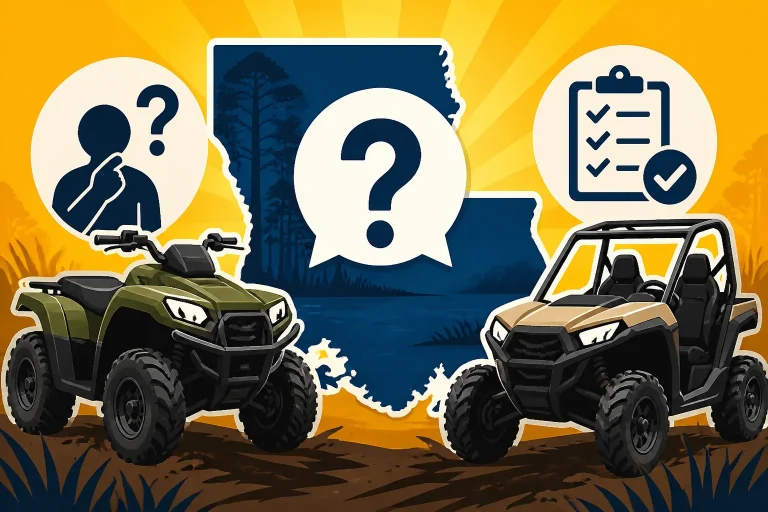
Louisiana WMA access rules can impose limits on both the machine and its tires. The commonly listed limits distinguish between quads and UTVs: an ATV must weigh under 750 pounds, while a UTV must weigh under 1,900 pounds and be no wider than 68 inches. Tire rules commonly include a maximum size of 26 by 12 inches, a maximum lug height of 1 inch, and a maximum pressure of 12 pounds per square inch.
Treat those figures as a screening checklist, not permission to ride anywhere. A machine can meet the size limits and still be barred from a particular area because the trail is closed, the machine type is not allowed, or another site-specific rule applies. Rules and access can vary by WMA, trail, season, and posted conditions.
| What to check | Common WMA limit | What to verify before you go |
|---|---|---|
| ATV weight | Under 750 pounds | How the applicable rule defines and measures machine weight |
| UTV weight | Under 1,900 pounds | Whether the specific area allows UTVs and how weight is measured |
| UTV width | No more than 68 inches | Whether width is measured at the widest point, including accessories |
| Tire size | No more than 26 by 12 inches | The actual tire size and whether all mounted tires comply |
| Tire lug height | No more than 1 inch | The tread’s lug height, not just the tire’s overall diameter |
| Tire pressure | No more than 12 PSI | Pressure before entering, checked with a working gauge |
The word “under” matters. If a stated limit is a maximum, do not assume that being right at the edge will be accepted. A borderline measurement can become a frustrating argument at a gate, especially if your tires are oversized, your machine has been modified, or you cannot show how you measured it. Leave a margin when choosing equipment.
For a broader explanation of the weight requirements, read Louisiana WMA Weight Limits Explained. The companion guide Louisiana WMA Tire Rules Explained covers tire size, tread, and pressure in more detail.
A size check is not the same as trail authorization
Think of the limits as one part of a larger access check. A compliant quad does not automatically have permission to use every WMA road, and a compliant side-by-side does not automatically qualify for every trail. The area may restrict riding to marked routes, impose seasonal closures, or set conditions that are more specific than the general equipment limits.
That distinction catches people off guard. Someone may check the ATV’s weight, see that the tires are within the listed dimensions, and assume the whole trip is settled. Then they arrive to find the trail closed for the season or discover the planned route is not designated for machines. Check access rules and trail status separately from equipment measurements.
Start with the WMA’s current map, access information, and posted notices. Confirm that the area allows your vehicle type, that the intended trail is open to it, and that any permit or self-clearing requirement is understood. Louisiana WMA Designated Trails Only is useful when you need to distinguish a marked route from a tempting but unauthorized track.
How weight, width, and tire measurements work
Understanding the ATV and UTV weight limits
A manufacturer’s advertised dry weight is a useful starting point, but it may not settle whether your machine meets a WMA limit. Add-ons such as a winch, brush guard, rack extensions, storage boxes, skid plates, spare tire, or plow can change the machine’s actual weight. Even without major modifications, trim levels and accessories can make two machines with the same model name weigh differently.
Avoid deciding based only on a brochure or an online listing. Look up the exact year and trim, check the owner’s manual or manufacturer specifications, and make a list of anything added after purchase. If the machine is close to the applicable threshold, ask the land manager or WMA contact how weight is determined and what documentation they accept. Do not assume that rider weight, fuel, cargo, or attachments are handled one particular way unless the relevant rule explains it.
A scale can help resolve uncertainty, but the result is only useful if the scale and weighing method are appropriate. A bathroom scale under one wheel or a guessed figure based on a similar machine is not a dependable measurement. If you cannot establish that your ATV is under 750 pounds or your UTV is under 1,900 pounds, treat that as an unresolved compliance issue before making the drive.
Measuring UTV width and tire size
UTV width deserves a careful check because accessories can stick out beyond the body. Mirrors, wheels, fender flares, replacement arms, or other modifications may affect the widest point. A manufacturer’s listed width might not match the machine as currently equipped, so measure the actual vehicle in its riding configuration and confirm the measurement method with the WMA if the result is near 68 inches.
Use a level surface and a tape measure, checking from the outermost point on one side to the outermost point on the other. Ask a second person to help hold the tape straight if needed. A basic tape measure from a hardware store—or one found through Amazon—can be enough for a straightforward check, but the reading should be taken carefully rather than at an angle.
Tire size markings also deserve attention. A “26 by 12” tire description generally refers to the tire’s stated overall dimensions, not the wheel rim size. Check the markings on the sidewall and compare all four tires; don’t assume a machine meets the limit because the front tires do. If the sidewall is worn or the tire has been replaced, find the exact tire specifications rather than relying on memory.
Lug height and pressure need their own checks
Lug height is not the same thing as tire diameter. It refers to the height of the tread lugs, which are the raised blocks that grip the ground. Aggressive mud tires can look close to a standard tire from a distance but have tall tread that exceeds the WMA limit. For details on why this rule matters, see Why WMA Rules Cap Lug Height at 1 Inch.
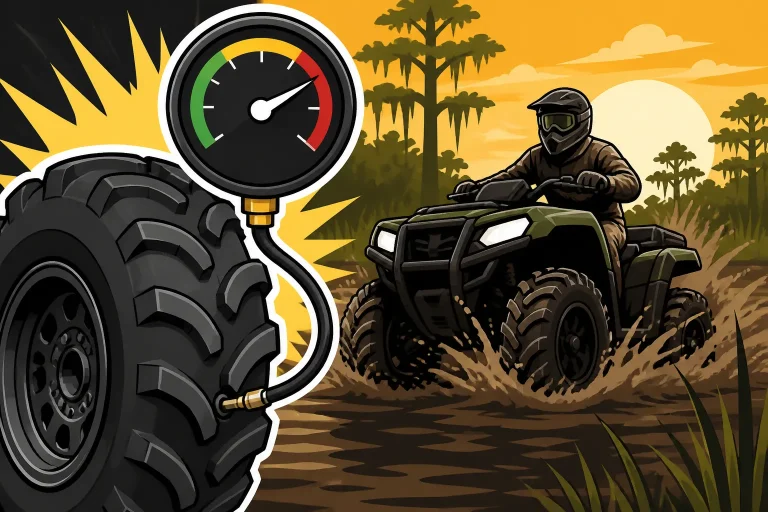
Tire pressure can also be easy to overlook. A tire set up for deep mud may be run at a pressure that is not permitted on a WMA trail. Check pressure when the tires are cool, use a reliable gauge, and do not depend on the appearance of the tire to estimate PSI. Keep the gauge with your riding gear so you can recheck pressure before unloading or entering the trail.
If you buy a compact tire-pressure gauge or measuring tool through Amazon, test it against a known reliable gauge before you depend on it for a trip. The goal is not simply to own a tool; it is to know that the tool gives a trustworthy reading. A small error can matter when you are near a stated limit.
How to check your machine before heading to a WMA
Make a complete inventory of your machine
Begin with the exact make, model, year, and trim. Write those down, then note any changes from the stock configuration. Include practical additions that are easy to forget: a front bumper, winch, roof, windshield, cargo box, wider wheels, aftermarket tires, and tools or recovery equipment that stay mounted on the machine.
For an ATV, compare the available specifications with the 750-pound limit. For a UTV, check both weight and width against the commonly listed limits. Then review tire size, lug height, and pressure as separate items. Passing one measurement does not compensate for failing another.
If you are borrowing a machine, ask the owner for its specifications and modifications instead of assuming it is standard. That conversation can feel fussy when everyone is eager to leave, but it is much easier to sort out in a driveway than at a trail entrance. Keep notes or photographs of the relevant sidewall markings and measurements for reference.
Measure in the configuration you plan to ride
Measure the machine as it will actually arrive at the WMA. If you plan to tow a storage box, spare tire, or other attachment on the machine, include it in your check. If you remove accessories before riding, make sure the vehicle stays within the rules in that final setup. A measurement taken months earlier may no longer describe the machine after upgrades or repairs.
For width, take the measurement across the widest points and record where you measured. For tires, photograph the sidewall markings and inspect each tire. For pressure, use a gauge rather than a visual estimate. Weight is often the hardest item to confirm at home; if the available specifications leave you close to the threshold, seek an acceptable way to establish it before travel.
A notebook or phone note can make the process repeatable. Record the date, tire specifications, pressure, measured width, and any reference used for the machine’s weight. The record does not replace compliance or official guidance, but it can help you catch a change—such as a new tire set—before the next ride.
Ask specific questions when the answer is unclear
A general question such as “Can I bring my side-by-side?” may not get you the information you need. Give the WMA or managing office the vehicle type, model, tire size, approximate weight, width, and any modifications. Ask whether the area permits that type of machine, whether its measurements meet the relevant limits, and whether a specific trail has additional restrictions.
Be precise about the issue that concerns you. If your UTV measures close to 68 inches, ask how width is defined and where it should be measured. If the machine’s listed weight is near 1,900 pounds, ask what the rule includes. If your tires are marked at the maximum size, ask whether the tread and pressure requirements also apply to your intended route.
Make a note of the response and the office or contact you spoke with. Rules can be easy to misremember after a busy call, and “someone said it should be fine” is not a useful plan if you reach a gate and encounter a different interpretation. When details remain uncertain, choose a different machine or riding location rather than counting on a favorable assumption.
Common reasons machines fail a size check
Oversized mud tires and aggressive tread
Oversized tires are a frequent source of trouble because riders often select them for traction without considering land-access restrictions. A tire that performs well in a deep mud pit may not be suitable for a WMA. Check the sidewall size and tread lug height rather than judging by how the tire compares with the stock set.
A second issue is mixing tire specifications. A rider might install larger rear tires while keeping stock front tires, or replace one damaged tire with a different size. Checking only one tire leaves room for an unpleasant surprise. Look at every tire and make sure the complete set complies with the size, lug-height, and pressure rules.
If your machine is built primarily for mud riding, it may be worth keeping a separate compliant tire setup for WMA access. That can be more practical than trying to make a heavily modified machine fit a trail system with different requirements. Why Tires Over 26 by 12 Are Turned Away explains the common size issue in more detail.
Weight added through upgrades
A stock machine can change substantially after accessories are installed. Winches, steel bumpers, roofs, windshields, cargo racks, and heavy-duty protection may add up. One upgrade may seem insignificant, but several can push a machine closer to a limit than the original factory figure suggests.
This is particularly important when a machine’s published weight is already close to the relevant threshold. Do not treat the model’s advertised number as a guarantee for the modified vehicle. If the configuration is near the line, ask how to check it properly and avoid relying on an estimate. When a Quad Weighs More Than 750 Pounds addresses this issue for ATVs.
Some riders also confuse the capacity of a machine with its own weight. A payload rating tells you how much cargo or passenger load the manufacturer permits; it does not establish the machine’s weight for WMA eligibility. Likewise, a trailer’s capacity has no bearing on whether the ATV or UTV itself meets the land-access rule.
Width changes that are easy to miss
Aftermarket wheels and suspension changes can alter a UTV’s overall width. The vehicle may still look close to stock, but a small increase can matter when the limit is 68 inches. Fender extensions or other parts may also be relevant if they extend beyond the tires or body.
Measure instead of guessing based on the width listed for the original model. Take the measurement in the configuration you will use on the trail and document the widest point. If a dealer or seller tells you a machine is “WMA legal,” ask what that statement is based on and check the current requirements yourself.
People shopping for a used side-by-side should be especially careful. The seller may not know which parts are aftermarket, and a modified machine can look tidy enough to pass as stock. Check wheel and tire specifications, ask about suspension changes, and measure the actual machine before you commit to a long trip.
WMA size limits are only one part of access
Confirm that the WMA allows your vehicle type
ATVs and UTVs are not always treated identically. A WMA may permit one type of machine on a route and restrict another, even when both meet their respective weight or dimension rules. Do not assume that “motorized access” means every off-road vehicle is allowed.
For quads, review Louisiana WMA Riding Rules for Quads. For side-by-sides, check Louisiana WMA Riding Rules for UTVs. Those distinctions matter when planning for a mixed group: a route that works for the ATV riders may not be suitable or open to the UTVs.
Confirm the exact area, not just the general region. A nearby public riding opportunity may have different access rules from the WMA you intend to visit. Likewise, a machine accepted at a private mud park is not automatically accepted on public WMA land. Land ownership and the rules governing that land both matter.
Check permits, trails, and seasonal restrictions
Before the trip, find out whether you need a permit or must complete a self-clearing permit process. Read [Louisiana WMA Permit Requirements] and [Louisiana Self-Clearing Permit Steps] if you need help understanding those requirements. A permit requirement and a machine-size limit solve different problems: having the required permit does not waive equipment restrictions.
Check the map and confirm that your planned route is actually open to your machine. Some WMAs limit motorized riding to specific designated trails. Do not treat an old tire track, service road, or path visible on a consumer map as proof that it is an authorized riding route.
Seasonal access is another separate question. A trail can be physically open-looking but closed under seasonal rules, wildlife-management restrictions, or posted notices. Verify the rules for the date you plan to ride, and check again before leaving home if conditions or closures may have changed.
Understand what changes when you are visiting from out of state
Visitors should not assume that an out-of-state registration, decal, permit, or riding habit automatically satisfies Louisiana WMA requirements. Reciprocity questions and land-access conditions are separate from vehicle dimensions. A machine may be permitted to travel from another state yet still need to meet Louisiana’s rules for the specific WMA.
Bring the documents and permits that apply to your trip, and check whether the machine’s home-state paperwork is recognized for the purpose you need. Do not confuse a road registration with authorization to ride a WMA trail. Public-road privileges and off-road land access are different issues.
If you are crossing in from Texas, Mississippi, or Arkansas, ask the WMA or relevant managing office about visitor requirements before towing. Also confirm that your ATV or UTV meets the Louisiana size limits, even if it is legal for a riding area in your home state. Familiar rules from another jurisdiction may not carry over.
Planning a smooth ride with a compliant machine
Build a pre-trip checklist
A short checklist reduces the chance of discovering a problem after you have already reached the trailhead. Include the machine’s weight documentation, UTV width if applicable, tire size, lug height, and tire pressure. Then check the area-specific access rules, trail status, permit requirements, and any seasonal restrictions.
Keep essential items together so they are easy to find. A small tire gauge, a tape measure, a phone note with vehicle specifications, and the required permit information can help answer routine questions. If you shop for a gauge or measuring tape through Amazon, choose tools that are easy to read and check their accuracy before relying on them.
Do a second check after modifications or tire changes. A vehicle that complied last season may not comply after a new wheel setup, winch, bumper, or suspension change. Treat equipment changes as a reason to repeat the entire checklist, not just the item that changed.
Avoid last-minute assumptions at the gate
If you are uncertain about a measurement, do not wait until the gate to ask. You may have limited cell service, no convenient way to change the setup, and a group that has already spent time towing to the area. Sorting out the question beforehand gives you time to choose another machine or another destination.
For a group ride, share the limits with everyone before departure. Ask each rider to confirm their own machine rather than assuming the organizer’s ATV is representative. A single oversized UTV or noncompliant tire setup can disrupt the plan for the entire group.
Have a backup riding plan when possible. If a closure or equipment restriction makes the selected WMA unsuitable, a permitted private park or another authorized area may be an option. Check that location’s rules separately; permission to ride there does not transfer to WMA land.
Keep your setup sensible for the trail
Compliance is the first step, but a machine that barely meets a limit may still be poorly suited to the route. Consider ground clearance, turning room, trail width, weather, and the experience level of everyone in the group. A large side-by-side on a narrow route can create practical problems even when it meets the formal width requirement.
Protect tires and suspension by avoiding unnecessary modifications for a trail that does not need them. If you ride both deep mud and public land, separate setups may help you avoid trying to use one aggressive configuration everywhere. Make sure changes are reversible and that any replacement parts remain within the rules for the location where you plan to ride.
Finally, follow posted directions and respect closures. WMA rules are not just obstacles to a ride; they help manage access to public land and protect the places people come to enjoy. Knowing the limits before unloading makes the visit calmer, safer, and less likely to end with a turned-away machine.
Disclaimer
This article is for general informational purposes only and does not constitute professional advice. Laws, prices and regulations vary by location and change over time. Consult a qualified professional for guidance on your specific situation.