Louisiana Private Park Alcohol Rules
Alcohol rules at Louisiana ATV and UTV parks can differ from one property to another, and an event weekend may bring extra restrictions. The safest approach is to check the park’s current policy before you pack, keep alcohol separate from riding, and never assume that private land makes impaired operation acceptable.
Start With the Park’s Own Alcohol Policy
There is no single alcohol policy that applies to every private riding park in Louisiana. Each operator can set rules for its property, and the rules may vary between ordinary riding days, special events, and camping areas. A park’s website, ticket terms, waiver, reservation details, posted signs, or staff can tell you what applies to your visit.
Read the current policy rather than relying on what a friend remembers from a previous trip. Operators can change rules, and an event promoter may add conditions on top of the park’s usual requirements. If the policy is unclear, contact the park before you leave home.
Questions to ask before you arrive
Get specific answers to the questions that could affect your plans:
- Is alcohol allowed anywhere on the property, or only in designated areas?
- Can guests bring their own alcohol, or must they buy it at the park?
- Are glass containers prohibited?
- Do different rules apply to campsites, cabins, staging areas, or riding areas?
- Are there added restrictions during concerts, festivals, or other event weekends?
- Can a guest who has been drinking remain on the property if they are not riding?
- What happens if someone breaks the alcohol policy?
- Are there rules for passengers or other members of a riding group who have been drinking?
A park might prohibit alcohol entirely, allow it only in certain places, restrict outside beverages, or set conditions for particular events. Those are examples of possible operator policies, not statewide rules. Do not assume that a rule at one mud park applies at another.
| Situation | What to confirm with the park | Safer plan |
|---|---|---|
| Bringing your own drinks | Whether outside alcohol is allowed and whether containers are restricted | Follow the stated limit and use permitted containers |
| Drinking at camp | Whether alcohol is allowed at the campsite or lodging area | Keep vehicles parked and keys with a sober person |
| Riding after drinking | Whether riding areas prohibit alcohol use or impaired riders | Do not ride after drinking |
| Special event weekend | Whether event-specific terms or restrictions apply | Recheck the event information before traveling |
| Group trip | Whether each guest must follow the same policy and waiver | Share the rules with everyone before arrival |
For a broader look at the conditions a park may set, see Louisiana Private Park Waivers and Rules. Alcohol requirements may appear in the same waiver or visitor terms as rules about riding, camping, passengers, and conduct.
Check policies for the whole group
The person who booked the visit should make sure the rules reach everyone in the group. A guest may not see the reservation email or waiver, and a quick conversation at the trailhead is a poor time to discover that outside alcohol is not permitted.
For a group trip, agree ahead of time on who will ride, who will handle driving, and where alcohol can be stored or consumed if the park allows it. A designated sober driver is useful for the trip home, but it is not permission for that person to operate a machine after someone else has been drinking.
If your party includes children or teens, keep alcohol inaccessible to them and follow all age-related laws. Park rules cannot authorize underage drinking or unlawful furnishing of alcohol. Check the relevant rules rather than treating a private-property setting as an exception.
Drinking and Operating an ATV or UTV
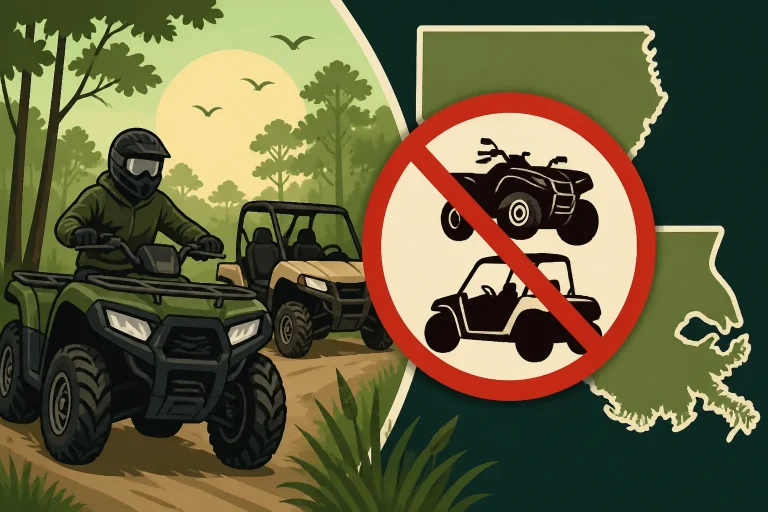
The clearest safety rule is also the simplest: do not operate an ATV or UTV after drinking. Alcohol can affect coordination, judgment, balance, and reaction time. Those effects matter on muddy ground, around water, on uneven trails, and wherever riders share space with other machines or pedestrians.
A private park is not automatically a place where impaired riding is legally or contractually allowed. State law, the park’s rules, and the circumstances of an incident can all matter. Do not assume that a machine is outside impaired-driving rules just because it is off a public road or on privately owned land. For the legal issues, read Louisiana DUI Law and Off-Road Machines and confirm any question about your specific situation with a qualified professional.
A campsite is not a safe staging area for a ride
A common mistake is to treat a short trip from camp as harmless after drinking. A ride to a wash station, parking area, restroom, or another campsite still involves operating a machine. Even a short distance can put the rider or someone nearby at risk.
Make the plan before anyone starts drinking:
- Park the machines for the day before alcohol is opened.
- Choose a sober person to move vehicles if necessary.
- Keep machine keys with that person or secured away from anyone who has been drinking.
- Arrange a sober driver for the drive home.
- Do not let a guest who has been drinking take a machine “just around camp.”
A designated driver for the road trip home does not solve the on-site problem if that person has also been drinking. If the driver is not sober, do not let them drive a truck, tow vehicle, ATV, or UTV.
Do not rely on a machine’s size or speed
A side-by-side may feel more stable than a quad, and a familiar trail may seem easy after a few drinks. Neither makes impaired operation safe. Passengers can be injured too, and a rollover or collision may affect people who were not drinking.
Park policies may also prohibit intoxicated people from riding or may require staff to stop unsafe activity. The details depend on the operator’s rules and the situation. Review Louisiana Private Park Waivers and Rules before accepting the waiver, and ask the park how it handles a guest who is visibly impaired.
If an incident happens, do not move an injured person unless there is an immediate danger that makes moving them necessary. Get help from park staff or emergency services, and follow their instructions. Avoid arguing about fault or continuing to ride while the situation is being handled.
Alcohol at Campsites and Events
A park may have separate rules for riding areas, campsites, cabins, and event spaces. That separation matters: permission to drink in a camping area, if the park allows it, does not mean alcohol is allowed on the trails or that a guest may ride after drinking.
Before booking, check both the alcohol policy and the park’s camping terms. [Louisiana Private Park Camping Rules] can help you think through the other conditions that may apply to an overnight stay, such as campground conduct and site requirements.
Event weekends may have added conditions
A private park can operate differently during a major event than during a quiet riding weekend. Tickets, wristbands, event notices, and venue rules may set conditions on what visitors can bring or where they can consume it. A rule from a past event may not carry over to the next one.
Check the information for the exact date you plan to attend. If alcohol is a central part of your group’s plans, ask the operator whether it is permitted and what areas are covered. Do not assume a concert or festival has the same rules as the surrounding campground.
Also check arrangements for the ride home. If a guest is impaired, they should not drive a car or tow vehicle, even if they are finished riding. Arrange a sober driver, an appropriate place to stay, or another safe way to get home before drinking begins.
Keep alcohol away from riding and equipment
If the park permits alcohol in a designated area, keep it there. Avoid carrying drinks on a machine or leaving containers where they can spill, break, or become trail debris. Follow any restrictions on glass, cans, coolers, or outside beverages.
Glass can be especially troublesome around tires, campsites, and walking areas, even when the park does not expressly prohibit it. Use only containers the operator allows, dispose of them properly, and do not leave trash on trails or in shared areas.
Do not combine drinking with other choices that reduce alertness, such as riding late, pushing through heat, or taking a difficult route without enough rest. If someone in the group is tired or unwell, that is a reason to stop riding, not to rely on another rider to watch them.
A Practical Plan Before You Go
A little preparation can prevent a policy dispute or an unsafe ride. Use this checklist for a day trip or overnight visit.
- Find the current rules. Check the park’s own visitor information, ticket terms, and event details. Do not rely only on social media comments or an old screenshot.
- Ask about unclear details. Confirm whether outside alcohol is allowed, where drinking is permitted, and whether the rules change during events.
- Tell the whole group. Share the policy and agree that no one will ride after drinking.
- Set a stopping point for riding. Park the machines before alcohol is served, rather than deciding later whether someone feels capable of riding.
- Keep keys controlled. Have a sober adult manage keys if guests will be drinking.
- Plan the drive home. Identify a sober driver or arrange another safe option before the visit.
- Follow staff directions. If staff say an activity or area is off-limits, stop and clarify the rule rather than testing it.
If the park’s alcohol policy conflicts with what your group wants to do, choose a different plan or a different venue. Do not try to work around the rule by moving drinks to a vehicle or campsite if the operator has prohibited them. A visit can be enjoyable without mixing alcohol and riding.
For other park-specific conduct questions, [Louisiana Private Park Quiet Hours] and Louisiana Private Park Age Minimums may help you identify separate rules worth checking before you arrive. Those policies are distinct from alcohol rules, so confirm each one independently. If you are drinking only at home or on your own land rather than at a park, the safety and legal questions still matter; Riding Under the Influence on Your Own Land covers that separate situation.
Disclaimer
This article is for general informational purposes only and does not constitute professional advice. Laws, prices and regulations vary by location and change over time. Consult a qualified professional for guidance on your specific situation.