Louisiana Private Park Pet Rules
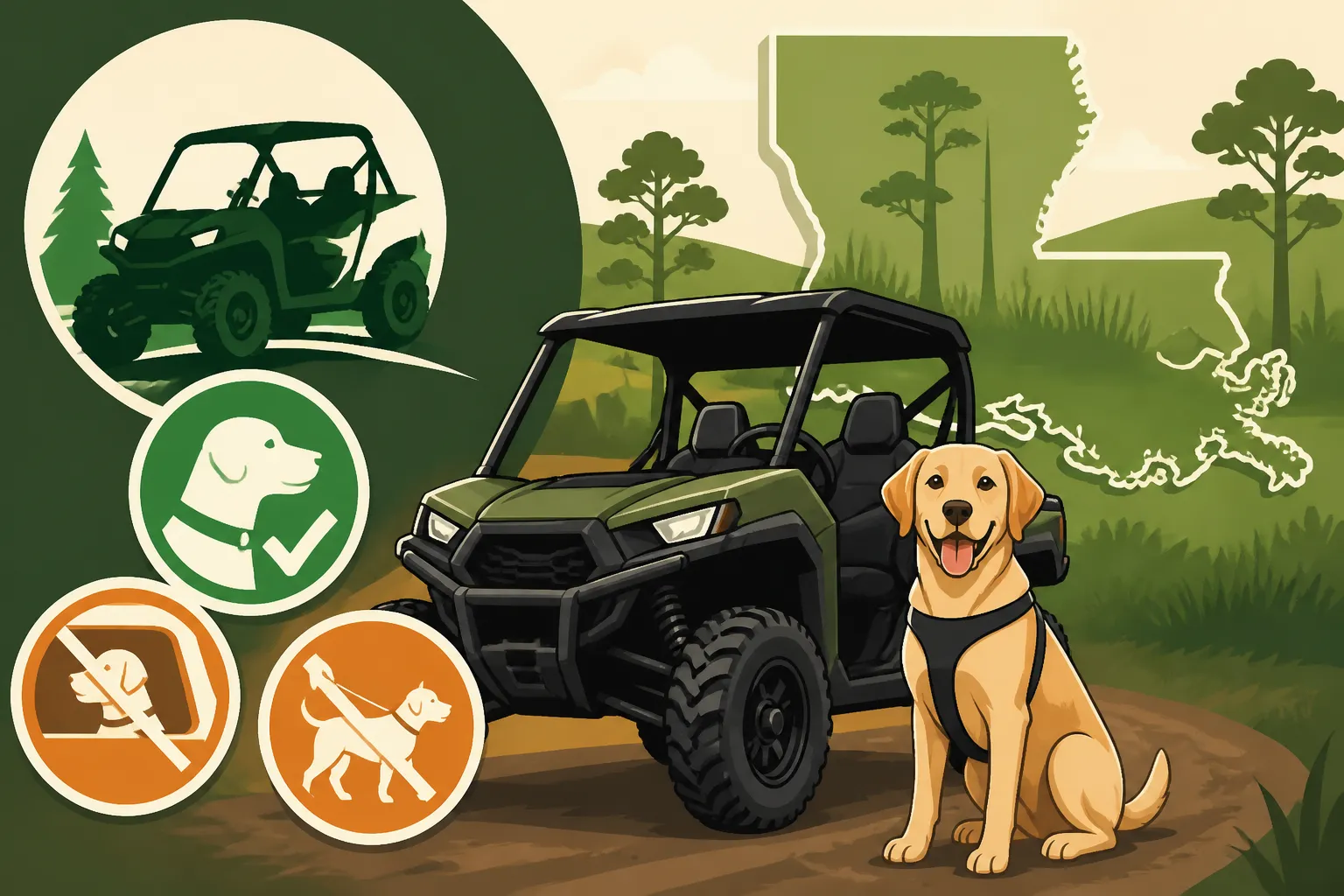
A dog can be welcome at a Louisiana ATV park and still be restricted from trails, mud holes, event areas, or campground amenities. Rules differ by property and may change for busy weekends, so do not assume that “pets allowed” means your dog can go everywhere. Check the park’s current policy before you tow, then plan for heat, noise, crowds, and safe restraint.
Check the park’s pet policy before you leave
Private riding areas set their own rules for pets. One park may allow leashed dogs in campsites but not on trails; another may restrict pets during particular events or in certain facilities. A social media post or an old trip report may not reflect the rules for your planned visit, so confirm directly with the park.
Ask specific questions rather than simply whether dogs are allowed. Clarify whether the policy covers the entire property or only designated areas, and whether it applies to the riding zones, campground, cabins, parking areas, and event grounds. If you are staying overnight, ask whether the answer changes after hours or during a special event.
Before you call or message, have these details ready:
- Your visit dates and whether you are attending an event
- Whether your dog will stay at your campsite or accompany you around the property
- Your dog’s size and whether it will be leashed or secured in an enclosure
- Whether you have a reservation, cabin, or RV site
- Any questions about service animals or assistance animals
Get the answer from the park itself, especially if it affects your booking. If a rule is unclear, ask for an explanation in writing or check the park’s official rules page. Also confirm whether any pet fee, deposit, or other condition applies; costs and terms can change, so check the provider for current details.
| Question to ask | Why it matters |
|---|---|
| Are dogs allowed on the date of my visit? | Some policies vary by event, season, or crowd level. |
| Where are pets allowed? | Permission for a campsite may not include trails or event areas. |
| Is a leash required, and are there leash-length limits? | A general “leashed” rule may still have specific conditions. |
| Can a dog stay in an RV, cabin, or tent while I ride? | Some parks have accommodation rules or unattended-pet restrictions. |
| Are pets allowed around food, showers, or other shared facilities? | Shared areas may have separate restrictions. |
| What happens if a dog becomes disruptive or aggressive? | Find out how staff handle complaints or safety concerns. |
| Are there rules for service animals? | Ask how the park handles access and any required arrangements. |
It helps to read the park’s broader policies at the same time. Pet restrictions may be included with admission conditions, campground requirements, or waiver language. For more on how those policies fit together, see Louisiana Private Park Waivers and Rules and [Louisiana Private Park Camping Rules].
Do not treat a friend’s experience as proof that a rule still applies. A park might have permitted dogs at a quiet campground visit but restricted them during a crowded mud event. If the policy is central to your plans, confirm it close to your visit and keep a copy of the answer or current rules with your booking information.
Keep your dog out of riding hazards
A private park is not a quiet neighborhood park. Machines may move quickly, engines can be loud, and riders may have limited sightlines around bends, mud holes, and parked trailers. A dog that is calm at home can still startle, bolt, or chase when surrounded by unfamiliar sounds and movement.
The safest plan is to keep your dog in an area the park explicitly allows and away from active riding. Do not let a dog roam between campsites, approach machines, or run alongside a moving ATV or UTV. Even a friendly dog can be injured by a tire, struck by a rider who cannot stop in time, or separated from you in a noisy crowd.
A leash is useful, but it does not make every area safe. Keep the leash short enough to prevent your dog from reaching a trail or vehicle lane, and stay close enough to control it. Avoid tying a dog where it can become tangled, reach a hot exhaust, or be exposed to passing traffic. If you use a crate, kennel, or tie-out at a campsite, follow park rules and make sure the setup is secure, shaded, and attended as required.
If you plan to ride for several hours, decide in advance where your dog will be and who will check on it. A tent or vehicle can heat up quickly in Louisiana conditions, even when the weather feels manageable outside. Never assume that leaving a window partly open makes an enclosed space safe. If the park does not provide a suitable supervised place for your dog, consider leaving it at home with a trusted caregiver rather than bringing it and hoping the situation works out.
Noise is another practical concern. Engines, generators, music, and crowds can overwhelm some dogs. A frightened dog may bark for long periods, pull free, or try to hide. If your dog is sensitive to noise, unfamiliar people, or other animals, a busy riding weekend may not be a good setting. The park may also have quiet-hour expectations for campers; see [Louisiana Private Park Quiet Hours] when planning an overnight stay.
At the trailhead, do not bring a dog into a riding area unless the park expressly allows it and you can keep the dog completely clear of moving machines. A dog riding in a side-by-side or on an ATV creates added risks, including distraction, falls, and interference with the driver. Do not assume that a lap, cargo rack, or open passenger area is a safe place for a pet. Follow the machine manufacturer’s passenger guidance as well as the park’s rules.
If your dog gets loose, tell park staff promptly and ask riders nearby to slow down or stop if it is safe to do so. Do not chase it across an active trail or into a mud hole. A staff member may know the property layout and be able to help coordinate a safe search.
Prepare for heat, mud, and a crowded campground
Dogs need a different setup from riders. Bring enough clean drinking water and a bowl, shade, waste bags, a secure leash, and identification with a current phone number. A collar tag is useful even if your dog is microchipped, because someone who finds the dog may be able to contact you without special equipment.
Louisiana heat and humidity can make a day outdoors harder on dogs than expected. Watch for heavy panting, unusual weakness, confusion, vomiting, or trouble standing. Move the dog to shade, offer water, and seek veterinary help if you are concerned. Do not count on a park’s facilities or staff to provide pet supplies or veterinary assistance.
Mud and standing water bring their own problems. A dog may drink from water that is dirty or unsuitable, pick up debris in its paws, or come back with mud packed between its toes. Check the paws and coat after a walk, and keep a towel and basic cleanup supplies at camp. Do not let your dog drink from a mud hole, pond, or ditch just because it looks like a convenient water source.
Crowds can create conflicts even when every animal is leashed. Give other dogs space, do not let your dog approach people or pets without permission, and avoid feeding it in shared areas where food may draw other animals. If your dog reacts to machines, children, or unfamiliar dogs, create more distance rather than trying to make it “get used to” the situation in the middle of a busy event.
A practical dog kit for a riding weekend can include:
- Water, a bowl, and food in a sealed container
- A sturdy leash, collar, and visible identification
- Waste bags and cleaning towels
- Shade or a park-approved enclosure
- Any regular medication and your veterinarian’s contact details
- A recent photo of your dog in case it gets separated from you
You can pick up basic supplies from many retailers, including Amazon, but verify that any restraint or enclosure is suitable for your dog and the park’s rules. A new leash or crate is not a substitute for supervision or a safe location.
If you are camping, factor in neighbors and shared space. Keep your dog from wandering into another site, barking for extended periods, or approaching people who are eating or working around equipment. Ask before allowing greetings, and clean up immediately. These simple steps help prevent a pet visit from becoming a campground complaint. For a broader overview of what to bring and how to manage an overnight trip, see Packing for a Night of Dry Camping at Mudfest.
Make a go-or-no-go plan
A little planning makes it easier to decide whether your dog should come along. If the park permits pets only in a restricted campsite area, consider whether your dog will be comfortable staying there while you ride. If you cannot provide shade, water, supervision, and a secure space, the practical answer may be to leave the dog at home.
Use this checklist before departure:
- Confirm the current pet policy with the park for your exact dates.
- Identify the areas where pets are allowed and mark them on your plan.
- Arrange care during riding time, including regular checks and a safe place to rest.
- Pack water, food, leash, waste bags, identification, and cleanup supplies.
- Check the weather and consider whether heat, storms, or crowd noise make the trip unsuitable.
- Save the park’s contact information and know how to reach staff if your dog gets loose or injured.
If you have a service animal, contact the park before the visit to discuss access and any arrangements. Do not assume that a pet policy automatically answers questions about service-animal access, and do not assume that an assistance animal is treated the same as a household pet. The park can explain its process and any information it needs.
If the dog cannot safely remain at camp, do not bring it onto a machine or into an area where riders are moving. Arrange an alternate caregiver, shorten the riding day, or choose a different outing. The point is not to make every park trip work for every dog; it is to avoid putting an animal, riders, or other visitors in a preventable situation.
For practical advice on managing a dog at a riding property, see Bringing a Dog to a Private Mud Park. You can also review Riding Etiquette at a Mud Event for ways to share busy spaces responsibly. Other campground conditions, including alcohol policies, may be covered separately under Louisiana Private Park Alcohol Rules, so check the full set of park rules rather than relying on a pet policy alone.
Disclaimer
This article is for general informational purposes only and does not constitute professional advice. Laws, prices and regulations vary by location and change over time. Consult a qualified professional for guidance on your specific situation.