Louisiana Penalties for No Decal
Riding your ATV or UTV across Louisiana's beautiful landscapes or through its legendary mud parks is a thrill, but nothing can dampen that excitement faster than an encounter with law enforcement when your machine isn't properly marked. Many riders mistakenly believe that off-road means "no rules," only to discover that the lack of a simple decal can lead to significant headaches and financial strain. This guide will walk you through the very real penalties you could face for riding without the required Louisiana ORV decal, helping you understand the stakes and how to avoid them.
Why a Decal Isn't Just a Sticker
It's easy to look at that little sticker on your ATV or UTV and think it's a minor detail, perhaps even an unnecessary bureaucratic hurdle. But in Louisiana, that off-road vehicle (ORV) decal serves a crucial purpose, acting as your machine's official registration for designated off-road use. Ignoring this requirement isn't just a minor oversight; it's a direct violation of state law, designed to ensure accountability and fund programs that benefit riders.
The Purpose of the Louisiana ORV Decal
Think of the Louisiana ORV decal as your machine's ID card for the off-road world. It's how the state tracks and identifies machines used on public lands and certain private facilities, ensuring they meet basic requirements and contribute to the system. This decal is more than just a piece of paper; it's tangible proof that you've fulfilled your part in the state's ORV program, which often helps fund trail maintenance, safety initiatives, and law enforcement efforts related to off-road vehicles. Without it, your machine is essentially "unregistered" in the eyes of the law, even if you have a title. It signifies that your machine is legally allowed to operate where ORVs are permitted, distinguishing it from machines that might be stolen, untaxed, or simply not compliant with state regulations. Understanding [Louisiana ORV Decals and Titles Explained] can shed more light on this two-tiered system. The funds generated from these modest decal fees are reinvested into maintaining and developing the very riding areas that off-road enthusiasts enjoy. It's a system designed to be self-sustaining, but it relies on every rider's participation.
Common Misconceptions About Decals
One of the biggest frustrations riders encounter stems from misunderstanding what the decal actually covers and what it doesn't. Many assume that because their machine is titled, a decal isn't necessary, or that only "street-legal" vehicles need such identification. This couldn't be further from the truth. In Louisiana, titling an ATV or UTV establishes ownership, but the decal is what authorizes its use. Think of the title as proof you own the machine, and the decal as proof you've paid your dues to operate it in specific ways.
Another common misconception is that riding solely on private property exempts you from the decal requirement. While some very specific agricultural exemptions exist (and you'll need an affidavit to prove it), for the vast majority of private land use, if you're venturing beyond your own private, fenced-off acreage, especially if crossing public ways or visiting pay-to-play parks, the decal is often expected or required by law. Many riders also confuse the off-road decal with traditional vehicle registration, thinking it grants them permission to drive on public roads, which it absolutely does not. The decal explicitly covers off-road usage, and riding on public roads without meeting very strict, specific criteria can lead to separate, harsher penalties. The fact that [Louisiana's Yearly Off-Road Decal] is so inexpensive can sometimes lead to it being underestimated in importance.
The Immediate Repercussions of a Trooper's Stop
Picture this: you're out riding, enjoying the bayou breeze or slinging mud, and suddenly, blue lights flash behind you. Your heart sinks. You know you've been having too much fun, but then you realize the reason might be simpler, and more frustrating, than a reckless maneuver: you forgot to put your decal on, or worse, you never got one. An interaction with law enforcement for a missing decal can quickly escalate from a simple stop to a significant legal and financial burden.
The Initial Encounter: What to Expect
When a Louisiana State Trooper or local sheriff's deputy spots an ATV or UTV operating in an area where decals are required but none is visible, it's often an immediate red flag. The officer will likely pull you over, much like they would a car on a highway. They'll ask for identification, proof of ownership (like your title or [Louisiana Requires an MSO for a New Machine] or [Louisiana Requires an Assigned Title for a Used One]), and inquire about the missing decal. This initial stop isn't just a friendly reminder; it's a legal inquiry. Officers are trained to identify non-compliant machines, and a missing decal often indicates other potential issues, leading to a more thorough inspection. This can be a tense situation, and your cooperation, combined with understanding [What a Louisiana State Trooper Can Ask to See], is crucial, even if you're feeling frustrated about the situation. Staying calm and providing requested documentation promptly can help prevent further complications.
Understanding the Citation for No Decal
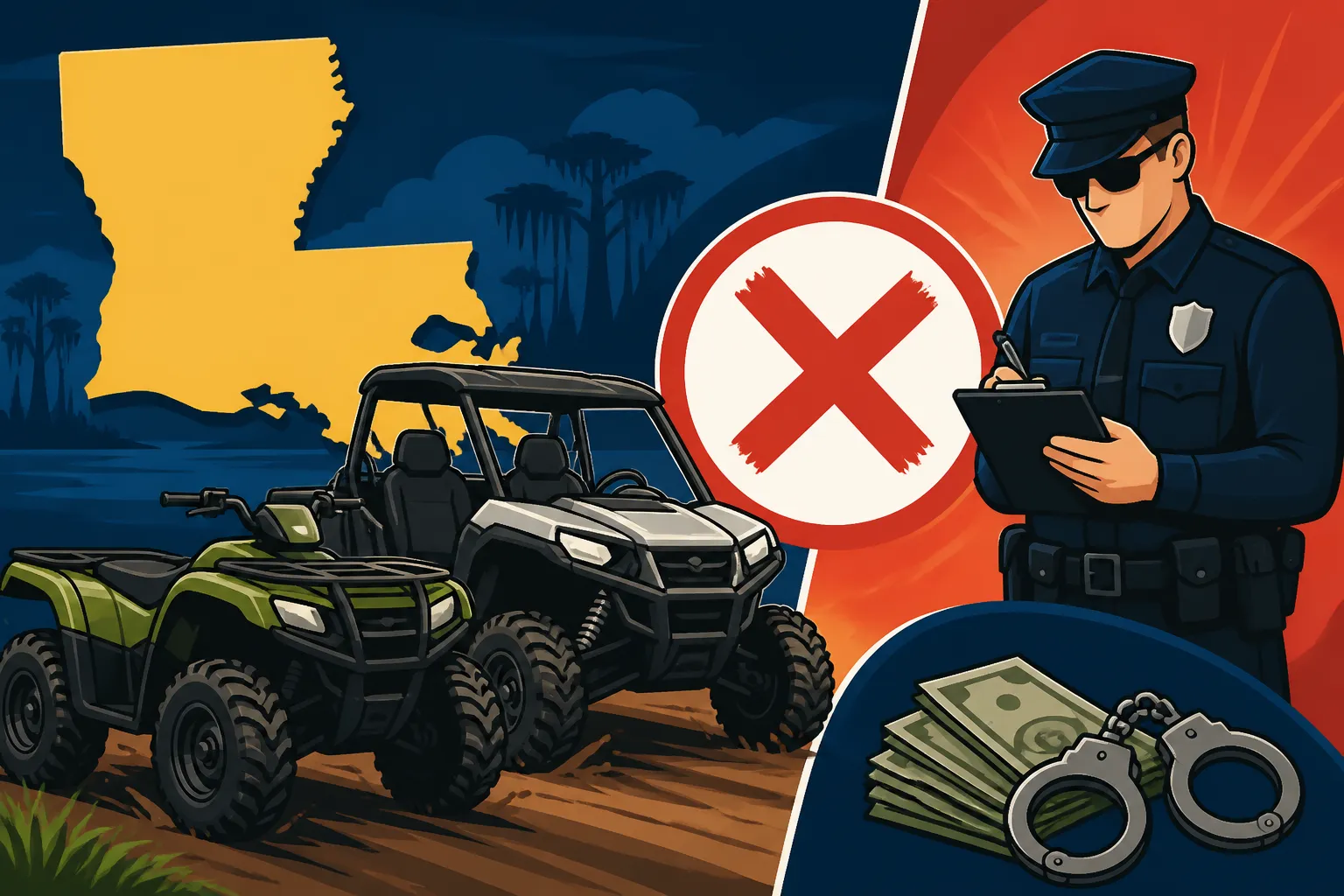
Once the officer confirms your machine lacks the proper decal, you'll likely receive a citation. This isn't just a warning; it's a ticket, much like a traffic ticket, that carries a specific fine. The exact amount can vary depending on the parish, the officer's discretion, and whether it's your first offense, but you can expect it to be a noticeable hit to your wallet. This citation will require you to either pay the fine by a certain date or appear in court to address the charge. Ignoring it is never an option, as it can lead to even more severe consequences, including warrants for your arrest or suspension of your driving privileges. Remember, the yearly [Louisiana Charges $3 a Year for a Decal] makes the cost of compliance incredibly low compared to the price of a single citation, which could easily be fifty times that amount or more.
Additional Violations That Can Stack Up
The absence of a decal often opens the door to other potential violations that an officer might discover during the stop. For instance, if you're riding on a public road or shoulder without meeting the very stringent legal requirements for road use, the lack of a decal might be the least of your worries. An officer could issue citations for [Louisiana Penalties for Illegal Road Riding], riding without a helmet (if applicable to your machine and age), operating an ATV underage, or even operating under the influence. If your machine itself isn't properly titled, or if you don't have adequate proof of ownership, that could also lead to further issues. It's a domino effect: one missing decal can lead to a cascade of legal problems, turning a fun day into a nightmare of fines, court dates, and potential impoundment. This is why it's so important to be fully compliant with all regulations, not just the decal itself.
Financial Repercussions Far Beyond the Initial Fine
Many riders mistakenly believe that a ticket for no decal is a one-and-done deal – pay the fine and move on. However, the financial consequences often extend far beyond the initial penalty. The administrative and court costs can quickly add up, and repeat offenses or more serious associated violations can even impact your insurance rates and eligibility.
Court Costs and Administrative Fees
If you choose to dispute your citation or are required to appear in court, prepare for an additional layer of costs. Beyond the base fine for not having a decal, you'll be responsible for various court costs and administrative fees. These can include court filing fees, fees for processing your case, and potentially even fees if you're ordered to complete a safety course. These hidden costs can sometimes dwarf the original ticket amount, turning a minor infraction into a significant financial burden. It's not uncommon for the combination of fines and fees to reach hundreds of dollars, making the simple act of obtaining [Louisiana's Yearly Off-Road Decal] look like an absolute bargain by comparison. Don't forget, if you fail to appear, further penalties and fees will accrue, so always address the citation head-on. Information on [Louisiana Court Costs for a Citation] can illustrate just how quickly these can accumulate, making that initial $3 decal seem like a distant, much more preferable memory.
The Ripple Effect on Insurance Premiums
While many off-road machines aren't legally required to carry insurance for purely off-road use, any citations for riding without a decal or, more seriously, for illegal road use, can have an indirect but real impact on your personal driving record. If the citation is handled in traffic court or appears on your driving record, your automobile insurance provider might see you as a higher risk, potentially leading to increased premiums for your car or truck. Even if your ATV insurance is separate, a history of citations can make it harder or more expensive to obtain coverage in the future, particularly if you ever need [Louisiana Insurance Proof on Demand] for specific uses or if you decide to finance a new machine. Insurance companies often look at a driver's overall risk profile, and a pattern of non-compliance with vehicle regulations can certainly factor into their calculations. This long-term financial impact is often overlooked by riders focused only on the immediate fine.
Potential for Increased Enforcement and Future Scrutiny
Once you've been cited for riding without a decal, you might find yourself under increased scrutiny from local law enforcement, especially if you continue to ride in the same area. Officers might remember your machine or recognize you, leading to more frequent stops and checks. This can be particularly frustrating if you've since obtained your decal but are still being singled out. Furthermore, if an area is known for repeat decal violations, law enforcement might dedicate more resources to patrolling those specific trails or roads, increasing the chances for every rider to be stopped and checked. This is why consistent compliance, including understanding [Louisiana Decal Placement on a Machine], is not just about avoiding a single ticket, but about contributing to a respectful and safe riding environment for everyone. Building a reputation as a responsible rider can save you a lot of hassle in the long run.
The Impoundment Nightmare: Losing Your Machine
Perhaps the most severe and financially draining consequence of riding without a decal, especially when combined with other violations, is the impoundment of your ATV or UTV. Having your machine seized by law enforcement is a traumatic and expensive experience that can leave you without your prized possession for an extended period, requiring significant effort and money to reclaim it.
When an ATV or UTV Gets Seized
Law enforcement officers have the authority to impound an ATV or UTV if it's being operated illegally, and a missing decal, especially if it's a repeat offense or tied to more serious infractions like illegal road use, can absolutely trigger this. Impoundment isn't just for stolen vehicles; it's a measure taken to remove non-compliant machines from circulation and ensure public safety. If your machine is seized, it will be towed away to an impound lot, often belonging to a private company contracted by the parish or state. This is a moment of pure frustration for any rider, suddenly finding themselves stranded and facing a daunting bureaucratic battle to retrieve their property. The initial shock of seeing your machine loaded onto a tow truck can be a vivid, expensive lesson in compliance. This is where topics like [Louisiana Impoundment for No Decal] become very real for riders, illustrating the serious consequences of seemingly minor violations.
The Cost of Recovery: Towing and Storage
Getting your machine back from an impound lot is rarely a quick or cheap process. First, you'll be responsible for the towing fee, which can be substantial depending on the distance towed and the size of your machine. On top of that, impound lots charge daily storage fees. These fees accrue every single day your ATV or UTV remains on their lot, and they can add up shockingly fast. A machine sitting for a week or two could easily incur hundreds, if not over a thousand, dollars in towing and storage charges. These costs are completely separate from any fines or court fees you might have to pay for the original decal violation. It's a compounding problem, where every day your machine is held hostage by the impound lot, your bill grows larger and larger. The expense quickly overshadows any perceived saving from not buying the decal in the first place.
The Process of Getting Your Machine Back
Retrieving an impounded ATV or UTV involves more than just paying a bill. You'll typically need to provide concrete proof of ownership, such as your title and a valid photo ID. If you're using an older bill of sale or if the paperwork is less than perfect, you might even consider using a service like LawDepot to draft a legally sound affidavit of ownership or an updated bill of sale to present to authorities. This step ensures all your documentation is in order, which is often a strict requirement for release. You'll also need to show proof that the original infraction has been addressed. For a no-decal violation, this usually means demonstrating that you've obtained and properly affixed the required decal to your machine, adhering to [Louisiana Decal Cycles and Their Length] specifications. Only once all fines are paid, the decal issue resolved, and ownership proven, will the impound lot release your machine. This can often involve multiple trips to the OMV, the court, and the impound lot, turning what should have been a simple $3 decal into an enormous financial and time sink.
Proactive Steps to Ensure Decal Compliance
The good news is that avoiding these penalties is incredibly straightforward. Louisiana has made the process of obtaining an ORV decal relatively simple and affordable. By understanding the requirements and taking a few proactive steps, you can ensure your machine is always compliant, letting you focus on the joy of riding rather than the worry of a roadside stop.
Steps to Obtain Your Louisiana ORV Decal
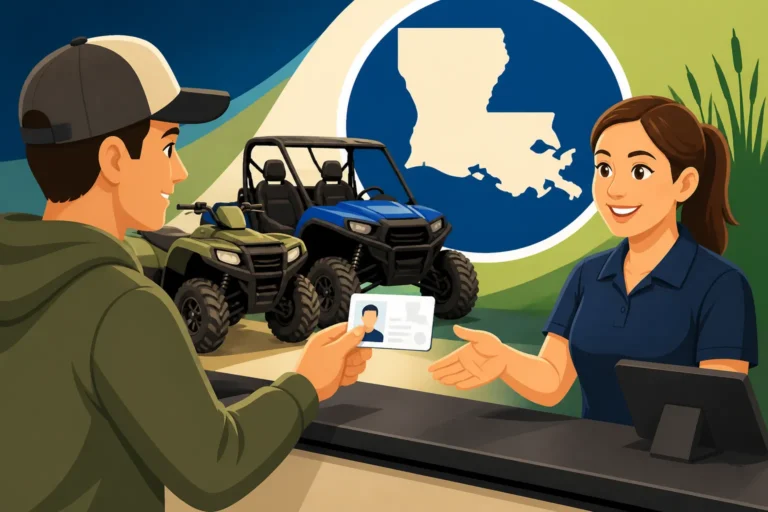
Getting your Louisiana ORV decal is a relatively simple process handled by the Office of Motor Vehicles (OMV). You'll need to provide proof of ownership for your ATV or UTV, which typically means your original manufacturer's statement of origin (MSO) for a new machine or a properly assigned title for a used one. You'll also need to prove that sales tax has been paid, and have a valid photo ID. The OMV will then process your application, and you'll pay a small fee for the decal itself, plus any handling fees. The process is designed to be completed in one visit if you have all your documents in order. Many riders find it helpful to review the OMV's checklist or visit their website before heading to the office to ensure they don't forget anything. Detailed instructions are often found in resources like [How to Get a Louisiana ORV Decal]. The ease and low cost of this process stand in stark contrast to the headaches of non-compliance.
| Requirement | Document/Action Needed | Key Considerations |
|---|---|---|
| Proof of Ownership | Original Manufacturer's Statement of Origin (MSO) for new, or Assigned Title for used. | Ensure signatures are correct and vehicle identification number (VIN) matches the machine exactly. |
| Proof of Sales Tax | Original sales tax receipt from dealer, or OMV-issued Use Tax receipt. | [Louisiana Requires Proof of Sales Tax First] before a title will issue, impacting decal eligibility. |
| Application Form | Completed OMV Vehicle Application Form (often DPSMV 1799 or similar). | Fill out completely and accurately; errors can cause delays. |
| Identification | Valid Photo ID (Driver's License, State ID). | Ensure your address matches other documents if applicable and is current. |
| Payment | Applicable fees for decal and OMV handling fee. | Be prepared for small cash fees, though many OMV offices accept cards. The decal itself is a modest amount. |
Ensuring Correct Decal Placement
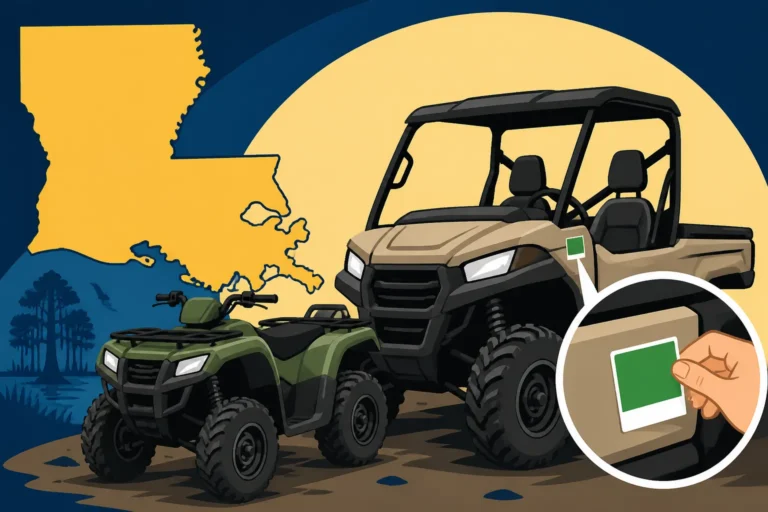
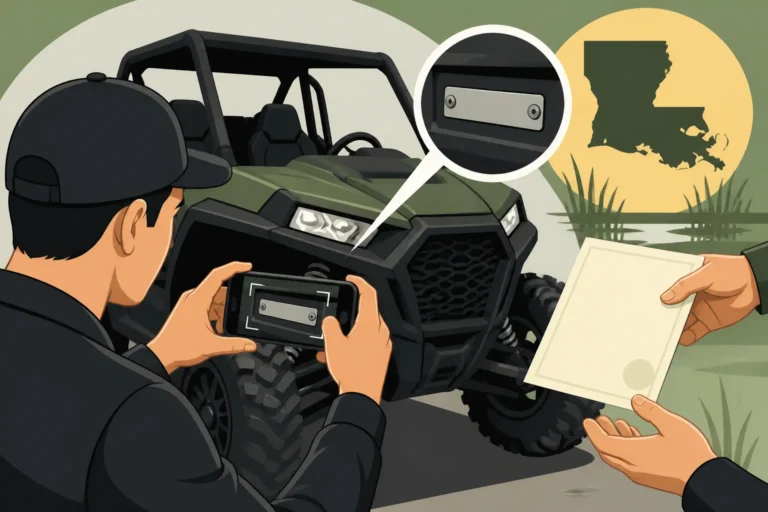
Once you receive your ORV decal, it's not enough to just toss it in your glove box or tool kit. For it to be considered valid, it must be properly affixed to your machine. Louisiana regulations typically specify that the decal should be placed in a visible location on the left side of the machine. This usually means on the front left fender, the left side of the cowl, or another easily seen, non-removable part of the frame. The goal is for law enforcement to be able to easily spot and verify the decal without having to search for it. Improper placement, or a decal that's peeling, obscured, or damaged, could still lead to questions from an officer, despite your best intentions. Always consult the instructions provided with your decal or refer to official OMV guidance on [Louisiana Decal Placement on a Machine] to ensure it meets all requirements. A properly applied decal will withstand the rigors of off-road riding better and prevent unnecessary scrutiny.
Proof of Decal: What to Carry
Even with your decal properly affixed, it's always a good idea to carry some form of proof of registration when you ride, just in case. This typically means carrying the small portion of the registration certificate that accompanies your decal. This paper document will list your machine's VIN, your name, and the decal's expiration date. While the visible decal is the primary form of identification, having the physical paper can resolve any ambiguities quickly during a stop, especially if your decal has become muddy or partially obscured during a ride. Just as you might carry your vehicle registration for your car, carrying the decal registration for your off-road machine is a smart practice. Consider keeping it in a waterproof bag or container on your machine, or carrying a digital copy on your phone if allowed, making sure it's readily accessible to avoid any unnecessary delays or complications. You might even consider having key documents, like a copy of your bill of sale or any affidavits (perhaps generated through LawDepot for proper legal language to ensure clarity and acceptance by officials), stored digitally or physically in a secure, waterproof spot on your machine to further streamline any roadside inquiries or to help retrieve an impounded machine. The more prepared you are with your documentation, the smoother any interaction with law enforcement will be.
Disclaimer
This article is for general informational purposes only and does not constitute professional advice. Laws, prices and regulations vary by location and change over time. Consult a qualified professional for guidance on your specific situation.