You Have 30 Days to Affix the Decal
It's incredibly frustrating, isn't it? You've just bought your dream ATV or UTV, you're itching to hit the trails or tackle that property work, and then you're hit with a barrage of confusing deadlines, especially that seemingly tight 30-day window to get your off-road decal affixed. Many folks in Louisiana find themselves scratching their heads, worried they'll miss a crucial step or accidentally incur a penalty before they even get to enjoy their new machine. This guide is here to untangle that knot of paperwork and deadlines, walking you through everything you need to know about the 30-day requirement for your Louisiana ORV decal so you can ride with peace of mind.
Understanding Louisiana's 30-Day Decal Deadline for ATVs and UTVs
When you bring home a new-to-you off-road machine in Louisiana, whether it's a shiny new side-by-side from a dealer or a trusty used quad from a private seller, the clock immediately starts ticking on several important requirements. One of the most critical, yet often overlooked, is the 30-day deadline to properly affix your Louisiana Off-Road Vehicle (ORV) decal. It's not just a suggestion; it's a hard and fast rule that the Louisiana Office of Motor Vehicles (OMV) takes seriously, designed to ensure that all machines operating in the state are properly accounted for.
The Initial Shock of a New Purchase
That feeling of driving home with a new ATV or UTV on the trailer is pure excitement. You're probably already mentally mapping out your first ride, picturing muddy trails or peaceful excursions through the woods. The last thing on your mind might be paperwork, but that initial euphoria often blinds us to the administrative tasks that come hot on the heels of a purchase. Many riders assume they have ample time, or that the decal is something they can just pick up "whenever." This assumption is where the trouble often begins, leading to unnecessary stress and potential issues down the road. The OMV doesn't distinguish between a machine bought on a whim and one meticulously saved for; the rules apply universally from the moment of transfer of ownership.
For many, the process of registering and titling an off-road vehicle feels daunting and unfamiliar, especially if they've only ever dealt with standard car registrations. The distinct set of rules for ATVs and UTVs can be a curveball, and the 30-day decal requirement is a prime example of a detail that often catches new owners off guard. It's not uncommon for someone to discover this deadline only after they've already had their new quad for a few weeks, suddenly realizing they're scrambling against the clock. This initial period of ownership is crucial, not just for getting acquainted with your machine, but for laying the groundwork for its legal operation in Louisiana.
Why This Deadline Matters More Than You Think
The 30-day decal deadline isn't just bureaucratic red tape; it serves several important purposes for both the state and the community of riders. Firstly, it's a mechanism to ensure timely compliance with state registration laws. The state wants to know who owns these machines and that they are ready for use, especially if they'll be ridden on designated public trails or property where a decal is legally required. By setting a firm deadline, the OMV minimizes the window in which an unregistered, untaxed, or untraceable machine might be circulating, whether legally or illegally.
Secondly, this deadline is directly tied to accountability and preventing abuse. Without a prompt decal requirement, it would be much easier for individuals to buy and sell machines without ever properly registering them, potentially avoiding sales tax or complicating the tracking of stolen property. The decal is essentially your visible proof of current registration, a quick visual cue for law enforcement that your machine is compliant. While some might view it as an inconvenience, it's a vital part of the broader system designed to regulate off-road vehicle use and maintain order on trails, in parks, and on properties where these machines are operated. Missing this window isn't just a minor oversight; it can open you up to penalties that quickly overshadow the initial excitement of your purchase. [Louisiana ORV Decals and Titles Explained] covers many of these underlying principles.
What Happens if You Don't Affix Your Decal in Time
Ignoring that 30-day window for affixing your ORV decal isn't just about feeling a little guilty; it can lead to real, tangible consequences that can put a serious damper on your riding plans and your wallet. The state of Louisiana has put these rules in place for a reason, and they back them up with specific penalties. It’s a common misconception that if you’re only riding on private land, these rules don’t apply. While the decal itself is most often a requirement for public access, the underlying registration and titling process, of which the decal is a part, is a state-level requirement for ownership regardless of where you ride.
The Frustration of Penalties and Fines
The most immediate consequence of not having your ORV decal properly affixed within 30 days is the potential for penalties and fines. If you're pulled over while riding on a designated public trail, crossing a road, or even simply transporting your machine in a way that suggests it's in use, and you don't have that current decal, a law enforcement officer can issue a citation. These fines aren't trivial; they can add up quickly, sometimes costing far more than the initial fee for the decal itself. It's a frustrating situation to be in, knowing that a simple administrative step could have saved you the headache and expense.
Imagine taking your new machine to a state park or a private mud park, only to be stopped by a ranger or staff member checking for compliance. Even if you're not on a public road, facilities that interact with state regulations often require proof of proper registration. Having to explain that you "just bought it" and "haven't gotten around to it" rarely satisfies the authorities. The penalties are designed to encourage prompt action, and ignoring the deadline essentially means you're operating outside of the state's established system, making you vulnerable to these financial hits. [Louisiana Penalties for No Decal] details the specific financial repercussions you might face.
When Your Machine Could Be Impounded
Beyond fines, there's an even more severe consequence that can arise from not adhering to the decal deadline: impoundment. While this isn't the first resort for every infraction, if an officer determines that your machine is being operated unlawfully, especially if there are other issues at play like a lack of proper title or suspicious ownership, they have the authority to impound your ATV or UTV. This means your machine could be taken away, stored at a facility, and you'd be responsible for not only the original fines but also towing and storage fees.
The process of getting an impounded machine back can be a nightmare. It typically involves proving ownership, resolving all outstanding fines and fees, and then paying the impound lot's charges, which can accumulate daily. This entire ordeal can cost hundreds, if not thousands, of dollars and consume countless hours of your time. It’s a stark reminder that these administrative details aren't just minor annoyances; they are critical components of responsible off-road vehicle ownership. Avoiding impoundment starts with understanding and respecting deadlines like the 30-day decal rule. [Louisiana Impoundment for No Decal] dives deeper into what this scenario entails.
The Step-by-Step Process to Meet Your 30-Day Obligation
Meeting the 30-day deadline for your Louisiana ORV decal might seem like a race against the clock, but with a clear plan, it's entirely manageable. The key is to be proactive and understand the sequence of actions required. It’s not just about getting the decal; it’s about having all your ducks in a row to ensure a smooth registration and titling process, which then makes the decal issuance a straightforward step.
Gathering Your Paperwork Immediately After Purchase
The moment you finalize the purchase of your ATV or UTV, consider it paperwork prep time. Whether you bought from a dealership or a private seller, you’ll need specific documents to apply for your decal and title. For a new machine from a dealer, you’ll typically receive a Manufacturer’s Statement of Origin (MSO) and an itemized dealer invoice. Make sure this invoice clearly separates the machine's price from any accessories or service charges, as this impacts how sales tax is calculated. If you bought used from a private seller, you’ll need a properly filled-out and notarized bill of sale. This document is absolutely vital, detailing the buyer, seller, purchase price, and the machine's Vehicle Identification Number (VIN). [Louisiana Notarized Bills of Sale] highlights why this is so important.
Beyond these core documents, be prepared with proof of Louisiana residency (like a driver's license or utility bill) and the exact sales tax amount paid, or be ready to pay use tax at the OMV. For private sales, you'll need to calculate and pay the sales tax directly to the OMV unless it was already collected and remitted by a Louisiana dealer. Having all these documents organized in a folder from day one saves immense stress down the line. It's also wise to make copies of everything for your records. Consider using services like LawDepot to generate a legally sound bill of sale if you’re involved in a private transaction, ensuring all the necessary fields are included for OMV acceptance.
Applying for Your Decal and Title Concurrently
The good news is that you typically apply for your ORV decal and title at the same time through the OMV. In fact, you generally cannot get one without the other because the decal signifies that the machine has been properly titled and registered. You'll need to complete a Vehicle Application form (often referred to as [Louisiana Form DPSMV 1799 Explained]). This form is where you provide all the details about your machine, yourself, and declare the purchase price for tax purposes. You'll submit this form along with your MSO (for new machines) or the assigned title/notarized bill of sale (for used machines), proof of sales tax payment, and your photo ID.
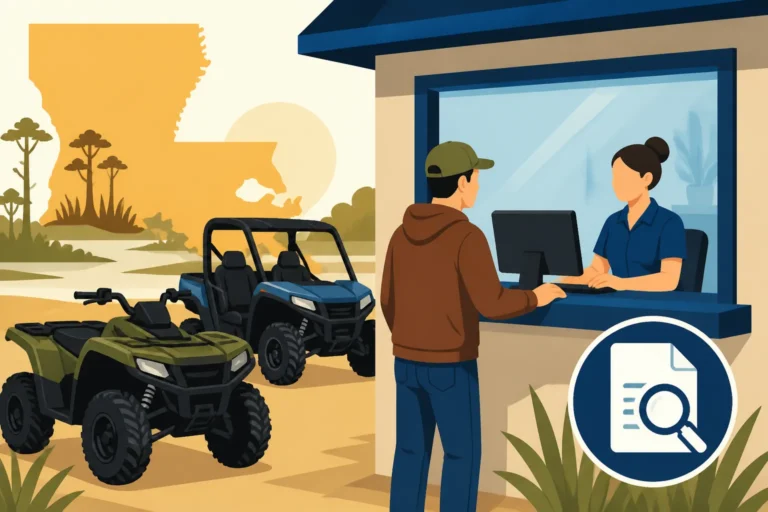
It's highly recommended to visit an OMV office in person for your initial title and decal application, especially if you have any questions or unique circumstances. This way, a clerk can review all your documents on the spot and flag any issues immediately, preventing delays. Once processed and approved, you'll receive your new title by mail, and in most cases, your ORV decal will be issued right then and there at the counter. Remember, this entire process needs to be initiated and the decal secured within that 30-day window from the date of purchase.
Proper Placement of Your New Decal
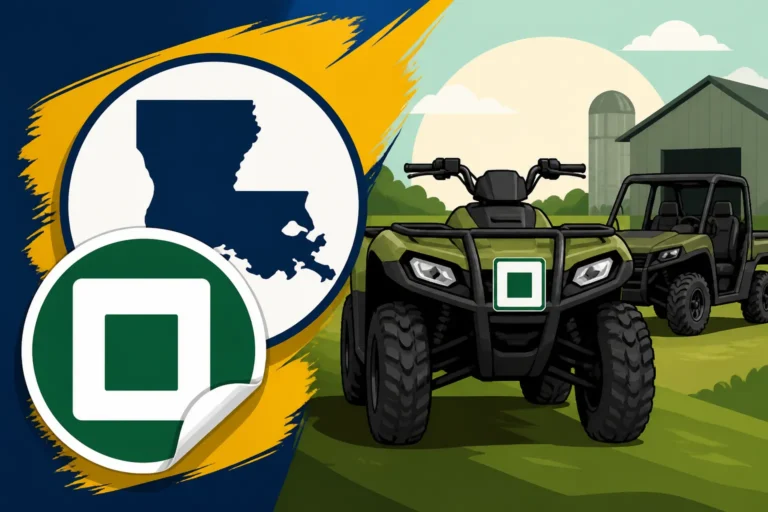
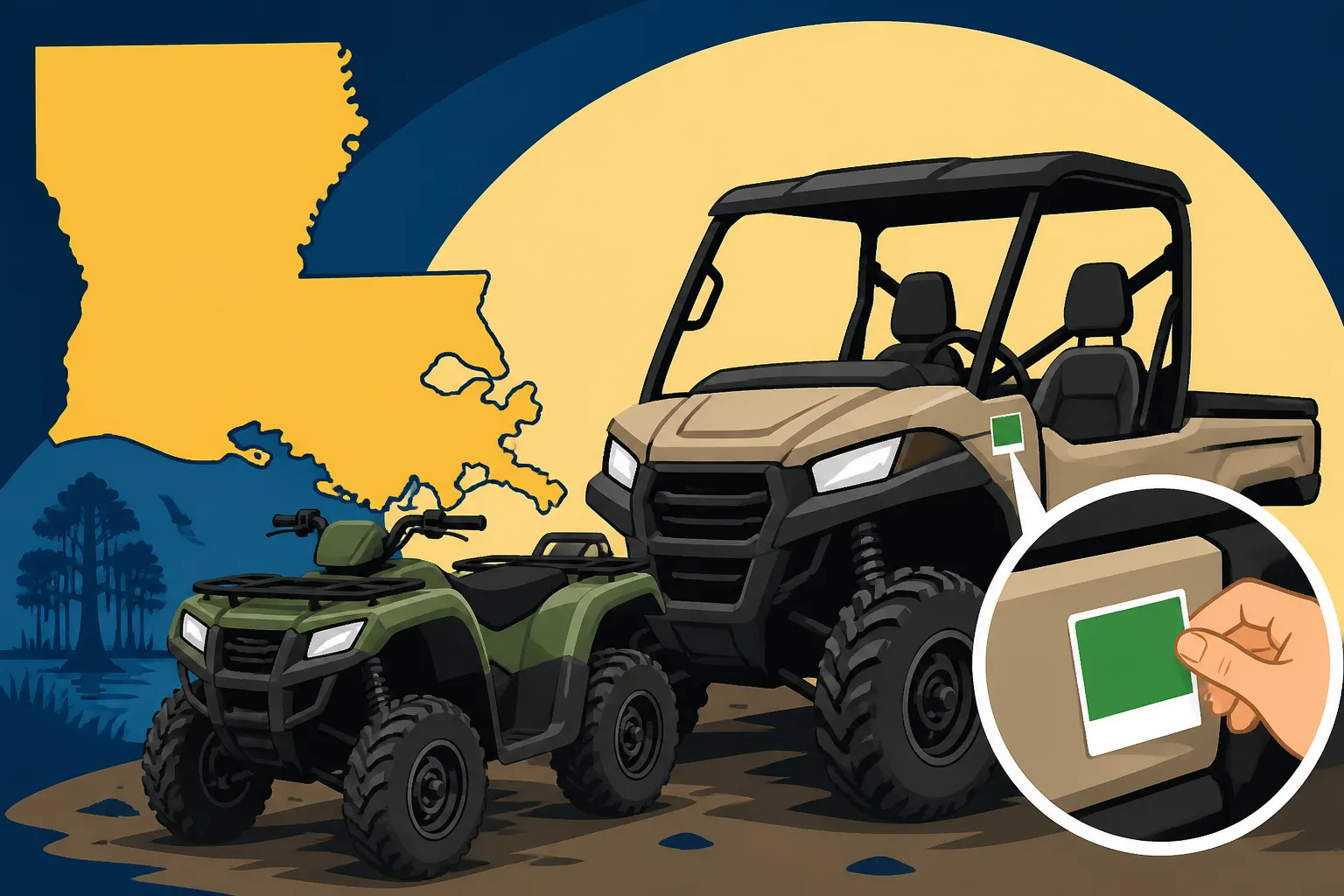
Once you have that shiny new decal in hand, your 30-day obligation isn't fully met until it's correctly affixed to your machine. The OMV has specific guidelines for where the decal must be placed to ensure visibility and compliance. Typically, the decal must be placed on the left side of the machine, clearly visible. This often means on the left front fender, the left side of the frame, or a prominent part of the bodywork that isn't easily obscured by mud, accessories, or your riding gear.
The purpose of specific placement is so that law enforcement or park rangers can quickly and easily verify that your machine is properly registered and has a current decal without having to search for it. If your decal is hidden, damaged, or placed in an unapproved location, you could still face questions or citations, even if you technically have one. Take a moment to clean the area where you intend to place the decal to ensure good adhesion, and then apply it smoothly, avoiding air bubbles. This final step is crucial to formally completing your 30-day compliance. [Louisiana Decal Placement on a Machine] provides visual guidance on where to put it.
Navigating Specific Scenarios Beyond a Standard Dealer Purchase
While a straightforward new purchase from a Louisiana dealer might have some of the paperwork handled for you, many riders find themselves in less common scenarios. Private sales, out-of-state acquisitions, or inheriting a machine all come with their own unique wrinkles that still fall under that 30-day decal deadline. Understanding these nuances is key to avoiding missteps.
Private Sales and the Decal Clock
Buying an ATV or UTV from a private seller in Louisiana introduces a few extra responsibilities into your lap compared to a dealer purchase. When you buy from an individual, they generally won't handle the tax calculations or the OMV paperwork for you. This means the onus is entirely on you, the buyer, to initiate the title transfer and decal application within that 30-day window. The clock starts ticking the moment you hand over the cash and receive the machine and its assigned title. [Buying From a Private Seller in Louisiana] elaborates on the full process.
Crucially, you'll need a properly executed bill of sale, ideally notarized, detailing the purchase price. This document is essential for proving ownership and, perhaps more importantly, for calculating and paying the sales tax directly to the OMV. Louisiana requires proof of sales tax payment before they will issue a title or decal. So, if you bought it used and paid sales tax as part of the total price to a private seller, you’ll likely still owe use tax to the OMV based on the purchase price. Don't underestimate this step; it's a major reason why many decal applications get held up.
Out-of-State Purchases and the Same Deadline
Bringing an ATV or UTV into Louisiana from another state – perhaps you found a great deal across the border in Texas or Mississippi – also triggers the 30-day decal deadline. Even if the machine was titled and registered in its previous state, Louisiana considers it a new acquisition once it's brought into the state for primary use by a Louisiana resident. You'll still need to follow the Louisiana titling and registration process, including applying for a new Louisiana ORV decal.
The main difference here will be how sales tax is handled. If you paid sales tax in the other state, Louisiana may offer a credit for that amount against Louisiana's sales tax, but you’ll still need to demonstrate proof of payment. If the other state’s tax rate was lower than Louisiana’s combined state and parish rate, you’ll likely owe the difference. If no sales tax was paid in the other state, then you'll owe the full Louisiana sales tax at the OMV. All these calculations and payments need to be made, and your application submitted, within those crucial 30 days. Don't delay thinking your out-of-state paperwork gives you extra time; it typically doesn't.
Inherited Machines and Transferring the Decal
Receiving an ATV or UTV through inheritance presents yet another unique scenario for the 30-day decal deadline. While there might not be a "purchase" in the traditional sense, ownership is still being transferred, and the OMV requires proper documentation to update the title and issue a new decal in the heir's name. The 30-day clock generally starts from the date the inheritance is finalized or the machine is legally transferred into your possession.
You'll need documentation like a certified copy of the death certificate, the decedent's last will and testament (if applicable), or an affidavit of heirship to prove your legal right to the machine. Even though no money changed hands, you'll still need to go through the title transfer process with the OMV. While sales tax is typically exempt for inherited property, there might still be transfer fees or other charges. It's crucial to gather all necessary legal documents and submit them to the OMV promptly to get the title updated and secure your new [Louisiana's Yearly Off-Road Decal] within the required timeframe.
Here's a quick overview of key actions:
| Transaction Type | Required Documents (Key) | Sales Tax Handling | Decal Timing Obligation |
|---|---|---|---|
| New from LA Dealer | MSO, Itemized Dealer Invoice, Photo ID | Collected by Dealer, Proof to OMV | Dealer typically files in 30 days |
| Used from LA Private | Assigned Title (from seller), Notarized Bill of Sale, Photo ID | Paid by Buyer at OMV | Buyer's 30-day clock begins immediately |
| Out-of-State Purchase | Out-of-State Title, Bill of Sale, Photo ID, Proof of LA Residency | Use Tax paid at OMV (credit for prior) | Buyer's 30-day clock begins immediately |
| Inherited Machine | Death Certificate, Will/Affidavit of Heirship, Original Title | Exempt (generally) | Heir's 30-day clock begins upon transfer |
Beyond the Decal: Other Post-Purchase Priorities
While the 30-day decal deadline is critical, it's just one piece of the larger puzzle of responsible ATV and UTV ownership in Louisiana. There are other immediate actions that, while closely related to getting your decal, deserve separate attention to ensure you're fully compliant and ready to ride safely and legally. These steps are often intertwined with the decal process itself, so understanding their importance is key to a smooth experience.
Sales Tax Proof: The Unsung Hero of Registration
I cannot stress this enough: proving sales tax payment is arguably the biggest hurdle for many people trying to get their ATV or UTV titled and decaled in Louisiana. The OMV will not issue you a title or a decal until they have confirmation that the appropriate state and parish sales tax has been paid on your machine. This is non-negotiable. If you bought from a Louisiana dealer, they are required to collect and remit the sales tax, and they will provide you with a receipt or an itemized invoice showing this payment. You'll bring this to the OMV.
However, if you bought from a private seller, you are personally responsible for calculating and paying the sales tax (also known as "use tax" when you bring it home) directly to the OMV. This means you need to know the purchase price and the combined state and parish sales tax rate for your specific parish. This is where many riders get stuck, either underestimating the amount or not realizing they have to pay it themselves. Do not wait on this. Make sure you have your sales tax receipt in hand or are prepared to pay the full amount at the OMV counter during your title and decal application. [Louisiana Sales Tax Proof at the Counter] delves into this in detail. If you use a reputable service like LawDepot for your bill of sale, it should clearly document the purchase price, making sales tax calculations straightforward.
Securing Your Title Alongside Your Decal
While the decal is the visible sign of your machine's current registration, the title is the ultimate proof of ownership. The two go hand-in-hand in Louisiana. You cannot get an ORV decal without first having the machine properly titled in your name. The title process is foundational; the decal simply confirms that the title is current and the registration fees paid for the year. So, when you're focusing on that 30-day decal deadline, you're inherently focusing on the title transfer process as well.
For a new machine, you'll transfer the Manufacturer's Statement of Origin (MSO) into a Louisiana title. For a used machine, the previous owner's signed-over title becomes the basis for your new title. Ensure the VIN on all documents matches the VIN on your machine exactly. Any discrepancies can cause significant delays. Once your application is processed at the OMV, you'll receive your physical title certificate in the mail, usually a few weeks after your visit. While the decal is affixed immediately, waiting for the title can take a little longer. Keep a copy of your application receipt and temporary paperwork with you until your official title arrives. Having both the title in your name and the current decal affixed ensures you're fully compliant with Louisiana law. [Why an ATV Needs Both a Title and a Decal] clarifies this relationship.
Disclaimer
This article is for general informational purposes only and does not constitute professional advice. Laws, prices and regulations vary by location and change over time. Consult a qualified professional for guidance on your specific situation.