Photographing the VIN Before You Sign the Title Over
Buying a used ATV or UTV in Louisiana can feel like navigating a minefield, especially when you're faced with mountains of paperwork and the lingering doubt about whether you're getting a legitimate machine. One crucial step that often gets overlooked in the excitement of a new-to-you off-road vehicle is thoroughly checking and documenting the Vehicle Identification Number (VIN) before you ever hand over your hard-earned cash or sign any final paperwork. This guide will walk you through exactly why photographing the VIN is non-negotiable and how to do it right, saving you potential headaches, legal woes, and financial losses down the line when you head to the OMV.
Why You Need to Photograph the VIN Before Signing
Imagine driving all the way to your local OMV office, ready to finalize the title transfer for that sweet side-by-side you just bought, only to be told that the VIN on the title doesn't match the one on the machine, or worse, that the machine you purchased is actually reported stolen. These aren't just hypothetical nightmares; they're real scenarios that Louisiana buyers face. Taking clear photographs of the VIN before you sign anything is your first line of defense against these devastating outcomes.
Protecting Yourself from Fraud and Theft
The VIN is essentially the unique fingerprint of your ATV or UTV. It's a 17-character code that tells you a machine's manufacturer, year, model, and much more. When you're buying from a private seller, you're relying on them to be honest and for the machine to be legitimate. Unfortunately, not everyone operates with integrity, and some machines circulating in the used market might be stolen or have a shady history.
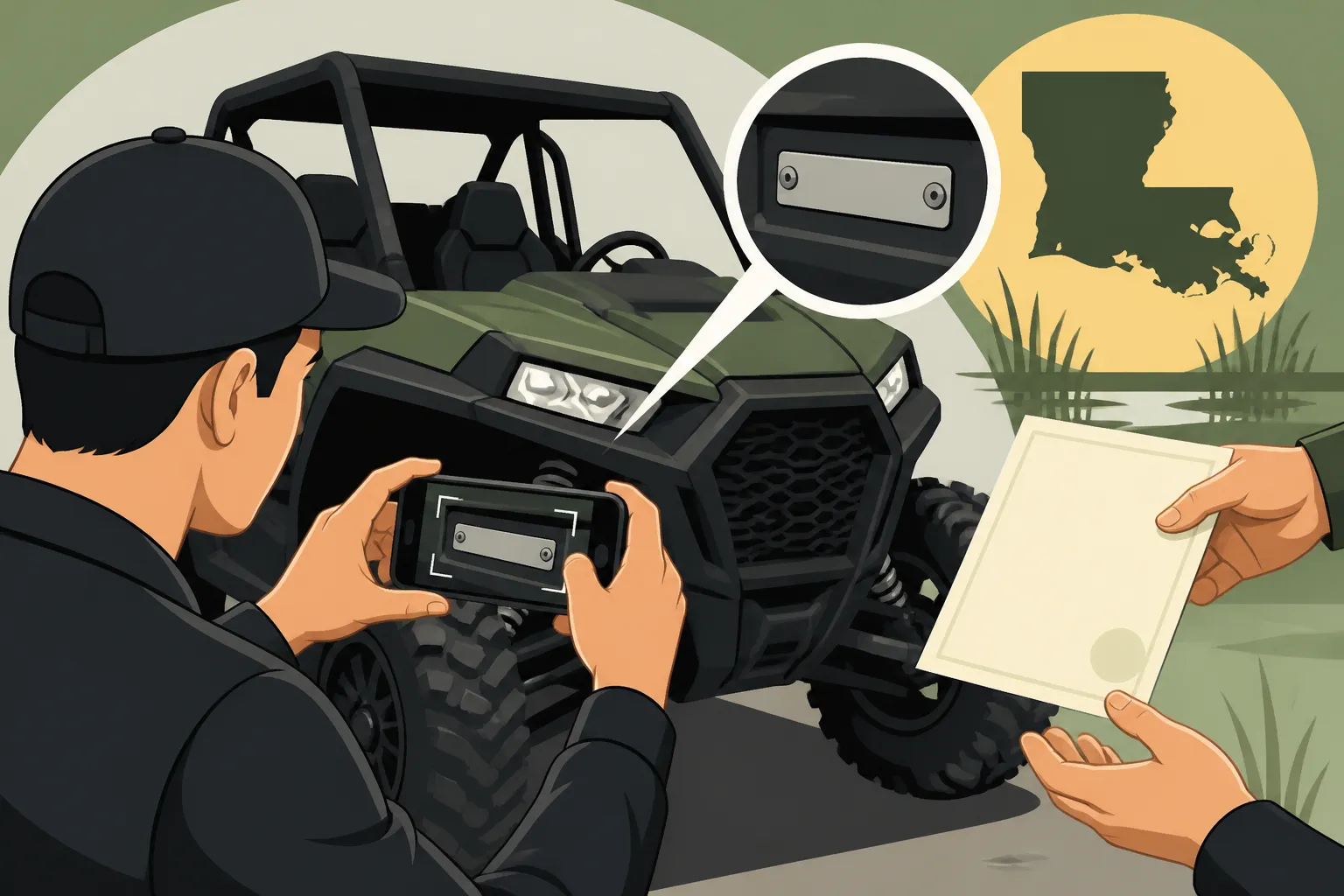
By photographing the VIN, you create an undeniable, timestamped record of the machine's identity at the point of sale. You can then use this VIN to run a quick check online (many services offer this, often for a small fee) to see if it's been reported stolen. More importantly, you can compare the VIN on the machine directly to the VIN listed on the title or Manufacturer's Statement of Origin (MSO) that the seller provides. If these don't match exactly, or if the VIN on the machine looks like it's been scratched, sanded, or re-stamped, that's a massive red flag. Walking away from a deal at this stage, even if it feels disappointing, is always better than dealing with the legal fallout of unwittingly buying a stolen machine or one with a compromised identity. The OMV is very strict about VIN discrepancies, and they will not issue a title if there are inconsistencies.
Documenting the Machine's Condition
Beyond verifying its legal identity, a VIN photograph can also serve as a crucial piece of evidence regarding the machine's physical condition at the time of purchase. While you're down there, getting a good, clear shot of the VIN, take a few extra moments to photograph any visible damage, wear, or unique features around the VIN area. This isn't just about the VIN itself; it's about documenting the "as-is" state of the vehicle at the exact moment you're about to commit to buying it.
In the rare but unfortunate event of a dispute with the seller later on – perhaps about a misrepresentation of the machine's condition, or a part that was supposedly included but isn't there – these timestamped photographs can be invaluable. They provide an objective record that can support your claims, should you ever need to involve small claims court or legal counsel. It’s a bit like taking photos before moving into a rental property; you’re establishing a baseline.
Ensuring a Smooth OMV Title Transfer
The Louisiana Office of Motor Vehicles (OMV) has a very specific process for titling ATVs and UTVs. One of their absolute bedrock requirements is that the VIN on the physical machine perfectly matches the VIN on all accompanying paperwork, whether it's an MSO for a new machine or an assigned title for a used one. They don't mess around with this. If you show up at the OMV counter with a title application, a bill of sale, and the current title, and the VINs don't line up, your application will be rejected on the spot.
A clear, well-taken photograph of the VIN from the machine can be incredibly useful in such situations. While it won't replace a physical inspection or the correct paperwork, it can act as a reference if there's a minor transcription error on a bill of sale or if a clerk has trouble reading a handwritten VIN. It shows you've done your due diligence and have a clear record. It can also help if you're trying to figure out what to fill in on the [What to Fill In on the OMV Vehicle Application] and need to double-check the VIN before you submit everything. This proactive step minimizes potential delays and frustrating return trips to the OMV.
What to Look for When Photographing the VIN
Taking a picture of the VIN sounds simple enough, but there’s a right way and a wrong way to do it. You don't just want any picture; you want a clear, usable photo that accurately represents the VIN and its condition. This attention to detail can make all the difference.
Locating the VIN on an ATV or UTV
Unlike cars, where the VIN is often clearly visible on the dashboard through the windshield, ATVs and UTVs can have their VINs in a few different places. The most common location for the primary VIN is stamped directly into the frame.
Here's where to typically look:
- Frame Rail: Often on the right-hand side (when sitting on the machine), near the front, possibly under the front fender or near the steering head. It might be stamped into a metal plate or directly into the frame itself.
- Engine Casing: Some manufacturers stamp a secondary identifier or even the full VIN onto the engine block. While this isn't usually the primary VIN for titling purposes, it's good to note if it matches.
- Manufacturer's Plate/Sticker: Some machines will have a metallic or durable sticker plate affixed to the frame, often near the seat or footwell, which includes the VIN along with other manufacturing details. Be wary if this sticker appears damaged or easily peelable, as stamped VINs are generally more tamper-proof.
Always look for the original, factory-stamped VIN. If you see multiple numbers, try to find the 17-character sequence. It's crucial to ensure this number matches what's on the title document. Remember, the OMV needs to see the genuine article for [Louisiana Requires an Assigned Title for a Used One] to proceed.
Tips for a Clear and Usable Photo
Once you've located the VIN, don't just snap a quick blurry shot. Take your time to get it right.
- Clean the Area: Often, the VIN area can be caked with mud, dirt, or grease, especially on an off-road machine. Wipe it down thoroughly so the numbers are completely visible. A stiff brush or even some water and a rag might be necessary.
- Good Lighting: Natural daylight is usually best. If you're in a garage or it's overcast, use your phone's flashlight or a separate light source to illuminate the numbers directly. Avoid shadows falling across the VIN.
- Angle and Focus: Get down low and take the photo straight on, not at a steep angle, to minimize distortion. Ensure the entire 17-character VIN is sharply in focus. Take multiple photos from slightly different angles and distances to ensure you capture every character clearly.
- Contextual Shots: It's also a good idea to take a wider shot that shows the VIN in its surroundings on the machine. This proves the VIN is actually on that specific ATV or UTV and hasn't just been photoshopped onto a picture. A photo showing the VIN plate on the frame along with a visible part of the engine or suspension provides context.
- Check Immediately: After taking the photos, zoom in and review them on your phone screen. Can you clearly read every single character of the VIN? Are there any blurs or smudges? If not, retake them until they are perfect.
Red Flags to Watch For
While you're photographing the VIN, you're also performing a critical visual inspection. Keep an eye out for anything suspicious:
- Tampering: Does the VIN plate look like it's been re-attached, welded over, or has fresh paint around it that doesn't match the rest of the frame? Are the numbers unusually spaced, shallowly stamped, or appear to be etched rather than factory-stamped? These are huge red flags that the VIN might have been altered or swapped.
- Illegibility: If the VIN is so rusty, scratched, or damaged that it's genuinely unreadable, even after cleaning, that's a problem. The OMV needs to be able to verify this number. While they may have a process for VIN inspections for illegible numbers, it will undoubtedly add significant delays and complications to your titling process.
- Discrepancies: The most obvious red flag is if the VIN on the machine doesn't match the VIN on the title or MSO the seller presents. Even a single character difference is a deal-breaker. If the seller tries to brush it off as a "typo," be extremely skeptical. Always compare the numbers character by character.
- Missing VIN: In very rare cases, an older machine might have a VIN that has genuinely worn off over time. For [Louisiana Title Without a Bill of Sale] or a completely missing VIN, the OMV has special procedures for assigning a new VIN after an inspection, but this is a lengthy and involved process that you, as a buyer, probably don't want to inherit.
If you encounter any of these red flags, it's usually best to walk away. The potential hassle and risk are simply not worth it. There will always be another ATV or UTV for sale that comes with clean paperwork and a verifiable VIN.
Integrating VIN Photography into Your Purchase Process
Taking a VIN photo isn't an isolated step; it's part of a larger, secure buying process. Especially when purchasing from a private seller, you need to ensure you're protecting yourself from all angles.
The Importance of a Notarized Bill of Sale
While photographing the VIN helps you verify the machine itself, a properly executed bill of sale legally documents the transaction between you and the seller. A bill of sale should clearly state the buyer and seller's information, the date of sale, the purchase price, and, crucially, the full 17-character VIN of the machine. Having a clear VIN photo to reference when drafting or reviewing the bill of sale ensures accuracy.
In Louisiana, a notarized bill of sale adds an extra layer of security. The notary public verifies the identities of the buyer and seller and ensures they both sign the document willingly. This can prevent disputes later on, as it's much harder for a seller to claim they never sold the machine or that the VIN on the bill of sale is incorrect if their signature was notarized. Services like LawDepot offer customizable bill of sale templates that guide you through including all the necessary details, including that all-important VIN. It’s a small extra step that offers significant peace of mind. Without a notarized bill of sale, especially for an older machine, you could run into trouble at the OMV, even if you have a perfectly clear VIN photo. [Why Your Bill of Sale Needs a Notary] explains this in more detail.
What to Do If the VIN is Missing or Unreadable
Sometimes, despite your best efforts, the VIN on an older machine might be completely obliterated by rust, damage, or simply worn away over decades of use. This situation isn't necessarily a dead end, but it's a significant hurdle that the buyer will inherit. The Louisiana OMV has a process for handling machines with missing or unreadable VINs.
Typically, this involves a VIN inspection by a state trooper or an authorized OMV agent. They will thoroughly examine the machine to try and locate any hidden VINs or manufacturer markings. If no original VIN can be found, they may assign a new, state-issued VIN to the machine. This new VIN would then be used for all future titling and registration purposes. However, this process requires additional forms, inspections, and time, and there may be fees involved. If you're considering buying a machine with a compromised VIN, factor in these potential delays and costs, and understand that you may need to complete these steps before you can legally get a [Louisiana ATV Title Cost] title in your name. If you're buying at auction, be especially vigilant, as [Titling a Quad Bought at a Louisiana Auction] machines sometimes have less-than-perfect paperwork.
After the Purchase: Storing and Using Your VIN Photos
Once the deal is done and you've got your new-to-you off-road machine, those VIN photos aren't just for that moment. They're a valuable part of your machine's permanent record.
- Digital Storage: Keep those photos in a safe, easily accessible digital location. Cloud storage, email, or a dedicated folder on your computer are good options. Label them clearly with the machine's make, model, year, and the date you took the photos.
- OMV Visits: When you go to the OMV to complete the title transfer, having these photos on your phone can be incredibly helpful. If there's any confusion or a question about the VIN, you can quickly pull up visual proof.
- Insurance: Your insurance company will definitely need the correct VIN to issue a policy. Having a clear photo ensures accuracy when providing them with the details.
- Maintenance & Repairs: Sometimes, parts suppliers or service centers use VINs to ensure they're ordering the correct components for your specific model year.
- Future Sale: If you decide to sell the machine down the road, having a record of the VIN from your purchase date can add credibility for your future buyer, showing them you've been meticulous with its history.
Common Pitfalls and How to Avoid Them
It’s easy to get caught up in the excitement of buying a new machine, but skipping steps in the purchase process can lead to significant regrets. Avoiding these common pitfalls will save you a world of trouble.
Rushing the Inspection
We've all been there: you find the perfect ATV or UTV, the price is right, and you just want to get the deal done. This eagerness can lead to rushing through the inspection process, including a thorough VIN check. The seller might be pressing you for time, or you might be traveling a long distance, but resist the urge to cut corners.
Take as much time as you need to visually inspect the VIN, clean the area, and take multiple clear photos. If the seller seems impatient or tries to rush you away from the VIN area, consider that a warning sign. A legitimate seller with nothing to hide will understand your need to verify the machine's identity. Remember, once you sign that bill of sale and hand over the money, you've accepted the machine "as is," including any hidden VIN issues. Take a deep breath, slow down, and protect your investment. This diligence also extends to checking the machine's overall condition and doing a test ride if possible.
Relying Solely on the Seller's Word
It's tempting to trust what a seller tells you, especially if they seem friendly or knowledgeable. However, when it comes to legal documentation like the VIN and title, you should always verify everything independently. Don't just take the seller's word that the VIN on the machine matches the title, or that it's never been stolen. You need to physically check it yourself and photograph it.
Use the photographs to compare the VIN on the machine to the VIN printed on the physical title or MSO that the seller has in hand. Never accept a photograph of a title or an email with a VIN. You need to see the original, physical document. Then, use an online VIN check service to verify the machine's history for theft or salvage titles. This independent verification is your safeguard against misinformation, whether intentional or accidental. For instance, [Checking Whether a Used Quad Is Reported Stolen] is a critical step that should never be skipped, regardless of how trustworthy the seller seems.
Not Having the Correct Documentation
Beyond the VIN photo, the overall documentation for a private ATV or UTV sale in Louisiana is crucial. Many issues at the OMV stem from incomplete or incorrect paperwork. This means having:
- A current, properly assigned title: The seller must sign and date the "Assignment of Title" section, often on the back. Ensure their signature matches the name on the front of the title.
- A notarized bill of sale: As discussed, this is a vital legal document for both parties. Make sure it includes the purchase price, date, buyer/seller information, and the full VIN. LawDepot provides excellent templates for these kinds of documents, ensuring you cover all the necessary legal points.
- Proof of sales tax payment: You'll need to pay Louisiana sales tax (state and parish) on the purchase price before the OMV will issue a new title. This is often paid at the OMV counter, but if you buy from a dealer, they typically handle it. Be prepared for [Louisiana Sales Tax Proof at the Counter].
- Your photo ID and proof of address: The OMV will need to verify your identity.
Missing any of these pieces can bring your title transfer to a grinding halt. Having your clear VIN photos and a properly prepared bill of sale will make a world of difference when you finally present your paperwork to the OMV clerk.
| Item to Verify/Document | Why It's Important | How to Verify/Document | Potential Red Flags |
|---|---|---|---|
| VIN on Machine | Unique identifier; proves machine's identity | Locate, clean, and photograph clearly; check for tampering. | Obscured, tampered, missing, or mismatched VIN. |
| VIN on Title/MSO | Legal proof of ownership | Compare character-by-character with VIN on machine and bill of sale. | Mismatched VIN, unassigned title, or title not in seller's name. |
| Seller's ID | Confirms seller is legal owner | Request to see photo ID; compare name to title. | Reluctance to show ID, name mismatch. |
| Bill of Sale | Legalizes the transfer, states terms & price | Use a notarized form (e.g., from LawDepot), ensure all details are correct. | Unnotarized, incomplete, or missing VIN/details. |
| Theft History Check | Prevents buying stolen property | Use online VIN check service. | Reported stolen, salvage title, or lien not disclosed. |
| Lien Check | Confirms no outstanding debt on machine | Check title for lienholder; ask for lien release if applicable. | Lien listed on title without release; seller avoids the topic. |
In the end, photographing the VIN before you sign over any title for your new Louisiana ATV or UTV isn't just a suggestion; it's a critical step in protecting yourself and ensuring a smooth, legal transaction. This simple action provides you with a robust piece of evidence against potential fraud, helps document the machine's condition, and smooths the path for a hassle-free title transfer at the OMV. Don't rush it, don't assume, and always verify before you finalize your purchase. Your peace of mind (and your wallet) will thank you for it.
Disclaimer
This article is for general informational purposes only and does not constitute professional advice. Laws, prices and regulations vary by location and change over time. Consult a qualified professional for guidance on your specific situation.