Louisiana Parent Riding With a Child
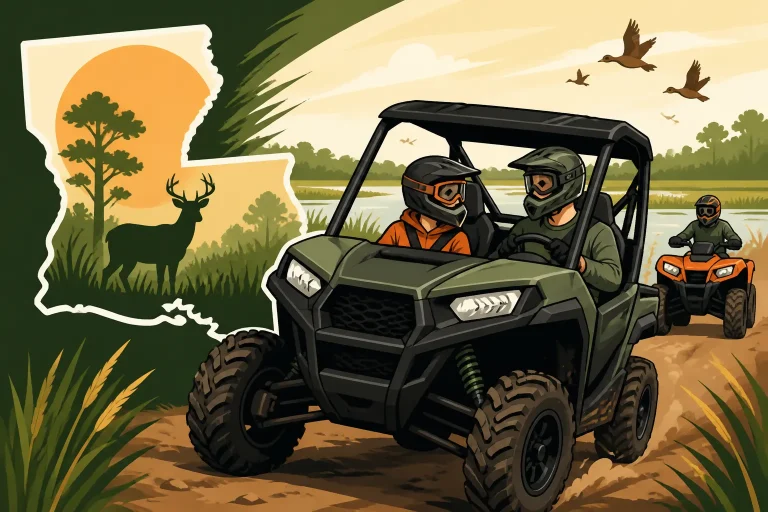
A parent riding with a child in Louisiana has two separate questions to answer: can the child ride on this machine, and is riding allowed at that location? The answer changes with the child’s role, the vehicle’s design, and the land or road rules. Use this practical checklist to plan a safer ride and avoid treating parental supervision as a substitute for permission or legal requirements.
Start With the Child’s Role and the Machine
A child may be riding as a passenger, operating a machine, or sitting in a properly equipped UTV seat. Those situations are not interchangeable. Before the engine starts, check the owner’s manual, the machine’s passenger capacity, and the rules for the place where you plan to ride.
Passenger on an ATV
Many ATVs are built for one rider. If the seat and footrests are intended for one person, carrying a child in front of or behind the adult is not a safe workaround. A child on the seat, handlebars, cargo rack, or an adult’s lap can shift the machine’s balance and interfere with steering or braking. A child-sized helmet does not make a one-person ATV suitable for two.
If you are considering a two-up ATV, confirm that the manufacturer designed that model to carry a passenger. Look for a designated passenger seat and footrests, and follow the manufacturer’s age, weight, and riding instructions. Louisiana rules can also depend on the location, so review Can You Carry a Passenger on a Louisiana ATV? before assuming that an ATV’s seating arrangement settles the legal question.
Passenger in a UTV
A UTV may have separate seats and restraints, but that does not mean every child can safely use every seat. Check that the child fits the seat and can use its restraint as intended. The lap belt should sit low and snug; a shoulder belt should cross the chest rather than the neck or face. If the restraint cannot be adjusted to fit the child, do not count on an adult holding the child in place.
Never carry a child on an adult’s lap in a moving UTV. In a sudden stop or rollover, a lap belt may hold the adult while the child is thrown or crushed. Follow the machine maker’s instructions for passenger capacity and age or size limits, and do not add extra passengers to a seat designed for one.
Child operating a machine
A child who is driving needs a machine suited to the child’s size, ability, and experience. Being able to reach the controls while parked is not enough; the child must be able to steer, brake, use the throttle, and stop reliably while wearing riding gear. A parent nearby cannot correct a loss of control quickly enough in every situation.
For more on age-related considerations, see Louisiana ATV Age Requirements and Louisiana Rules for a Ten-Year-Old Rider. Rules for a public trail, a private park, and private property may differ. Do not assume that a child who is allowed to ride at home is automatically permitted to operate a machine elsewhere.
| Situation | Check before riding | Safer choice |
|---|---|---|
| Child riding as an ATV passenger | Whether the model is designed and approved for two riders, and whether local rules allow it | Do not carry a passenger on a single-rider ATV |
| Child riding in a UTV | Seat and restraint fit, passenger capacity, and the operator’s ability to supervise safely | Use a proper seat and correctly fitted restraint |
| Child operating an ATV or UTV | Age and location rules, machine fit, skill, gear, and adult supervision | Choose a machine the child can control and stop |
| Parent and child riding on a public road | Whether the specific road and vehicle qualify under Louisiana law | Do not treat a decal, title, or private-land permission as road authorization |
Match the Ride to the Place
Parental permission does not replace permission from a landowner, a riding facility, or the agency responsible for public land. Nor does an off-road decal or title make a machine street-legal. Decide where you are riding first, then check that location’s current rules.
Private property and private riding parks
On private land, get permission from the owner and set clear boundaries before the child rides. Point out gates, ditches, water, steep areas, livestock, equipment, and places where the child must stop. Keep the route within the area the child can manage, and stay close enough to supervise without creating pressure to ride faster or farther.
A private mud park or riding facility may set its own minimum ages, passenger rules, helmet requirements, and restrictions on particular machines. Call or check the facility’s rules before towing there. A parent’s presence does not override a park’s requirements. See Louisiana Private Park Age Minimums and [Louisiana Private Park Helmet Rules] when planning a park visit.
Public land and trails
Public riding areas can have additional limits on machine type, rider access, permitted routes, and seasonal use. A trail may allow one type of off-road vehicle but not another, or may be closed even when the surrounding area is open to other recreation. For Louisiana Wildlife Management Areas, riders should check the designated trail map and permit requirements rather than assuming that a visible path is open to machines. Louisiana WMA Riding Rules for Quads and Louisiana Self-Clearing Permit Steps can help you identify what to verify.
Also check whether the child’s machine meets the site’s equipment requirements. A child-sized quad is not automatically permitted simply because it is small. Some public-land rules focus on machine specifications, while others address who may ride, where, and when. Confirm the exact rules for the specific trailhead before unloading.
Public roads are a separate issue
Louisiana’s off-road title or decal is not general permission to ride on a public street. Road use is limited by state law and, for some UTV use, by additional local requirements. An adult’s supervision does not make a road legal for a child or turn a prohibited passenger arrangement into an allowed one. Review Why an Off-Road Decal Is Not Street-Legal Registration and Louisiana UTV Street Legal Rules by Parish before considering any public-road route.
Do not ride on a road simply because it is quiet, rural, or close to your property. If a lawful crossing is available, follow the applicable crossing rules and use it only as permitted. When the route or signage is unclear, stop and verify rather than riding first and sorting out the rule later.
Set Up a Safer Parent-and-Child Ride
A child’s first ride should be short, controlled, and easy to stop. The goal is not to keep up with adults or cover a certain distance. It is to give the child a chance to practice basic control in a setting where the parent can intervene safely.
Choose the right machine and route
Use the manufacturer’s guidance to match the machine to the rider. Check that the child can sit securely, reach and operate the controls, and keep feet on the intended footrests. Avoid using a machine that feels difficult to control or has more power than the child can manage. Do not carry a passenger or cargo in a way that changes the machine’s balance beyond its designed capacity.
Pick a route with good visibility and room to stop. Avoid steep slopes, deep mud, fast traffic, water crossings, and crowded riding areas for a novice. Change only one challenge at a time. For example, a child who is still learning to brake should not also be navigating ruts or following a fast group.
Wear protective gear and check the machine
Use a properly fitted helmet and protective clothing appropriate for the ride. A helmet that shifts, pinches, or blocks vision is not a good fit. Closed-toe footwear, gloves, eye protection, and clothing that covers exposed skin can help protect against debris and contact with hot or moving parts. Check the location’s rules as well as the gear maker’s instructions.
Before leaving, inspect the machine’s tires, brakes, throttle, controls, lights where applicable, and fuel or battery condition. For a UTV, check each passenger’s restraint and the condition of the seat and doors or side barriers. Make sure the child knows where the emergency shutoff is and what to do if the machine stops or the parent signals to stop.
Agree on signals and supervision
Explain simple rules before riding: stay within sight, do not pass the adult, slow down when signaled, and stop if the adult stops. Use a clear signal that works over engine noise, such as a hand signal agreed on in advance. Keep enough space between machines to avoid collisions, and do not let a child follow another rider beyond the adult’s view.
Supervision means actively watching, not riding far ahead and assuming the child will follow. The parent should be sober, rested, and able to focus on both the route and the child. If more than one child is riding, arrange supervision so one adult is not trying to watch riders spread across different trails.
A Practical Pre-Ride Checklist
Use this checklist before each outing. Conditions can change from one ride to the next, and a machine or route that worked before may not be suitable today.
- Identify the riding area. Confirm whether it is private property, a private park, public land, or a public road. Get permission and check the current site rules.
- Confirm the child’s role. Decide whether the child is a passenger or operator, then verify that the machine and its seating are designed for that use.
- Check age and equipment rules. Review the requirements that apply to the rider, machine, and specific location. Do not rely on a rule remembered from another park or trail.
- Fit protective gear. Check the helmet, footwear, eye protection, and clothing. For a UTV passenger, check the restraint fit before moving.
- Inspect the machine. Test controls and brakes, look for visible damage, and confirm that tires and safety equipment are in suitable condition.
- Choose a manageable route. Start with a short ride on familiar ground and avoid hazards beyond the child’s skill level.
- Agree on supervision and signals. Keep the child in sight, set a clear stopping signal, and establish what to do if the group becomes separated.
- Stop when conditions change. Fatigue, heat, rain, poor visibility, mechanical trouble, or a child who feels overwhelmed are good reasons to end the ride.
A parent can make an off-road outing more controlled, but supervision is only one part of the decision. The machine must suit the rider, the passenger arrangement must be appropriate, and the location must allow that kind of riding. When any of those points is uncertain, pause and confirm the applicable rule before setting out.
Disclaimer
This article is for general informational purposes only and does not constitute professional advice. Laws, prices and regulations vary by location and change over time. Consult a qualified professional for guidance on your specific situation.