Louisiana Deer Season Machine Rules
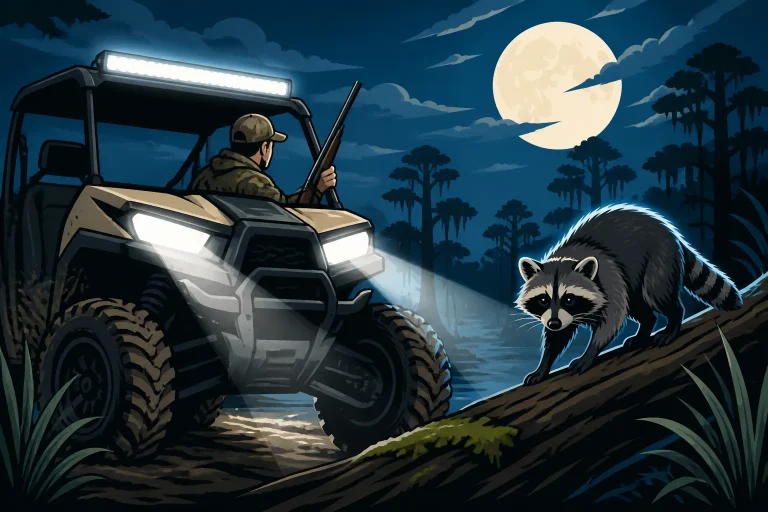
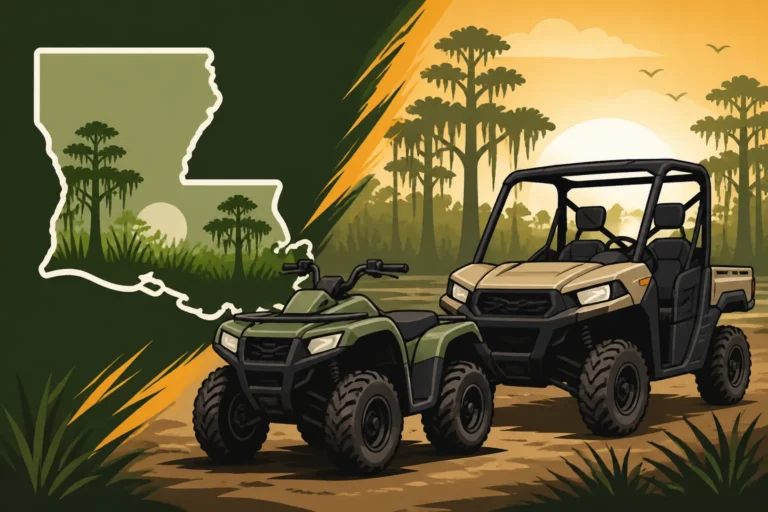
Louisiana deer season machine rules depend on where you hunt and why you are riding. An ATV or UTV that is allowed on private land may be restricted on a wildlife management area, and permission to hunt does not automatically mean permission to drive. Check access, retrieval, firearm, and road rules before loading your machine.
First identify the land and the purpose of the ride
Start by separating three questions: whether you may enter the property, whether you may operate a machine there, and whether the ride is part of hunting or retrieving game. Those permissions do not necessarily come together. A hunting license or a lease may allow you to hunt but still leave machine access subject to separate rules.
Wildlife management areas
On a Louisiana wildlife management area, use the current rules for that specific area. Statewide requirements can include access permits and restrictions on where and when machines may operate, while individual area rules may add conditions. Do not assume that a trail open to a pickup, or a route shown on an old map, is open to an ATV.
Before unloading, check the current WMA map and regulations for:
- Whether ATVs or UTVs are allowed in the area at all
- Which marked routes are open to machines
- Seasonal closures and operating hours
- Any machine, tire, or access limits
- Parking and overnight-staging rules
- Whether a special exception applies to game retrieval
The general rule on WMA machine access is to stay on routes that are specifically open to the type of vehicle you are using. Louisiana WMA Designated Trails Only explains why being on public land does not mean you can ride anywhere across it. Seasonal restrictions matter too; check Louisiana WMA Seasonal Riding Ban before planning a hunt around machine access.
A WMA self-clearing permit may also be required for access. Follow the current instructions at the entrance and keep the portion you are supposed to retain. See Louisiana Self-Clearing Permit Steps for the basic process, then verify the area-specific requirements before your trip.
Private property and hunting leases
Private land can have fewer public-land restrictions, but the landowner’s permission still sets the boundaries. Ask specifically whether your permission covers riding an ATV or UTV, which trails or fields you may use, and whether you may drive during the hunt or only to reach a stand. A hunting lease may also have rules about machine size, passengers, speed, quiet hours, or where vehicles may be parked. Louisiana Hunting Club Riding Rules is useful when access is controlled by a club or lease agreement.
Do not treat a gate, worn path, or old tire tracks as permission to enter. A route might cross another owner’s property, a restricted area, or land where motorized use is prohibited. If the boundary or route is unclear, get permission from the person who controls the land before riding. The same applies to timber roads and other work roads: a road that looks accessible is not automatically open to recreational use.
Public roads are a separate issue
Permission to hunt on land does not make nearby public roads legal ATV or UTV routes. Louisiana has specific limits on off-road machines used on public roads, and local designations can matter. A machine that is legal on the property may still be prohibited on the road you need to use to get there. Review Louisiana Rules for Riding a Parish Road and Louisiana Rules for Crossing a Highway before planning a route that connects fields, camps, or parking areas.
| Where you plan to ride | What to verify before the hunt |
|---|---|
| WMA | Area-specific machine access, open routes, seasonal limits, permits, and retrieval rules |
| Private land | Landowner or lease permission, approved routes, and any hunting-club restrictions |
| Public road or shoulder | State law, local designation, signs, and any limits on the machine or purpose of travel |
| Trail or park | The operator’s hours, machine rules, closures, and any separate hunting restrictions |
Riding during a hunt is different from retrieving a deer
One of the most important distinctions is between using a machine to move around while hunting and using it to recover a deer that has already been legally taken. A retrieval exception, where one applies, should not be treated as general permission to ride through hunting land.
On a WMA, do not assume you can use an ATV to reach a stand, scout, follow tracks, check a camera, or move between hunting locations simply because you intend to hunt. Machine travel is governed by the area’s access rules. Stay on authorized routes and do not drive off a marked trail to get closer to a hunting spot unless the current regulations expressly allow it.
Likewise, the fact that a deer is down does not mean every route is open to a machine. A retrieval rule may have limits on the number of machines, who can ride, whether a firearm may be carried, and where the machine may travel. Read the current rule for the WMA or property rather than relying on a general recollection of how retrieval worked during a previous season. Louisiana Game Retrieval Rules covers the distinction between riding for ordinary access and riding for recovery.
What counts as retrieval
Treat retrieval narrowly. It generally means recovering an animal that has already been lawfully harvested, not using a machine to search for wounded game or to continue the hunt. If an animal is hit but not yet recovered, using a machine to track it can raise a different issue from transporting a deer that has been found and legally taken. Check the exact current wording before acting.
The safe practical approach is:
- Confirm the animal was taken legally and that you are allowed to recover it from that location.
- Check whether machine retrieval is allowed on that property and whether a specific route or exception applies.
- Follow restrictions on the number of machines and riders.
- Keep firearms handled and carried according to the applicable rules; do not assume the retrieval exception also authorizes carrying a firearm on the machine.
- Use the machine only for the permitted recovery trip, not for scouting or further hunting.
- If the rule is unclear, contact the land manager or the Louisiana Department of Wildlife and Fisheries before riding.
For details that can affect a retrieval trip, see Louisiana Retrieval Party Limits and Louisiana Firearms and Retrieval Rules. The key takeaway is that a retrieval exception is not a blanket pass for machine use throughout a WMA.
Do not ride across a boundary to make recovery easier
A deer may run across a property line, into a closed area, or beyond an approved machine route. Your right to recover an animal does not automatically give you permission to trespass or drive into a restricted area. Contact the landowner or area manager and follow the applicable recovery process. Do not use an ATV to cross a fence or enter land where you have not been granted access.
If the animal is on a WMA, check that area’s rules before leaving an authorized route. If it is on private land, obtain permission from the person who controls that land. Louisiana Landowner Permission Forms can help with documenting access, but a form does not replace permission where it is required.
Firearms, passengers, and safe transport
Hunting with a machine adds safety issues beyond the access rules. A firearm must be secured and handled in a way that complies with hunting regulations and the machine’s rules. Never assume that because an ATV is being used for retrieval, normal firearm restrictions no longer apply. The rules may differ for transportation, hunting, and retrieving, so verify which situation applies.
Before riding, make a plan for where firearms will be unloaded or secured, how passengers will be carried, and how the harvested deer will be transported. Keep the load stable and within the machine’s capacity. A deer tied loosely to a rack can shift, affect steering, or fall onto a trail. Avoid blocking lights or controls with gear, and do not overload a passenger seat or cargo rack.
A UTV can carry more people and gear than a quad, but that does not mean every passenger arrangement is allowed. Follow the manufacturer’s seating limits and the land manager’s passenger rules. On narrow trails, keep passengers seated and use a route that is open to the UTV’s width and type. Check Louisiana WMA Riding Rules for UTVs for public-land restrictions, and verify private-property rules separately.
Visibility and noise also matter. During deer season, other hunters may be walking, sitting in stands, or crossing trails. Ride slowly near parking areas and established hunting routes, and stop if visibility is poor. Do not assume a road or trail is empty because it is early or late in the day. Louisiana’s rules for road use and machine lighting can also differ from a property’s trail requirements.
A practical pre-ride check should include:
- Tires, brakes, steering, and lights
- Enough fuel for the planned route and return
- A charged phone or other reliable way to contact your group
- A map showing property boundaries and routes open to machines
- Secure storage for tools, first aid supplies, and hunting equipment
- A plan for what to do if a machine becomes stuck or breaks down
On public land, carry any required access paperwork and proof of ownership or other documents required by the applicable rules. Do not count on cell service to look up a map or regulation once you are deep in the woods. Save or print the current area map and rules before leaving home.
Plan the trip around current regulations
Deer seasons, WMA access rules, and property conditions can change. A route that was open in one season may be closed in another, and a special rule for one WMA may not apply to the next one. Check the current Louisiana Department of Wildlife and Fisheries regulations and the specific area’s information before each trip. If the answer is not clear, contact the area manager or the landowner rather than guessing at the trailhead.
Use this checklist before taking a machine hunting:
- Identify the property. Confirm whether it is private land, a lease, a WMA, or another managed area.
- Get access permission. Confirm that hunting access includes machine use, if you plan to ride.
- Check current area rules. Verify routes, dates, hours, permits, vehicle limits, and retrieval provisions.
- Separate hunting travel from retrieval. Do not use a possible retrieval exception as permission to scout or travel to a stand.
- Plan your route. Keep a map of boundaries and approved trails, and avoid public roads unless the route is legal for your machine.
- Confirm firearm and passenger rules. Check the requirements for your exact activity and machine.
- Prepare the machine. Secure your load, check basic equipment, and let someone know where you plan to hunt.
- Recheck before departure. Closures, weather, and land access can change after you make the plan.
The most common mistake is relying on a rule heard from another hunter without checking where it applies. A machine may be allowed on one property and restricted on another; retrieval may be allowed under narrow conditions, while ordinary hunting travel is not. Make the land boundary and the purpose of each ride clear before you unload. That is the simplest way to avoid trespass, a citation, or a disrupted hunt.
Disclaimer
This article is for general informational purposes only and does not constitute professional advice. Laws, prices and regulations vary by location and change over time. Consult a qualified professional for guidance on your specific situation.