Boots That Survive Standing Water
Standing water is part of riding in Louisiana, whether you meet it on a muddy trail, at a wet campground, or while unloading after a storm. The wrong boots can leave your feet soaked, sore, and rubbing long before the ride is over. This guide explains how to choose footwear for wet ATV and UTV riding, and how to keep it comfortable and usable.
Choose Boots for the Water You Expect
Waterproof hiking and riding boots for mixed conditions
If your rides alternate between damp ground, shallow puddles, and dry trail, a supportive waterproof boot may be a practical middle ground. Look for a snug heel, room for your toes to move, and a sole with enough grip for muddy ground and slick steps. A higher shaft can help keep splashes out, but it cannot stop water from pouring in over the top if you step into a deeper hole.
Waterproof boots work best when you can avoid submerging them above the cuff. Their membranes can help keep water from passing through the boot material, but water may still enter at the opening. Once it is inside, a waterproof lining can also slow drying. That can be frustrating when your boots get flooded early in the day and stay damp for the rest of the ride.
Pay attention to fit with the socks you plan to wear. A boot that feels fine in a store with thin socks may pinch when you switch to thicker riding socks. Too much pressure around your toes can make a long day uncomfortable, while a loose heel can rub when you walk through mud. Try the boots on with the socks you expect to use, and walk around before taking them out on a trail.
Rubber and neoprene boots for deeper water
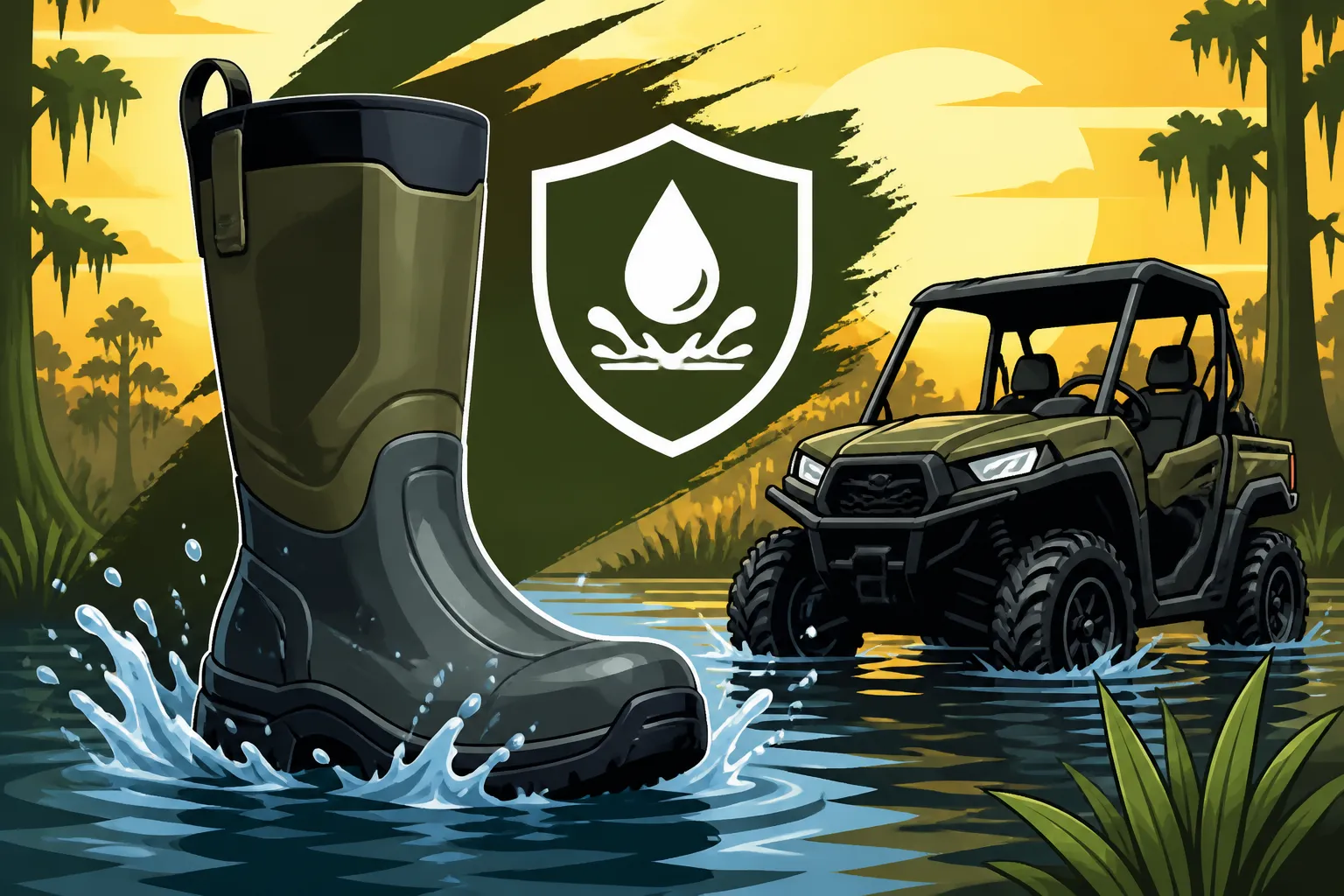
Tall rubber boots can make sense when you expect to walk through water that would overwhelm a lower boot. They are easy to rinse off, and their smooth exterior is less likely to hold onto mud than some fabric uppers. The trade-off is that they can feel less supportive on uneven ground, and a loose fit may make walking tiring.
Neoprene-lined boots can provide more warmth and cushioning than plain rubber, but warmth is not always welcome in Louisiana’s humid weather. A boot that feels comfortable on a cool morning can become clammy as temperatures rise. Consider how much walking you will do, whether you will be standing in water for long stretches, and how easily you can remove and dry the boots between rides.
Neither boot type makes it safe to ride into water when you cannot judge its depth or bottom. Water can conceal holes, soft ground, debris, and sudden drop-offs. If a trail looks questionable, stop and assess it rather than relying on tall boots to solve the problem. For more on assessing a muddy crossing, see Reading a Mud Hole Before You Ride Into It.
| Boot type | A good fit for | Main drawback | Check before choosing |
|---|---|---|---|
| Waterproof hiking or riding boot | Damp trails and shallow splashes | Water can enter over the cuff, and flooded linings may dry slowly | Ankle support, fit, and tread |
| Tall rubber boot | Muddy walks and deeper standing water | Can feel loose or tiring on uneven ground | Shaft height, heel hold, and sole grip |
| Neoprene-lined boot | Wet conditions when added warmth is useful | Can feel hot and clammy in humid weather | Lining thickness and breathability |
| Quick-drying non-waterproof boot | Warm rides with frequent water exposure | Feet get wet, and socks may need changing | Drainage, fit, and drying time |
Fit and Grip Matter as Much as Waterproofing
Check the ankle, heel, and sole
A boot’s job is not just to keep water out. You may need to step down from a machine, walk across a rutted area, or climb in and out of a trailer on slick ground. A stable heel and a sole with dependable tread can make those everyday movements feel more secure. Look for a fit that holds your foot without restricting it, and avoid soles that feel smooth or unstable when wet.
Ankle coverage can help shield your lower legs from splashes, mud, and brush, but a taller boot is not automatically a better boot. A shaft that folds or rubs can become uncomfortable during a long walk. If you wear ankle-high boots, gaiters can help keep debris and splashes from entering at the top, though they are not a substitute for a waterproof boot in deeper water.
Try a simple fit check at home. Wear your intended socks, lace or fasten the boots as you would for a ride, then walk, bend your knees, and step onto a stable low surface. Your toes should not hit the front when you lean forward, and your heel should not lift excessively. If the boots feel borderline in a dry room, mud and repeated walking are unlikely to improve the fit.
Choose socks and layers for Louisiana humidity
Thick socks can cushion your feet, but they can also make boots too tight and trap heat. A medium-weight moisture-managing sock is often a sensible starting point for warm-weather riding. If you expect a cool morning or a long stretch outside, bring a dry spare pair rather than assuming the same socks will stay comfortable after a water crossing.
Cotton socks can remain wet and uncomfortable once soaked. Whatever material you choose, fit matters: wrinkles, bunching, and seams in the wrong place can rub under a boot. If you often get blisters, test your socks and boots together on a short walk before taking them on a full riding day.
A small dry bag in your truck or trailer can hold spare socks and a clean pair of footwear for the ride home. That can be a welcome backup after a wet day near a trail system such as Kisatchie National Forest. Before you head out, check the route and conditions rather than assuming every trail will be passable. Louisiana Trail Conditions After Rain and Louisiana Trail Closures After a Storm are useful topics to review when rain has recently moved through.
Plan for Mud, Heat, and Changing Trail Conditions
Match your boots to the whole ride
Think beyond the deepest puddle you hope to cross. A ride might involve a short muddy section, several hours on damp ground, and a walk around camp afterward. Tall waterproof boots may be useful for a short stretch through water but tiring if you wear them all day in the heat. A lighter boot can be more comfortable for mixed terrain, but less useful if you expect water to rise above its cuff.
Consider where you will ride and what the day involves. A marked forest trail, a private mud park, and a campground access road can present different mixes of water, walking, and cleanup. Check current trail information and the land manager’s rules before traveling. If you use onX Offroad to plan a route, treat it as a planning aid, not confirmation that a trail is open or that a crossing is safe. Check official trail or park updates as well.
When using onX Offroad or another mapping tool, zoom in on the route and identify possible detours or nearby access points before unloading. A map cannot tell you the exact depth or condition of a puddle after heavy rain. It can help you avoid relying on a single route, but you still need to make decisions from conditions on the ground. For broader route-planning considerations, see Louisiana Trail Difficulty Ratings.
Know when to turn around
Standing water can hide a sudden rut or soft edge, and the same crossing can change after rain or repeated vehicle traffic. Do not assume that another rider’s tracks prove the bottom is firm. If you cannot see the path clearly, cannot judge the depth, or would have no safe way to turn around, choose another route.
Water is not only a footwear issue. It can make a trail harder to navigate and can affect other riders, trail surfaces, and nearby land. Follow posted closures and local rules, and avoid creating a new track around a blocked or flooded section. For a useful overview of considerate behavior on shared routes, read Louisiana Trail Etiquette Locals Expect. If your ride is specifically focused on mud, Louisiana Trails With Deep Mud can help you think about the kind of terrain you may encounter, but always verify the current conditions and access requirements.
A simple rule for choosing boots is to match them to the likely depth of water, the amount of walking, and the weather. If the route could involve water above your boot tops, plan for wet feet rather than trusting footwear alone to keep them dry. Pack a spare pair of socks, leave a dry change of shoes in the vehicle, and avoid crossing anything you cannot assess safely. For hot-weather outings, Louisiana Riding in Summer Heat is also worth considering when you plan what to wear and carry.
Clean and Dry Boots After a Wet Ride
Rinse off mud before it dries
Mud and grit can work into seams, laces, and tread. After the ride, knock off loose dirt and rinse the boots with clean water where appropriate for their materials. Use a soft brush for stubborn mud rather than scraping aggressively, especially around seams and closures. Check the manufacturer’s care instructions before using cleaners or treatments, since products suitable for one material may damage another.
Take out removable insoles and loosen the laces or straps so air can circulate. Let the boots dry in a ventilated place, away from direct high heat. A heater or hot surface may seem like a shortcut, but excessive heat can damage some boot materials and adhesives. If the boots are still damp when you put them away, odor and discomfort can become a repeat problem on the next ride.
If you haul muddy gear home, keep wet boots separate from clean clothes and equipment. A washable tote or ventilated gear bag can keep mud contained without trapping moisture for days. After a particularly messy outing, cleaning the machine and footwear in the same general routine helps avoid spreading grit into your storage area. Washing a Machine After a Mud Weekend offers related cleanup considerations.
Keep a simple backup kit
A small post-ride kit does not need to be elaborate. Spare socks, a towel, a bag for wet footwear, and a dry pair of shoes can make the drive home much more comfortable. If you regularly ride in wet conditions, check your boots between outings for worn tread, loose seams, cracked rubber, and damaged closures. A boot that no longer holds its shape or grip may be less suitable for muddy, uneven ground.
Before the next trip, check the forecast and trail information, then choose footwear for the conditions you are likely to encounter rather than the best-case scenario. Keep onX Offroad as one part of your route-planning routine if it helps you organize a ride, but confirm access with the relevant park or land manager and make the final call based on what you see at the trail. Good preparation will not keep every puddle out of your boots, but it can make a wet Louisiana ride more comfortable and easier to manage.
Disclaimer
This article is for general informational purposes only and does not constitute professional advice. Laws, prices and regulations vary by location and change over time. Consult a qualified professional for guidance on your specific situation.