The 150 RV Hookups at Muddy Bottoms
Arriving at an off-road park with a trailer, a packed machine, and nowhere clear to plug in can sour a riding weekend before it starts. Muddy Bottoms in Sarepta is known for having 150 RV hookups, but a hookup count alone does not tell you what site to reserve or what to bring. This guide helps you plan the camping side of your visit with fewer surprises.
What 150 RV hookups at Muddy Bottoms really means
A large hookup count is a starting point, not a site guarantee
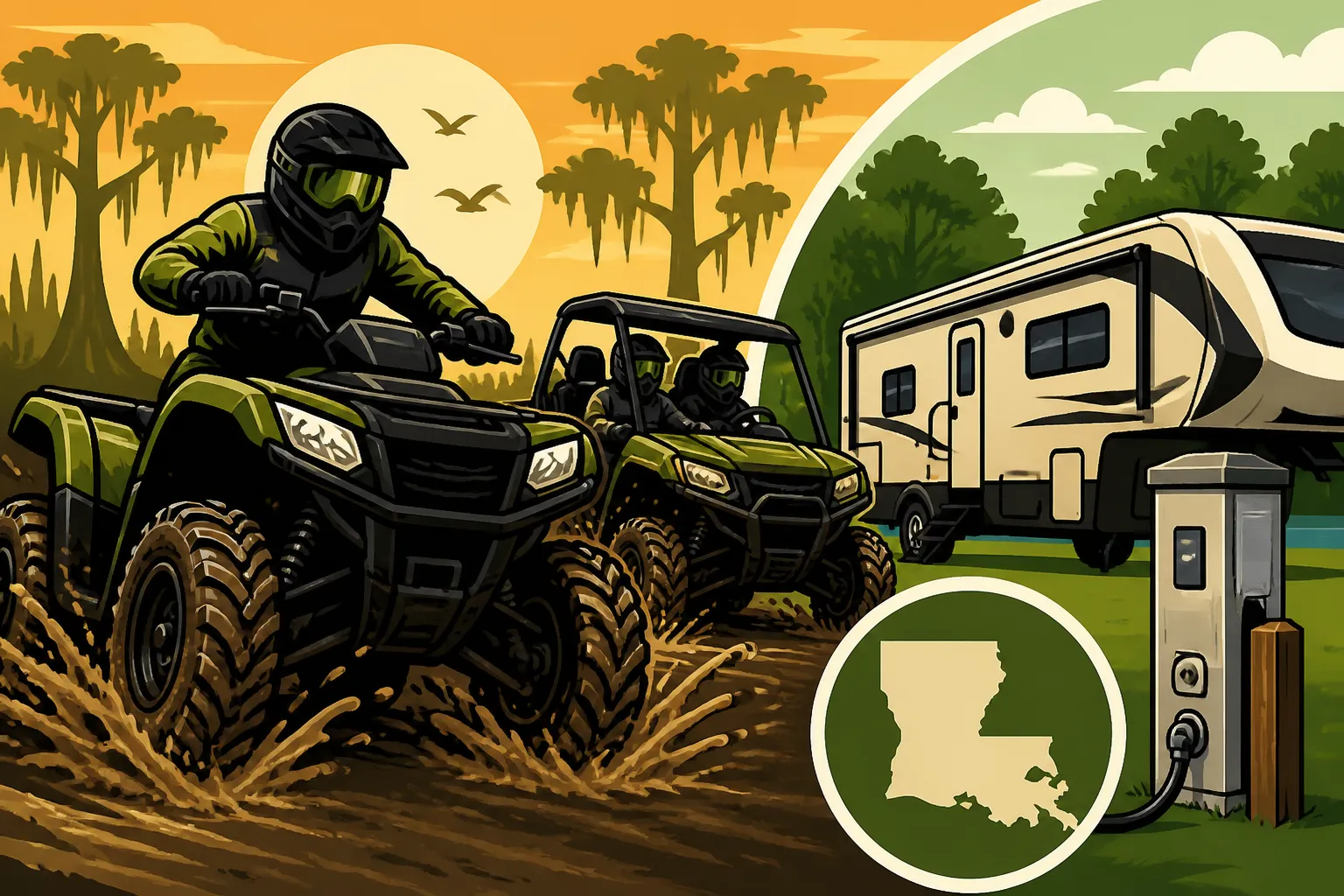
The figure of 150 RV hookups gives riders a sense of the park’s camping capacity, but it should not be treated as a promise that every site will be open or suitable for every rig on the date you want to visit. Muddy Bottoms operates around event weekends, so availability and the experience on the ground can depend on the calendar, demand, and the park’s current arrangements.
That distinction matters if you are bringing a larger motorhome, towing a long travel trailer, or arriving with a group that hopes to camp together. Before you commit to the drive, ask the park which sites are available for your dates, what utilities are included at the specific site, and whether the site layout will accommodate your vehicle and trailer. The park’s [Muddy Bottoms' RV Sites in Louisiana] details can help you get oriented, but confirm the practical details directly before booking.
A hookup count also does not tell you whether sites are close together, shaded, level, or near the areas your group wants to use. If one person in your party needs easier access to facilities or you have children who will be walking between the campsite and common areas, ask about location and distance rather than relying on a general description of the campground.
Know what you mean by an RV hookup
“Hookup” can mean different things to different campers. One person may assume it includes water and electrical service; another may expect sewer connections at the site. Don’t guess based on the term alone. Ask what services are available at the site you’re considering, whether you need a particular adapter, and whether the park recommends bringing a full water tank or other backup supplies.
The same goes for power needs. A small camper and a large RV with several appliances may have very different requirements. Confirm the electrical service available and make sure it matches your rig. If you use a surge protector, extension equipment, or a water pressure regulator at other campgrounds, bring the gear you normally rely on, while checking that any connection method is allowed by the park.
For a broader sense of the park’s camping setup and nearby amenities, review [Muddy Bottoms' Bathhouse, Pro Shop and Amenities]. Then use your questions to pin down what matters for your particular visit. A family who expects to cook most meals at the campsite will plan differently from a group spending most of the day riding and returning only to sleep.
Confirm your reservation details before towing
An RV site that works well for a short camper may be awkward for a large rig with a separate machine trailer. Before you leave home, make sure you understand the site’s dimensions or any restrictions the park can provide, how to check in, and whether you can arrive before a particular time. If you’re traveling with a group, confirm that everyone understands where to meet and how the reservations are arranged.
Keep confirmation details somewhere accessible, not buried in a text thread you can’t find when cell service is patchy. Save the park’s address and any arrival instructions before leaving. If your party is arriving in more than one vehicle, share the information with each driver. A little coordination can prevent the familiar parking-lot shuffle where one rig is waiting, another has gone to the wrong entrance, and the first person to arrive doesn’t know where to go.
The general park schedule matters just as much as the reservation. Check the [Muddy Bottoms' Event Calendar in Louisiana] before choosing travel dates, and confirm that the event or riding weekend you have in mind is actually taking place. The park’s operating pattern may not resemble a campground that welcomes guests every day, so plan around the listed dates instead of assuming a site is available whenever you want to go.
Choosing an RV setup for a riding weekend
Match the site to your rig and trailer
A campsite needs to fit more than the RV itself. Think about the length of your vehicle and trailer together, whether you need room to turn around, and where you will park the ATV or UTV when it is unloaded. If the machine stays on the trailer overnight, include that space in your plan. A site that technically fits the RV but leaves the trailer blocking the access lane can create a headache for your whole group.
Before booking, describe your setup clearly. Tell the park whether you’re bringing a motorhome and a separate toy hauler, a travel trailer with a machine on a utility trailer, or another combination. Ask about site access and any limitations that could affect backing in or unloading. If you are not used to backing a trailer into a tight space, a simple request for the best arrival route or site type can save a lot of stress.
Good planning also means being realistic about who is driving. A veteran RV owner may be comfortable maneuvering a large rig, while a less experienced driver might prefer a simpler approach and more room to park. If the group has multiple campers, compare everyone’s vehicle lengths and arrival times before booking. The best arrangement is often the one that makes unloading and moving around safe, not the one that looks most convenient on a map.
Decide between hookups and primitive camping
Hookups can make a multi-day ride more comfortable, especially when you’re traveling with children, using a larger RV, or trying to avoid managing every resource in the rig. But they are not the only way to camp. Some riders may prefer a simpler setup, while others may find that having utilities close at hand makes the weekend easier after a long, muddy day.
The right choice depends on your equipment and habits. If your RV has limited battery capacity or your group relies on appliances, verify the available utility service before choosing a site. If you are comfortable managing your own water and power, a more basic camping arrangement might work. Read [What Primitive RV Camping Gets You at Muddy Bottoms] to compare the general idea of primitive camping with a hookup-based stay, then check what is actually offered for your dates.
Do not assume that a primitive site is a fallback that can be arranged after you arrive. It may have different rules, availability, or placement from a hookup site. Ask about both options early, especially if your group is flexible. You may find that one type of site suits your rig, while the other works better for a tent camper joining the trip.
Plan for mud, wet gear, and cleanup
Louisiana riding can mean wet clothes, muddy boots, and a machine that needs attention before you put it away. Decide in advance where you will store riding gear, how you’ll keep the RV interior clean, and what you’ll do with muddy equipment. A separate tote for boots and gloves, a washable mat at the RV entrance, and a change of clothes can make the return from a ride much less chaotic.
Ask the park what washing or cleanup options are available and what rules apply. Do not assume you can wash a machine anywhere on the property, drain dirty water at the campsite, or use a nearby hose without permission. The park’s [Muddy Bottoms' Bathhouse, Pro Shop and Amenities] information is a useful starting point, but it is still worth confirming the current setup and rules directly.
After the ride, avoid letting wet riding gear sit in a closed RV for hours. Air it out where permitted, keep muddy items separate from bedding and food, and secure anything that could leak or drip during the drive home. For more on post-ride care, see [Washing a Machine After a Mud Weekend]. A little preparation protects both your gear and the interior of your camper.
Getting your machine and RV to the park
Make a towing and unloading plan
Before the trip, check your vehicle and trailer as a complete setup. Make sure the machine is tied down securely, the trailer lights work, and the load is balanced according to the equipment’s instructions. Bring the tie-downs and basic tools you normally use, and give yourself time to inspect everything before leaving rather than discovering a loose strap at the park gate.
Plan the order of arrival and unloading. If your RV and machine trailer are separate, decide whether one vehicle should arrive first and where the second should wait. Confirm where you are allowed to unload, and avoid blocking campground roads while you sort out gear. At a busy event, a clear plan keeps your group moving and helps avoid creating a pinch point for other campers.
For more detailed preparation, read [Trailering to a Mud Park]. It’s also sensible to look at the route before you leave, especially if you are unfamiliar with rural roads around Sarepta. An off-road navigation app such as onX Offroad may help you review routes and organize trip information, but do not assume its trail or property data replaces the park’s directions, posted signs, or permission requirements.
Check the route and arrival instructions
Rural driving can bring narrow roads, turns that are easy to miss, and stretches where a large RV needs extra room. Check the route with your rig in mind, not just the fastest route shown by a general navigation app. Consider bridge restrictions, roadwork, tight turns, and fuel stops where you can comfortably maneuver. If you are uncertain about the last part of the drive, ask the park for its preferred approach.
Download or save directions before entering an area where phone service may be unreliable. onX Offroad can be useful for organizing outdoor route information, but use it as a planning aid rather than the final authority on how to enter the park. Follow the park’s arrival instructions and signs, and do not use a map line as permission to cross private land or take an unapproved route.
Aim to arrive with enough daylight to check in, park, and unload without rushing. If you expect to arrive later, ask in advance what the procedure is. Rushing to back into a site after dark is uncomfortable even for experienced drivers, and it is harder to spot soft ground, obstacles, or people walking nearby.
Prepare for changing trail conditions
Rain can change the character of an off-road weekend quickly. A route that felt easy on a dry day may become slick, muddy, or difficult to navigate after a storm. Check park updates and ask about conditions before loading your machine. If the park has a status page or communicates through event channels, review that information close to departure.
A tool such as onX Offroad may help you keep your route notes organized, but it cannot tell you whether a particular track is open, safe, or appropriate for your machine unless that information is specifically provided and current. Confirm trail access with the park, follow posted restrictions, and be prepared to change your plans if conditions have shifted. For background on planning around weather, see [Louisiana Trail Conditions After Rain].
Bring the right recovery and safety equipment for your riding group, but don’t treat gear as a reason to enter terrain beyond your ability. A winch, tow strap, or recovery board is useful only when the people using it understand safe recovery practices. Agree on a simple group plan before riding: who leads, who brings communication equipment, and what everyone should do if a machine gets stuck or separated.
Making the campground work for your group
Set expectations with family and riding companions
Not everyone at an ATV or UTV weekend has the same idea of a good camping trip. One person may want to ride from morning until evening, while another may expect downtime, meals together, or a quiet place to relax. Talk through the schedule before you arrive. Decide when the group will meet, who is riding, who is staying at camp, and how you will communicate if plans change.
Families with children should be especially clear about where kids can walk and play. Do not assume that campground roads are free from moving vehicles or trailers. Set boundaries, keep children close around active loading and unloading areas, and make sure they know not to approach another person’s machine without permission. If your group includes young riders, review the park’s age, helmet, passenger, and supervision rules before the trip.
A written plan can help when several families are sharing a site or nearby sites. Include the reservation details, arrival time, meal responsibilities, and emergency contacts. It may feel overly organized at first, but it is a lot easier than trying to coordinate five people while engines are running and everyone is looking for a helmet.
Respect campground and park rules
The campsite is part of the visit, not a private island. Follow the park’s directions about quiet hours, fires, generators, pets, waste disposal, and vehicle movement. Rules can differ between parks and may vary by camping area, so ask rather than relying on what was allowed at another mud park. Keep equipment and personal belongings within your site and leave roads clear for other guests.
Pay particular attention to safety around trailers and machines. Lower ramps only in a suitable area, keep bystanders away while loading, and secure the machine when it is parked. Do not ride through the campground unless the park specifically allows it. A campground may be busy with pedestrians, children, and vehicles moving in both directions, so slow, predictable behavior makes the area safer for everyone.
Be considerate of neighboring campers after a long day of riding. Muddy Bottoms is a recreation destination, but other guests may be trying to sleep, put children to bed, or enjoy a quiet meal. Keep music and conversations at a reasonable level, especially later in the evening. The same courtesy makes event weekends more enjoyable for the people who come back year after year.
Keep amenities and logistics in perspective
A campground’s facilities can make a trip more comfortable, but the details matter. Check what is available, where it is located, and whether it is accessible during your stay. If you rely on a bathhouse, store, or other shared facility, ask about the location and hours that apply to your visit instead of assuming every amenity operates continuously.
Make a short list of what you need on site and what you should bring. That might include drinking water, food, outdoor lighting, waste bags, a first-aid kit, and basic repair supplies. Even if the park has a pro shop or other services, it is better to arrive with essentials than to rely on finding a particular item at the last minute. Check [Muddy Bottoms' RV Sites in Louisiana] and [Muddy Bottoms' Bathhouse, Pro Shop and Amenities] as part of your planning, then confirm any important details with the park.
If your group is traveling from farther away, identify fuel, groceries, and other essentials before you get close to the park. onX Offroad can help you keep outdoor route planning in one place, while a separate road-navigation tool may be more practical for fuel and general services. Save those locations before the trip and think about where you can turn around with a trailer.
A practical planning checklist for your Muddy Bottoms stay
Before you reserve
Start with the event calendar and your group’s travel dates. Verify that the park is open for the kind of visit you want, then ask about RV-site availability and the services included at the particular site. Do not book based on the headline number of hookups alone. Confirm that your rig and trailer combination will fit and ask whether there are rules about arrival times, unloading, or parking.
Use this quick comparison to keep your questions organized:
| Planning question | Why it matters | What to confirm |
|---|---|---|
| Is the park open on your dates? | Muddy Bottoms plans around events and scheduled visits | Current event dates and check-in instructions |
| What services come with the site? | Hookup details can vary by site or arrangement | Water, electrical service, sewer access, and any limitations |
| Will your full setup fit? | The RV may fit while the trailer does not | Vehicle and trailer dimensions, turning room, and parking |
| Where can you unload? | Unloading in a busy area can block other guests | Approved unloading locations and timing |
| What facilities are available? | Amenities affect what you need to bring | Facility location, access, and operating details |
| What are the current riding conditions? | Rain and park rules can affect access | Trail status, closures, and machine restrictions |
If someone in your group has a specific accessibility or comfort need, raise it early. Ask about walking distances, surfaces, and the location of shared facilities. It is much easier to adjust the plan before you leave than to discover that the most convenient site is far from the places your group needs to reach.
The week before you leave
Reconfirm the reservation, event schedule, site services, and arrival procedure. Check the weather and ask whether conditions are likely to affect access or riding. If your plans depend on a particular machine or trail type, verify that it is allowed and that the relevant areas are open. For nearby riding context, [Louisiana Riding Near Sarepta] can help you think about the area, but it should not be treated as a substitute for the park’s own rules and directions.
Inspect your RV and trailer. Check tires, lights, brakes, hitch connections, and tie-downs. Make sure the machine is ready for the kind of riding you intend to do, and pack clothes that can handle mud and changing weather. Keep important papers, reservation details, and emergency contacts where the driver can reach them without digging through packed storage.
Create a simple packing plan that separates campsite items from riding equipment. When those two categories are mixed together, it is easy to forget something important or unload half the trailer to find it. A checklist also makes the return trip easier: clean or contain muddy gear, secure the machine, and check the campsite for items left behind.
On arrival and before your first ride
Follow the park’s check-in process and confirm your site before unloading. Take a moment to look over the site and its approach. If the ground is soft, the turning space is tight, or the site differs from what you expected, stop and ask for help before trying to force the rig into place. Don’t block traffic while you sort out a solution.
After parking, locate the nearest facilities and review the park’s rules with everyone in your group. Make sure riders know where they can and cannot ride, how to get to permitted areas, and what the park expects if weather changes. Keep children away from loading areas and establish a meeting point in case the group gets separated.
Before heading out, check your machine, helmet, fuel, and communication plan. Tell someone where you expect to ride and when you plan to return. When you come back, slow down through the campground, park only where permitted, and handle muddy gear thoughtfully. Those simple habits help protect the site, the machine, and the weekend you came to enjoy.
Disclaimer
This article is for general informational purposes only and does not constitute professional advice. Laws, prices and regulations vary by location and change over time. Consult a qualified professional for guidance on your specific situation.