600 Acres Near a Small Town
A 600-acre riding venue near a small Louisiana town can sound like an easy weekend plan, until you realize it may operate around scheduled events rather than regular trail hours. This guide explains what to expect from Louisiana Mudfest near Colfax, how to plan your visit, and what to check before loading your ATV or UTV.
What to expect from a 600-acre riding area near Colfax
A large private venue is not the same as a public trail system
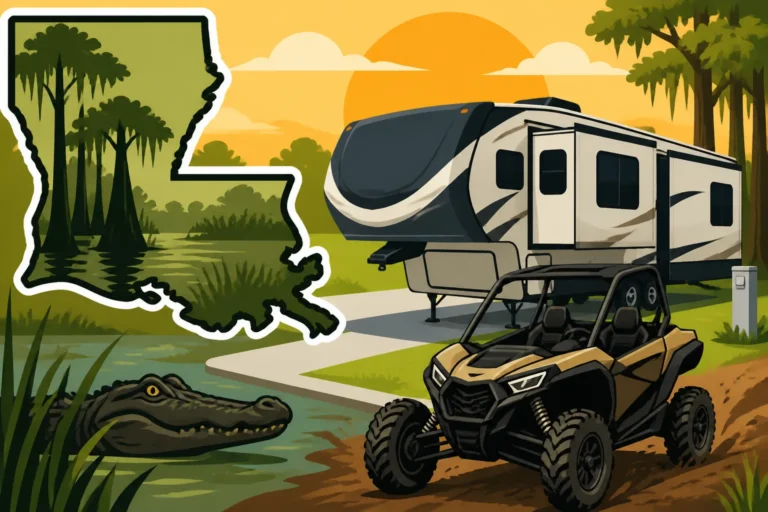
Louisiana Mudfest is associated with a 600-acre riding area near Colfax in Grant Parish. That acreage gives an event plenty of room to spread out, but it does not mean every section is open to every rider at all times. Access, riding zones, and available activities can depend on the event schedule and the rules in effect for that gathering.
That distinction matters if you are used to public trails, where you might look up a forest road or trailhead and plan a ride around posted access hours. A private mud park can have a different rhythm: an event weekend may be the time to ride, camp, meet friends, or use particular parts of the property. Before you hitch up the trailer, check the current event information rather than assuming the property is open for casual, day-to-day riding. Louisiana Mudfest and Event Weekends
A big property can also feel very different depending on the weather, crowd size, and the kind of riding you enjoy. Some riders are there for mud and group energy; others may prefer a quieter, more predictable trail. It helps to decide what you want from the trip before you go. The acreage is useful context, but it does not tell you how challenging a route will be, how busy the venue will feel, or what will be open during your visit. Louisiana Mudfest’s 600 Acres
Colfax is part of the trip, not just a name on the map
For visitors coming from farther away, Colfax is a practical location to keep in mind when planning fuel, food, supplies, and the drive in. Small-town logistics can be different from arriving at a large resort with every service on site. If you need a specific item for your machine or camping setup, it is sensible to bring it with you instead of assuming you can easily find it at the last minute.
Think through the full route, including where you will stop before reaching the riding area and how you will handle a late arrival. A group towing several trailers may need more time for fuel and coordination than one rider in a pickup. If your party is meeting from different parts of Louisiana, agree on a meeting point and a backup plan in case someone gets delayed or loses cell service.
Use a navigation app to plan the drive, but do not treat a phone map as a substitute for venue instructions. onX Offroad can help you review your route and keep track of your own waypoints, while event directions should guide you to the correct entrance and staging area. Save the details you need before leaving reliable service, and follow posted signs once you arrive.
How to plan a Mudfest visit
Check the event details before you tow
The most important planning step is confirming that the event you want to attend is actually scheduled and that it suits your group. Event weekends can have different arrangements, activities, access rules, and camping options. A date that works for your calendar is not enough by itself; read the event information closely and contact the organizer if a detail you need is unclear. Louisiana Mudfest’s Event Calendar in Louisiana
Make a short checklist before you leave:
- Confirm the event date and admission instructions.
- Check whether your machine type is permitted and whether there are equipment rules.
- Review the rules for passengers, children, helmets, pets, and alcohol.
- Confirm what camping options are available and what you need to bring.
- Ask whether the venue has specific arrival, parking, or unloading instructions.
- Save directions and any confirmation details where you can access them offline.
This may seem fussy when your friends are already talking about the ride, but it prevents a frustrating arrival. Few things are worse than towing a machine for hours only to discover that you misunderstood the event schedule, brought an unsuitable vehicle, or left an essential piece of equipment at home.
It is also worth separating confirmed details from assumptions. A friend may have visited a previous event, but rules and logistics can change between gatherings. Use firsthand stories for helpful context, then verify the parts that affect your own visit. Louisiana Private Park Waivers and Rules
Match your setup to the kind of weekend you want
A Mudfest weekend can involve more than riding. Your group may spend time unloading, meeting up, camping, waiting for others, or taking breaks between rides. That means your comfort plan matters almost as much as your machine setup. Pack for Louisiana heat and humidity, bring drinking water, and think about shade, dry clothes, and a way to keep essential items protected from mud.
If you intend to camp, check what the current event setup offers rather than assuming every service is included or available. The needs of a family in a camper differ from those of riders tent camping with minimal gear. Get the details on the options that matter to you and make a packing list around the actual arrangement. Packing for a Night of Dry Camping at Mudfest
Plan for the machine as well. Inspect tires, brakes, lights, fluids, and tie-down points before departure. Carry basic tools and any parts you know your ATV or UTV may need. Deep mud can put extra strain on equipment, and a small issue that is easy to address at home can become a major headache once you are at an event. For more on preparing the tow vehicle and machine, see Trailering to a Mud Park.
| Planning question | Why it matters | What to do |
|---|---|---|
| Is the property open on the date I want? | Access may revolve around scheduled events | Confirm the event schedule before leaving |
| Is my ATV or UTV allowed? | Venue rules can vary by event | Check machine and equipment requirements |
| What is available for camping? | Options and facilities may not suit every group | Verify arrangements and pack accordingly |
| How wet are conditions likely to be? | Rain can change the character of a riding area | Check event updates and bring recovery gear |
| Will I have phone service? | Coverage can be inconsistent around rural areas | Save directions and important details offline |
| What is the plan if someone gets separated? | Groups can spread out on a large property | Set a meeting point and agree on communication |
Riding safely and navigating a large property
Do not treat acreage as a promise of easy riding
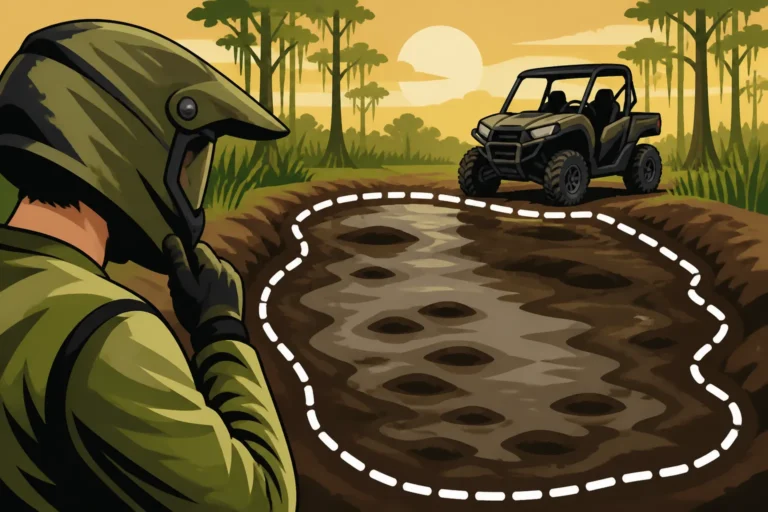
A 600-acre property may contain varied terrain, and acreage alone does not tell you whether a particular route is suitable for a beginner, a child, or a stock machine. Mud depth, water, ruts, traffic, and recent weather can change how a section rides. Stay within the areas designated for your event and follow any staff directions, even if a route looks open or familiar.
Riding with a group can make it tempting to follow the most confident person without checking whether everyone is comfortable. Before heading out, agree on a pace and a regrouping point. Riders with less experience should not feel pressured to enter a mud hole or follow a faster machine into an unfamiliar section. A simple “we’ll stop at the next marked junction” plan can prevent a small separation from becoming a stressful search.
Weather deserves particular attention. Heavy rain may make some areas more difficult, while dry conditions can bring dust and visibility problems. Ask about conditions when you arrive and adapt your route to the machines and riders in your group. For broader guidance on post-rain planning, see Louisiana Trail Conditions After Rain.
Make a navigation plan before your group spreads out
Even on private property, it is smart to know where you are and how your group will reconnect. Agree on a primary meeting point near a recognizable landmark or the staging area. Make sure everyone understands what to do if they lose sight of the group, have a breakdown, or need to return early. A charged phone or radio may help, but no device replaces a clear plan.
Mapping tools can be useful for organizing your own ride notes and checking your route before you leave. onX Offroad can help you save waypoints and review mapping information, but do not assume that a map app displays current event boundaries or replaces directions from park staff. Follow the venue’s signage and instructions first. If a marked route appears to conflict with a saved track, stop and ask rather than guessing.
Be considerate around other riders, campers, and staff. Keep speed under control in busy areas, give people space when they are unloading or working on a machine, and avoid riding through campsites or restricted zones. On a busy event weekend, courtesy and predictable riding help everyone have a better day.
Making the trip work for your group
Choose the right experience for first-timers and families
A large mud event can be exciting, but it may not be the ideal first ride for every person. If a child or beginner is coming along, talk about what the day might involve: noise, crowds, mud, long stretches outdoors, and possibly waiting while others ride. Bring suitable protective gear and make sure each rider understands the group plan and the venue rules.
Set a low-pressure goal for the first outing. Instead of promising that everyone will ride all day, plan to get familiar with the property, take breaks, and see how each person feels. A new rider may have more fun exploring easy areas with a patient companion than trying to keep up with experienced friends. Make sure the vehicle is appropriate for the rider and that supervision is clear.
Families should also agree on a meeting point and a simple response if someone gets separated. Children should know which adults they can approach for help and where the group will regroup. These small conversations are easy to skip when everyone is eager to unload, but they make a crowded event feel more manageable.
Build in time for cleanup and the drive home
Mud riding does not end when you stop the engine. Leave time to secure machines, check the trailer, and prepare for the drive home. Before loading, look for loose gear, damaged straps, mud packed around components, and anything that could shift on the road. If the venue offers a wash area, confirm how it works and whether it fits your departure plan; do not count on it without checking.
Think about where you will clean the machine once you get home. Mud left on components can make inspection harder and may contribute to wear, especially after riding in wet conditions. A careful post-ride check helps you catch a damaged tire, loose fastener, or other issue before the next trip.
Finally, compare what you experienced with what you expected. If the event format suited your group, make a note of what you would pack differently next time. If the property was busier, wetter, or more demanding than you wanted, consider a different riding setting for your next outing. Louisiana has a mix of private parks, forest trails, and other riding opportunities, and each one calls for its own preparation. Start with Louisiana ATV Trails: Where to Ride when you want to compare the broader options.
Disclaimer
This article is for general informational purposes only and does not constitute professional advice. Laws, prices and regulations vary by location and change over time. Consult a qualified professional for guidance on your specific situation.