Louisiana ATV Trails: Where to Ride
Louisiana riding plans can unravel quickly when a trail is closed after rain, a route turns out to be for dirt bikes rather than side-by-sides, or a public-land permit is required at the gate. This guide explains where to look for ATV and UTV riding in Louisiana, how the main riding areas differ, and what to check before loading your machine.
How to choose a Louisiana riding area
Start with the kind of ride you want
“ATV trail” can mean a quiet route through pine woods, a managed public trail system, a privately operated mud park, or a designated route on public land with specific access rules. Those are very different experiences. Before choosing a destination, decide whether you want a scenic trail ride, technical terrain, deep mud, a family-friendly day, or a place where you can camp beside your machine.
Public forest trails often appeal to riders who enjoy a more self-directed outing. You may need to navigate marked routes, follow land-use rules, and be comfortable turning around if conditions change. A private park can be a better fit if your group wants mud holes, an event atmosphere, or amenities close to the riding area. The trade-off is that access may follow an event schedule and the park’s own rules.
A useful first step is to compare your planned ride with the area’s official information. Check whether ATVs and UTVs are both allowed, whether the route is open, and whether a permit or fee applies. A trail name on a map does not automatically mean the route is open to every machine. For a broader overview of local options, see [Louisiana ATV Trails: Where to Ride].
Match the machine to the route
A compact ATV can fit through tighter turns and narrower trails more easily than a wide side-by-side. A UTV may be more comfortable for passengers, long days, or carrying gear, but width restrictions and trail design can limit where it can go. Check the specific riding area’s vehicle rules instead of assuming that an ATV permit or trail listing applies to a UTV too.
Also think about your tires and setup. A machine built for deep mud may be heavy, wide, and fitted with aggressive tires. That can be fun at a private mud park but poorly suited to a narrow forest trail or a public-land route with equipment limits. Conversely, a lightly equipped trail machine may not be ready for deep water or sticky gumbo mud.
When comparing possible destinations, write down your machine’s width, tire size, and intended use. Then compare those details with the park or land manager’s published requirements. Public-land restrictions can be especially specific, so review [Louisiana WMA Riding Rules for Quads] and [Louisiana WMA Riding Rules for UTVs] if a wildlife management area is on your list.
Treat maps as planning tools, not permission
A map can help you understand the shape of an area, locate access points, and plan a route that suits your group. It cannot always tell you whether a trail is currently open, whether a gate is locked, or whether your vehicle is allowed on a particular segment. Posted signs and the land manager’s current information should take priority over a route drawn on a phone.
Digital mapping tools such as onX Offroad can be useful for planning and keeping track of your position, particularly in wooded areas where cell service may be unreliable. Download or save the information you need before leaving home, and bring a backup plan for navigation. Do not treat any app as a substitute for checking official closures, posted rules, or landowner permission.
A map can also reveal practical details that are easy to overlook: where a trail system meets a road, where a staging area may be located, or how far your group might be from the truck. Use that information to set a realistic ride plan. If you are unfamiliar with an area, a shorter loop with a clear turnaround point is usually a better first outing than trying to cover every visible route.
Public forest trails in Louisiana
Kisatchie National Forest
Kisatchie National Forest is one of the first places many riders consider when looking for public-land riding in Louisiana. Its pine forests and recreation areas offer a different feel from a privately operated mud park, but the forest is not one unrestricted riding zone. Routes, access rules, permits, and seasonal conditions can vary by trail and recreation site.
Before unloading, confirm which roads or trails are designated for motorized use and whether the machine you brought is allowed. Forest boundaries can include areas with different purposes and restrictions, so seeing a wide road on a map does not necessarily mean it is an approved ATV route. Pay attention to signs at the trailhead and check the relevant forest information before you travel.
Kisatchie can suit riders who enjoy planning a day around marked routes and wooded scenery. It may be less suitable for someone expecting a commercial park experience, guaranteed amenities, or a maintained mud course. If you are going for the first time, read [Kisatchie National Forest OHV Trails in Louisiana] and [Louisiana Forest Trail Use Passes] as part of your planning, then confirm the specific site’s current requirements.
Sandstone Multiple-Use Trail
The Sandstone Multiple-Use Trail is associated with the Kisatchie Hills area and is known as a destination for off-highway riding. The word “multiple-use” matters: riders should expect to share the area with other permitted users rather than treat the trail as a private ATV course. Yielding courteously, keeping speeds appropriate to visibility, and staying on the designated route make the experience better for everyone.
Trail conditions and access can change with weather, maintenance, and seasonal management. A route that was rideable on a previous visit may be muddy, damaged, or closed on the day you arrive. Heavy rain can make a seemingly manageable track difficult to navigate, and riding around a closure can cause damage or create problems for future access.
Check the trail’s official status before you tow, and pay particular attention to seasonal notices. If the trip depends on riding Sandstone, have another plan in mind in case the route is closed or unsuitable. For more details about the area and its access patterns, see [Louisiana's Sandstone Multiple-Use Trail] and [Louisiana Trail Closures and Seasons].
Vernon Enduro and Claiborne
Vernon Enduro Trail and the Claiborne trail system are other names riders may encounter while researching Louisiana forest riding. Each area has its own character, access points, and suitability for different machines. Do not assume that a trail built or promoted for one kind of off-highway vehicle will be comfortable or legal for every ATV or side-by-side.
A narrower or more technical route may be a poor match for a wide UTV, especially if there is little room to pass or turn around. Riders on ATVs should also consider their experience level, the condition of the trail, and whether the group can handle obstacles without taking unnecessary risks. If your party includes new riders, choosing a less demanding route is often the wiser choice.
Look up each trail individually rather than relying on a general search for “Louisiana ATV trails.” Read the route description, confirm allowed vehicle types, and check current access information through the responsible land manager. [Louisiana's Vernon Enduro Trail] and [Louisiana's Claiborne Multi-Use Trail] are useful starting points for comparing these destinations.
Private mud parks and riding events
Muddy Bottoms and event-based riding
Private parks offer a different kind of day from public forest trails. Muddy Bottoms, near Sarepta in Webster Parish, is a well-known example of an event-oriented riding destination. A private park may offer a mix of mud, trails, open riding areas, camping, and event amenities, but the exact experience depends on its calendar and rules.
Do not assume a private park is open every weekend just because it has a website or a familiar name. Some parks organize access around scheduled events, and event weekends may have different entry procedures, camping options, or ride areas. Confirm the dates, admission arrangements, machine rules, and camping details directly with the park before setting out.
An event can be a good fit for a group that wants a lively atmosphere and a place to spend the weekend. It may be a less comfortable choice for riders who prefer quiet trails, early nights, or an uncrowded first ride. If your group is considering the area, [Muddy Bottoms ATV Park in Louisiana] and [Louisiana Mudfest and Event Weekends] can help you compare the style of riding and event planning involved.
What to expect at a private park
Private riding areas set their own operating rules, and those rules can cover age limits, helmets, passengers, alcohol, pets, noise, speed, camping, and where different machine types can ride. Read the rules before arriving, especially if children or passengers are coming along. A machine that is mechanically ready may still be turned away if it does not meet the park’s requirements.
Mud parks can also be demanding on equipment. Deep mud puts extra strain on tires, belts, bearings, cooling systems, and electrical connections. A winch and recovery strap may be useful, but they do not make every mud hole safe to enter. A rider should be willing to skip an obstacle when the depth, current, or recovery risk is unclear.
Ask practical questions before buying tickets or packing the trailer: Is the park open on your intended dates? Are camping reservations needed? Are there separate requirements for ATVs and UTVs? Are wash stations available, and are they open during the event? The answers can affect everything from how much gear you bring to whether your machine is a sensible match for the weekend.
Choosing between a forest trail and a mud park
A forest trail is often about route choice, scenery, and self-reliance. A private mud park is more likely to offer concentrated riding areas, event programming, or nearby camping. Neither is universally better; the right choice depends on what your group wants and how prepared you are for the conditions.
Consider who is coming with you. Experienced riders who want a quiet day may prefer a public trail system, if the route is open and appropriate for their machines. A mixed group with different riding styles might appreciate a private park where people can choose separate activities. Families should check age, passenger, and helmet rules rather than assuming the venue is child-friendly simply because other families attend.
The table below offers a practical comparison. It is a planning aid, not a substitute for each site’s current rules.
| Riding option | Often a good fit for | Important checks before leaving |
|---|---|---|
| Public forest trail | Riders who enjoy marked routes and wooded scenery | Trail status, vehicle eligibility, permits, seasonal access |
| Wildlife management area | Riders prepared to follow designated-route and access rules | Self-clearing permit, trail map, seasonal restrictions, machine limits |
| Private mud park | Groups seeking mud riding or an event atmosphere | Event calendar, admission, park rules, camping, machine requirements |
| Local private land | Riders with permission and a clear understanding of boundaries | Written permission, property limits, access roads, neighbor considerations |
Wildlife management areas and other public land
Know the difference between a trail and general access
Wildlife management areas are not open riding grounds. Motorized access is typically limited to routes and uses specified by the managing agency, and access can depend on the season or purpose of the visit. A road visible on a map may be closed to recreational machine use, and a route used by hunters or staff may not be available to recreational riders.
That distinction is easy to miss when you are planning from home. A friend may remember riding an area years ago, or an online map may show a route without explaining its current status. Before unloading, check the official rules for the specific management area and confirm which routes are open to your machine.
If you are new to WMA riding, read [Louisiana WMA Designated Trails Only] and [Louisiana Self-Clearing Permit Steps]. These details are not minor paperwork. They can determine whether you can ride at all, which trail you may use, and what you need to do at the access point.
Permits, equipment limits, and seasonal access
Public-land riding requirements can include permits, designated-trail rules, machine specifications, or seasonal closures. Requirements may differ between an ATV and a UTV. Tire width, weight, lug height, or other equipment details can matter in places where land managers are trying to reduce trail damage.
Do not wait until you reach the gate to find out that your machine is outside the allowed limits. Check the requirements at home and measure or verify your setup if necessary. This is especially important if you have modified tires, added accessories, or are bringing a machine built primarily for mud.
Seasonal access is another common source of frustration. A trail may be closed during a particular period, even when the weather seems perfect and the route looks rideable. Closures protect land and wildlife, and ignoring them can damage access for everyone. Review [Louisiana WMA Season Closures] and the current area-specific notice before planning a trip.
Respect boundaries and land access
Public land may sit next to private property, timberland, agricultural fields, or roads with separate access rules. A track that appears to continue beyond a gate or boundary is not an invitation to proceed. Follow posted signs and turn around when the route ends or the permitted area is unclear.
On private land, get clear permission from the landowner before riding. A casual assumption that a road is public can create conflict, especially in rural areas where a track may serve a farm, hunting lease, logging operation, or neighboring property. Permission should cover where you can ride, when you can visit, and whether guests are included.
This matters even when a route looks familiar or is regularly used by local riders. Land ownership and access arrangements can change, and a gate may be there for a reason. A respectful conversation before the ride is far better than an argument after a machine has crossed a boundary.
Louisiana riding regions and trip styles
North Louisiana and the piney woods
North Louisiana offers many of the state’s better-known forest and private-park riding options. The piney woods around areas such as Webster Parish and the Kisatchie region can make for a pleasant change from open fields and paved roads, but distances between services may be longer than visitors expect.
Plan fuel, food, and recovery supplies before you leave the main highway. A short-looking trip on a map can become a long day if you have to tow a disabled machine or drive to find fuel after riding. In wooded areas, a dropped phone signal can also make navigation and communication more difficult.
Riders heading toward the northern part of the state should check trail status, private-park calendars, and road access as separate items. A forest route might be open while a nearby event park is closed, or a park could be hosting a weekend event while a public trail has weather-related restrictions. For more local ideas, explore [Louisiana Riding Near Shreveport] and [Louisiana Riding in Webster Parish].
Central Louisiana and the Kisatchie area
Central Louisiana can work well for riders building a trip around forest recreation, especially if they are willing to plan rather than expect a fully managed park experience. The landscape, route style, and access arrangements can vary considerably across the region, so it is worth choosing a specific trail system rather than treating “Kisatchie” as one destination.
If you are travelling from Alexandria, Leesville, or Natchitoches, map the drive to the actual trailhead or staging area. The nearest town name may not tell you how far the final stretch is, whether the access road is suitable for a large trailer, or where you can safely park. Confirm the location from the managing agency’s directions and allow time for unloading and permit steps.
A central Louisiana trip can also be a good opportunity to combine riding with a simple overnight stay, but do not assume camping is permitted wherever your group stops. Check the designated campground or recreation-site rules, and confirm whether overnight parking is allowed. [Louisiana Riding Near Alexandria] and [Louisiana Trails With Camping] can help narrow down the kind of trip you want.
South Louisiana and the limits of nearby options
South Louisiana riders may find that the closest appealing riding destination is not necessarily a public forest trail. Private parks, organized events, and landowner-approved routes may be more practical options, depending on the part of the region and the machine you own. The drive can be a significant part of the day, so verify the destination before loading.
Do not confuse an open field, levee, canal bank, or rural road with an approved ATV trail. These places may have separate ownership and access rules, and some are not lawful or suitable for recreational riding. Always confirm who manages the property and whether motorized riding is allowed.
If you are travelling from the New Orleans area or the Gulf Coast, plan the day around towing time, fuel, and the destination’s opening schedule. An event-based park may require advance planning, while a public-land destination may require a permit or have limited facilities. [Louisiana Trails Within Two Hours of New Orleans] can help with early trip research, but confirm the actual route and rules before departing.
Plan for weather, conditions, and safe riding
Check trail conditions after rain
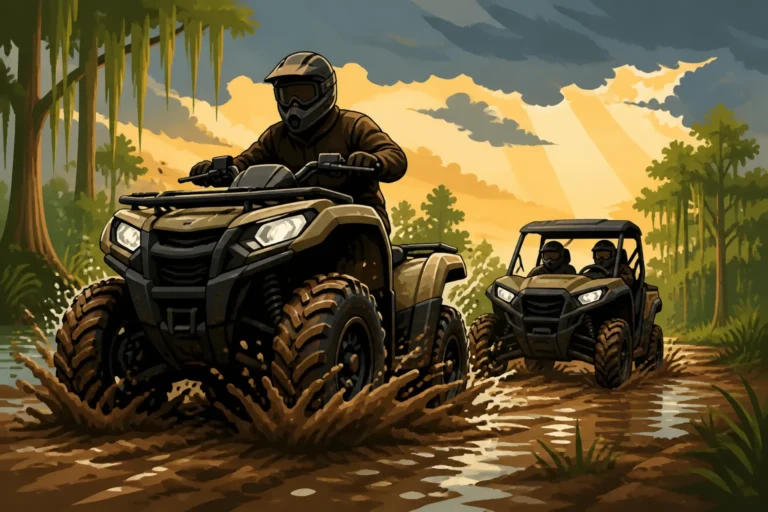
Louisiana rain can change a ride quickly. A route that was easy to navigate the previous weekend may become slick, rutted, or deeply flooded after a storm. Even where the trail remains open, the conditions may be inappropriate for a beginner, a lightly equipped machine, or a group without recovery gear.
Check for recent weather and any trail notices before you commit to the drive. If the destination has a status page or direct contact information, use it. Do not rely only on an old social media post or a map review from someone who visited under different conditions.
Give your group permission to change the plan. Turning around is not a failed ride; it is often the safest choice when a water crossing is deeper than expected or the trail has been damaged. Read [Louisiana Trail Conditions After Rain] and [Louisiana Trail Closures After a Storm] before heading out in wet weather.
Prepare for heat, bugs, and limited service
Heat and humidity can make an ordinary ride tiring, especially when riders are wearing helmets and protective gear. Start hydrated, bring more drinking water than you expect to need, and take breaks before anyone feels dizzy or unusually weak. Children and newer riders may need more frequent stops than experienced adults.
Insects are part of many Louisiana outdoor trips. Pack repellent, consider clothing that covers exposed skin, and check yourself and your passengers after riding. Long sleeves and gloves can also reduce scratches from brush and help protect skin from sun exposure.
Cell service can disappear in wooded or rural areas. Share your destination and expected return time with someone who is not riding, and carry offline navigation or a paper map as a backup. A phone with a full battery is useful, but it is not a complete communications plan. [Cell Dead Zones in the Piney Woods] and [Packing for Humid Heat] offer practical reminders for trips where comfort and communication matter.
Ride with a recovery plan
A recovery plan starts before a machine gets stuck. Bring suitable recovery equipment, know how it is meant to be used, and agree on a plan with your group. Keep people clear of tensioned straps and winch lines, and never stand in a place where a shifting machine could strike you.
Avoid entering water or mud when you cannot judge the depth, bottom, or exit. A hole that looks shallow from the bank may conceal a rut, soft edge, or submerged obstacle. If your machine has a snorkel, winch, or aggressive tires, that does not remove the need to assess risk.
Keep the group together and decide what to do if someone loses the route or has a mechanical problem. New riders should not feel pressured to follow a more experienced friend into a difficult obstacle. A conservative choice can prevent an injury, a damaged machine, or a costly recovery.
Choose a machine and gear for the destination
Tires and setup should suit the trail
Tire choice affects how a machine steers, grips, and handles mud, but more aggressive does not always mean better. Deep-lug tires may perform well in certain muddy conditions, yet they can be a poor fit for a public route with equipment restrictions or a firm, narrow trail. Check the destination requirements before changing your setup.
The same goes for accessories. A snorkel may make sense for a rider who regularly visits deep-water areas, while a winch can be useful for recovery. But heavy accessories can change a machine’s weight and handling, and they do not make unsafe crossings safe. Build your setup around the places you actually ride.
If your plans include both public trails and mud parks, accept that one machine setup may not be ideal for every destination. Prioritize the rules of the area you visit most often, and avoid taking a modified machine somewhere without checking its eligibility first. Public-land restrictions deserve particular attention because they can be more specific than private-park preferences.
Pack for the day you have planned
A day ride calls for more than a helmet and a full tank. Bring water, basic first aid, a tool kit suited to your machine, a tire-repair option, a flashlight, a charged phone, and a way to navigate offline. Add weather protection and a dry change of clothes if the route or season makes getting wet likely.
For a group ride, make sure each rider knows the meeting point, route plan, and turnaround time. Keep a small reserve of supplies with someone who is not carrying everything on one machine. If a rider is separated or a machine breaks down, a simple plan prevents confusion from becoming a bigger problem.
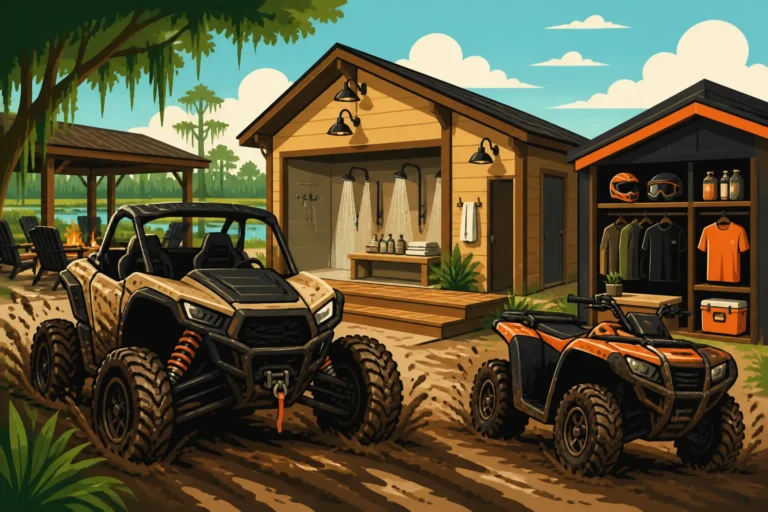
For an overnight trip or event weekend, think through storage and cleanup as well. Wet riding gear left in a hot trailer can become unpleasant fast, and mud carried home can create extra work if the machine is not rinsed and inspected promptly. Pack straps, a tarp, and basic cleaning supplies so you can secure the machine and deal with the mess without improvising in a parking lot.
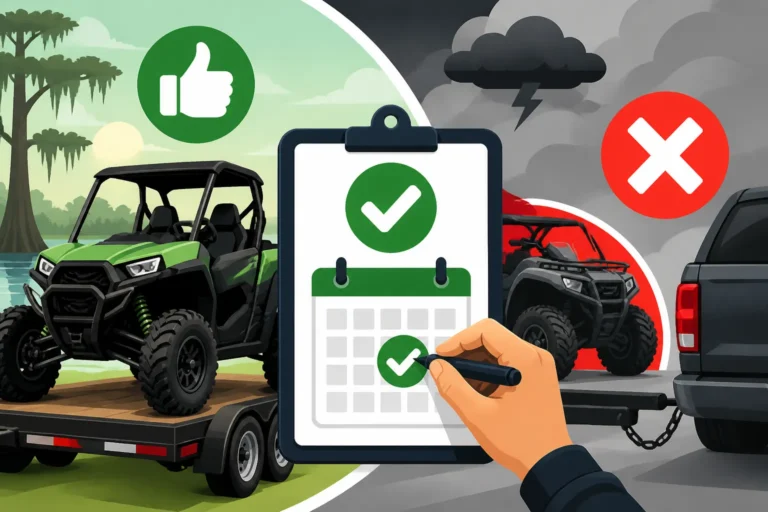
A practical checklist before you tow
Confirm the destination details
Before leaving, verify that the area is open on your intended date and that your machine is permitted. Check whether the ride requires a permit, pass, reservation, event ticket, or separate camping arrangement. Confirm the address of the actual entrance, not just the nearest community or general area name.
Look for restrictions that could affect your group: machine width, age rules, passenger requirements, helmets, trail difficulty, or seasonal access. If the information is unclear, contact the park or land manager before committing to the trip. It is much easier to resolve a question at home than at a gate with a loaded trailer.
Also check the weather and any notices posted shortly before departure. If rain, fire conditions, maintenance, or a scheduled event could change access, make a backup plan. A second-choice destination or an alternate activity can save the day when the original route is unavailable.
Prepare the trailer and riding group
Inspect tie-downs, trailer lights, tires, and the hitch before a long drive. Secure each machine at appropriate frame points and confirm that nothing can shift during braking. Bring a spare strap and the tools needed to deal with a minor trailer problem.
Make sure every rider understands the group’s expectations. Agree on a pace, stopping points, and how to handle a rider who wants to skip an obstacle. A ride is more enjoyable when beginners can speak up without being teased or rushed into terrain beyond their comfort level.
Finally, let someone know where you are going and when you expect to return. That small step matters if the group has an accident, loses service, or gets delayed by a mechanical problem. When you are riding in a remote or unfamiliar area, good planning is part of the fun—not a burden to deal with after something goes wrong.
Disclaimer
This article is for general informational purposes only and does not constitute professional advice. Laws, prices and regulations vary by location and change over time. Consult a qualified professional for guidance on your specific situation.