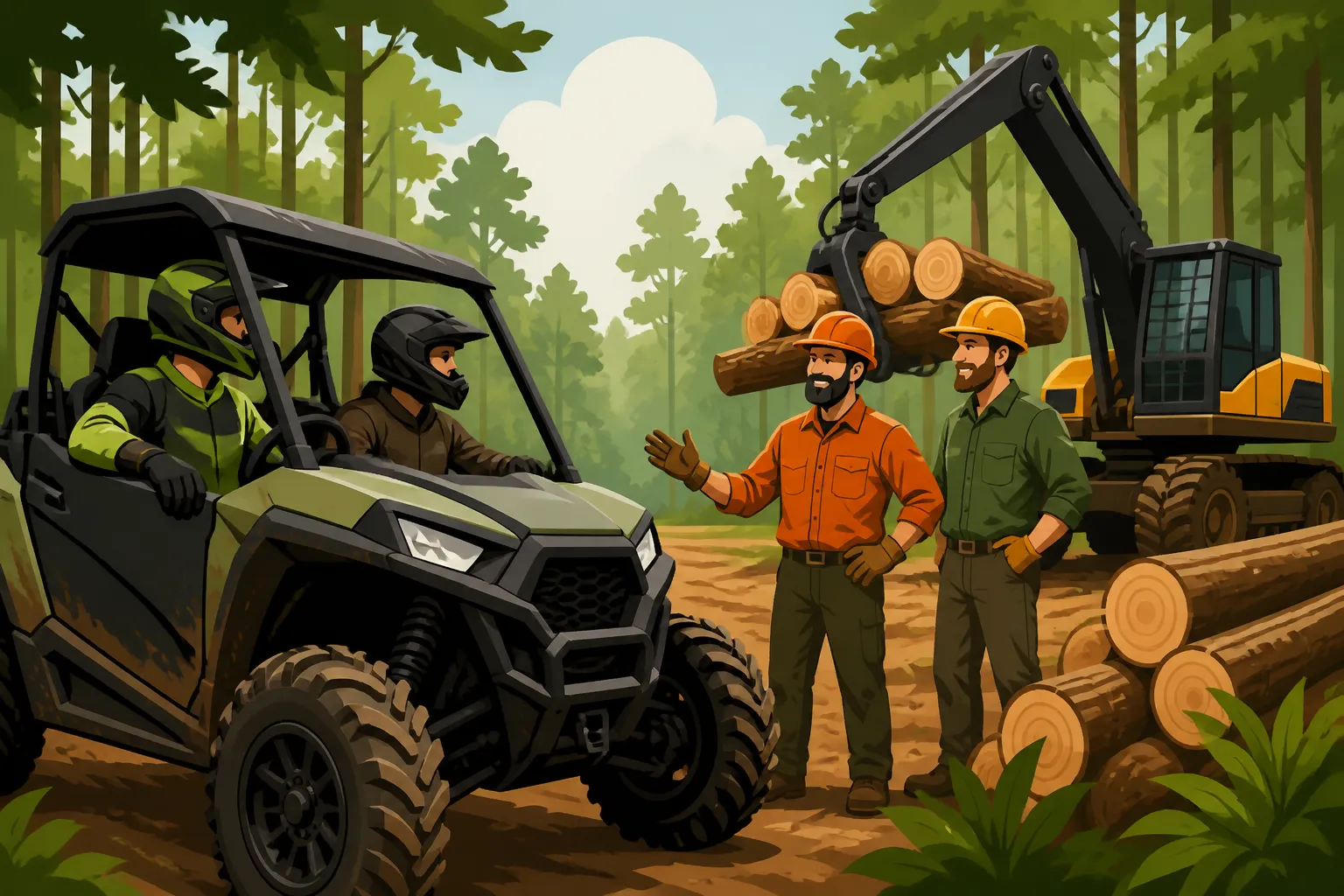
Meeting a Logging Crew in the Forest
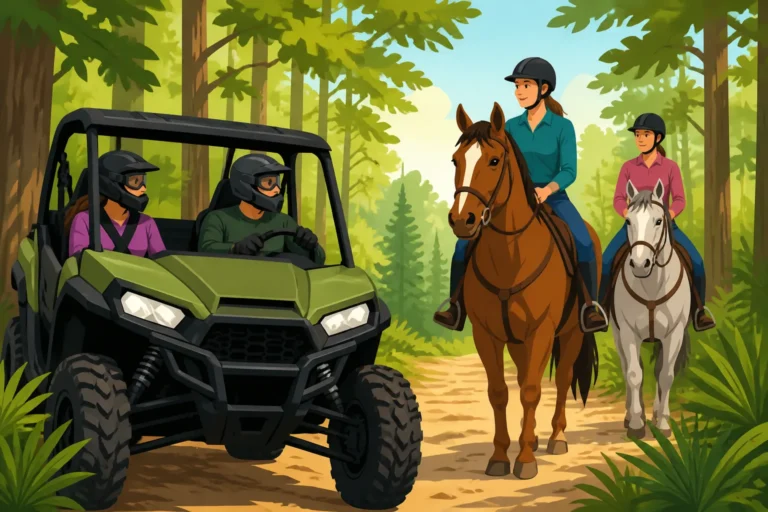
A quiet Louisiana forest trail can change quickly when logging trucks, skidders, or loaders appear around a bend. The safest response is to slow down, stop well clear of the work area, and give the crew room to operate. This guide explains how to handle an encounter, recognize warning signs, and decide when it is safer to turn around.
Why Logging Traffic Changes a Forest Ride
Expect large vehicles and limited visibility
Logging roads can carry equipment that is much wider, heavier, and slower to stop than an ATV or UTV. A loaded truck may need substantial room to turn or brake, while a skidder or loader can move in unexpected directions as it handles timber. Dust, tree cover, uneven ground, and engine noise can make it harder for everyone to see or hear each other.
A bend that felt easy to navigate on the way in may look very different when a truck is coming toward you. You might have only a short distance to react, especially on a narrow road with brush along the edges. Keep your speed low enough that you can stop within the clear distance you can see.
Do not assume the driver or equipment operator has spotted you. Heavy machinery often has blind areas close to the vehicle, and a person on a small machine can be difficult to notice among trees and dust. Make yourself predictable: slow down, stop, and wait somewhere visible but safely outside the active work area.
Understand that a forest road may serve more than recreation
A road through the woods may look like a trail but still be used for timber operations, land management, access, or other work. A route shown on a riding map does not automatically mean it is open to public riding today. Work schedules, weather, temporary closures, and posted restrictions can change what is safe or permitted.
Before heading into Kisatchie National Forest or another riding area, check the land manager’s current notices and trail information. A map can help you plan, but it should not replace posted signs or official closure information. For a broader look at designated riding areas and trail networks, see Kisatchie National Forest OHV Trails in Louisiana.
If you use onX Offroad to plan a route, treat it as one planning tool rather than permission to enter a road or work zone. Compare your planned route with official information, then obey signs and barriers you encounter on the ground. This is especially important when a route crosses areas where timber work may be underway.
What to Do When You Meet a Logging Crew
Slow down, stop, and choose a safe place to wait
As soon as you see a logging truck, work vehicle, or active machinery, ease off the throttle and stop before reaching the crew. Avoid braking hard at the last moment or pulling into a space where the operator may need to turn, back up, or move equipment. If you can safely move to a wider, stable shoulder without entering the work area, do so; otherwise, stop where you are and wait for a clear signal or a safe opportunity to retreat.
Keep your machine pointed in a direction that makes it easy to move away if needed. Leave enough room for the crew’s vehicles to pass, and do not park in front of a gate, at a road junction, or beside a place where trucks are loading or turning. If you are riding with others, make sure the entire group has stopped and is not spread across the road.
Once stopped, stay on your machine or move only to a safe location well outside the work zone. Do not walk up to an operator who is focused on equipment, approach a truck cab, or try to get close enough to be heard over machinery. A friendly wave from a safe distance is fine, but your first priority is staying visible and out of the way.
Let the crew control the timing of the encounter
Do not assume that a gap between vehicles means the road is clear. Another truck may be coming, equipment may be backing up, or a worker may be preparing to move a load. Wait until the road and work area are clearly safe before moving. If a worker signals you to stop, follow that direction. If they indicate that you should turn around, do so without arguing or trying to squeeze past.
If you need to ask whether a route is open, wait until the crew is not operating equipment and you can communicate without approaching machinery. Keep the question brief and respectful. Workers may not be able to stop what they are doing to discuss trail access, and a quick response should not be treated as a replacement for official access rules or posted signs.
Never ride under a raised load, pass close to a moving skidder, or thread between trucks and equipment. A machine that looks stationary may begin moving without much warning. The safest distance is the one that keeps you completely outside the active work area, not merely far enough away to fit through.
| What you encounter | Safer response | Avoid |
|---|---|---|
| A logging truck approaching on a narrow road | Stop early in a visible, stable place and leave room to pass | Trying to race ahead or squeeze by |
| A skidder, loader, or other machine working near the road | Stay well outside the work area and wait | Walking close to the machine or crossing its path |
| A closed gate, barrier, or closure sign | Turn around and use a confirmed open route | Moving the barrier or riding around it |
| Dust or poor visibility after a truck passes | Wait for visibility to improve before continuing | Following closely behind the truck |
| A worker directing riders to stop or turn back | Follow the direction calmly | Debating access in the middle of active work |
How to Decide Whether to Continue or Turn Around
Treat signs, barriers, and active work as clear warnings
A closure sign or barrier should end the discussion. Do not move it, ride around it, or assume that a temporary-looking closure does not apply to recreational riders. A work zone may extend beyond the exact location where equipment is visible, and the crew may be using roads that connect to your planned route.
Even without a sign, active logging is a strong reason to pause and reassess. If you cannot see the full route ahead, if trucks are repeatedly entering or leaving, or if equipment is working close to the road, turning around is often the safest choice. A shorter ride is frustrating, but it is better than becoming trapped between machinery, a blocked route, or a long truck turnaround.
Trail status can also change after storms, road damage, or scheduled work. Check current updates before loading your machine and again before entering a trail system. Checking a Trail Status Page First can help make that pre-ride check part of your routine, while Louisiana Trail Closures After a Storm explains why a familiar route may not be usable after changing conditions.
Make a safe retreat instead of improvising a detour
If the road ahead is blocked or unsafe, return the way you came only when you can do so safely. Before turning around, look for a broad, stable area rather than attempting a tight turn on a steep, soft, or narrow shoulder. In a group, communicate clearly so riders do not start moving in different directions.
Do not create a new route by cutting through brush, crossing a closed road, or taking an unmarked spur. An apparent detour can lead into private property, another work area, or terrain that is difficult to navigate. If you are uncertain whether a connection is open, stay on a route you have confirmed rather than relying on a guess.
A navigation app can help you understand where you are and find a route back, but it cannot tell you whether a road is safe to enter at that moment. onX Offroad may help you review your planned route before the ride; still, compare that information with official trail notices and on-site signs. If the app’s route conflicts with a barrier or a worker’s direction, follow the real-world restriction.
Plan Ahead and Ride Considerately
Prepare for limited cell service and changing conditions
Forest riding can take you beyond reliable cell coverage. Save your route information before leaving service, carry a paper map or other backup, and make sure someone at home knows where you plan to ride and when you expect to return. If your group has several machines, agree on a simple plan for regrouping if visibility or dust separates riders.
A route-tracking tool such as onX Offroad can be useful for reviewing your location and planned path, but do not rely on a phone alone. Batteries can drain, devices can be damaged, and a route line cannot confirm that a trail remains open. Carrying a Paper Map in the Forest offers another way to prepare for navigation problems.
Pack for a slower day than expected. A surprise closure or work zone may add time, and riders may need to backtrack. Bring water, basic first-aid supplies, communication equipment suited to your group, and enough fuel for the planned ride and a reasonable return. The goal is not to push past a closure because you are tired, low on fuel, or eager to reach a destination.
Keep group riding calm and predictable
Before setting out, tell everyone in the group how you will respond to work vehicles: slow down, stop, leave room, and wait for a safe path or turn around. Riders should avoid bunching up around machinery or trying to pass one another near a truck. If one person spots a crew, they should alert the group without creating a sudden pileup.
Keep noise and speed down when approaching homes, camps, trailheads, and work areas. Dust can reduce visibility for workers as well as other riders, so leave extra distance behind trucks and avoid following them closely. These habits fit into broader Louisiana Trail Etiquette Locals Expect and make shared forest roads more comfortable for everyone.
Also plan for the possibility that a favorite route is unavailable. Have a confirmed alternative riding area in mind rather than choosing an unmarked road on the fly. If you are using an app such as onX Offroad to prepare backup routes, verify those options with the appropriate land manager before riding. For narrow trail sections where you meet other users, Yielding on a Narrow Forest Trail offers additional practical guidance.
A logging crew is not an obstacle to outsmart; it is a sign that the forest is being actively worked. Stop early, stay clear of machinery, follow closures and directions, and turn around when the route does not look safe or authorized. A little flexibility can protect you, the crew, and the chance to enjoy another ride later.
Disclaimer
This article is for general informational purposes only and does not constitute professional advice. Laws, prices and regulations vary by location and change over time. Consult a qualified professional for guidance on your specific situation.