Sunscreen on an Open Forest Road
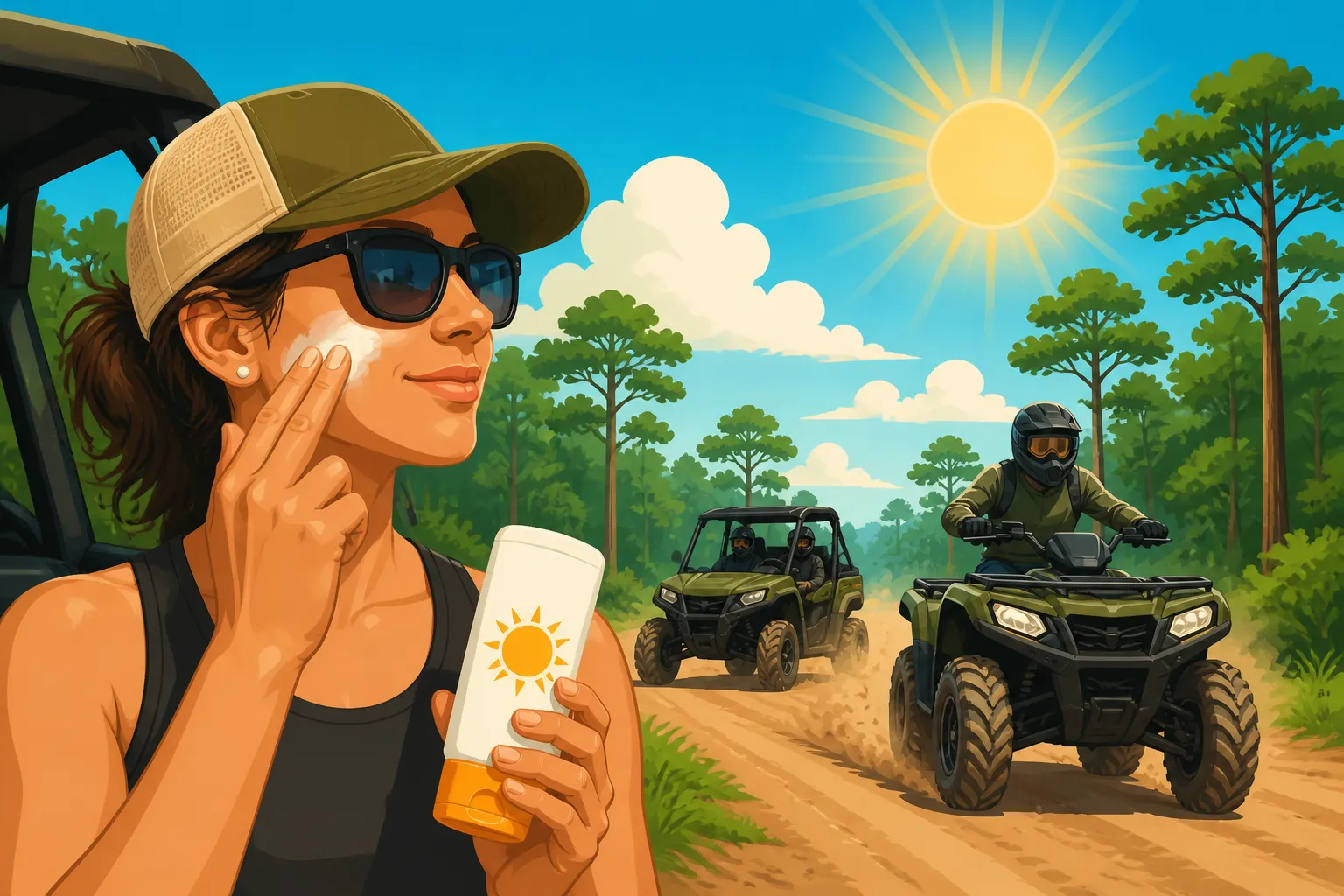
An open forest road can feel shaded until a long stretch of direct sun hits your face, neck, and arms. In Louisiana, heat, humidity, sweat, and reflected light can make a riding day rough on exposed skin. This guide explains how to choose sunscreen, apply it before you ride, keep it working on the trail, and protect the spots riders often miss.
Why sunscreen matters on an open forest road
Shade can change from one stretch to the next
A trail that begins beneath a pine canopy may soon open onto a wide forest road, a cleared utility corridor, or a sandy stretch with little cover. Even if most of your route feels shaded, brief exposed sections can add up over several hours. The wind from riding can also make the sun feel less intense than it is, so it’s easy to underestimate how much time your skin is exposed.
Louisiana’s heat and humidity add another complication: sunscreen may mix with sweat, rub off under gloves or straps, or run into your eyes. A comfortable morning can become a hot afternoon, especially if you stop often or ride slowly through soft ground. If you’re planning a summer outing, pair sun protection with the practical advice in Louisiana Riding in Summer Heat and Packing for Humid Heat.
A useful habit is to think about sun exposure by body part, not just by the amount of shade on the route. Your cheeks may be covered by a helmet, while your ears, the back of your neck, and your hands are exposed. A rider wearing a short-sleeved shirt may get several hours of sun on their forearms even when the trail itself is mostly wooded.
Sunscreen is one part of a broader protection plan
Sunscreen helps protect exposed skin, but it works best alongside clothing, shade, and sensible breaks. A lightweight long-sleeved shirt, riding gloves, sunglasses, and a helmet with appropriate coverage can reduce how much skin is exposed in the first place. That can make reapplying sunscreen simpler, too: you have fewer exposed areas to keep track of.
Treat sunscreen as something to plan for, rather than a last-minute item tossed into a gear bag. If you’re towing to a trailhead, put it somewhere easy to reach before unloading. If your group is checking a map and discussing route options, use that pause to think about exposed sections and when you’ll be able to stop safely. A route-planning tool such as onX Offroad may help you review the area and prepare for a ride, but your sun protection plan should still account for changing shade and conditions on the ground.
Choose sunscreen and riding gear that work together
What to look for when choosing sunscreen
For a day outdoors, look for a broad-spectrum sunscreen with an SPF of 30 or higher. Broad-spectrum protection covers both UVA and UVB rays. Water-resistant formulas can be a practical choice when you expect to sweat, but “water-resistant” does not mean waterproof or all-day protection. Follow the product label for how often to reapply, and bring enough for everyone who plans to use it.
There isn’t one perfect formula for every rider. A lotion may be easier to apply evenly before you get dressed, while a stick can be convenient for spots such as the nose and ears. Some people find certain formulas sting their eyes when sweat carries them down their face. If that has happened to you, try a different product before a long ride rather than experimenting at the trailhead.
| Riding situation | A practical approach | Details to remember |
|---|---|---|
| Long exposed stretches | Apply sunscreen to uncovered skin before departure and bring extra | Wind can make sun exposure easy to overlook |
| Sweaty, humid conditions | Consider a water-resistant formula | Reapply according to the label, especially after heavy sweating |
| Frequent helmet or gear adjustments | Use clothing to cover vulnerable areas where practical | Straps, collars, and gloves can rub sunscreen away |
| Sensitive skin or eye irritation | Test a product before ride day | Keep sunscreen out of the eyes and follow package directions |
| A group ride with children | Pack a separate, easy-to-use supply | Help younger riders cover often-missed spots |
If you’re unsure whether a product suits your skin, try it on a shorter outing first. A sunscreen that feels fine during a quick errand may be uncomfortable after hours of heat and sweat. Keep the label with the product, and follow its directions rather than relying on a memory of when you last applied it.
Cover the parts riders often miss
The most commonly forgotten areas are often the ones that are hard to see while you’re getting ready: ears, the hairline, the back of the neck, the tops of the hands, and the lower legs between socks and pants. If you wear a helmet with an open face, pay attention to your cheeks and nose. If you ride with a short collar, check the skin just above it.
Put sunscreen on before you put on gloves, goggles, or other gear that can make application awkward. Give it time to settle according to the product directions before you start riding. If you apply it in a hurry at the trailhead, it’s easy to leave a bare strip around a wrist or miss one side of your neck while your group is waiting.
Clothing can take some of the pressure off remembering every spot. Long sleeves and riding pants provide a physical barrier, while gloves cover the backs of your hands. A neck covering can help protect the skin below a helmet, as long as it fits safely and doesn’t interfere with your gear. For broader advice on getting ready for a ride, see Louisiana Trail Etiquette Locals Expect and Louisiana Trail Mileage Totals.
Build sunscreen into your ride-day routine
Before you leave home
Apply sunscreen to clean, dry skin before dressing, following the product label. This makes it easier to cover areas that may be hidden by clothing or straps once you are geared up. Check that the bottle is closed securely and pack it where it won’t be crushed, leak onto other gear, or get buried under tools and spare clothing.
Think through your day, not just the first hour. A short outing near the trailhead may turn into a longer ride if your group takes a wrong turn, stops for repairs, or decides to explore another road. Planning ahead helps prevent the familiar problem of realizing the sunscreen is back in the truck after you’ve already ridden well away from it.
If you use a mapping app such as onX Offroad to review your route, combine that planning with a simple exposure check: where might you be out in the open, and where can the group pause safely? A route map cannot tell you exactly how much direct sun you’ll get at every moment, so bring sunscreen even when the planned route looks heavily wooded. Before heading out, it can also help to check Checking a Trail Status Page First and review Louisiana Trail Conditions After Rain, especially if weather may change the ride or make stops more difficult.
During the ride
Reapply sunscreen as directed on the label. Many products call for reapplication about every two hours, and sooner after swimming, toweling off, or heavy sweating. On an ATV or UTV trip, that may mean applying again during a planned break rather than waiting until you feel sunburned. Use a clean, safe place to stop; don’t try to apply sunscreen while operating a machine or standing where other riders may not see you.
A small routine makes reapplication easier. At a break, take off dusty gloves, wipe away excess sweat if needed, and check exposed areas before applying more. Pay special attention to the nose, ears, neck, and backs of hands. If sunscreen gets into your eyes, stop somewhere safe and follow the product’s directions for rinsing and care.
Keep the container sealed and protected from excessive heat. A hot vehicle or direct sun can make a bottle unpleasant to handle and may affect the product, so follow its storage instructions. If a product changes in appearance or smell, or is past the expiration date printed on it, replace it rather than relying on it for a full day outdoors.
For a longer ride, agree on a sunscreen stop before the group spreads out. A route discussion using onX Offroad can be a convenient moment to plan that break, but the key is making the stop part of the group’s routine. This is especially helpful when riding with people who tend to keep going until the trailhead is back in sight.
Common mistakes and a safer plan for groups
Don’t rely on a cloudy sky, tree cover, or one morning application
Clouds can make the light feel less direct without eliminating the need for sun protection. Tree cover also comes and goes, and a shaded trailhead doesn’t guarantee a shaded ride. Riders often make the same mistake with an early application: they put sunscreen on before leaving home and assume it will last the whole day, even after hours of sweat, rubbing, and gear adjustments.
Another common problem is using too little or spreading it unevenly. Rushed application can leave missed patches around the hairline, ears, or clothing edges. Use enough to cover exposed skin as directed on the label, and ask a riding partner to check spots you can’t easily see, such as the back of your neck.
Don’t let sun protection distract you from safe riding habits. Apply sunscreen while parked, keep vehicles off narrow trail sections during breaks where possible, and make sure the group knows where everyone is before setting off again. The same thoughtful preparation that makes a ride more comfortable also helps avoid unnecessary delays and confusion at the trailhead.
Make a simple plan for children and riding groups
Children may not notice early sun exposure, and they may be less willing to stop once a group is moving. Help them apply sunscreen before gearing up, check that their ears and neck are covered, and bring a product they can tolerate. Follow the product label and any age-specific directions; ask a healthcare professional if you have questions about what is suitable for a child.
For a larger group, designate a break point where everyone can drink water, check gear, and reapply sunscreen. This works better than assuming each person will remember on their own. Let the group know before the ride begins that a sunscreen stop is part of the plan, particularly if the route includes open roads or long stretches between trailheads.
A practical checklist can be short:
- Apply sunscreen to exposed skin before dressing and follow the product label.
- Pack the bottle where it is easy to reach and protected from damage.
- Wear clothing and gear that cover vulnerable areas comfortably.
- Plan a safe stop for reapplication and a quick gear check.
- Reapply according to the label and after heavy sweating or other activity that removes it.
- Check each other for missed areas before leaving the break.
If your plans include public forest trails, remember that sunscreen is only one piece of preparation. Confirm access requirements, trail rules, and any restrictions before you unload; [Louisiana Forest Trail Use Passes] is a useful starting point for understanding the pass question. When you’re riding with others, also review Louisiana Group Ride Planning so stops, route choices, and basic safety expectations are clear to everyone.
A little planning can spare you the miserable surprise of a burned neck or hands after a ride that seemed mostly shaded. Choose a sunscreen you’ll actually use, cover the areas your helmet and clothing leave exposed, and build reapplication into a safe break. Then you can focus more on the ride and less on regretting what you forgot at the trailhead.
Disclaimer
This article is for general informational purposes only and does not constitute professional advice. Laws, prices and regulations vary by location and change over time. Consult a qualified professional for guidance on your specific situation.