Heat Illness on a Summer Ride
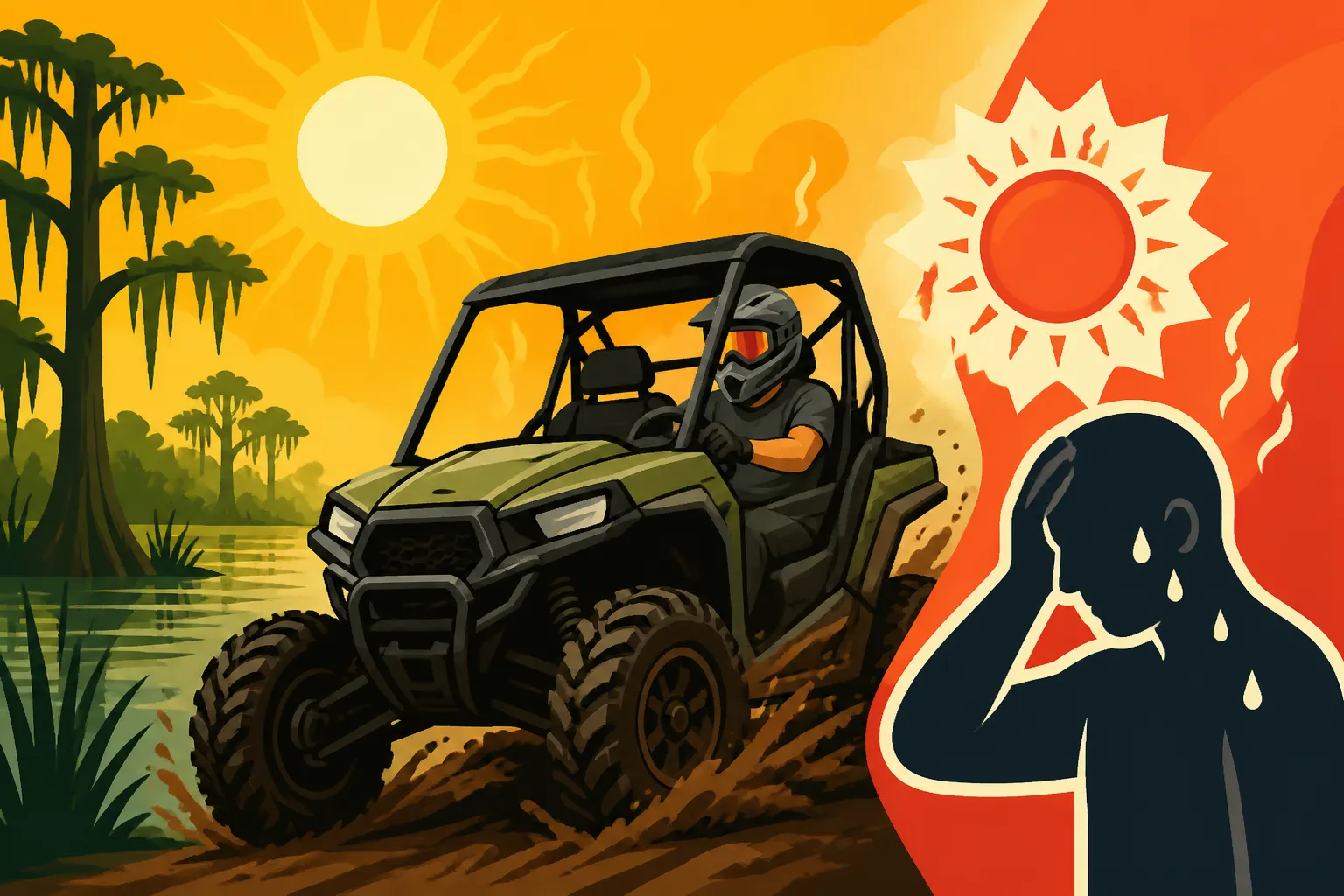
A Louisiana summer ride can turn uncomfortable before the trail looks especially demanding. High humidity, sun-warmed gear, slow mud riding, and a machine that stalls far from the truck can make it hard to cool down. This guide explains how to recognize heat illness, reduce the risk before and during a ride, and respond when someone starts showing symptoms.
Why summer riding in Louisiana raises heat risk
Humidity and riding gear make cooling harder
Your body cools itself partly by sweating. In humid conditions, sweat evaporates less efficiently, so you may keep sweating without getting the cooling benefit you expect. That can happen on a wooded trail near Kisatchie National Forest as well as in an exposed staging area or open stretch of trail. Shade can help, but it does not remove the heat and humidity your body is dealing with.
Protective gear adds another challenge. A helmet, gloves, boots, long sleeves, and riding pants are important pieces of off-road safety equipment, but they can trap heat, especially when you are moving slowly or stopped in direct sun. Mud riding can add physical effort: pushing a stuck machine, working a winch, or repeatedly maneuvering through deep ruts takes more energy than an easy cruise.
Heat trouble can creep up gradually. A rider may feel merely tired or irritable, then develop a headache, nausea, dizziness, or weakness. That is why it is risky to rely on “I’ll know when I’m overheating.” Pay attention to changes in how you or your riding partners feel and behave, not just to the temperature.
Long routes and delayed help complicate a hot-day ride
A trail can feel manageable when you leave the parking area and become much harder when you are tired, thirsty, or dealing with a machine problem. If a group gets separated, someone has a mechanical issue, or a rider takes a wrong turn, time in the heat can stretch longer than planned. A route plan should account for likely stops, the pace of the least experienced rider, and how the group will reach the parking area if someone needs to quit early.
Before heading toward areas such as the Kisatchie Hills or Sandstone Multiple-Use Trail, check access information and trail conditions rather than assuming that a familiar route is open or suitable. Checking a Trail Status Page First and Louisiana Trail Conditions After Rain are useful reminders to make conditions part of the plan. An offline map or saved route in onX Offroad may help your group understand where it is and identify a way back, but it should not replace official trail information, a charged phone, or a clear group plan.
Recognize heat illness before it becomes an emergency
Heat exhaustion signs to take seriously
Heat exhaustion can involve heavy sweating, weakness, unusual tiredness, headache, dizziness, nausea, muscle cramps, or cool, pale, and clammy skin. A rider may seem unusually short-tempered, slow to answer, or unsteady when walking. These symptoms are not a sign to “tough it out” until the next checkpoint. Stop the ride and help the person cool down.
Move the rider to shade or another cooler place, loosen or remove unnecessary gear, and use cool water or wet cloths on the skin. If the person is alert and able to swallow normally, offer small, frequent sips of water. Do not push a large amount of fluid at once. If symptoms worsen, do not improve, or you are unsure how serious the situation is, seek medical help. A rider who is confused, fainting, or unable to drink safely needs urgent attention.
The group should also stop riding. Continuing while one person rests can leave that person isolated, and it encourages everyone else to ignore their own symptoms. A planned break is more useful when it is long enough to cool down, drink, and check that each rider is thinking clearly and feeling steady.
Heat stroke is an emergency
Heat stroke is a life-threatening emergency. Warning signs can include confusion, unusual behavior, loss of coordination, seizures, collapse, or unconsciousness. The skin may be hot, and sweating can vary; do not wait for a particular skin appearance before acting. If someone has signs of heat stroke, call 911 immediately and begin cooling the person while help is on the way.
Get the person out of the heat, remove excess gear, and cool them with available water, wet cloths, or other safe cooling methods. Keep monitoring their breathing and responsiveness. Do not give anything to drink to someone who is confused, unconscious, having a seizure, or unable to swallow safely. If the person is unconscious or their condition is rapidly worsening, treat it as an emergency rather than trying to ride them out to the truck without contacting emergency services.
| What you notice | What to do |
|---|---|
| Thirst, fatigue, or mild cramps while the rider is alert | Stop in a safe place, rest in shade, and offer water |
| Headache, nausea, dizziness, marked weakness, or heavy sweating | End the ride for that person, cool them, and monitor closely |
| Confusion, collapse, seizure, loss of coordination, or unconsciousness | Call 911 and begin cooling immediately |
Prepare before unloading the machines
Plan around heat, route length, and the group
Choose a ride that matches the day and the group’s experience. A short familiar loop with clear return options is a safer choice than an ambitious route that leaves little room for breaks or delays. Consider starting earlier, when practical, and avoid treating a scheduled ride time as a reason to push through discomfort. If heat or humidity feels oppressive before unloading, reconsider the plan.
Agree on simple group rules before you set off: nobody rides alone, the group stops if anyone needs help, and anyone can call for an early return without being teased or pressured. Decide who carries a first-aid kit, who has a phone, and what everyone should do if the group becomes separated. At a park or forest trailhead, learn where the entrance, vehicle staging area, and posted emergency information are located.
Navigation planning can help avoid unnecessary detours when visibility, fatigue, or a confusing junction makes route-finding harder. Some riders use onX Offroad to save a route or review where trail connections lead before leaving the staging area. Make sure more than one person understands the route, and carry a backup way to navigate. A navigation app is a planning aid, not a guarantee of signal, trail access, or emergency response.
Pack water, cooling supplies, and suitable clothing
Bring more drinking water than the group expects to need, and keep it accessible rather than buried under cargo. For a longer ride or an event day, plan where you can refill and how you will carry water while riding. Electrolyte drinks or other hydration options may be useful for some riders, but they are not a substitute for rest, shade, or stopping when symptoms appear. See Hydration at a Mud Event for more event-focused preparation.
Pack a basic first-aid kit, a charged phone, and practical cooling supplies such as a small towel that can be wetted. Keep supplies secured so they cannot fall off the machine. A lightweight extra layer can be useful for sun protection, but clothing should be appropriate for riding and should not interfere with protective gear. For a broader hot-weather checklist, Packing for Humid Heat covers the kinds of details riders often remember only after they reach the trailhead.
Do not forget the logistics around the ride. Tell someone who is not riding where you are going and when you expect to return. If your group is heading into a forested area, save the route before leaving reliable service and confirm the location of your vehicles. onX Offroad can be one tool for keeping a route reference available, while a paper map or written directions can provide a backup if a device battery dies.
Manage heat during the ride and respond as a group
Use breaks as a safety tool, not a reward
Stop before anyone feels desperate for a break. Use shaded or designated stopping places when available, and give the group enough time to drink, cool down, and check in. A quick pause beside a hot machine may not be enough if riders are already showing symptoms. If a rider is weak, dizzy, nauseated, or confused, end their ride rather than simply shortening the next break.
Pay attention to the person who is quiet, unusually slow, or making mistakes they would not normally make. Heat stress can affect judgment, which means a rider may insist they are fine even when their behavior says otherwise. Ask direct, simple questions and watch whether the person can answer normally, walk steadily, and manage their gear without unusual difficulty.
At a busy event or private park, it can be tempting to keep riding because the group has traveled a long way or paid to attend. Those reasons do not make it safer to continue. Follow the park’s rules and staff directions, and use available first-aid or emergency resources. First Aid at a Mud Park is relevant preparation for riders attending an event, while Louisiana Private Park Waivers and Rules is a reminder to check venue requirements before arriving.
Make the call to stop early
If someone develops heat-related symptoms, stop the ride and move the group to a safe place. Do not leave the affected rider alone while others continue. One person can call for help or contact park staff while another stays with the rider and begins cooling them. If symptoms suggest heat stroke, call 911 rather than trying to judge whether the person can recover on their own.
If the rider is alert and improves after cooling and rest, do not assume they should immediately get back on the machine. Consider the distance back, the rider’s strength and balance, and whether symptoms have fully settled. When there is doubt, choose the safer option and arrange help or transport from the trail area. A rider who has become ill should not be pressured to drive a truck or trailer home if they are still weak, dizzy, or confused.
After the ride, keep checking on anyone who felt unwell. Make a note of what happened, including the route, conditions, and any supplies that were missing, so the next outing can be planned better. For more seasonal context, see Louisiana Riding in Summer Heat and Louisiana Trails With Camping when planning a trip that includes an overnight stay. If you use onX Offroad to plan the next route, review the return options and places to pause before the group leaves the staging area.
Disclaimer
This article is for general informational purposes only and does not constitute professional advice. Laws, prices and regulations vary by location and change over time. Consult a qualified professional for guidance on your specific situation.