Hydration at a Mud Event
A Louisiana mud event can feel deceptively manageable until you’ve spent hours riding in humid heat, walking through mud, and working around a hot machine. By the time thirst catches up, you may already be tired or overheated. This guide explains how to plan water, electrolytes, cooler access, and check-ins so you and your group can stay hydrated from arrival through the ride home.
Plan Hydration Before You Leave
Match your plan to the day
Hydration needs depend on the heat, humidity, how hard you’re riding, how long you’ll be outside, and how much you sweat. A relaxed morning at a shaded campsite is different from a long afternoon riding in open sun, helping pull a stuck machine, or walking between trails at a busy event. Build your plan around the most demanding parts of the day, not just the time you expect to spend on your machine.
Louisiana humidity can make sweat feel less effective at cooling you, and protective clothing adds another layer of heat. You may not notice how much you’re sweating while concentrating on a trail or helping a friend. Think ahead: decide where your group will keep water, how riders can reach it, and when everyone will pause to drink and cool down.
Check the event schedule and the expected weather before leaving. A weekend event at Muddy Bottoms or Louisiana Mudfest may involve more time outside than a short ride on a familiar trail, especially if you’re camping, waiting in line, or walking around the grounds. For event-planning details, see Louisiana Mudfest and Event Weekends and check Muddy Bottoms’ Event Calendar in Louisiana before you tow.
Set up water access for the whole group
Pack more water than you expect to use, then make it easy to reach. A large supply back at camp is useful, but it won’t help a rider who is far from the staging area and has no way to get back to it. Keep personal drinking water with each rider, and leave an additional supply in a shaded, accessible place at camp or near your group’s meeting point.
If your group is spread across a large riding area, agree on where to regroup before starting out. Marking your camp or a planned meeting point in a navigation app such as onX Offroad can help everyone find the same location if the group gets separated. A map is a planning aid, not a substitute for carrying water; don’t count on being able to reach a particular refill point unless you’ve confirmed that it is open and available.
Make the plan simple enough that tired riders will follow it. For example, agree that the group stops at camp before the afternoon ride, takes a break during a long session, and checks in again when returning. If you’re riding with children, new riders, or anyone who may be reluctant to speak up, make those pauses part of the schedule rather than waiting for someone to ask.
Choose Drinks and Carry Them Safely
Use water as your everyday default
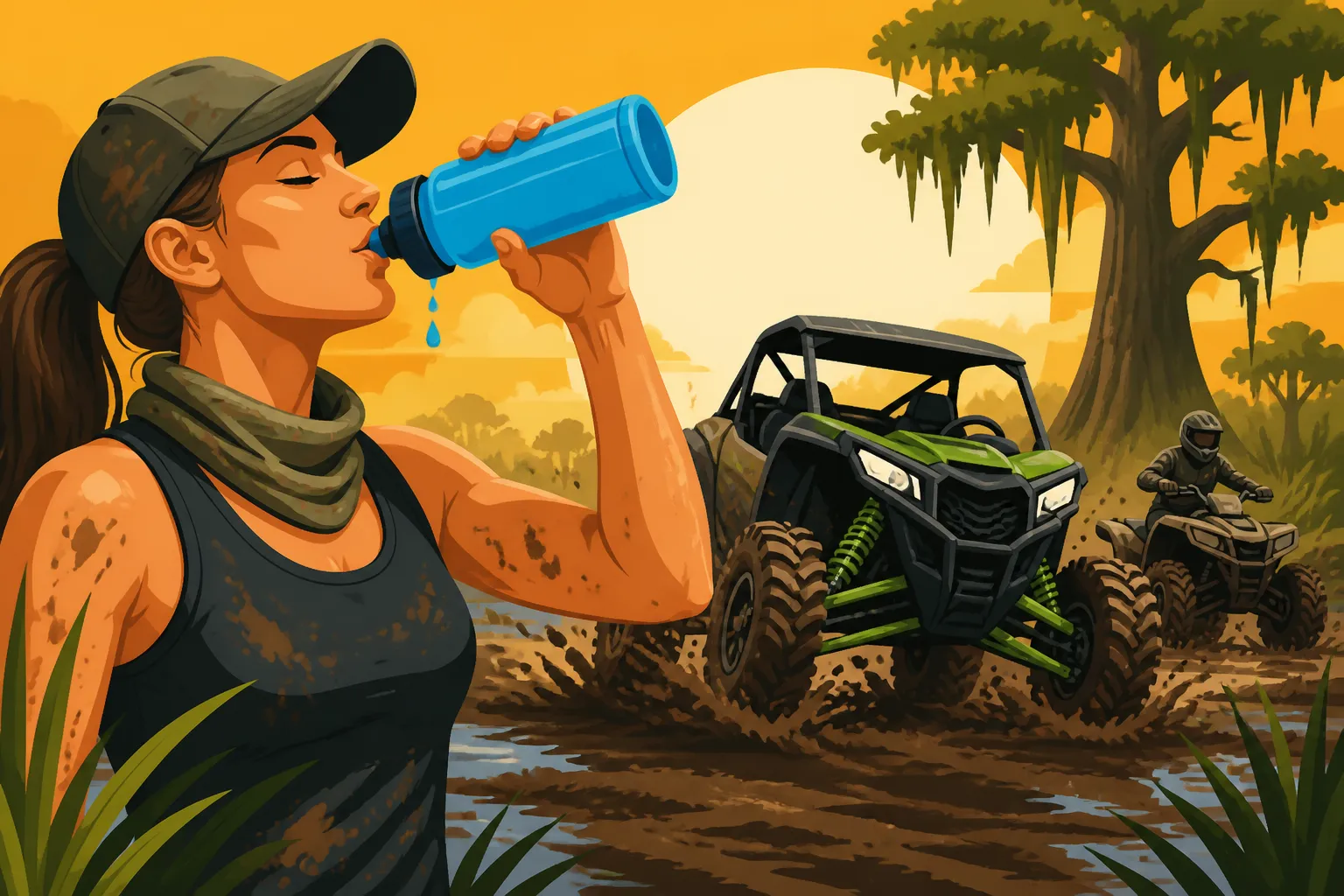
Water is a practical choice for regular sipping during a ride and for replacing fluids during breaks. Keep a bottle or hydration pack within easy reach, and drink at intervals rather than waiting until you feel parched. Thirst is useful, but it’s easier to stay on top of your needs when drinking is built into the day.
For a short ride with ordinary breaks, water may be all you need. During a long, hot day with sustained sweating, an electrolyte drink or a suitable electrolyte option may be helpful for some people. Follow the product directions, and don’t assume that more electrolyte mix or more fluid is automatically better. If you have a medical condition, take medication that affects fluid balance, or have been told to follow a specific hydration plan, use advice from your healthcare professional.
Avoid treating alcohol or energy drinks as hydration. Alcohol can make it harder to judge how you’re feeling and can be a poor choice in heat; energy drinks are not a replacement for water or a cooling break. Keep drinking choices straightforward, especially if you’re responsible for young riders or coordinating a group.
Pack bottles and coolers so they stay usable
A cooler full of water can turn into a muddy-event frustration if it’s buried under food, left in direct sun, or placed where it slides around in the trailer. Keep drinking water separate from raw food and muddy gear, and use containers with secure lids. Put the drinks you’ll need soon near the top so no one has to unpack the whole cooler during a brief stop.
Use a dedicated personal bottle or hydration pack for each rider. Don’t pass one bottle around the group, particularly when people have been handling helmets, gloves, tools, and muddy equipment. Bring extra clean water for rinsing hands before eating, but keep that supply distinct from drinking water so it doesn’t get used up accidentally.
Secure coolers and water containers before towing, and place them where they won’t shift or tip when the vehicle moves. If you’re bringing a cooler to an event, Strapping Down a Cooler for a Mud Weekend offers a related packing consideration. Keep water out of the sun where possible, and make sure someone knows where the backup supply is stored.
| Situation | Practical hydration setup | What to watch for |
|---|---|---|
| Short ride with regular breaks | Personal bottle or hydration pack, plus water at camp | Don’t leave your only water behind in a vehicle |
| Long ride in hot, humid conditions | Personal water, planned refill or regroup stops, and a backup supply | Heat, exertion, and protective gear can make it harder to notice fatigue |
| Group ride | A bottle for each rider and a shared meeting point | Don’t assume another rider has spare water |
| Event camping | Separate drinking water from food, cleaning water, and muddy gear | Keep containers clean, closed, and easy to reach |
| Riding with children | Adult-supervised breaks and water each child can access | Children may not speak up when tired or overheated |
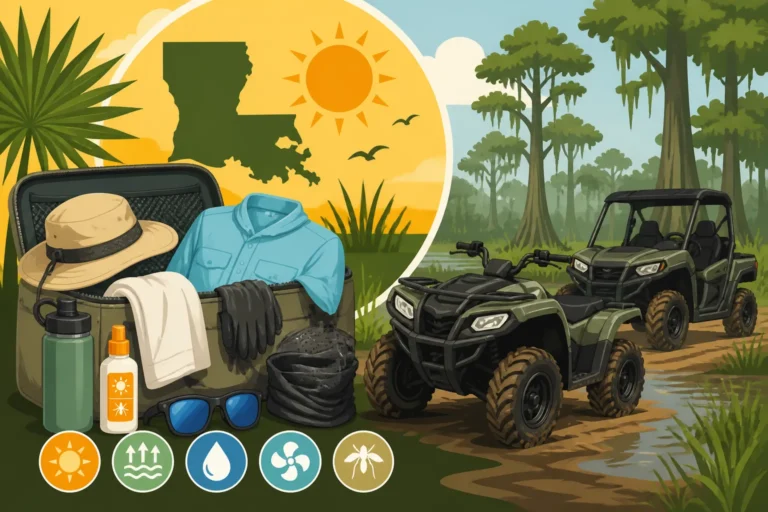
For more gear and packing ideas, see Packing for Humid Heat. If you’re marking camp and planning routes with a group, onX Offroad can help you note a shared meeting point; keep an offline or paper backup if phone service is unreliable.
Build Breaks Into the Ride
Take scheduled stops before everyone is exhausted
A break is not just a chance to drink. It gives riders time to get out of the sun, loosen restrictive gear safely, cool down, and check how the rest of the group is doing. Pick a shaded or otherwise comfortable stopping place when possible. If there’s no shade nearby, shorten the ride or return to a cooler area rather than pushing on just to finish a route.
Let the pace and conditions guide the length and frequency of breaks. A route that feels easy early in the day may become draining as the ground, weather, and rider fatigue change. Stop sooner if anyone starts feeling unusually tired, weak, dizzy, nauseated, or confused. Those symptoms should not be brushed off as ordinary mud-day exhaustion.
A useful group habit is to ask each rider a direct question at every stop: “How are you feeling?” Someone who doesn’t want to slow the group may say “fine” automatically, so pay attention to changes in coordination, alertness, mood, and riding ability too. If a rider seems unwell, get them out of the heat and seek appropriate help rather than sending them back onto the trail.
Make a plan for the rider who falls behind
Before you leave camp, agree that no one rides alone without the group knowing where they’re going. Choose a regrouping location and a simple response if someone separates from the pack. A map app such as onX Offroad may help your group identify a meeting point, but make sure everyone understands the plan without relying on a phone signal or a fully charged battery.
Ask one person to carry spare drinking water, but don’t make that person the only source. If the group splits into smaller riding parties, each party should have water and know how to return to camp. At a large event, it can be easy to lose track of time and distance; set a turnaround point before riders get tired or the day gets hotter.
If you are camping, explain where the water supply is and how to contact the group before leaving the campsite. Some campsites or parks may have different facilities and access arrangements, so confirm the details with the event or park before relying on a refill station. The guide What Primitive RV Camping Gets You at Muddy Bottoms can help with related camping questions, but always check the specific event’s current instructions for amenities.
Recognize Trouble and Respond Early
Know when ordinary tiredness may be heat illness
Feeling tired after a demanding ride is common, but dizziness, headache, nausea, unusual weakness, cramps, heavy sweating, or difficulty keeping up can signal that someone needs to stop and cool down. Confusion, fainting, seizures, or a person who is difficult to wake are emergency warning signs. Don’t leave someone alone to “sleep it off” or insist that they ride back to camp.
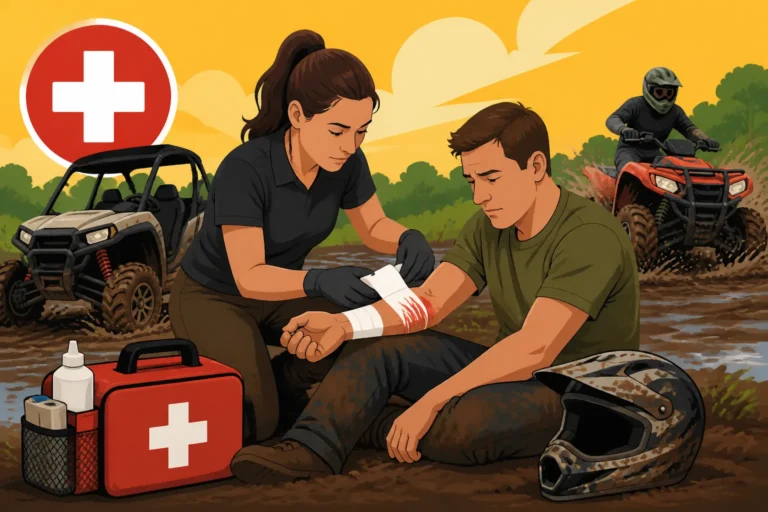
Move the person to a cooler, shaded area and get help from event staff or emergency services when symptoms are serious, worsening, or not improving. Loosen or remove unnecessary outer gear while preserving privacy and safety. Follow emergency responders’ instructions. If you’re unsure whether a situation is serious, err on the side of getting medical help.
Hydration is only one part of preventing heat illness. Rest, shade, lighter exertion, suitable clothing, and getting out of the heat all matter. Water cannot make it safe to continue riding through severe symptoms. Review Heat Illness on a Summer Ride before your trip, and know where to find event staff and first-aid support. First Aid at a Mud Park is also useful reading for planning who to contact if someone needs help.
Keep the plan flexible
Conditions can shift during an event. Rain can change trail conditions, delays can stretch a short ride into a long one, and a machine problem can leave riders waiting in the sun. Check the forecast and any event updates, and be prepared to shorten or skip a ride if the heat or your group’s condition makes continuing a bad choice. Louisiana Trail Conditions After Rain offers a related reminder to check conditions before heading out.
If anyone in your group has a health concern that affects hydration, heat tolerance, or exertion, plan around that person’s needs rather than assuming the whole group can follow the same routine. Bring any supplies they normally need, identify a way to get help, and agree in advance that they can stop without pressure. Good planning should make it easier to speak up, not harder.
Finally, keep the ride enjoyable by treating water and breaks as ordinary parts of the day. Pause while everyone is still feeling well, refill before supplies run low, and regroup before the group gets scattered. A little structure helps you spend less time dealing with preventable problems and more time enjoying the event.
Disclaimer
This article is for general informational purposes only and does not constitute professional advice. Laws, prices and regulations vary by location and change over time. Consult a qualified professional for guidance on your specific situation.