Packing for Humid Heat
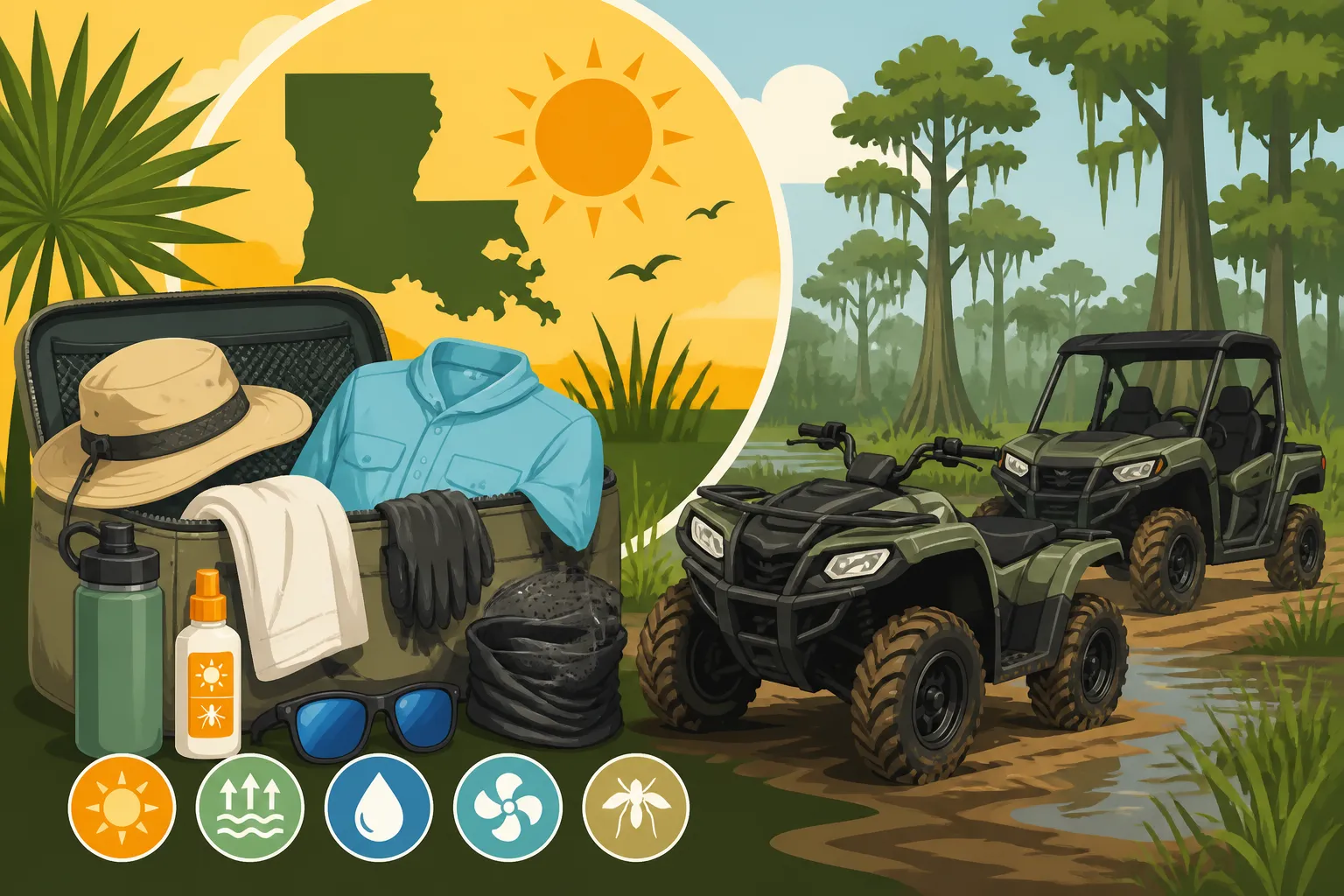
Louisiana heat can make a short ride feel exhausting, especially when humidity slows sweat from drying and muddy trails leave you working harder than expected. Packing for an ATV or UTV ride here means more than bringing water: you need breathable clothing, sun and bug protection, a way to navigate, and a plan for cooling down if someone starts to feel unwell.
Build your packing list around the ride
Start with the route, weather, and riding time
A few hours on a shaded forest trail is different from a long summer day at a mud park. Before loading up, check the ride area’s rules and conditions, estimate how long you’ll be away from your vehicle, and think about how much of the route is exposed to sun. Areas such as Kisatchie National Forest and private riding parks have different access rules and facilities, so don’t assume that a familiar place has the same services or trail conditions every visit.
Louisiana weather can shift, and recent rain may affect access, traction, and the effort needed to move through a trail. Check Louisiana Trail Conditions After Rain and Louisiana Trail Closures After a Storm before towing out. A trail that looked manageable on a dry day may be slow going after heavy rain. Mud, standing water, and detours can also make a planned ride longer than expected.
Plan for the least convenient part of the day, not just the easy part. If you expect to be out through the hottest hours, pack enough water and food for delays, and decide where your group will regroup if riders get separated. For a day at a park such as Muddy Bottoms, consider whether you’ll be close to your truck or campground between rides. On a forest trail, you may have fewer nearby places to refill or cool off.
A map helps you keep the route in mind when trails branch or a group spreads out. You can use onX Offroad to plan a route and mark useful locations before leaving, but don’t make a phone app your only navigation plan. A paper map or saved offline map can be helpful when cell service is weak; see Carrying a Paper Map in the Forest and Cell Dead Zones in the Piney Woods. Tell someone who isn’t riding where you’re going and when you expect to return.
Match clothing to heat, mud, and bugs
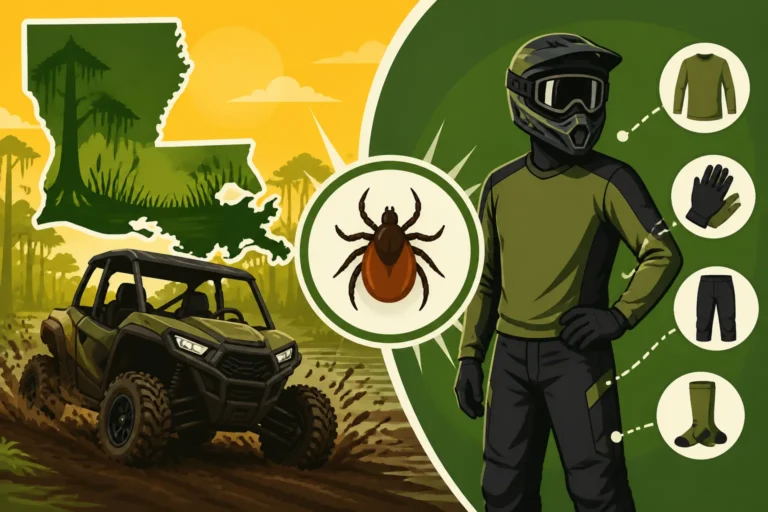
Choose lightweight, breathable layers that cover your skin without trapping too much heat. A long-sleeved shirt and riding pants can help limit sun exposure and reduce scratches from brush. Avoid clothing that becomes heavy and restrictive when wet. If you’re riding through water or mud, bring a dry change of clothes and a separate bag for wet gear; sitting in damp clothing during the drive home is uncomfortable and can leave you chilled once the air conditioning is on.
Wear a helmet that fits and is appropriate for your machine and riding conditions. Add goggles or riding glasses to help keep dust, debris, and insects out of your eyes. Gloves can improve grip and help protect your hands, but they should fit securely and allow you to control the machine. For footwear, use sturdy boots that stay on and offer protection around the ankles. If standing water is likely, consider how your footwear will handle it; Boots That Survive Standing Water offers more on choosing boots for wet conditions.
Bug protection matters in Louisiana’s woods and around standing water. Apply an appropriate insect repellent according to its label, and consider treated clothing if it suits your needs. Keep repellent separate from food and drinks, and wash your hands after applying it before handling snacks. Pack sunscreen as well, even if the route is shaded in places. Sun reaches exposed shoulders, necks, and hands during stops, and repeated short stretches of exposure add up.
| Ride condition | Useful packing choice | Why it helps |
|---|---|---|
| Long ride in midday heat | Extra drinking water and a cooling towel | Gives you supplies for a longer stretch between stops |
| Muddy or wet trail | Spare clothes and a bag for wet gear | Keeps the ride home more comfortable |
| Wooded route | Insect repellent and long sleeves | Helps reduce exposure to biting insects and brush |
| Unfamiliar trail system | Offline map or paper map | Provides a backup if phone service is limited |
| Group ride | Shared first-aid supplies and a meeting point | Makes it easier to respond if someone needs help |
Pack for hydration and cooling
Carry more than one way to drink
Bring enough drinking water for the ride and for the possibility that it takes longer than planned. A hydration pack keeps water close at hand while riding, while bottles in a cooler or vehicle provide a refill option at breaks. Keep drinking water separate from water used for washing hands or rinsing equipment. At a group ride, ask everyone to bring their own supply rather than assuming one person’s cooler will cover the whole group.
Drink regularly instead of waiting until you feel very thirsty. Heat and physical effort can sneak up on you when you’re focused on keeping pace, navigating mud, or helping a machine through a difficult spot. Make planned stops part of the ride. If you’re riding with children or less-experienced riders, check in with them directly; a quiet passenger or rider may not speak up when they need a break.
For longer rides or strenuous conditions, some riders also pack an electrolyte drink or an appropriate replacement product. Read product directions, and don’t treat sports drinks as a substitute for water or rest. The amount and type of fluid a person needs can vary with the weather, exertion, and individual health. For practical event-day planning, see Hydration at a Mud Event and Heat Illness on a Summer Ride.
Make cooling breaks easy to take
Put cooling supplies where you can reach them without unpacking the entire truck. A small cooler can hold water and a few snacks. A wet bandana or cooling towel may feel useful during a break, and a portable shade canopy can make a staging area more comfortable if the riding location allows it. Don’t count on finding shade beside every trail or on having a nearby building open.
Set a simple group routine: stop at planned intervals, drink, check how everyone is feeling, and decide whether to continue, shorten the route, or head back. The person who says, “I’m fine,” may still need a minute in the shade. Be especially attentive when someone becomes unusually tired, dizzy, confused, nauseated, weak, or unsteady. Those symptoms can indicate a serious heat-related problem. Stop riding, move the person to a cooler place, and seek emergency help when symptoms are severe, worsening, or concerning. Don’t leave an unwell rider alone or expect them to drive themselves.
The safest decision may be to end the ride early. It can be frustrating to tow a machine all the way to a trail and turn around before covering the route you planned. But pushing through symptoms or trying to “finish one more loop” can put the whole group at risk. Build a turnaround point into the plan so stopping feels like a normal option, not a failure.
Prepare for the trail and the unexpected
Carry a compact first-aid and repair kit
A small first-aid kit should be easy to find and protected from mud and water. Pack supplies suited to minor cuts, scrapes, and blisters, along with any personal medication someone in the group may need. Check the kit before trips so you aren’t counting on a bandage that was used months ago. Keep essential items in a waterproof pouch or container, and make sure at least one person knows where it is.
Bring basic machine-recovery and repair items appropriate to your vehicle and experience. Depending on the ride, that may include a tire-repair kit, a compact air pump, a tow strap, gloves, and tools that fit your machine. A winch can be useful in some settings, but it should be used only by riders who understand safe rigging and recovery practices. Avoid putting people in the path of a loaded strap or cable, and don’t attempt a recovery that exceeds your equipment or skill.
A phone in a waterproof case is useful, but it does not replace first-aid supplies, navigation, or a communication plan. Before you leave, tell someone your destination and expected return time. If you’re riding in a group, choose a lead rider and a sweep rider, agree on a stopping point if someone gets separated, and make sure everyone knows how to contact the group. First Aid at a Mud Park can help you think through what to have available for a riding day.
Keep gear organized and accessible
Divide your load into a few clear categories: items you need while riding, items you need at breaks, and items you only need back at the vehicle. Water, a phone, and essential protective gear should be accessible without unloading your machine. Dry clothes, extra snacks, and larger repair supplies can stay secured in the truck or trailer if the route brings you back to it.
Use waterproof bags for spare clothing, paper maps, and first-aid supplies. Secure loose equipment so it cannot shift, fall from a rack, or interfere with the rider. A cooler should be stable in the vehicle, not balanced where it might slide during towing or unloading. Make a short checklist and repack from it after every trip; that is easier than discovering at the trailhead that the sunscreen, gloves, or map is still on the workbench.
If you use onX Offroad to prepare, mark the starting point, planned route, and a sensible return point before you head out. Save information for offline use when available, and carry a backup map for unfamiliar terrain. Don’t follow a route simply because it appears on a screen: observe posted signs, follow the area’s rules, and respect closures. Good preparation includes knowing when to turn around.
Adjust the kit for Louisiana riding conditions
Account for wet trails and changing plans
A humid day can turn a small amount of exertion into a tiring ride, while rain can change the route itself. Pack a lightweight rain layer if conditions call for one, but avoid relying on clothing that becomes uncomfortable when soaked. Keep dry socks and a towel in a sealed bag. If a trail is flooded, badly rutted, or posted closed, don’t treat the obstacle as a challenge to overcome; choose a safer route or call the ride.
At designated forest trails, private parks, and public riding areas, the rules and amenities vary. Check whether the location permits your type of machine, what equipment or permits are required, and whether water, restrooms, or wash facilities are available. A park with nearby services can make resupply easier, but it is still sensible to arrive with your own drinking water and basic supplies. For more trip-planning context, see Louisiana Trail Etiquette Locals Expect and Louisiana Riding in Summer Heat.
Don’t assume that a machine can be ridden on a public road just because it has a decal or because the road looks quiet. Road-use rules are separate from trail access. If your plan includes a road connection, review Louisiana ATV Road Rules Under 32:299 or Louisiana UTV Road Rules Under 32:299.3 before you ride.
Use a final pre-ride check
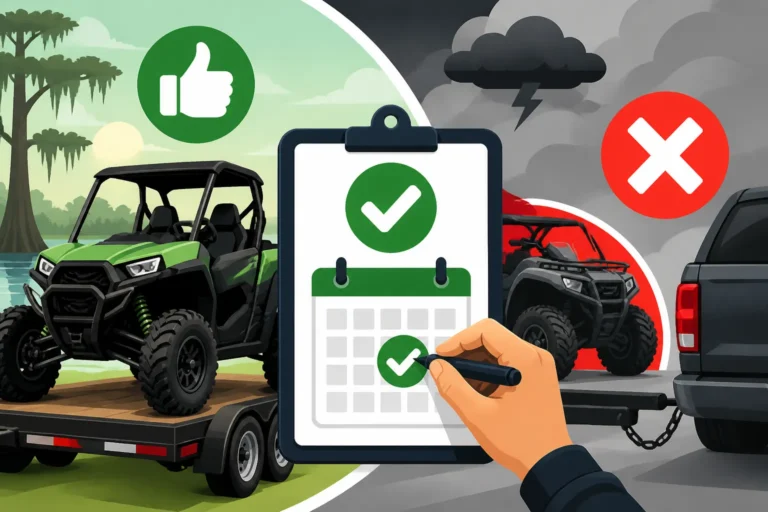
Before unloading, take a few minutes to check that everyone has the essentials. Confirm that water is reachable, helmets and eye protection fit, phones are charged, and the route plan is understood. Check your machine for obvious issues and make sure gear is secured. If someone is already feeling unwell before the ride begins, reconsider whether they should ride in the heat.
A simple checklist can prevent the most common oversights:
- Drinking water for every rider, plus extra for delays.
- Helmet, eye protection, gloves, suitable clothing, and sturdy boots.
- Sunscreen and insect repellent.
- First-aid kit and any personal medication.
- Charged phone, navigation backup, and emergency contact plan.
- Dry clothes, towel, and waterproof bags.
- Basic recovery and repair gear suited to the machine and route.
- A route, turnaround point, and return-time plan shared with someone.
Packing well cannot control the weather or guarantee a trouble-free day. It can, however, make it easier to take breaks, handle a wet or extended ride, and recognize when conditions are no longer comfortable. In Louisiana’s humid heat, the best ride plan is one that leaves room to slow down, change the route, or call it a day.
Disclaimer
This article is for general informational purposes only and does not constitute professional advice. Laws, prices and regulations vary by location and change over time. Consult a qualified professional for guidance on your specific situation.