Louisiana ATV Road Rules Under 32:299
Trying to figure out where you can legally ride your ATV in Louisiana can feel like navigating a swamp blindfolded. The rules are often misunderstood, leading to confusion, frustration, and sometimes, expensive tickets. Many riders assume that because they have an off-road vehicle, they can take it on any backroad or shoulder, only to find themselves pulled over by a state trooper. This guide is here to untangle the complexities of Louisiana's ATV road rules, specifically focusing on Revised Statute 32:299, so you can ride confidently and legally.
Understanding Louisiana R.S. 32:299: The Foundation of ATV Road Rules
Louisiana Revised Statute 32:299 is the primary legal framework that dictates where and how ATVs can operate on public roads within the state. It's a critical piece of legislation that all ATV owners and riders in Louisiana need to understand intimately. This statute isn't about giving you free rein; it's about setting very specific boundaries to ensure public safety and manage the interface between off-road vehicles and traditional traffic infrastructure. Ignoring it can lead to more than just a slap on the wrist – it can mean fines, court appearances, and even having your beloved machine impounded.
What the Law Says, Plain and Simple
At its core, Louisiana R.S. 32:299 states that an all-terrain vehicle (ATV) cannot be operated on public roads or highways, with a few very narrowly defined exceptions. This means that, for the most part, your ATV belongs off the pavement. The statute defines an ATV as a motorized off-highway vehicle, 50 inches or less in width, having a dry weight of 1,200 pounds or less, traveling on three or more tires, designed for use on unimproved terrain. This definition is important because it clearly distinguishes ATVs from other types of off-road vehicles like UTVs, which fall under a different set of rules (R.S. 32:299.3). So, if you're riding a traditional quad, this is the law you need to pay attention to, and it's much stricter than many riders realize.
The law is clear: unless you meet one of the specific exemptions, your ATV should not be on a public road. This includes everything from small parish roads to major state highways. Many riders mistakenly believe that if a road is unpaved, it's fair game, but that's simply not true if it's considered a "public road." Understanding this basic principle is the first step toward staying out of trouble. The exceptions are very specific, and assuming broad permission is a common and costly mistake.
Why This Statute Exists
The primary reason for such strict regulations regarding ATVs on public roads is safety. ATVs are designed for off-road conditions, featuring high ground clearance, knobby tires, and suspensions built for uneven terrain, not smooth asphalt. These characteristics make them inherently unstable and unpredictable when mixed with traditional road traffic. Their tires have less traction on pavement, their higher center of gravity can lead to rollovers, and their lack of typical road safety features like turn signals, mirrors, and seatbelts (on most ATVs) makes them dangerous in a road environment. [Why a Title Still Keeps You Off the Road] elaborates on this further.
Furthermore, public roads are designed for vehicles that meet certain safety and emission standards, neither of which ATVs typically adhere to. Lawmakers recognized the significant risk posed by mixing fast-moving cars and trucks with vehicles not designed for that environment. The statute is a preventative measure, aimed at reducing accidents, injuries, and fatalities. It protects not only ATV riders from themselves but also other motorists who might not anticipate an ATV on a paved public thoroughfare.
Common Misconceptions About 32:299
One of the biggest misconceptions riders hold is that they can ride on the shoulder of any public road, regardless of the purpose, as long as they stay off the main travel lane. While the shoulder is mentioned in an exception, it's not a blanket permission slip. Another prevalent myth is that if a road is not regularly patrolled, or if it's a gravel road in a rural area, the rules don't apply. State and parish law enforcement officers are very much aware of these regulations and will enforce them, especially in areas known for ATV use.
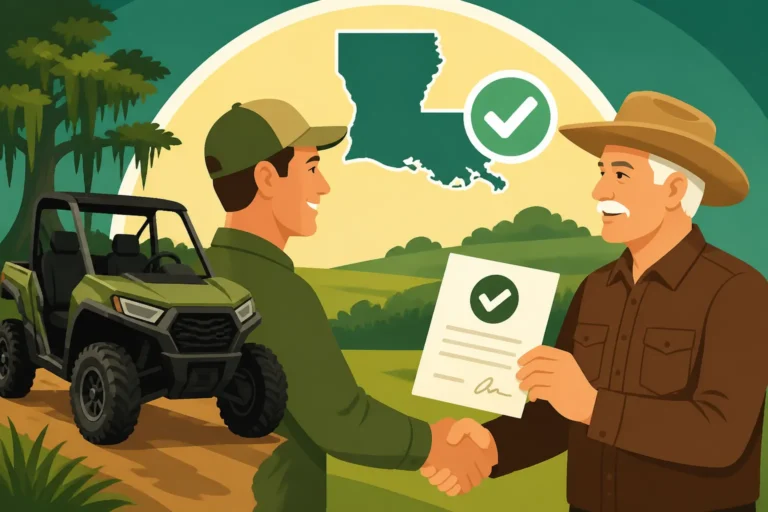
Many also believe that simply having a title and decal makes their ATV street legal. This is incorrect. While Louisiana requires both [Louisiana ORV Decals and Titles Explained] for off-road machines, these documents prove ownership and allow off-road riding on designated trails or private land; they do not grant permission for general road use. The state is strict on this point: a title and decal are for identification and tax purposes, not for making your ATV street-legal. Don't confuse official documentation with operational permission on public roads.
The Strict Limitations: Where ATVs Are Not Allowed on Louisiana Roads
Louisiana's R.S. 32:299 is quite explicit about the places where ATVs are absolutely forbidden. These prohibitions are in place to prevent severe accidents and protect critical infrastructure. Understanding these no-go zones is just as important as knowing the limited exceptions, as violations here often carry significant penalties. It’s not just about getting a ticket; it’s about putting yourself and others at serious risk.
Banned from Travel Lanes and Interstates
The most straightforward prohibition in Louisiana R.S. 32:299 is the ban on ATVs from regular travel lanes of public roads and highways, as well as from interstates. This means no riding in the lane of traffic, whether it’s a small two-lane parish road or a bustling multi-lane highway. ATVs simply aren't equipped for the speeds, traffic volume, and handling demands of these environments. Their small size makes them hard for larger vehicles to see, and their limited top speeds can create dangerous traffic impediments. Trying to keep up with vehicles doing 55 mph or more on an ATV designed for 30-40 mph off-road is a recipe for disaster.
Interstates are an absolute no-go. These are high-speed, limited-access roads where ATVs have no business. The danger is immense, not only from the speed differential but also from the lack of visibility for other drivers. Enforcement on interstates is swift and strict. You won't just get a ticket; your machine will likely be impounded immediately, and you could face reckless endangerment charges. This is a bright-line rule with no exceptions, emphasizing that [Louisiana Bans ATVs From Interstates] for good reason. No matter how short the distance, avoid interstates entirely.
Why Public Levee Riding Is Prohibited
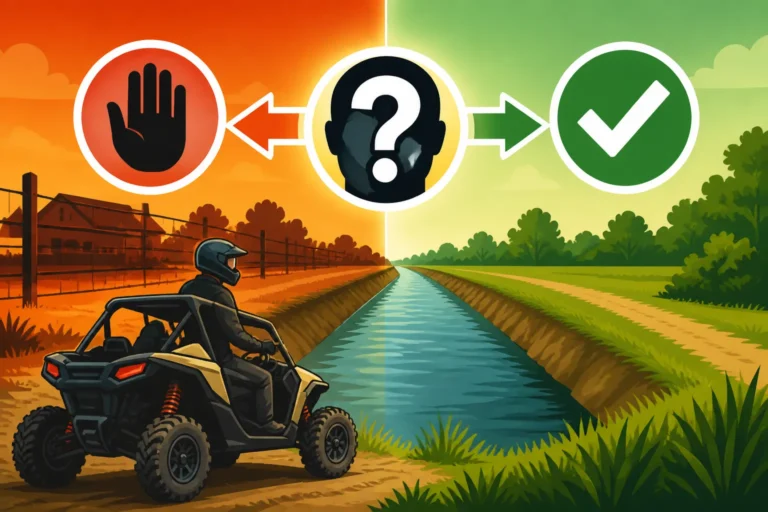
For those who live near Louisiana’s vast network of levees, the idea of riding an ATV along these elevated earthen structures might seem appealing, offering unique views or shortcuts. However, Louisiana law, including aspects relevant to 32:299, generally prohibits ATV riding on public levees. [Louisiana Levee Riding Is Prohibited] for several critical reasons. Levees are vital flood control infrastructure, protecting communities and agricultural lands from rising waters. Any damage to their integrity, even from the ruts of an ATV, can compromise their protective function during a flood event.
Beyond structural integrity, levee access is often restricted for safety and environmental reasons. Many levees are maintained by specific levee districts, which have their own rules and regulations regarding access. Unauthorized riding can lead to substantial fines, legal action from levee boards, and even charges of trespassing. While local parish officials might occasionally grant specific, limited access for certain work or events, recreational ATV riding is generally not permitted. Always assume a public levee is off-limits unless you have explicit, written permission from the controlling authority.
The Orleans Parish Exception
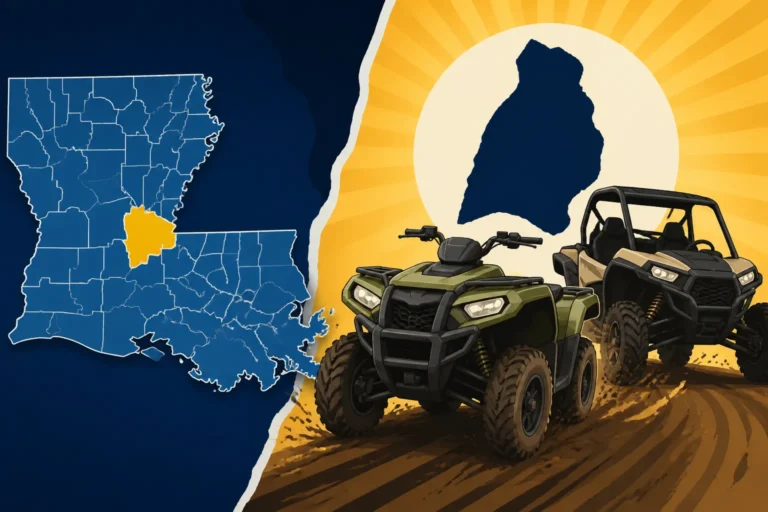
It might come as a surprise, but Louisiana Revised Statute 32:299 explicitly states that Orleans Parish is exempt from its provisions. This means the specific rules and exceptions outlined in 32:299 concerning ATV operation on public roads do not apply within the geographical boundaries of Orleans Parish (which is coextensive with the City of New Orleans). This unique carve-out is largely due to the urban nature of the parish and its distinct local ordinances regarding vehicles.
However, this exemption does not mean that ATVs are street-legal or allowed to ride freely on public roads in New Orleans. Quite the opposite. Because 32:299 does not apply, Orleans Parish relies on its own municipal ordinances, which are typically much stricter than state law. In New Orleans, ATVs are generally prohibited from public streets and sidewalks, and enforcement is often aggressive, especially against groups riding recklessly. So, while 32:299 itself doesn't apply, [Orleans Parish Is Exempt From Louisiana's ATV Statute] only to reinforce that local bans are often even more comprehensive. Always check local city and parish ordinances, as they will govern ATV use in New Orleans and other specific municipalities.
The Shoulder-Only Rule: Navigating Louisiana Parish Roads
While ATVs are largely banned from public roads, Louisiana R.S. 32:299 does offer a very narrow set of circumstances where they can legally use the shoulder of certain public roads. This isn't a free pass to ride anywhere there's dirt next to the pavement; it's a specific exception tied to agricultural activities and requires adherence to strict rules. Understanding these nuances is key to staying legal and safe. This limited allowance often trips up riders who interpret "shoulder" too broadly.
What "Shoulder Riding" Truly Means
For ATVs, "shoulder riding" under R.S. 32:299 refers to the unpaved portion immediately adjacent to the travel lanes of a public road. It is generally the part of the road that is off-limits to regular vehicular traffic and is often composed of gravel, dirt, or grass. The critical point is that even when permitted, the ATV must remain off the paved or hard-surfaced portion of the roadway. This means no dipping a tire onto the asphalt, no cruising in a bicycle lane if it’s paved, and absolutely no entering the main traffic flow.
The purpose of this shoulder allowance is not for recreational riding, but for specific, utilitarian purposes connected to farming. If you're on a parish road shoulder for any other reason, you're likely in violation of the law. Troopers are vigilant about distinguishing legitimate use from general joyriding. Even on the shoulder, riders are expected to operate safely, maintaining a speed appropriate for the conditions and yielding to any pedestrian or bicycle traffic that might also be using the shoulder.
The Farm-Related Exemption: Conditions and Radius
Here's where the shoulder rule becomes very specific: the only time an ATV can legally use the shoulder of a public road is if it is being operated for bona fide agricultural purposes. This means the rider must be actively engaged in a farming activity, such as moving between fields, transporting equipment for planting or harvesting, or checking livestock. It's not for a casual ride to a friend's house or a quick trip to the store, even if you live on a farm. [Louisiana's Shoulder-Only Farm Exception] is very clear about its intent.
Adding another layer of restriction, the statute specifies a "five-mile radius" rule. An ATV used for agricultural purposes can only be operated on the shoulder of a public road within five miles of the farm's primary entrance. This helps prevent large-scale transit and keeps the use localized to where agricultural activities are actually taking place. Riders must be prepared to show proof of their agricultural activity if stopped, which often includes a sworn [Louisiana Farm Affidavits for Road Use] or other documentation. The exemption exists to support farmers, not to expand recreational riding opportunities.
Incidental Crossings: How to Legally Cross a Public Road
Even with the strict rules, there are times when an ATV legitimately needs to cross a public road to get from one piece of private property to another, or from one field to an adjacent one. Louisiana R.S. 32:299 allows for these "incidental crossings," but they must be performed safely and directly. This is not an invitation to ride along the road, but merely to go across it. The crossing should be made at a right angle to the roadway, yielding to all oncoming traffic.
Before attempting an incidental crossing, the rider must ensure the way is clear and it is safe to proceed. This means stopping, looking both ways, and crossing only when there's ample time and space, without impeding the flow of traffic. The intent is to minimize the time the ATV spends on the paved portion of the road. Any deviation from a direct, safe crossing, such as riding down the road for a short distance before turning, would be a violation. [Louisiana Crossings of Public Roads] stresses that these are brief, necessary maneuvers, not an extension of riding.
Who Can Ride: Age, Licensing, and Specific Exceptions
Beyond where you can ride, Louisiana law also dictates who can operate an ATV on the limited public road allowances under 32:299. These requirements are in place to ensure a minimum level of driving competence and responsibility. Just because you have an ATV doesn't mean anyone can hop on and take to the shoulder, even for farm use. There are age and licensing criteria that must be met, as well as specific professional exceptions.
Louisiana Requires a Class E License for Road Use
If you're operating an ATV on the shoulder of a public road under the agricultural exemption, Louisiana law requires the operator to possess a valid Class E driver's license. The Class E license is the standard operator's license for non-commercial vehicles in Louisiana, the same one you'd use to drive your car or pickup truck. This requirement ensures that anyone operating a vehicle on a public right-of-way, even the shoulder, has demonstrated basic driving knowledge and skills. [What a Class E License Lets You Do] includes this specific permission for agricultural use of ATVs on shoulders.
This means that younger riders, even if they are competent off-road, cannot legally operate an ATV on the shoulder of a public road. The state wants to ensure that anyone interacting with public road traffic, however minimally, has undergone formal driver training and testing. Carrying your physical license is essential, as law enforcement will ask to see it if you're stopped. Operating an ATV on the shoulder without a valid Class E license is a clear violation and will result in a citation.
Minimum Age Requirements for Road-Legal ATV Use
Following from the Class E license requirement, this means there's an inherent minimum age for operating an ATV on a public road shoulder for agricultural purposes. In Louisiana, you must be at least 15 years old to obtain a learner's permit for a Class E license, and typically 16 for a full, unrestricted Class E license. Therefore, any rider under these ages is automatically excluded from legally using an ATV on public road shoulders. [Louisiana ATV Age Requirements] are strict, and for road use, they align with standard driving ages.
This rule is designed to protect youth riders who may not have the judgment, experience, or physical development necessary to safely navigate a public road environment, even on the shoulder. While many young people ride ATVs proficiently on private land, the risks associated with public roads are significantly higher. Parents should be particularly mindful of this, as allowing an underage child to operate an ATV on a public shoulder, even for farm work, can lead to serious legal consequences for both the child and the parent.
Law Enforcement, Paramedics, and Campus Exceptions
Louisiana R.S. 32:299 does carve out specific exceptions for certain professional uses of ATVs on public roads. These exceptions are critical for public safety and utility. For instance, ATVs can be operated on public roads by law enforcement personnel while performing their official duties. This allows police and sheriff's deputies to use ATVs for patrol, search and rescue, or other necessary functions in areas inaccessible to traditional patrol vehicles. [Law Enforcement Riding a Quad on Duty] is an example of this.
Similarly, paramedics and other emergency medical personnel may use ATVs on public roads when responding to emergencies or performing duties related to public health and safety. These machines can be invaluable for reaching accident scenes in difficult terrain or for transporting equipment in a crisis. Additionally, employees of state universities and colleges may operate ATVs on campus roads and grounds for official university business, such as maintenance, security, or groundskeeping. These are highly specific, job-related allowances, and they do not extend to recreational use by the general public.
Essential Equipment and Proof: What You Need to Carry and Show
Even when operating an ATV under one of the limited legal exceptions on Louisiana public roads, simply having the right to be there isn't enough. You must also ensure your machine is properly equipped and that you carry the necessary documentation to prove compliance. Failing to have the correct items can still result in a citation, even if your actual road use was otherwise legal. Think of it as preparing for a routine traffic stop; you need all your ducks in a row.
The Mandatory Off-Road Decal
Any ATV operated in Louisiana, whether on private land, designated trails, or under the limited road exemptions of 32:299, is required to have a valid off-road decal issued by the Louisiana Department of Public Safety and Corrections, Office of Motor Vehicles (OMV). This decal serves as proof that the vehicle is properly titled and that sales tax has been paid. It must be affixed to the machine in a visible location, typically on the front fender or handlebars. [Louisiana's Yearly Off-Road Decal] costs a nominal fee and is valid for a specific cycle.
While the decal doesn't make your ATV street-legal, it is absolutely essential for any kind of official operation. If you're stopped on the shoulder for farm use, law enforcement will check for this decal. Operating without it is a violation of state law and can lead to fines. Ensure your decal is current and properly displayed. It's a small piece of paper that carries significant weight in Louisiana’s ATV regulations.
Proof of Insurance on Demand
Louisiana law does not generally mandate insurance for ATVs that are solely operated off-road or on private property. However, if you are operating your ATV on the shoulder of a public road under the agricultural exemption, having proof of insurance is a very good idea, and in some interpretations, implicitly required due to the interaction with a public right-of-way. While 32:299 doesn't explicitly state "insurance required for farm use," any vehicle operating on a public roadway typically falls under general insurance requirements for liability.
More importantly, common sense dictates that if you are involved in an accident on a public road, even on the shoulder, liability insurance will be critical. Without it, you could be personally responsible for property damage or medical expenses for others involved. While SuperATV provides fantastic durable parts for your machine, they don't cover the financial fallout of an unexpected collision. It is highly advisable to carry at least basic liability insurance for your ATV if there's any chance it will touch a public road, and always be prepared to show [Louisiana Insurance Proof on Demand] if requested by law enforcement.
Lighting and Safety Equipment for Road Travel
Although ATVs are not fully street-legal under 32:299, if you are operating on a public road shoulder, particularly during low-light conditions (such as dawn or dusk for agricultural purposes), adequate lighting is paramount for safety. While the statute might not explicitly detail headlamp requirements for shoulder riding, general traffic laws imply the need for visibility. Your ATV should have functional headlights and taillights. Many riders also add additional reflective tape or safety flags for enhanced visibility. [Louisiana Lighting Rules on a Machine] dictate what is generally expected.
Consider adding aftermarket accessories for improved safety, even for limited shoulder use. Companies like SuperATV offer a range of robust lighting solutions, mirrors, and even turn signal kits (though turn signals are generally for UTVs or street-legal conversions, which ATVs under 32:299 are not, improved visibility is always a plus). Even if not explicitly required by 32:299 for shoulder use, a bright LED light bar from SuperATV, for example, can make you much more visible to passing motorists. The goal is to maximize your presence and reduce the risk of a collision, even when you're technically off the main travel lane.
Consequences of Non-Compliance: Penalties and Enforcement
Ignoring the rules set forth in Louisiana R.S. 32:299 can lead to a host of unpleasant and costly consequences. Law enforcement in Louisiana, particularly the State Police and parish deputies in rural areas, are well-versed in these regulations and actively enforce them. The penalties are designed to be a deterrent, making it clear that illegal ATV road use is taken seriously. Don't think of these as minor infractions; they can quickly escalate.
Tickets, Fines, and Court Costs
The most immediate consequence of violating R.S. 32:299 is receiving a traffic citation. This ticket will come with a fine, the amount of which can vary depending on the specific violation (e.g., riding in a travel lane versus unauthorized shoulder use) and the discretion of the issuing officer. Fines for such infractions can be significant, often ranging from several hundred dollars. In addition to the base fine, you'll also be responsible for court costs and administrative fees, which can quickly double or triple the initial amount. [Louisiana Ticket Costs for Road Riding] can add up quickly.
A citation also means a mandatory court appearance in many cases, especially if you want to contest the ticket. This involves taking time off work, travel to the courthouse, and potentially legal fees if you choose to hire an attorney. Pleading guilty or being found guilty will likely result in points on your driving record, which can impact your vehicle insurance rates, even for your car. It’s a snowball effect that starts with what many perceive as a minor offense.
Impoundment: Losing Your Machine
Perhaps the most dreaded consequence for an ATV owner is the impoundment of their machine. Law enforcement officers have the authority to seize and impound ATVs found operating illegally on public roads. This means your ATV will be towed away to an impound lot, and you won't be able to retrieve it until all fines, storage fees, and towing charges are paid. These fees can accrue daily, quickly becoming a substantial financial burden. [Louisiana Impoundment for No Decal] often occurs when machines are ridden illegally.
Getting your ATV back from impound can be a lengthy and frustrating process. You’ll need to provide proof of ownership, pay all outstanding balances, and sometimes even show proof of a valid driver's license. If you can't afford the fees, or if your ATV was involved in a more serious offense, it could even be forfeited to the state. The financial and emotional stress of having your machine impounded far outweighs the fleeting thrill of an illegal road ride.
Disputing a Citation and Understanding Your Rights
If you receive a citation for an ATV road rule violation, you have the right to dispute it in court. This means you can plead "not guilty" and present your case before a judge. However, it's crucial to understand that challenging a citation requires a thorough understanding of the law and often strong evidence to support your defense. Simply claiming ignorance of the law is rarely an effective defense. It's often best to consult with an attorney who specializes in traffic law if you intend to dispute a ticket.
When stopped by law enforcement, always remain calm and polite. Cooperate with the officer, provide your driver's license, and other requested documentation (like your ATV decal or farm affidavit). You have the right to remain silent regarding questions that might incriminate you, but you must provide identifying information. Understanding your rights and responsibilities during a traffic stop can sometimes influence the outcome, though it does not excuse a violation of the law. Knowing [Louisiana Equipment Checks by Troopers] can help you be prepared.
Louisiana R.S. 32:299 and Its Future: What to Watch For
Laws are not static; they evolve as technology changes, public sentiment shifts, and new safety data emerges. While Louisiana R.S. 32:299 has been the foundational statute for ATV road use for years, it's important for riders to stay informed about potential legislative changes. Keeping an eye on proposed bills or OMV policy updates can prevent you from inadvertently falling out of compliance.
Legislative Amendments and Policy Revisions
Legislatures periodically review and amend existing statutes to address new issues or clarify ambiguities. For instance, while 32:299 primarily covers ATVs, there was a significant amendment in 2022 (R.S. 32:299.3) specifically for UTVs, which outlines different and often more permissive rules for those larger machines. [Louisiana's 2022 UTV Amendment] shows how the state is willing to adapt. This highlights that while 32:299 remains strict for ATVs, legislative adjustments are possible, especially concerning vehicle types and their capabilities.
The Office of Motor Vehicles (OMV) also issues policy revisions or administrative rules that can impact how statutes are interpreted and enforced. These changes might not be direct amendments to the law itself but can alter procedural requirements or clarify definitions. It's wise to occasionally check the OMV's official website or relevant legislative tracking sites for updates that could affect your riding. For example, [OMV Policy 82.00 Was Revised in January 2026] suggests that administrative guidelines are regularly updated to reflect new understandings or legislative mandates.
The Growing Push for Designated ATV/UTV Roads
Across many states, there's a growing movement to create more legal opportunities for off-road vehicles on public roads, often through local ordinances. Some parishes or municipalities in Louisiana may be exploring or have already implemented specific ordinances that designate certain parish roads or city streets as open to ATVs or UTVs under specific conditions. These local ordinances exist outside of R.S. 32:299, and riders would need to comply with those local rules, which might include specific equipment like turn signals, mirrors, or maximum speed limits.
However, for ATVs, such local allowances tend to be much rarer than for UTVs. The physical characteristics of ATVs make them less suitable for road integration. Still, it's worth checking with your local parish or municipal government if you believe such designations might exist in your area. [Louisiana Parish Ordinance Lookups] and [Louisiana Municipal Ordinance Lookups] are excellent resources. Never assume; always verify with official sources, as state law (32:299) remains the default prohibitive rule unless a specific local exception is formally enacted.
How Rider Behavior Influences Future Legislation
The way ATV riders conduct themselves on and near public roads profoundly influences public perception and, consequently, future legislative action. Incidents of reckless riding, excessive noise, trespassing, or environmental damage often lead to public outcry and a stricter stance from lawmakers. Conversely, responsible riding, adherence to existing laws, and proactive engagement with local communities can foster a more positive environment for the sport.
Organizations like local ATV clubs can play a crucial role in advocating for responsible riding and working with legislators to craft sensible regulations. By demonstrating a commitment to safety and respect for the law, riders can help shape a future where there might be more, not fewer, legal opportunities to enjoy their machines. Continuous education on topics like [Louisiana Trespass Law for Riders] and [Louisiana Noise Complaints About Quads] helps ensure that the riding community maintains a good reputation. Ultimately, the future of ATV road access in Louisiana depends heavily on the collective actions of its riders.
Table: Summary of ATV Road Rules Under Louisiana R.S. 32:299
To help clarify the nuances of Louisiana R.S. 32:299, here's a quick summary of what's generally prohibited versus what's permitted under very specific conditions for ATVs on public roads. Remember, "permitted" here means strictly under the agricultural exemption and within the stated radius.
| Aspect | Generally Prohibited | Permitted Under Specific Conditions (R.S. 32:299) |
|---|---|---|
| Travel Lanes | All public roads, highways, interstates | None |
| Interstates | Absolutely prohibited | None |
| Public Levees | All public levees | None (unless explicit written permission from Levee District) |
| Orleans Parish | State statute 32:299 does not apply; local ordinances prohibit | Local ordinances govern, generally prohibited |
| Road Shoulders | For recreational use, or outside farm radius | For bona fide agricultural purposes only, within 5 miles of farm |
| Road Crossings | Riding along the road, or unsafe/indirect crossings | Incidental, direct, and safe crossings at a right angle |
| Operator's License | Operating without a valid Class E license | Valid Class E driver's license required |
| Operator's Age | Under 15 years old for learner's permit, generally under 16 for full license | 15+ with permit, generally 16+ with full Class E license |
| Mandatory Decal | Operating without a current, visible Louisiana ORV decal | Current Louisiana ORV decal required |
| Proof of Insurance | Riding without proof of liability (highly advisable) | Recommended for any public road interaction |
| Lighting (Dusk/Dawn) | Operating without functional lights for visibility | Functional headlights & taillights highly recommended for safety |
| Recreational Use | Any public road or shoulder | None |
Disclaimer
This article is for general informational purposes only and does not constitute professional advice. Laws, prices and regulations vary by location and change over time. Consult a qualified professional for guidance on your specific situation.