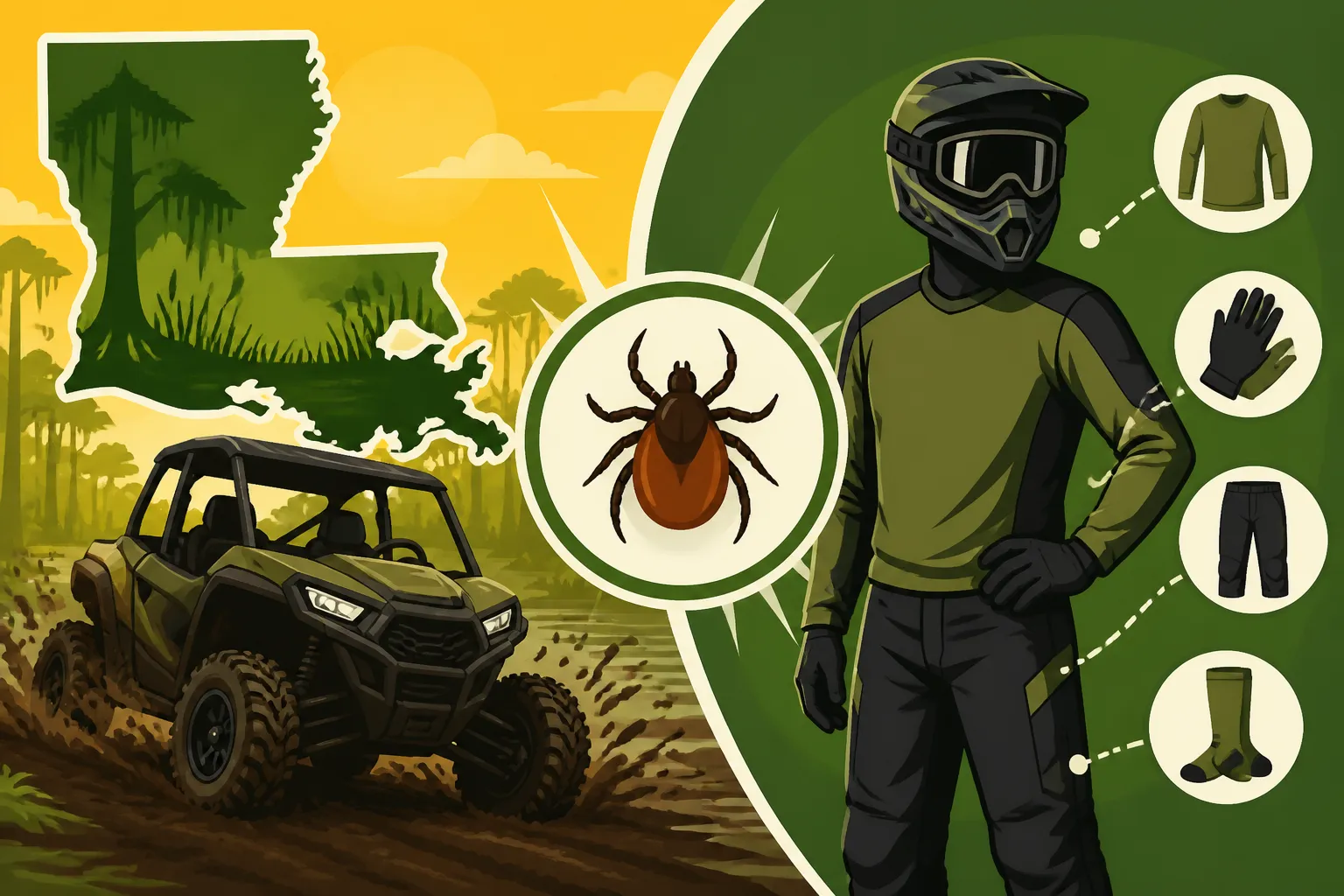
Louisiana Tick Season and Riding Gear
Louisiana tick season can turn a ride through pine woods, brushy trail edges, or tall grass into an itchy problem hours later. Ticks are not limited to one riding area or one warm month, so a simple routine matters: dress to reduce exposed skin, use repellents as directed, check yourself and your gear after every ride, and know what to do if you find a tick.
When ticks are active in Louisiana
Expect ticks through much of the riding year
Ticks are most noticeable in Louisiana during warmer months, but mild weather can make them a concern beyond a short, predictable “season.” Activity varies with local conditions, vegetation, and the type of tick. A cool morning does not guarantee a tick-free ride, and a quiet trailhead does not tell you whether ticks are waiting in the grass beside the trail.
Common Louisiana ticks include lone star ticks, Gulf Coast ticks, American dog ticks, and blacklegged ticks. Different species can carry different germs. A lone star tick bite is also associated with alpha-gal syndrome, a condition involving an allergic reaction to certain mammal products. That does not mean every bite causes illness, but it is one reason to take tick prevention seriously rather than treating ticks as only a nuisance.
For riders, the practical approach is to use precautions whenever you will be in brush, leaf litter, tall grass, or wooded areas. Conditions can vary around Kisatchie National Forest, the Vernon Enduro Trail, and riding areas near Leesville or Alexandria. If you are planning a warm-weather outing, [Louisiana Riding in Spring] and [Louisiana Riding in Summer Heat] can help you think through the other seasonal conditions that affect your gear and comfort.
Where ticks are likely to be waiting
Ticks are often found in vegetation close to the ground, including leaf litter, tall grass, brush, and the edges where a cleared trail meets thicker growth. They may attach to clothing or skin as you pass through that vegetation. You do not need to ride off-trail to encounter them: stopping beside a brushy trail, walking through grass to retrieve a dropped item, or leaning against vegetation can be enough to bring you into contact with ticks.
Some riding conditions make checks especially worthwhile. After a wet ride, riders may focus on mud and water in their boots, cuffs, and gloves, while missing a tick on a waistband or behind a knee. Trail conditions can change after rain, too, with riders stepping around puddles into taller vegetation. Check local conditions before heading out, and use [Louisiana Trail Conditions After Rain] as part of your planning.
A map can help you understand where a route goes and where you may stop, but it does not show whether ticks are present. If you use onX Offroad to plan or follow a route, treat it as a navigation aid, not a safety or trail-condition guarantee. Confirm that the riding area is open and that your route is allowed before unloading.
What to wear and use before a ride
Choose clothing that reduces exposed skin
Long sleeves and long pants offer a physical barrier between you and vegetation. Choose close-fitting cuffs where practical, and tuck pants into tall socks or boots so ticks have fewer easy paths to skin. Light-colored clothing can make crawling ticks easier to spot. It does not repel them, but noticing one before it reaches skin is useful.
Riding gear has to work in Louisiana heat, so the goal is protection you can tolerate for the whole outing. Lightweight, breathable layers are often more realistic than heavy clothing that you will remove after an hour. A neck gaiter or similar covering can protect exposed areas when conditions allow, but avoid anything that interferes with your helmet, vision, or ability to stay cool. For help balancing coverage and comfort, see [Packing for Humid Heat].
Boots should protect your feet and ankles while fitting securely around your lower legs. If your boots or pants have loose openings, use gaiters or tuck fabric in where it is comfortable and safe to do so. After a muddy ride, remove clothing carefully rather than shaking it out beside the vehicle. [Boots That Survive Standing Water] offers related advice for choosing footwear that can handle wet Louisiana trails.
Use repellents according to their labels
Repellents can add protection, but the label matters. Products containing ingredients such as DEET or picaridin are used on exposed skin when applied according to their directions. Permethrin products are intended for treating clothing or gear when the label permits; they should not be applied directly to skin. Some clothing is sold pretreated, while other products are meant for home application. Follow the specific product instructions, including any guidance about drying, reapplication, age restrictions, or use around children and pets.
Apply skin repellent only as directed, and take care around eyes, mouth, cuts, and irritated skin. Do not assume that a product labeled for mosquitoes is automatically labeled for ticks; check the product label for the pests it covers. If you ride with children, read the age-specific directions and have an adult handle application.
Repellent is one part of prevention, not a substitute for clothing coverage or a post-ride check. For a practical look at choosing and carrying bug protection in wooded riding areas, see [Bug Spray in the Piney Woods]. If you use onX Offroad to mark a route or return point, that can help with navigation, but it does not replace packing repellent or checking your skin afterward.
| Riding situation | Practical precaution | What it helps with |
|---|---|---|
| Walking through tall grass or brush | Wear long pants and sleeves, and keep cuffs secure | Reduces exposed skin and makes it harder for ticks to reach skin |
| Riding in warm, humid weather | Choose breathable layers and take cooling breaks | Makes protective clothing more comfortable to keep on |
| Using skin repellent | Follow the product label and reapply only as directed | Provides an added layer of protection on exposed skin |
| Treating clothing or gear | Use a product labeled for that purpose; do not put permethrin on skin | Helps protect treated fabric when used correctly |
| Returning to the truck or camp | Check clothing, gear, skin, and pets before relaxing | Can catch ticks before they remain attached or spread indoors |
What to do during and after the ride
Make tick checks part of each stop
You do not have to turn every trail break into a long inspection. Take a quick look at pants, socks, boots, gloves, and the backs of clothing while you are stopped. A tick crawling on fabric is easier to remove than one found later after it has attached. Pay particular attention after walking through brush, moving around a stuck machine, or stepping off the trail to take a break.
At the end of the ride, inspect your clothing and exposed skin before getting comfortable in the truck or entering the house. Check places that are easy to overlook, including the hairline, behind the ears, under the arms, around the waistband, behind the knees, and between the legs. Use a mirror or ask someone to check areas you cannot see. Children should be checked by an adult, and riders who brought a dog should inspect the animal as well.
A shower after coming indoors can help you find ticks that have not attached yet. Put riding clothes somewhere they will not brush against clean clothing or bedding, and follow garment-care instructions before washing or drying them. Muddy gear deserves attention too: a tick can be carried home on a pant cuff, glove, towel, or seat cover.
Remove an attached tick promptly and carefully
If you find an attached tick, use fine-tipped tweezers if available. Grasp it as close to the skin as possible and pull upward with steady, even pressure. Avoid twisting or crushing it. Do not try to make it release with a lit match, petroleum jelly, nail polish, or other folk remedies; those methods can create additional problems and do not replace careful removal.
After removing the tick, clean the bite area and your hands. If you cannot remove it completely, or you are unsure what to do, contact a healthcare professional for advice. Make a note of when and where the bite happened, and consider taking a clear photo of the tick if you can do so safely. Tick identification is not always straightforward, so do not rely on appearance alone to decide whether you need care.
Not every tick bite leads to illness. Still, pay attention to how you feel after a bite and contact a healthcare professional if you develop a rash, fever, chills, headache, muscle aches, unusual fatigue, or other concerning symptoms. Tell them about the bite and when you noticed it. Symptoms and timing can vary, so do not wait for a particular pattern if you are worried.
Plan a safer Louisiana ride
Match precautions to the route and the group
Before leaving home, check the riding area’s current rules and access information. Public trails, wildlife management areas, and private parks can have different restrictions, permitted routes, and seasonal closures. For instance, the marked trail system and access rules at a forest riding area may be different from the rules at a private mud park. [Louisiana Trail Closures and Seasons] is useful when planning around access changes, while [Louisiana Trail Etiquette Locals Expect] can help you prepare for shared trail use.
Pack a small tick-check kit with fine-tipped tweezers, a compact mirror, a sealable bag, and any personal repellent you plan to use. Keep it somewhere easy to reach instead of buried beneath tools or recovery gear. If your group includes children, make one adult responsible for helping them check after the ride. A quick routine is more likely to happen than a complicated one that everyone forgets once the machines are loaded.
If you ride somewhere with limited cell service, plan your route and meeting point before you leave. onX Offroad can help riders review routes and keep navigation details handy, but verify access and closures with the riding area itself. A map cannot tell you whether a trail is muddy, open, or tick-heavy that day. Carrying a paper map or saving route information before leaving service can also be useful in wooded areas.
Use a repeatable post-ride routine
The most useful tick-prevention plan is one you can follow even when you are tired, muddy, and ready to head home. Before climbing into the vehicle, brush off visible debris and check cuffs, socks, and exposed skin. At home, change out of riding clothes, inspect your body and your gear, and keep dirty clothing away from beds and clean laundry. If you camp, do the same checks before settling into your sleeping area.
A simple routine also helps when a group is riding together. Agree on a short inspection stop before everyone packs up, especially after a day on a brushy or wooded route. Check children and pets before they climb into the vehicle or tent. If anyone finds an attached tick, remove it carefully and record the date and location so they can share those details with a healthcare professional if symptoms develop.
Tick precautions do not need to spoil a ride. With clothing that is comfortable enough to keep on, label-directed repellent, and a thorough check after riding, you can reduce the chance of taking an unwanted passenger home. And if the route takes you deep into the piney woods, make the gear check as routine as loading your machine and securing the trailer.
Disclaimer
This article is for general informational purposes only and does not constitute professional advice. Laws, prices and regulations vary by location and change over time. Consult a qualified professional for guidance on your specific situation.