Riding a Sandbar When the River Runs Low
Ah, the mighty Mississippi, the Red River, the Atchafalaya, and all our smaller waterways that crisscross Louisiana. When those waters start to recede, exposing wide, inviting stretches of glistening sand, it’s a natural instinct for any ATV or UTV rider to eye them with a mix of excitement and longing. Many folks in our riding community yearn to tear across those open sandy expanses, but the reality of what's legal, what's safe, and what's responsible can be a muddy mess. This guide aims to clear up the confusion, help you understand the intricacies of sandbar riding in our beautiful state, and equip you with the knowledge to either ride legally or find fantastic alternatives.
The Allure and Reality of Louisiana Sandbar Riding
There’s something truly special about wide-open spaces, and few natural landscapes offer that feeling quite like a freshly exposed sandbar. It’s like a temporary, natural playground, calling out to riders who crave freedom and adventure. But as quickly as these natural wonders appear, they also bring a host of questions about access and ownership that can catch even the most seasoned riders off guard.
Why Sandbars Beckon ATV and UTV Riders
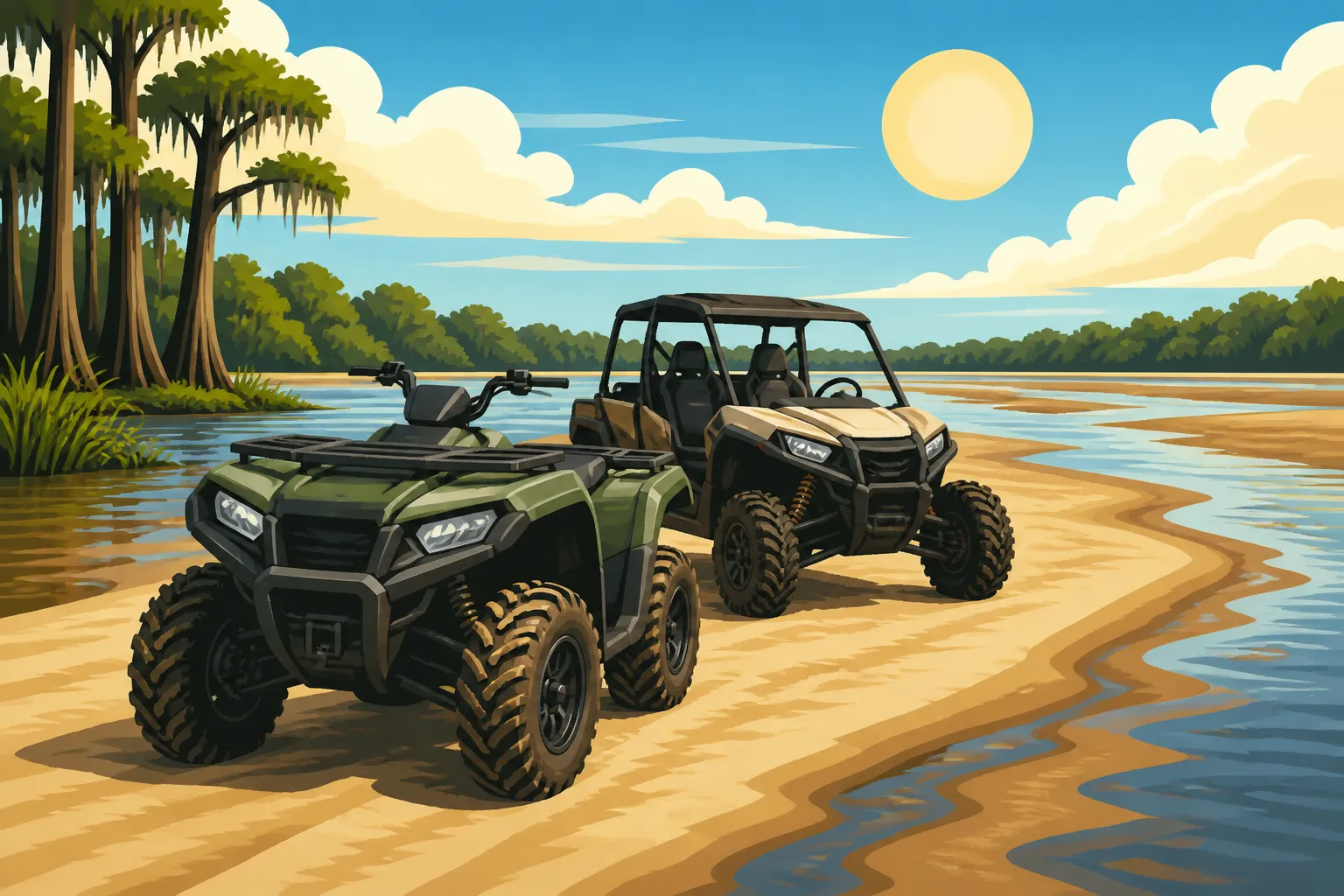
Imagine the scene: the sun glinting off the water, a vast, flat expanse of clean sand stretching out before you, the sound of your engine ready to roar. Sandbars offer a unique riding experience that’s distinct from muddy trails or forest paths. The open terrain allows for higher speeds (where safe and permitted, of course), wide turns, and the sheer joy of carving lines in pristine sand. For many, it’s the ultimate escape, a place where the feeling of freedom is palpable. It’s often a chance to truly stretch the legs of your machine, whether you're on a nimble sport quad or a robust utility UTV. The sensation of gliding over the soft, shifting sand is exhilarating, offering a different kind of challenge and fun compared to the tight turns and obstacles of traditional trails. Plus, the backdrop of Louisiana’s natural river systems is simply breathtaking, making for memorable rides and fantastic photos.
The Harsh Truth: Who Owns That Sand?
Here's where the dream meets reality, and often, it’s a rude awakening for many riders. While a sandbar might look like public land, especially in the middle of a river, the question of ownership in Louisiana is far more complex than it appears at first glance. Our state's unique legal history and geological characteristics mean that riverbeds, banks, and adjacent lands are often a patchwork of public, private, and even parish or levee district ownership. What appears to be "no man's land" is almost always owned by someone or some entity. Riding on someone else's property without explicit permission, even if it's a sandbar that only appears seasonally, is considered trespassing. Many riders assume that because it's a river, it must be public access, but this simply isn't the case in Louisiana. The land under navigable waters is generally considered state property, but the banks and the batture (that land between the levee and the river, often where sandbars emerge) are frequently privately owned. This is a critical distinction that can lead to serious legal trouble if overlooked. You might think you're enjoying a harmless ride, only to find yourself facing fines, confiscation of your machine, or even arrest for trespassing. It’s a bitter pill to swallow when you just want to enjoy the outdoors, but understanding these ownership nuances is the first step toward responsible riding. [Louisiana Trespass Law for Riders] can be surprisingly strict, and ignorance of the law is never a valid defense.
Navigating the Legal Landscape of Sandbar Access
Understanding who owns what, and the regulations that govern those areas, is absolutely essential before you even think about putting tires on a Louisiana sandbar. Without this knowledge, you're essentially riding blind into potential legal trouble.
Public vs. Private Riverbeds and Banks
In Louisiana, the legal definitions of public and private land, especially concerning waterways, are distinct and vital for riders to understand. Generally, the beds of navigable rivers and streams belong to the public (the state), up to the ordinary high-water mark. This means that you usually have a right to navigate on the water, and often to walk along the banks below this mark, but it doesn't automatically grant you the right to drive an ATV or UTV on those banks or exposed sandbars. The land above the ordinary high-water mark, including most river banks and the critical area known as the batture, is frequently private property.
The batture, that land between the river's edge and the levee, is a particularly tricky area. While it's often prone to flooding and looks wild, much of it is privately owned or controlled by levee districts. Accessing these areas with a machine typically requires explicit permission. Just because you see others riding doesn't make it legal for you. You really need to do your homework. For a deeper dive into this specific type of land, check out [What the Batture Is and Who Controls It]. Similarly, the rules for accessing and riding along canal banks can be complex, often falling under the control of drainage districts or private landowners.
Permitting and Permission: The Key to Legal Riding
If you're determined to ride a sandbar, your best and safest bet is to secure explicit permission from the landowner or managing authority. This almost always means getting it in writing. A verbal "go ahead" can be easily misunderstood or revoked, and it offers little protection if a property owner changes their mind or denies ever giving permission.
Here’s a practical approach:
- Identify Ownership: Start by trying to determine who owns the land adjacent to the sandbar. Parish tax assessor maps, available online in most parishes, can be incredibly helpful for identifying property owners.
- Make Contact: Once you've identified the owner, reach out to them directly. Be polite, explain what you want to do, and inquire about their rules for ATV/UTV access. Many landowners are wary of off-road vehicles due to past issues with irresponsible riders, so be prepared to make a good impression.
- Get Written Permission: If they agree, request written permission. This document should ideally specify the dates you are allowed to ride, the specific areas, and any rules or conditions they have. This formal step protects both you and the landowner. You can find more about the importance of written permission in [Getting Written Permission From a Louisiana Landowner].
- Consider Levee Districts: If the sandbar is near a levee, you'll also need to consider the levee district's regulations. Levee boards have strict rules about access to maintain the integrity of our flood protection systems. [Louisiana Rules for Riding a Levee] explains why riding on these critical structures without proper authorization is almost universally prohibited and can lead to severe penalties.
This process might seem like a lot of hassle, but it's the only way to ensure you're riding legally and respectfully. Without permission, you're gambling with legal repercussions.
Understanding Trespass Law on River Property
Louisiana's trespass laws are serious, and they apply just as much to river property as they do to dry land. When you ride on a sandbar without permission, you are often committing criminal trespass, which can carry significant penalties. These aren't just minor infractions; they can result in fines, impoundment of your machine, and even jail time in some cases.
Enforcement:
- Local Law Enforcement: Parish deputies and state troopers routinely patrol rural areas, including those near rivers. If you’re spotted riding where you shouldn't be, you will likely be stopped and cited. [Louisiana Equipment Checks by Troopers] often extend to ensuring you have proper permission to be where you are.
- Property Owners: Landowners are well within their rights to press charges against trespassers. They might be fed up with litter, property damage, or safety concerns from unauthorized riding, leading them to be less lenient.
- Environmental Concerns: Beyond property rights, riding in sensitive riparian zones can also fall under environmental protection laws. Disturbing wildlife habitats, causing erosion, or polluting waterways can lead to additional charges.
It's crucial to always assume that any land, including a sandbar, is private until you have clear, documented proof otherwise. Many riders get caught because they saw an old trail or someone else's tracks and assumed it was fair game. Don’t make that assumption. Take the time to confirm access, or choose a designated riding area instead. When in doubt, it's always better to err on the side of caution. Remember, what seems like harmless fun can quickly turn into a costly and regrettable incident.
Practical Considerations for Sandbar Adventures
Even if you do manage to secure legal access to a sandbar (and kudos to you if you do!), there are still a host of practical considerations that are unique to this type of riding. It’s not just about the law; it’s about safety, responsible enjoyment, and having the right gear.
Safety First: Assessing River Conditions and Hazards
Riding on a sandbar, especially one exposed by low river levels, comes with its own set of risks that are different from typical trail riding. The river environment is dynamic and can change rapidly.
- Submerged Hazards: What looks like flat sand can hide all sorts of dangers just beneath the surface or where the sand meets the water. Rocks, logs, old concrete, rebar, or even discarded trash can be submerged and undetectable until you hit them. These can cause severe damage to your machine, or worse, lead to a serious accident. Always proceed with extreme caution, especially in areas you haven't thoroughly scouted.
- Soft Sand Pockets: Even seemingly solid sand can have soft, boggy pockets that can easily swallow a wheel, especially on the edges near the water line or in areas where silt has accumulated. Getting stuck in deep, wet sand is no fun, and extracting a heavy UTV can be a monumental task.
- Changing Water Levels: Rivers can rise surprisingly quickly due to upstream rainfall or dam releases. A sandbar that was perfectly dry when you started your ride could become submerged within hours, trapping you or making egress dangerous. Always monitor weather reports and river gauges before and during your ride.
- Currents and Drop-offs: The edges of sandbars can drop off sharply into deep, fast-moving currents. Getting too close to the water's edge, especially on an ATV, can be incredibly dangerous if your machine slides in or if the current pulls you.
- Environmental Factors: Sun exposure can be intense on open sandbars, leading to heat illness if you're not careful. Bugs, especially biting flies and mosquitoes, can also be relentless. Be prepared with plenty of water, sunscreen, and insect repellent.
Always ride with a buddy, inform someone of your plans, and carry a fully charged cell phone (though service can be spotty in remote river areas). In case of an accident, knowing what steps to take, including calling for help and understanding reporting procedures, is vital. [Louisiana Accident Reporting for an ATV Crash] offers important guidance if things go wrong.
Gear and Preparation for Sandbar Riding
Having the right gear is crucial for a safe and enjoyable sandbar experience. Your regular trail setup might need a few adjustments.
- Tires: While knobby tires are great for mud and dirt, very aggressive lugs can sometimes dig into soft sand too much, potentially burying your machine. Some riders prefer less aggressive tread patterns or even paddle tires for pure sand riding, but a good all-around tire that can handle varied terrain is usually sufficient if you air down slightly (check your tire manufacturer's recommendations!). SuperATV offers a wide range of tire options designed for different terrains, which can be a great resource for finding the right rubber for your machine.
- Recovery Gear: A winch is practically a necessity for sandbar riding. Getting stuck is a high probability, and a good winch with a tree saver strap and shackles can get you unstuck quickly. Recovery boards (traction mats) can also be invaluable for gaining purchase in soft sand. Shovels are also a must-have.
- Communication: Radios (like two-way FRS/GMRS radios) are excellent for group communication, especially where cell service is unreliable.
- Waterproof Storage: Sand and water don't play nicely with electronics or dry gear. Invest in waterproof bags or storage boxes for your phone, wallet, first-aid kit, and snacks.
- Safety Equipment: Helmets are always a must, as are eye protection, gloves, and sturdy boots. Bright clothing can help increase visibility in wide-open areas.
- Fluids and Fuel: Carry extra water for hydration and enough fuel for your planned ride, plus a reserve. Sand riding can be demanding on your machine and your body, often consuming more fuel than trail riding.
Proper preparation can turn a potential disaster into a minor inconvenience, or prevent it entirely.
Environmental Responsibility and Leaving No Trace
Responsible riding isn't just about legality and safety; it's also about respecting the environment and ensuring these natural spaces, should they be accessible, remain beautiful for future generations.
- Stay on Designated Areas: If you have permission to ride a specific sandbar, stick to the areas you're allowed. Don't venture into adjacent wetlands, vegetated banks, or private property.
- Pack It In, Pack It Out: This is paramount. Anything you bring onto the sandbar must leave with you, including trash, food wrappers, empty cans, and even organic waste like fruit peels. Littering is not only disrespectful but can also harm wildlife and lead to further restrictions on access.
- Minimize Disturbance: Avoid riding in areas where nesting birds or other wildlife might be present. Be mindful of erosion, especially on the edges of sandbars. The goal is to leave the area exactly as you found it, or better.
- Noise Awareness: While rivers can be remote, sound travels across water. Be considerate of any nearby residents, campers, or other outdoor enthusiasts. Your loud exhaust might be fun for you, but it can be intrusive to others.
- Machine Maintenance: Ensure your ATV or UTV is well-maintained to prevent fluid leaks (oil, gas, coolant) that can contaminate the delicate river ecosystem.
Adhering to a "Leave No Trace" ethic is crucial for maintaining a positive image of off-road riders and for preserving access to any potentially rideable sandbars. When you disregard these principles, it only makes it harder for everyone to enjoy these spaces responsibly. [Louisiana Rules Riders Get Wrong] often includes neglecting basic environmental courtesies.
Where to Find Information and Alternatives
Given the complexities of sandbar riding in Louisiana, sometimes the best approach is to fully understand the restrictions and then explore excellent, legal alternatives. It's often safer, less stressful, and equally (if not more) fun.
Researching Local Regulations and Property Ownership
Before even considering a sandbar, thorough research is your best friend. Don't rely on hearsay or what you've seen others do.
- Parish and Municipal Ordinances: Some parishes or municipalities might have specific ordinances regarding motorized vehicle use on riverbanks or public lands within their jurisdiction. These are often available on their official websites.
- Levee District Websites: If you're near a levee system, check the local levee district's website for their policies on access and use.
- Louisiana Department of Wildlife and Fisheries (LDWF): The LDWF manages many waterways and wildlife management areas (WMAs). They have regulations regarding vehicle use that would apply to many riverine environments. Their maps and rulebooks are invaluable.
- Online Tax Assessor Maps: As mentioned before, these maps are publicly accessible and can show you parcel boundaries and ownership information, which is critical for determining if a riverbank is public or private.
- Local Riding Clubs: Connect with local ATV/UTV clubs. Experienced local riders often have the most up-to-date information on accessible areas and property ownership, though you should always verify any information they provide.
It pays to be diligent. A little research upfront can save you a lot of headache and potential legal trouble down the line. You can also explore specific property ownership questions related to features like [Who Owns the Canal Bank You Want to Ride] which can be adjacent to river systems.
Alternative Riding Locations in Louisiana
If navigating the legal labyrinth of sandbar access seems daunting, or if you simply can't secure permission, Louisiana has fantastic, legal, and well-maintained off-road riding areas that offer just as much excitement, and often, better facilities.
- Designated Public Trails: Kisatchie National Forest offers several multi-use trails, like the Sandstone and Vernon Enduro Trails, which provide miles of diverse terrain, including sandy sections, forest paths, and some challenging areas. These trails are managed for off-road use, meaning the infrastructure and rules are in place for you to ride legally and safely. Check their websites for current trail conditions and any required passes. [Louisiana ATV Trails: Where to Ride] is a great starting point for finding these public options.
- Private Mud Parks: Louisiana is famous for its private mud parks, and many of them have dedicated sand sections, gravel pits, and even artificial beaches that mimic the feel of a sandbar without the legal headaches. Parks like Muddy Bottoms ATV Park or Louisiana Mudfest offer thousands of acres of riding, camping, and events. These parks are designed for off-road enthusiasts and provide a controlled environment where you know you're riding legally. They also often have amenities like wash stations, repair shops, and food vendors. [Louisiana Private Mud Parks Compared] can help you choose the right park for your next adventure.
- Wildlife Management Areas (WMAs): While WMAs are primarily managed for hunting and conservation, some offer designated trails or roads where ATVs and UTVs are permitted, often seasonally, for specific purposes like game retrieval. Always consult the specific WMA's regulations carefully, as rules are very strict regarding machine size, tire type, and seasonal closures. [Louisiana WMA Trail Riding] provides more details on navigating these regulations.
Exploring these established alternatives is often the most straightforward and enjoyable way to get your off-road fix in Louisiana. They remove the uncertainty of land ownership and trespass laws, allowing you to focus purely on the thrill of the ride. Many of these locations also offer more technical challenges or social events, enhancing the overall riding experience. Before heading out, make sure your machine is up to snuff and your paperwork is in order, including title and decal. [Why an ATV Needs Both a Title and a Decal] is a good refresher on basic Louisiana requirements.
Disclaimer
This article is for general informational purposes only and does not constitute professional advice. Laws, prices and regulations vary by location and change over time. Consult a qualified professional for guidance on your specific situation.