Why Riders Under 21 Cannot Drive a UTV Legally
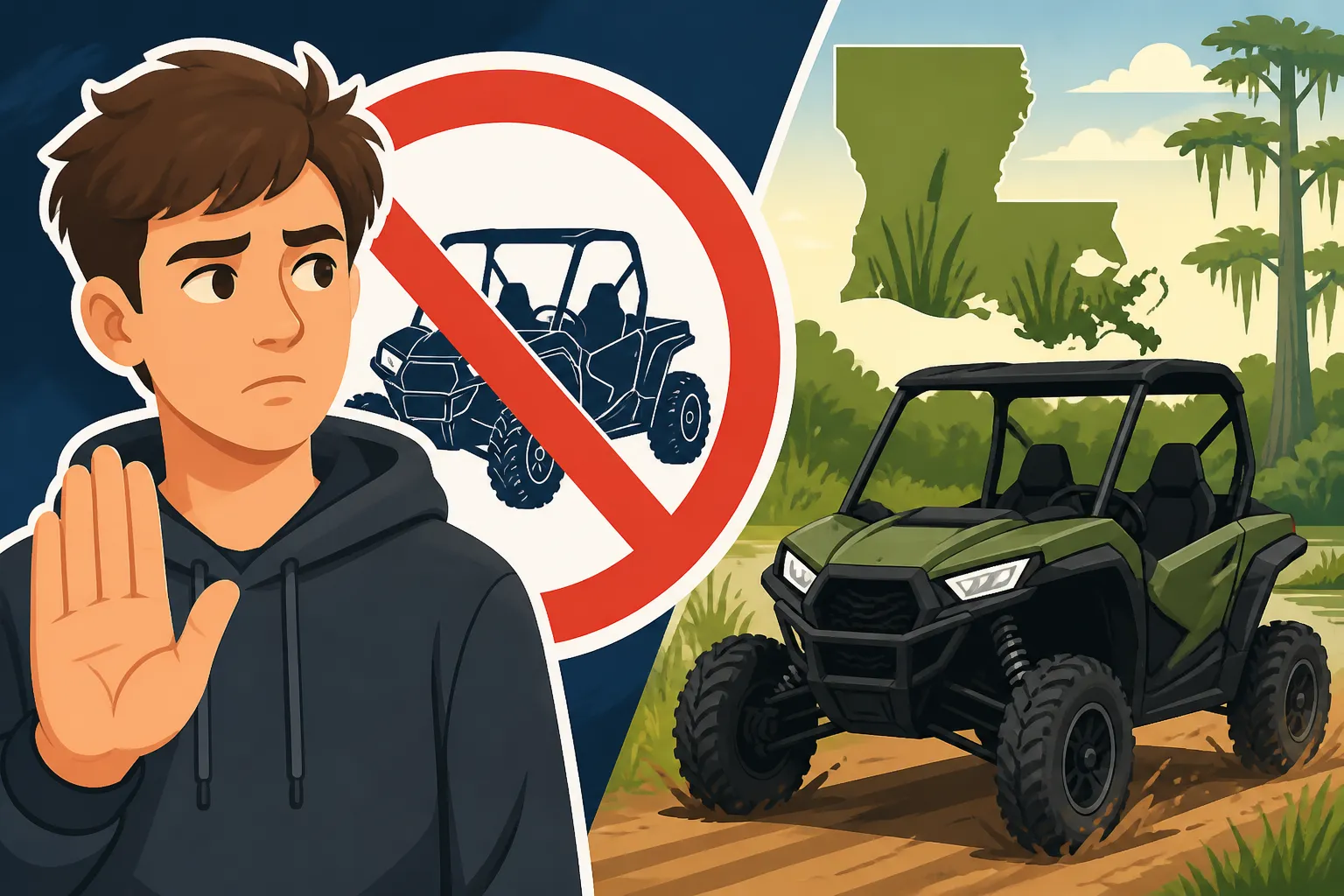
It can be incredibly frustrating, can't it? You see those awesome side-by-sides, tearing up the trails, maybe even cruising down a designated parish road, and you think, "I can drive a car, why can't I drive a UTV on the road?" But then you hear about Louisiana's age restriction for UTVs on public roadways, specifically the 21-year-old minimum, and it feels like a real roadblock. This guide is here to unravel the mystery behind that age requirement, explaining the laws and the reasoning so you understand exactly why riders under 21 cannot legally operate a UTV on designated public roads in Louisiana.
The Legislative Roots of Louisiana's UTV Age Rule
Louisiana has always taken a cautious approach when it comes to integrating off-road vehicles onto public roadways. It's a delicate balance between allowing enthusiasts to enjoy their machines and ensuring public safety for everyone sharing those roads. The laws didn't just appear overnight; they evolved through legislative acts aimed at defining where and how these powerful machines could operate.
The Foundation: Act 2015
The initial framework for UTV road use in Louisiana began with a significant piece of legislation back in 2015. This act ([Louisiana's 2015 UTV Statute]) was the state's first real attempt to address the growing popularity of UTVs and the desire of many owners to use them for more than just off-road recreation. Before this, UTVs were pretty much confined to private land or designated trails, with very limited exceptions for agricultural use.
The purpose of this initial statute was to provide a pathway for UTVs to legally access certain public roads. However, it came with a lot of caveats. The state recognized that UTVs, while fun and versatile, were not designed or equipped like standard automobiles. They typically have a higher center of gravity, different braking characteristics, and are open-cab, making them inherently different from the cars and trucks we're all used to seeing on the highway. Lawmakers were grappling with how to permit road use without creating undue hazards. They understood the economic benefits and the recreational appeal, but safety remained paramount. This cautious approach meant that any expansion of UTV access would be carefully controlled, starting with local government buy-in and strict operational guidelines.
The 2022 Amendment and the 21 Age Minimum
Fast forward to 2022, and Louisiana refined its UTV road use laws with a crucial amendment ([Louisiana's 2022 UTV Amendment]). This update addressed several aspects of UTV operation, but one of the most impactful changes, and the one that often surprises younger riders, was the explicit establishment of the 21-year-old minimum age for driving UTVs on designated public roads. This isn't just an arbitrary number; it reflects a considered decision by state legislators about maturity, experience, and the inherent risks associated with these vehicles.
The rationale behind requiring UTV drivers to be 21 years old on public roads is multi-faceted. Lawmakers likely considered the fact that UTVs are generally larger and heavier than traditional ATVs, and they often carry passengers, increasing the potential for injury in an accident. The speeds they can achieve, coupled with their unique handling characteristics, mean that a higher level of judgment and experience is deemed necessary. It's about minimizing risk, not just for the UTV operator and their passengers, but for other motorists and pedestrians as well. While a 16-year-old can obtain a Class E driver's license for a car, the legislature decided that the unique nature of UTVs on public roads warranted an older, presumably more experienced, operator. So, yes, [Louisiana Requires UTV Drivers to Be 21] if they want to hit those designated public roads.
Understanding the "Why" Behind the Minimum Age
It's easy to feel like the state is just trying to put a damper on your fun, but understanding the legislative reasoning can help clarify why these rules are in place. It really boils down to safety, risk, and the unique characteristics of UTVs themselves.
Risk Perception and Safety Concerns
When state lawmakers draft legislation concerning vehicles on public roads, safety is always at the forefront. UTVs, or side-by-sides, present a unique set of challenges compared to passenger cars. They typically have an open-air cabin, sometimes a roll cage, and often lack the same occupant protection systems found in cars. Their suspension is usually designed for off-road terrain, which can feel different on paved surfaces. Braking distances might vary, and their handling in emergency maneuvers can be less predictable than a standard vehicle.
The perception is that younger drivers, while capable of operating cars, may not have the same level of judgment, experience, or ability to react effectively in complex road situations, especially when piloting a UTV. The state is essentially making a judgment call that someone 21 or older is more likely to possess the maturity, decision-making skills, and real-world driving experience needed to safely navigate a UTV alongside cars, trucks, and motorcycles. It’s a way to mitigate the potential for serious accidents and injuries, which can be amplified in an open-cab vehicle. Even the most cautious young driver faces statistical hurdles when it comes to legislative perceptions of risk, and that's largely what this age limit aims to address.
The Role of Driver's Licenses and Insurance
This is where it gets a little nuanced. Most people assume that if you have a driver's license, you can drive any vehicle that's street legal. And largely, that's true for cars and light trucks. However, UTVs occupy a unique legal space. While you absolutely need a valid [Louisiana Requires a Class E License] to operate a UTV on a public road, that license alone doesn't override the 21-year-old age restriction specific to UTVs. A 16-year-old with a Class E license can drive a car, but not a UTV on a designated parish road.
The complexities of insurance also play a significant role. Insuring a UTV for road use is already a specialized field. Insurance companies assess risk based on many factors, and driver age is a major one. Younger drivers are statistically more likely to be involved in accidents, leading to higher premiums and increased liability for insurers. By setting a higher age minimum, the state helps to standardize the risk pool for UTV road operators, potentially making insurance more manageable and accessible for those who meet the criteria. [Louisiana UTV Insurance Minimums] exist, and providing that coverage to a larger group of younger drivers would likely push those costs up considerably, or make it difficult to obtain at all.
To help visualize the difference in age requirements, here’s a quick overview of various vehicle types and their minimum age for public road use in Louisiana:
| Vehicle Type | Minimum Age for Public Road Use (Louisiana) | Primary Regulatory Body | Notes |
|---|---|---|---|
| Passenger Car | 16 (with full license) | OMV (DPSMV) | Requires driver's education and specific permit stages; supervised driving often starts earlier. |
| Motorcycle | 16 (with Class M endorsement) | OMV (DPSMV) | Requires specific motorcycle training and testing beyond a standard Class E license. |
| ATV (Shoulder Use) | No specific state minimum for public road shoulder farm use | LDWF/OMV (complex) | Extremely limited to specific agricultural activities within a 5-mile radius; decal required. |
| UTV (Designated Road) | 21 | OMV (DPSMV) | Subject to parish/municipal designation; Class E license, insurance, and proper equipment required. |
As you can see, UTVs stand apart with their 21-year-old age mandate for public road use, highlighting the state's specific concerns.
Exceptions and Private Land Use
It's crucial to understand that this 21-year-old rule applies only when you're thinking about operating a UTV on a public road that has been designated for such use by a parish or municipality. The rules are entirely different when you're on private property.
If you own land, or have permission from a landowner, you can generally ride your UTV there regardless of age, as long as you're following the property owner's rules and any applicable local ordinances. Many private mud parks, like Muddy Bottoms or Louisiana Mudfest, also have their own age rules, which are typically based on manufacturer recommendations (often 16 for a UTV, with some parks having stricter rules or requiring adult supervision for minors). But those are private regulations, not state laws governing public roadways. On your own land, or at a private park, the state's 21-year-old restriction for public road use doesn't apply.
Parents still bear the significant responsibility for supervising younger riders on private property, ensuring they ride safely and responsibly. While the state public road age limit doesn't apply off-road, it doesn't mean "anything goes." Safety gear, appropriate speeds, and proper training remain essential, no matter where you ride.
Navigating Legal UTV Road Use for Those Over 21
So, you're over 21, you've got your Class E license, and you're ready to explore those designated UTV roads. Great! But the age requirement is just one piece of the puzzle. There are other critical steps and considerations to ensure your UTV road adventures are legal and safe.
Designated Roads and Local Ordinances
The biggest hurdle, even for an adult rider, is knowing where you can actually ride your UTV on public roads. Louisiana law doesn't just open all roads to UTVs. Instead, it places the authority in the hands of local governments. This means that [Louisiana Parishes Must Designate and Sign Roads] where UTV use is permitted. A parish or municipality has to formally pass an ordinance allowing UTVs on specific roads within its jurisdiction.
This patchwork of regulations means that a road that's legal for UTVs in one parish might be strictly off-limits in a neighboring one. It’s incredibly important to do your homework before you ever put a wheel on a public road. You'll need to research local ordinances for the specific areas you plan to ride. Some parishes and towns have embraced UTV road use, while others have chosen to keep them off their streets entirely. Checking the official websites of parish councils or town halls, or even making a phone call, is a smart move. Without a local ordinance and proper signage, even if you’re 21 and have a Class E license, you’re still riding illegally. Knowing [Louisiana UTV Street Legal Rules by Parish] is absolutely essential.
Equipping Your UTV for Road Use
Beyond having an eligible driver, your UTV itself needs to meet specific requirements to be street legal, even on designated roads. Think of it like taking your truck on the highway – it needs proper lights, brakes, and safety features. UTVs are no different when they venture onto public thoroughfares.
Louisiana law specifies certain mandatory equipment. This includes functional headlights, tail lights, brake lights, and turn signals – just like a car. You'll also need a rearview mirror (or multiple mirrors for adequate visibility), and a horn. Your tires must be DOT-approved, and your UTV generally needs to be insured to the state's minimum requirements for vehicles operating on public roads. [Louisiana UTV Signage Requirements] might also include displaying a slow-moving vehicle emblem if your UTV can't maintain the posted speed limit.
This is where quality aftermarket parts can really come into play. Companies like SuperATV understand the specific needs of UTV owners looking to make their machines road-ready. They offer a wide range of road-legal kits that bundle many of these essential components, such as LED turn signal kits, DOT-approved glass windshields, and side mirrors, making it easier to ensure your UTV complies with Louisiana's requirements. Investing in these components, which are often more robust than standard factory equipment, enhances both safety and compliance. When you're driving on public roads, you want to be as visible and as safe as possible, and quality parts from reputable brands can make a significant difference. Maintaining your UTV with durable, well-fitting parts, whether from SuperATV or another trusted source, ensures reliability and safety, regardless of whether you're tackling deep mud or cruising a designated parish road.
Penalties and What to Expect
Ignoring these rules, especially the age requirement, isn't just a minor infraction. Louisiana takes its road safety laws seriously, and there can be significant consequences for those who don't comply.
Consequences of Non-Compliance
If a rider under 21 is caught operating a UTV on a designated public road, they could face a range of penalties. This isn't just a slap on the wrist. Fines can be substantial, and the vehicle itself might even be impounded. Furthermore, depending on the circumstances, it could result in points being assessed against their driving record, which could impact their ability to get a standard driver's license later on, or lead to higher insurance rates once they are of age. [Louisiana Penalties for Illegal Road Riding] can be quite stiff, and nobody wants that headache.
Beyond the immediate penalties for the rider, there's also the issue of liability. If a parent or guardian knowingly permits an underage driver to operate a UTV on a public road and an accident occurs, they could face significant legal and financial consequences. This could include civil lawsuits for damages, in addition to any criminal charges. It's a serious risk that far outweighs any perceived fun or convenience.
The Bigger Picture: Safety and Responsibility
Ultimately, the 21-year-old age restriction for UTVs on Louisiana's public roads, along with all the other rules, is fundamentally about safety. It’s about protecting the UTV rider, their passengers, and everyone else who shares the road. These laws aren't designed to be punitive; they're preventative, aiming to minimize accidents and serious injuries.
Understanding [Louisiana UTV Road Rules Under 32:299.3] is more than just memorizing a few bullet points; it's about embracing a culture of responsible riding. This includes proper training, always wearing appropriate safety gear (like helmets, even if not strictly mandated for UTVs on roads, it's always a good idea), and never operating a UTV under the influence. By adhering to these regulations, all riders, regardless of age, contribute to a safer environment and help ensure that UTV recreation can continue to be enjoyed responsibly in the Pelican State.
Disclaimer
This article is for general informational purposes only and does not constitute professional advice. Laws, prices and regulations vary by location and change over time. Consult a qualified professional for guidance on your specific situation.