Insurance a Mud Event Organizer Has to Carry
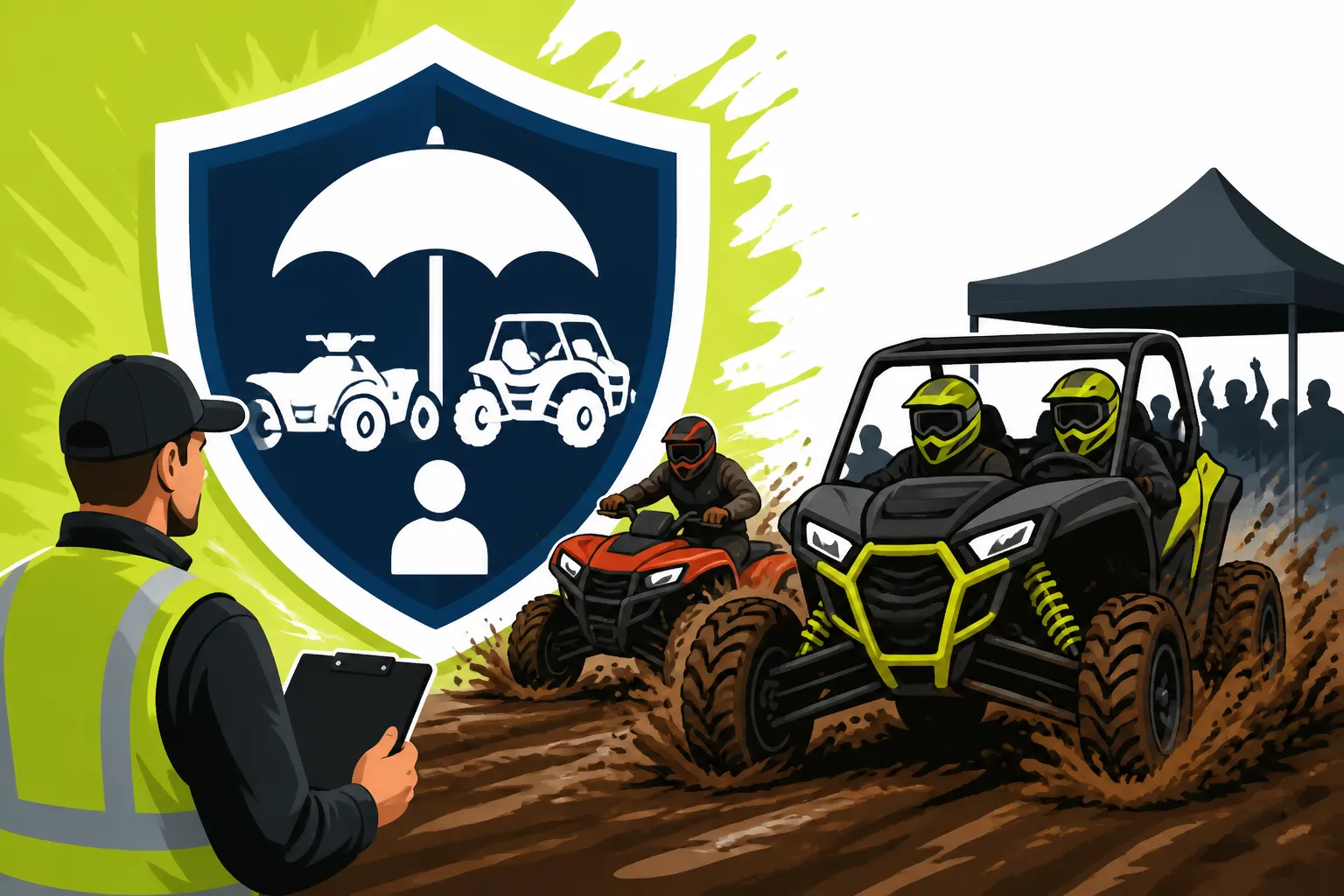
A mud event can involve hundreds of riders, private land, staff, vendors, and powerful machines. Organizers often ask what insurance Louisiana requires, but the answer depends on the event, the landowner, permits, and contracts. There is no one policy that automatically covers every risk. Start by confirming the conditions attached to the site and event, then ask an insurer about coverage built for off-road motorsports.
What insurance does a Louisiana mud event organizer have to carry?
Do not assume that a single statewide rule gives every mud event the same insurance checklist. Requirements may come from a landowner, a venue agreement, a permit, a municipality or parish, or a contract with a vendor. The event’s activities also matter: a private ride with no spectators is different from a ticketed weekend with racing, camping, food sales, or alcohol.
The first step is to ask each party with authority over the event for its requirements in writing. Check the land-use agreement, event contract, permit conditions, and any instructions from the local office handling the event. If you are planning a ride rather than a commercial event, Louisiana Event Permits for a Ride can help identify another part of the planning process to check.
Then have an insurance broker review those requirements and the event’s actual activities. A policy’s name is not enough. Two policies both described as general liability can treat ATV riding, competition, participant injuries, or spectators differently. Ask the broker to identify exclusions and confirm whether the specific event is covered.
| Coverage to ask about | Risk it may address | Key question for the organizer |
|---|---|---|
| Commercial general liability | Certain claims involving injuries to spectators or other third parties, and property damage | Are off-road riding and the event’s activities covered, or excluded? |
| Participant liability or accident coverage | Injuries involving registered riders, depending on the policy | Are participants covered, and under what conditions? |
| Commercial auto | Certain claims involving vehicles used in event operations | Which vehicles and drivers are covered for event work? |
| Workers’ compensation | Work-related injuries to eligible employees, as required by applicable rules | Who counts as an employee, and what obligations apply? |
| Liquor liability | Certain claims connected with alcohol service or sales | Does coverage apply to the planned service arrangement? |
| Property or equipment coverage | Damage to or loss of covered event property | Which equipment, locations, and causes of loss are included? |
| Umbrella or excess liability | Additional limits above certain underlying policies | Does it follow the relevant underlying coverage, including motorsports? |
The table is a starting point, not a legal checklist. A policy may not cover an activity simply because it appears in the event description. Have the insurer confirm coverage in writing, and keep that confirmation with the event records.
Separate legal requirements from contract requirements
A landowner may require the organizer to carry liability insurance, name the landowner as an additional insured, or provide a certificate before allowing access. That requirement comes from the agreement; it is not the same thing as a general statewide rule that applies to every event.
Permits and local rules can also have conditions. Ask the issuing office what documents it needs, who must be listed on them, and when it needs them. Requirements can differ by site and event, so do not rely on paperwork from a previous event as proof that this one meets its conditions.
A waiver does not replace insurance. A signed release may help document that a participant received and accepted certain terms, but it does not guarantee that a claim will be dismissed or that an insurer will pay. Review Louisiana Private Park Waivers and Rules alongside your insurance questions, not instead of them.
Coverage details that matter at a mud event
Mud events create risks that an ordinary event policy may not be designed to cover. Riders may collide, machines can roll over, spectators may approach active riding areas, and mud or water can make surfaces difficult to assess. Add camping, stages, vendors, repair work, or alcohol and the exposure changes again.
Describe the event fully when seeking a quote. Do not minimize the riding, call a competition a casual gathering, or leave out activities that are still being planned. A broker cannot match coverage to risks that have not been disclosed.
General liability and motorsports exclusions
Commercial general liability is often a central coverage to discuss, but it is not a guarantee of protection for riding-related claims. Policies may exclude or limit injuries connected with motorized vehicles, racing, competition, or participation in certain activities. A policy intended for a festival or ordinary outdoor gathering may not cover what happens on an ATV course.
Ask the insurer directly:
- Does the policy cover ATV and UTV riding at this event?
- Does it cover practice sessions, demonstrations, races, or timed challenges?
- Are injuries to registered riders excluded, limited, or covered under a separate policy?
- Are spectators covered if a machine leaves the riding area?
- Does coverage apply to event setup, breakdown, and overnight camping?
- Are contractors, volunteers, landowners, and vendors treated differently?
- What safety rules or site controls are conditions of coverage?
Request answers that refer to the event’s actual activities. If the answer is unclear, ask for the relevant policy language or an explanation in writing. A certificate of insurance is evidence that a policy exists; it does not change the coverage terms or prove that every event activity is included.
Participant accident coverage is not the same as liability coverage
Organizers may also ask about participant accident insurance. Depending on the policy, it can help with certain medical expenses after an eligible injury. It does not necessarily pay for every injury, replace liability insurance, or protect the organizer against every claim.
Find out who is eligible, what activities are covered, how claims are handled, and whether the coverage is primary or secondary to a participant’s health insurance. Ask whether the policy covers volunteers and staff who ride as part of their duties. The answers depend on the specific terms.
Vehicles, employees, alcohol, and property
If the organization uses trucks, trailers, or other vehicles to move equipment, ask whether its commercial auto coverage fits that work. Personal auto coverage may not be designed for business use. Check who may drive, whether borrowed or rented vehicles are included, and whether loading and unloading creates separate concerns.
For paid employees, ask a qualified insurance professional or employment adviser what workers’ compensation obligations apply to the organization. Do not assume that calling someone a volunteer or contractor settles the question. Classification and coverage depend on the circumstances and applicable rules.
Alcohol service needs its own review. A venue’s policy, a vendor’s policy, and the organizer’s policy may each treat alcohol differently. If the event will sell, serve, or allow alcohol, disclose that early and ask whether liquor liability coverage is needed and who must obtain it.
For equipment, signs, generators, tents, and other property, ask about coverage for theft, weather, transport, and damage during setup. A liability policy generally should not be treated as insurance for the organizer’s own equipment. See Louisiana Private Mud Parks Compared when evaluating how the venue itself fits into your event plan.
How to confirm coverage before you open the gate
Organizers can avoid last-minute surprises by turning insurance into a planning task rather than a final paperwork check. Keep a written record of what the event includes, what the venue requires, and what the insurer has agreed to cover.
- Write down the complete event plan. Include riding areas, spectator zones, practice or competition, camping, vendors, alcohol, staff duties, vehicle use, and expected attendance. Update it when plans change.
- Get the site and contract requirements. Ask the landowner or venue what limits, endorsements, named parties, or proof documents it requires. Confirm deadlines for submitting them.
- Check permit conditions. Ask the relevant local office what permits apply and whether insurance documents are part of the application or approval. Do not assume a permit is an insurance policy.
- Contact a broker familiar with off-road events. Explain the machine activities plainly and ask about motorsports exclusions, participant coverage, and event-specific terms.
- Review the actual documents. Compare the policy and endorsements with the event activities and contract requirements. A certificate alone may not answer whether a particular risk is covered.
- Set safety and claims procedures. Establish controlled riding areas, clear spectator boundaries, staff responsibilities, emergency access, and a process for documenting incidents. These measures support risk management but do not replace insurance.
- Recheck when the event changes. A new race format, alcohol service, added camping, or different site can affect both the insurance quote and permit conditions.
Use a clear written agreement with vendors, performers, and contractors. It should state who is responsible for their own insurance and what proof they must provide. Do not assume a vendor’s policy protects the organizer; ask whether the organizer needs to be named on the vendor’s coverage and have the agreement reviewed if the arrangement is significant.
Event waivers and posted rules should match the event that is actually being run. If the organizer allows activities that the waiver or insurance application does not describe, the mismatch can create avoidable disputes. For age and site rules, review [Louisiana Private Park Age Minimums] and confirm the venue’s current requirements rather than copying another event’s materials.
Common insurance mistakes and a practical final check
The most serious mistake is buying a policy based only on its title. “Event liability” does not tell you whether ATV riding, competition, or participant injuries are covered. Get a specific answer about each activity and verify it against the policy wording.
Another common mistake is treating a waiver, certificate, or landowner agreement as a substitute for the others. They do different jobs. A waiver records participant terms; a certificate summarizes insurance information; a contract sets obligations between parties. None automatically expands the insurance policy.
Organizers should also avoid waiting until the week of the event to disclose key details. Insurers may need time to review a motorsports exposure, assess the site, or clarify a requirement. Late changes can mean revised terms or an inability to bind the coverage needed for the planned event.
Before opening the gate, confirm that:
- The landowner’s insurance conditions are met.
- Any permit or local requirements have been checked with the issuing office.
- The insurer has been told about all riding, competition, camping, alcohol, vendor, and vehicle activities.
- Exclusions and participant coverage have been reviewed.
- Required parties and documents are correctly identified.
- Staff know the site boundaries, emergency plan, and incident-reporting process.
A well-prepared organizer does not assume that one policy covers every person and activity. The safer approach is to match coverage to the event, confirm the conditions with the landowner and relevant offices, and keep the written answers available during planning and event operations. For related event planning, see Louisiana Mudfest and Event Weekends and Louisiana Private Park Waivers and Rules.
Disclaimer
This article is for general informational purposes only and does not constitute professional advice. Laws, prices and regulations vary by location and change over time. Consult a qualified professional for guidance on your specific situation.