Never Searching for Wounded Game
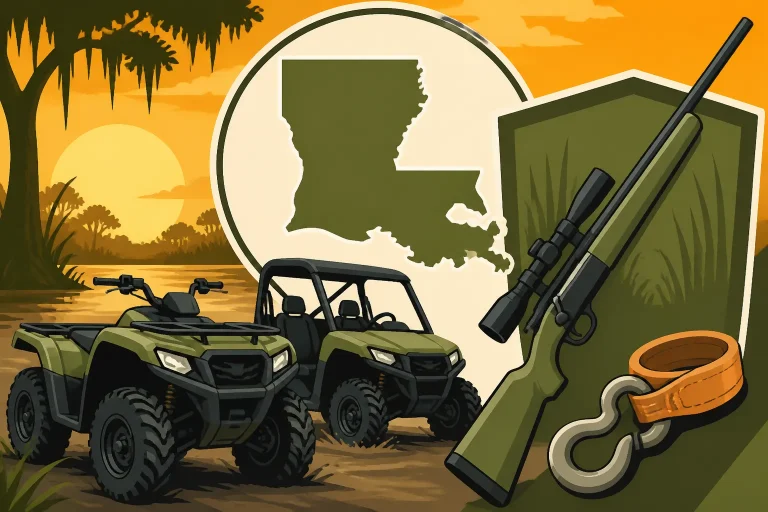
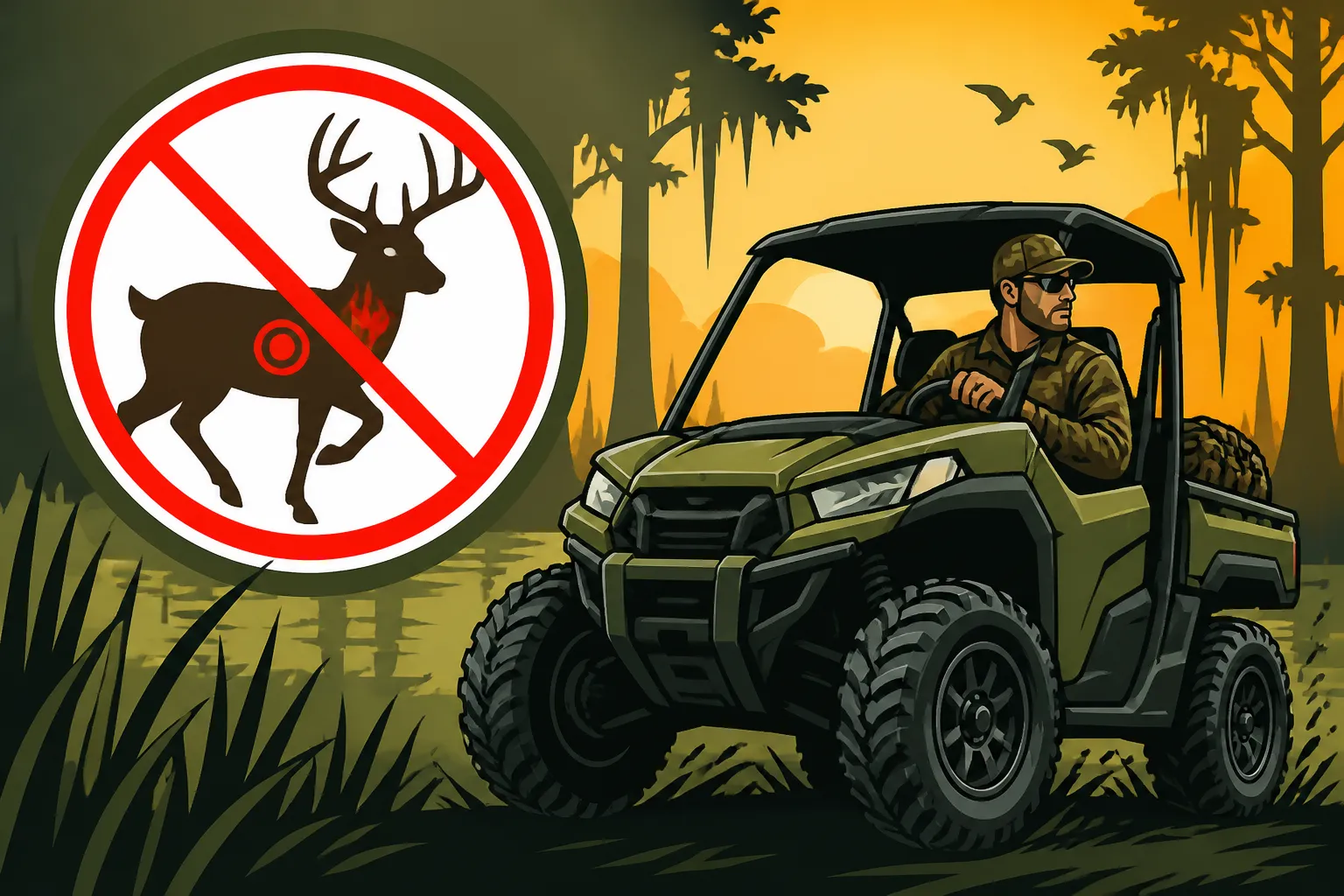
A quad can make it easier to reach a game animal already located on a Louisiana Wildlife Management Area, but that does not mean it can be used to look for wounded game. The key distinction is retrieval versus searching. Know where that boundary falls before you unload, because a hunting purpose does not automatically make off-trail machine use legal.
Retrieval and searching are not the same thing
On a WMA, machine use is generally limited by the area’s rules and designated routes. A game-retrieval exception may allow a machine to help recover an animal, but it is not blanket permission to ride around looking for one. The practical distinction is whether the animal has already been located.
If you know where a harvested animal is, using a machine to reach or retrieve it may fit the applicable retrieval rule. If you are still trying to find an animal you shot, driving a quad to search cover, follow a blood trail, or check likely hiding places is a different activity. Do not assume it qualifies as retrieval simply because a shot was fired.
| Situation | What it means | Safer next step |
|---|---|---|
| The animal is located and you need to recover it | Retrieval may be allowed under the WMA’s conditions | Confirm the current rule and limits for that WMA |
| The animal is wounded but has not been found | The animal is still being searched for | Do not use the machine to search; check hunting rules for lawful recovery steps |
| You want to ride off a marked route to look for sign | This is not automatically covered by a retrieval exception | Stay within authorized routes and ask the area manager or LDWF |
| You are unsure whether a recovery qualifies | The facts and WMA rules may matter | Pause and get guidance before taking the machine off route |
A machine can cover ground quickly, but that is exactly why the distinction matters. Riding back and forth through woods or fields can disturb other hunters, damage habitat, and turn a recovery effort into unauthorized off-trail travel. The fact that a quad is being used for hunting does not by itself authorize that travel.
For the broader conditions that apply to recovery, read Louisiana Game Retrieval Rules. If you are looking for the general rules on where machines may travel, see Louisiana WMA Riding Rules for Quads.
What to do when an animal is wounded but not located
A wounded animal that has not been found is not the same as a located animal waiting to be retrieved. Do not treat the machine as a search tool. That includes using it to follow a trail of blood, sweep a large area, or shuttle between places where you suspect the animal may have gone.
Instead, stop and consider the hunting rules that apply to the species, season, and WMA. Rules for following a wounded animal may differ from rules for operating a machine. A permission to track on foot, if one applies in the circumstances, would not automatically permit ATV or UTV travel. Likewise, an exception for machine-assisted retrieval should not be stretched into permission to search.
If you are uncertain, contact the WMA manager or the Louisiana Department of Wildlife and Fisheries before riding. Give a clear description: whether you have located the animal, where it is, what route you would use, and whether you would need to leave a designated trail. Asking first is more useful than trying to explain the ride after a violation or disturbance.
A careful response also helps avoid needless damage. Keep the machine on the route authorized for the area, do not drive through sensitive ground or another hunter’s setup, and do not assume a gate or an existing tire track means the route is open to public riding. WMA rules can be more restrictive than the general rules for private land.
If the animal is found, check the specific conditions before moving it. The WMA may limit how many machines can be involved or where they may travel. The reference topic One Machine in a Retrieval Party addresses a common limit; confirm the current rule for the property you are visiting rather than assuming the same conditions apply everywhere.
Check the WMA’s rules before taking a machine
A retrieval exception does not replace ordinary access requirements. Before riding, confirm that the WMA allows machine use at that time, identify the authorized trails, and check any season, time, size, or equipment restrictions. A trail shown on an old map, a route used by another hunter, or a road that looks passable is not proof that riding is permitted.
Start with the WMA map and current regulations. Reading a WMA Map Before You Unload can help you identify designated routes and closed areas. If the area requires a self-clearing permit, complete the required steps before entering; Louisiana Self-Clearing Permit Steps explains that process. A permit or pass grants only the access described by its terms. It does not turn a closed route into an open one or create a general right to ride off trail.
Pay particular attention to the difference between an authorized trail and a retrieval exception. A rule permitting limited access for a specific recovery purpose should not be read as general permission to leave designated routes whenever hunting is involved. The area may also have restrictions on night riding, seasonal access, or machine type. Check those separately rather than treating one exception as an all-purpose authorization.
| Before riding | What to verify |
|---|---|
| Entry | Whether a permit, pass, or self-clearing process applies |
| Route | Which marked trails are open to machines |
| Timing | Seasonal closures and allowed hours |
| Machine | Applicable size, weight, tire, or other limits |
| Retrieval | Whether the animal is located and what conditions govern recovery |
| Group | How many machines may take part |
| Uncertainty | Who to contact for a ruling on the specific WMA |
Machine rules can be different from one public property to another. If you ride public land as a visitor, do not assume your home-state decal, permit, or habits settle the Louisiana requirements. The page Riding Louisiana Public Land on an Out-of-State Machine covers the visitor question, while Louisiana WMA Off-Trail Bans explains why a retrieval claim does not automatically authorize off-route travel.
A practical decision before moving the quad
When a shot has been fired and the animal is not yet located, use this simple decision process:
- Stop before riding. Do not drive a route just to see whether you can find sign or the animal.
- Work out what you know. Is the animal positively located, or are you still trying to determine where it went?
- Separate hunting rules from machine rules. Check the current hunting requirements for tracking and the WMA rules for machine use. One does not automatically grant permission under the other.
- Confirm the property’s conditions. Review the current map, closures, route designations, and any retrieval limits.
- Ask before leaving the route. If the rule is unclear, contact the area manager or LDWF and explain the situation.
- Keep the recovery narrow. If machine use is allowed for a located animal, follow the applicable limits rather than turning the trip into a wider search.
This approach may feel slower when you are eager to recover game, but it avoids a common mistake: treating a hunting-related purpose as if it cancels the WMA’s riding restrictions. It also makes it easier to explain what happened if an officer or manager asks why the machine was being used.
Do not rely on a general statement from another hunter as a substitute for the current rules. The details can depend on the WMA, the season, and what you mean by “retrieval.” If the animal is not located, the conservative choice is not to use the quad to search. If the animal is located, verify the exact retrieval conditions before moving the machine.
Disclaimer
This article is for general informational purposes only and does not constitute professional advice. Laws, prices and regulations vary by location and change over time. Consult a qualified professional for guidance on your specific situation.