Rules for Flying a Drone Over a Mud Park
A drone can capture dramatic footage of mud, machines, and event crowds, but a mud park is not automatically open airspace. Before launching in Louisiana, check both FAA requirements and the park’s rules. The key questions are where you can fly, whether your purpose is recreational, and how to keep the drone away from riders and spectators.
Can You Fly a Drone Over a Louisiana Mud Park?
Sometimes—but there is no single yes-or-no answer for every park or event. FAA rules apply to drone flights, while a park can set its own conditions for access, takeoff and landing on its property, filming, and event participation. A flight that meets FAA requirements can still violate park policy.
Start by asking the park operator, preferably in writing. Be specific: explain whether you want to fly over the property or only launch from it, what you plan to record, when you want to fly, and whether the footage is for personal use or a business. Ask whether the park has no-fly areas, event-day restrictions, designated launch locations, or insurance requirements. Do not assume a ticket to ride or watch an event includes permission to operate a drone.
The distinction between flying over land and using land matters. Property ownership does not, by itself, answer every question about airspace, but a park can control access to its grounds and set reasonable conditions for visitors. If staff tell you drones are prohibited, do not launch from the property or disregard the rule because you believe the flight is otherwise legal. A disagreement with park staff is not a safe way to settle an airspace question.
Event weekends need extra care. A crowd, moving machines, dust, and noise make a flight more hazardous than a quiet practice session. The event organizer may prohibit drones even when the park allows them on ordinary days. For event-specific planning, review Louisiana Mudfest and Event Weekends and the park’s own published rules. A park’s event schedule and entry conditions can change, so confirm directly before towing your machine or drone to the site.
A permitted flight should satisfy both sets of conditions:
| Question | What to check |
|---|---|
| Is the airspace available? | Check FAA airspace requirements and any active restrictions |
| Is your purpose recreational? | Confirm whether your flight qualifies as a hobby flight or falls under Part 107 |
| Will people be underneath or near the drone? | Plan to avoid flying over riders, spectators, and workers |
| Does the park allow the flight? | Get permission for the specific location, date, and use |
| Is it an event day? | Ask the organizer about event-only limits or a complete drone ban |
| Are you recording people? | Consider privacy, consent, and the park’s filming rules |
A mud park can be private property, a public recreation site, or an event venue with additional requirements. Do not assume the rules at one location apply at another. If your plan involves a large event, a commercial shoot, or flying close to people, resolve the questions with the operator and the appropriate FAA guidance before the day of the flight.
FAA Rules That Matter at a Mud Park
FAA rules apply whether you fly over a remote field, a private mud park, or a public trail area. The first step is to identify how the flight will be conducted: as a recreational flight or under the rules for a non-recreational operation.
Recreational or Part 107
A recreational flight is one flown solely for fun or personal enjoyment. A flight connected to business, work, or another non-recreational purpose may need to follow Part 107 rules. Whether money changes hands is not the only consideration; the purpose of the operation matters. For example, filming content for a business or producing footage for a client is not automatically a recreational flight just because the pilot is not paid that day.
If the purpose is not clearly a personal hobby, check FAA guidance on which rules apply before flying. A park’s permission does not replace FAA requirements, and having an FAA certificate does not give you permission to fly from park property.
People who fly recreationally must follow the applicable safety requirements, including completing the required recreational safety test and carrying proof of completion as required. Registration and Remote ID requirements can depend on the drone and how it is operated. Check the current FAA rules for your aircraft rather than relying on an old assumption about its weight or equipment.
Airspace, altitude, and visibility
Before you drive to a park, check the airspace for the exact location and planned flight. Some airspace requires authorization before a drone can operate, and restrictions can vary by place and time. Nearby airports, heliports, or temporary restrictions may affect a flight even when the park itself has no posted drone rule.
In uncontrolled airspace, the general altitude limit for many small drone operations is 400 feet above ground level, subject to applicable exceptions and conditions. That limit is not permission to fly anywhere below it. Keep the aircraft within visual line of sight, and do not rely on a phone screen or camera feed as a substitute for being able to see the drone.
A mud park can make line of sight difficult. Dust clouds, tree lines, grandstands, tents, and parked trailers can hide a small aircraft quickly. If you cannot keep the drone in sight or maintain control, land and reassess. A spotter may help you monitor the aircraft and surrounding activity, but does not make an otherwise unsafe flight acceptable.
Avoid flying over people
One of the most important practical limits at a mud event is the presence of people beneath or near the flight path. Riders may be moving unpredictably, spectators may crowd around a mud hole, and workers may be focused on vehicles rather than looking upward. Do not plan a route that crosses a group simply because the drone is small or the flight is brief.
FAA rules restrict operations over people unless the operation meets applicable requirements. Those requirements depend on factors such as the aircraft and the way it is operated. Do not guess that a lightweight drone is automatically allowed over a crowd. Check the current FAA rules for your specific aircraft and operation, and choose a route that keeps people out from underneath whenever possible.
The park’s permission is separate from this question. An event organizer might approve filming from a designated location but still prohibit flights above spectators or riders. If either FAA rules or park conditions rule out the planned route, change the route or do not fly.
Park Permission, Events, and Filming
Even when the airspace check looks clear, a park can have rules that make launching impractical or prohibited. Ask about permission before setting up. The operator may want to know who is piloting, where the drone will launch, what area it will cover, and whether footage will be shared or used commercially.
A useful request is narrow and concrete. Instead of asking, “Can I fly here?”, explain the date and time, the proposed launch and landing area, the height and direction of the flight, and whether the drone will pass near people or vehicles. Ask for any restrictions in writing. A verbal okay from one staff member may not settle what is allowed during a busy event or in another part of the property.
Some parks may require a waiver, special event approval, or other conditions for activities on site. Review Louisiana Private Park Waivers and Rules and ask the operator how drone use fits into its current policies. If you are organizing a ride or filming as part of an organized event, Louisiana Event Permits for a Ride may help you understand why event approval and ordinary visitor permission are different questions.
Keep filming considerate
Permission to fly does not mean every person at the park has agreed to be filmed. Avoid hovering near spectators, campsites, restrooms, staging areas, or private conversations. Do not record people in places where they reasonably expect privacy. If recognizable people will be featured in footage, ask for consent when practical, especially if the video will be used to promote a business or event.
The safest footage often comes from a planned shot that does not require flying directly over anyone. For example, you might capture a wide view from an approved perimeter location, film an empty section of track before the crowd arrives, or record a machine from a safe distance with the rider’s agreement. Do not use the camera’s zoom or the drone’s small size as a reason to get closer than the park or FAA rules allow.
Event restrictions are not automatic, but they can apply
A mud park event is not automatically subject to a drone restriction just because it has a crowd. However, an event organizer may set its own no-drone rule, and FAA restrictions may apply in particular circumstances. Do not assume that a previous event’s rules, a social-media post, or a clear-looking map settles the matter for the day you plan to fly.
If the event is large, ask the organizer whether it has approved aerial filming or hired a drone operator. If someone else is already capturing aerial footage, do not launch a second drone without coordination. Two aircraft operating near a track, spectators, and event infrastructure can create avoidable risks.
A Safe Preflight Plan for a Mud Park
Use a short checklist before you unpack the drone. If you cannot confirm a requirement, pause the flight until you can. Conditions at a mud park can change quickly, so check again when you arrive.
- Ask the park or event organizer. Confirm that drones are allowed on the specific date and learn where you may launch and land. Ask about event-only rules, filming limits, and any required approval.
- Check the airspace and restrictions. Use current FAA resources for the exact location and intended time. Look for controlled airspace requirements and temporary restrictions.
- Confirm which operating rules apply. Decide whether the flight is recreational or falls under Part 107. Check current requirements for safety testing, registration, Remote ID, and operating over people.
- Choose a route away from people and vehicles. Avoid the track, crowded mud holes, staging areas, campsites, and work zones. Plan a safe place to land if conditions change.
- Check visibility and weather at the site. Dust, rain, low light, wind, and obstacles can make a flight unsafe even if the airspace is available.
- Brief anyone helping you. Agree on the route, landing area, hand signals, and what should happen if riders or spectators move into the flight path.
- Stop when conditions change. Land if you lose visual contact, dust blocks the view, a crowd moves under the aircraft, or park staff ask you to stop.
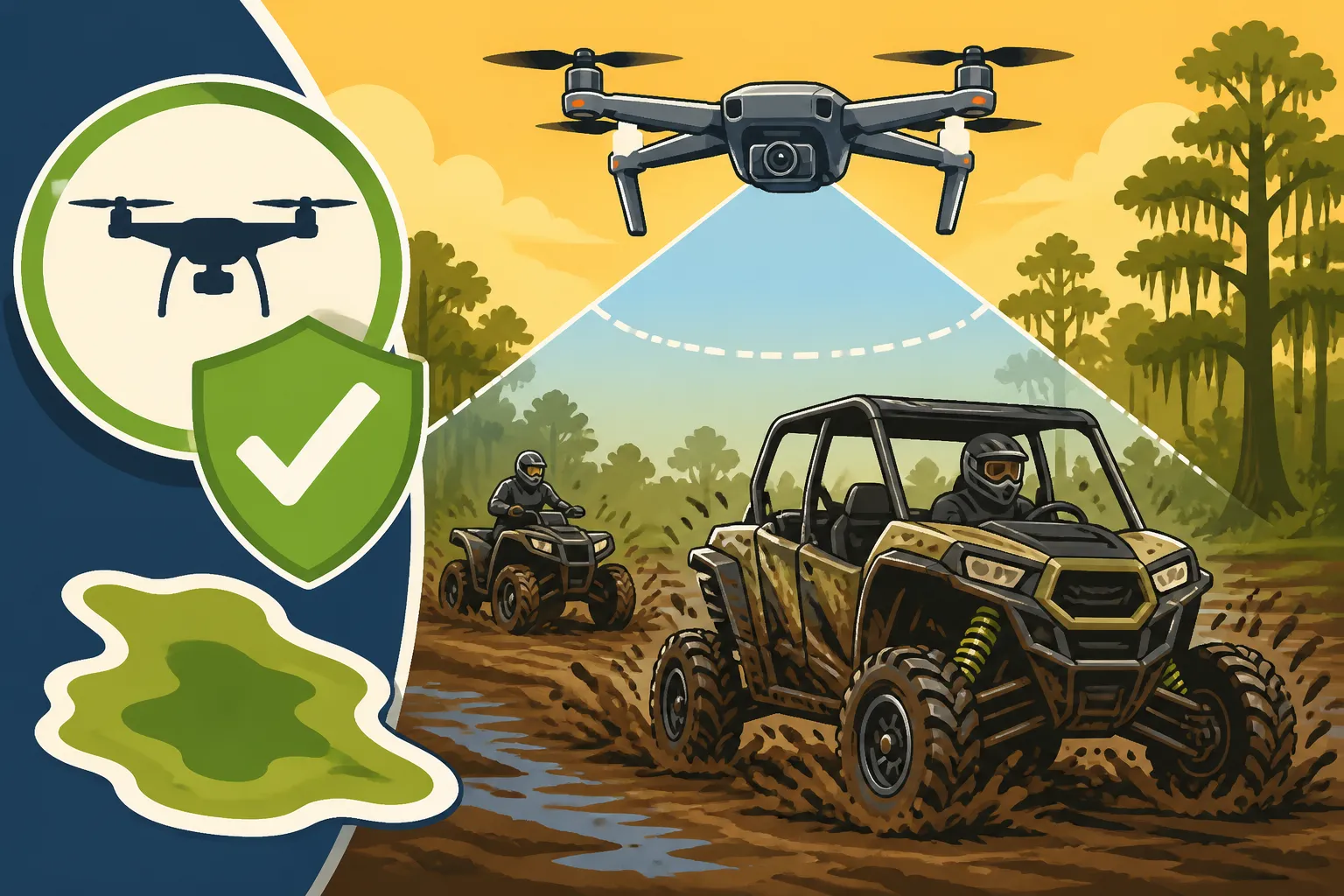
A bright landing pad can help keep the drone away from mud and make a launch point easier to identify. If you shop for one through Amazon, check its size and material against your aircraft and the ground conditions; it will not make an unauthorized location acceptable. Likewise, propeller guards can reduce some contact risks but do not make flying over a crowd safe or automatically legal.
If the park says no, the airspace requires authorization you do not have, or you cannot keep people clear of the flight path, the practical answer is not to fly. A ground camera or footage supplied by an approved operator may be a better option. The important distinction is that park approval, FAA compliance, and considerate filming are separate checks. You need to address all three before taking off.
Disclaimer
This article is for general informational purposes only and does not constitute professional advice. Laws, prices and regulations vary by location and change over time. Consult a qualified professional for guidance on your specific situation.