When a Louisiana Mud Park Can Send You Home
A day at a Louisiana mud park can end early if a rider ignores a rule, creates a safety risk, or damages property. But parks differ in their rules, waiver terms, and response to problems. Knowing what can prompt staff to stop a ride, remove someone from the property, or deny a return visit helps you avoid a preventable conflict and understand what to ask before unloading.
Reasons a Louisiana mud park may remove a rider
A private park sets conditions for using its land. Those conditions may appear on a ticket, waiver, posted sign, reservation page, or rule sheet. By buying admission or entering the property, you may be agreeing to follow those conditions. The exact terms and the park’s response to a violation depend on that venue.
A staff member might first give a warning for a minor or correctable issue. A serious danger, repeated violation, or refusal to follow instructions may lead to an immediate stop to riding or a request to leave. Do not assume that every park follows the same warning process. Ask staff how rules are enforced if a policy is unclear.
Common reasons a park may intervene include:
- Unsafe riding: Excessive speed, reckless driving, racing where it is not allowed, or riding in a way that endangers others can draw a quick response.
- Ignoring boundaries: Entering a closed trail, riding outside designated areas, or crossing into a restricted zone may violate park rules and create hazards.
- Breaking equipment or access rules: A machine that does not meet the park’s requirements, or a rider using it in a prohibited way, may be turned away or stopped.
- Alcohol-related behavior: A park may prohibit alcohol while riding or restrict where and when it can be consumed. Impaired operation can prompt staff to stop a rider immediately.
- Disregarding protective gear rules: If a park requires a helmet or other safety equipment, refusing to wear it can be grounds to stop the ride.
- Passenger or age violations: Carrying an unauthorized passenger or allowing someone below the park’s minimum age to ride may violate admission conditions.
- Harassment, fighting, or threats: Aggressive conduct toward other guests or staff can make continued access unsafe.
- Property damage or theft: Deliberately damaging signs, facilities, equipment, or another guest’s property can lead to removal and further consequences.
- Trespassing or bypassing payment: Entering without authorization, sneaking in, or refusing to leave a closed area can result in staff ending your visit.
- Refusing a staff instruction: Even if you disagree with an instruction, refusing to stop a machine or leave a restricted area can turn a minor disagreement into a more serious incident.
These are practical examples, not a universal list of Louisiana park rules. Read the venue’s own conditions before riding. For an overview of what operators may ask guests to accept, see Louisiana Private Park Waivers and Rules.
| Situation | Likely staff response | What to do |
|---|---|---|
| First, minor rule issue | Reminder or warning, depending on park policy | Correct it promptly and ask if you are unsure what is allowed |
| Safety hazard or reckless riding | Stop the ride, restrict access, or require the rider to leave | Park safely and follow staff instructions |
| Repeated rule violations | Removal from riding areas or the property | Do not argue while operating a machine; ask about next steps once stopped |
| Damage, threats, or suspected trespass | Immediate intervention and possible further action | Keep people clear, report what happened, and avoid confrontation |
| Unclear or disputed rule | Staff clarification; the outcome depends on the park’s terms | Ask for the rule in writing and remain calm |
Rules that are especially easy to overlook
Many disputes begin with a guest assuming a rule is obvious or applies only to someone else. A park’s standards can be stricter than what you are used to at home or on another riding property. A familiar machine, a short ride, or a private group event does not automatically make an exception.
Alcohol and impaired riding
Parks may set rules for alcohol in riding areas, campsites, or event spaces. Those rules are not necessarily identical from one location to another. More importantly, operating an ATV or UTV while impaired is dangerous, whatever the park’s specific policy says. If someone appears impaired, staff may stop them from riding and may require them to leave.
Check Louisiana Private Park Alcohol Rules before bringing alcohol, and do not treat permission to possess or drink it in one area as permission to operate a machine afterward. If a guest has been drinking, arrange a sober driver or another safe way to get back to camp.
Helmets, ages, and passengers
A park can set age and protective-gear requirements as a condition of entry. It may also limit who can operate a machine, whether a child needs adult supervision, or whether a passenger is permitted on a particular ATV or UTV. The machine’s seats and manufacturer design matter, but the park’s posted rules still need to be checked.
Review Minimum Ages a Private Mud Park Sets, Helmet Rules a Private Mud Park Enforces, and Passenger Rules at a Private Mud Park before the trip. Do not assume that a rule for one machine type applies to another, or that a passenger is allowed just because the machine has a seat.
Closed areas, speed, and trail conduct
Mud parks may close trails temporarily because of weather, maintenance, crowding, or unsafe conditions. A trail that was open on a previous visit may not be open today. Barricades, signs, ropes, and staff directions should be treated as boundaries, not suggestions.
Speed and passing rules also deserve attention. Mud, standing water, blind corners, and groups of riders can make it difficult to see what is ahead. Stay within the park’s limits, leave room for other machines, and slow down near campsites, spectators, and trail intersections. The basic habits in Louisiana Trail Etiquette Locals Expect can help prevent conflicts even when a park’s rules are more specific.
Campsites, pets, and quiet hours
A rider may be asked to leave for conduct at camp, not only for something done on a trail. Some parks set requirements for pets, generators, fires, noise, parking, or overnight guests. If a group’s campsite behavior violates the rules, staff may address the people responsible or the group, depending on the park’s policy and what happened.
Check the relevant conditions before you arrive, including Louisiana Private Park Camping Rules, Louisiana Private Park Pet Rules, and Quiet Hours at a Mud Park Campground. A guest who stays within the riding rules can still create a problem by blocking an access lane, disturbing nearby camps, or ignoring a staff request to quiet down.
What to do if staff tells you to stop or leave
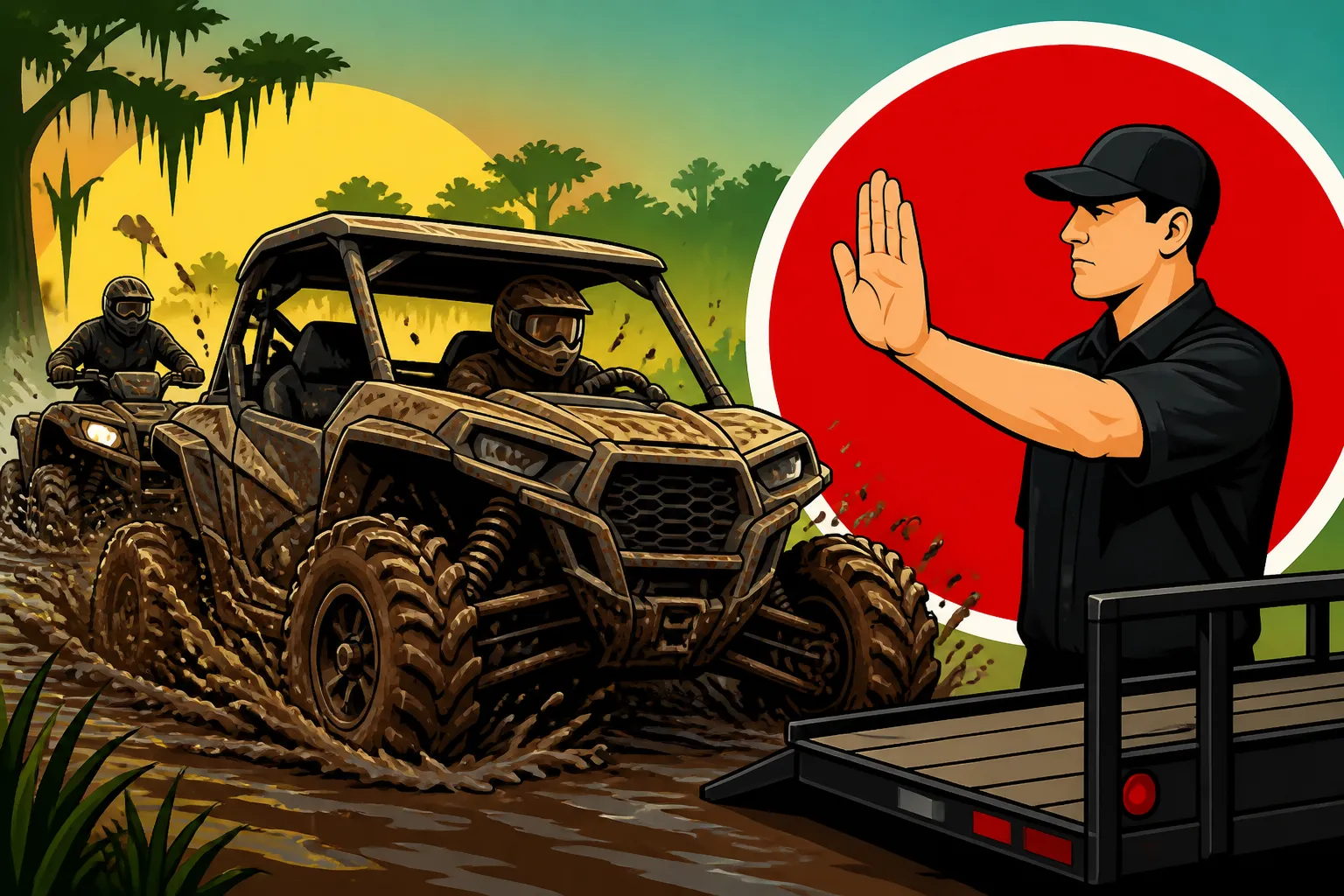
The safest approach is to stop riding first and discuss the decision afterward. A moving ATV or UTV is a poor place to argue, and continuing after staff has told you to stop may create a new safety or access issue.
- Stop in a safe place. Slow down, move clear of traffic if possible, shut off the machine, and keep other riders from joining the dispute.
- Listen to the instruction. Ask what behavior or rule prompted the intervention. Do not interrupt, threaten staff, or try to ride away.
- Ask for the relevant policy. If you do not understand the reason, ask to see the posted rule, waiver term, or event condition. A calm request is more useful than arguing about what another park allows.
- Follow reasonable directions while the issue is addressed. Staff may ask you to leave a trail, return to camp, or exit the property. Do not cross a closed area or re-enter after being told not to.
- Keep a factual record. If you believe the decision was mistaken, note the time, location, staff explanation, and names of witnesses. Photograph signs or relevant conditions only if it is safe and permitted.
- Ask about the admission or reservation policy. Whether a ticket, camping booking, or other payment is refundable depends on the park’s terms. Do not assume a refund is automatic, and do not let a payment disagreement keep you on property after you have been directed to leave.
- Use the park’s review process later. Contact management after the immediate situation has settled. Provide a concise account and any relevant documentation rather than posting accusations while facts are still unclear.
If the disagreement involves an injury, damage, or a threat, focus on safety and reporting rather than trying to settle responsibility at the trailhead. Seek medical help when needed. For machine damage or a collision, record details and contact your insurer if the circumstances call for it.
A park’s request to leave is different from a ticket for a public-road violation. Private property rules and public-road rules are separate questions. A park admission decal or waiver does not authorize riding on public roads, and a private park’s decision to remove a guest does not itself explain what public-road rules may apply. Keep the two issues distinct.
How to reduce the chance of being sent home
A little preparation makes it easier to spot a rule conflict before it costs you a riding day. The most useful step is to check the specific park’s current rules, not rely only on a friend’s recollection or an old social media post.
Before leaving home, confirm whether the venue has rules for machine size, sound, tires, lighting, helmets, passengers, age, alcohol, pets, camping, and after-hours riding. Ask whether the rules differ during special events. If you are arriving with a group, share the rules with everyone; one person’s violation can disrupt plans for the rest of the party.
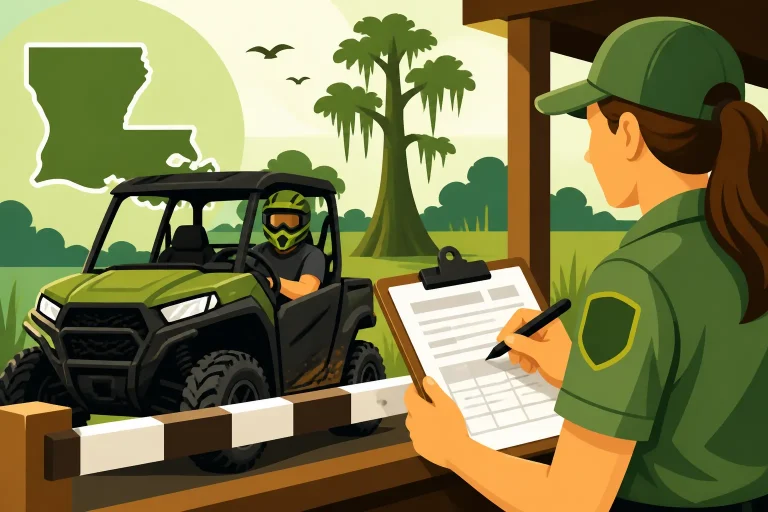
At the gate, take time to read posted notices and complete any required waiver carefully. Make sure the rider who signs understands what the document covers, especially rules about children, passengers, trail access, and responsibility for damage. If a clause is unclear, ask a staff member before the machine is unloaded. A waiver is not a substitute for safe riding, and signing one does not mean you should ignore the park’s instructions.
When staff gives a direction, respond promptly and courteously. That does not require agreeing with every decision; it means keeping the situation safe while you ask for an explanation or use the park’s complaint process. If you are bringing a group, choose one person to speak with staff so several people do not crowd the conversation.
It also helps to understand how the park handles damage or rule violations. Ask whether there is a damage deposit, who evaluates damage, and how a dispute is reviewed. The details can vary, so review Damage Deposits at a Private Mud Park and the venue’s own terms rather than assuming another park’s process applies.
The best prevention is straightforward: ride within marked boundaries, follow protective-gear and passenger rules, avoid operating when impaired, and treat staff instructions as part of the conditions for using the property. If a rule seems ambiguous, get an answer before riding into a situation that could end the day.
Disclaimer
This article is for general informational purposes only and does not constitute professional advice. Laws, prices and regulations vary by location and change over time. Consult a qualified professional for guidance on your specific situation.