Louisiana 4-H ATV Safety Program
Louisiana parents looking for an ATV safety course may find that the hardest part is knowing what the course covers and what it does not. The 4-H ATV safety program can help young riders build safer habits, but it is not a substitute for Louisiana’s age, equipment, land-access or road-use rules.
What Louisiana’s 4-H ATV Safety Program Is
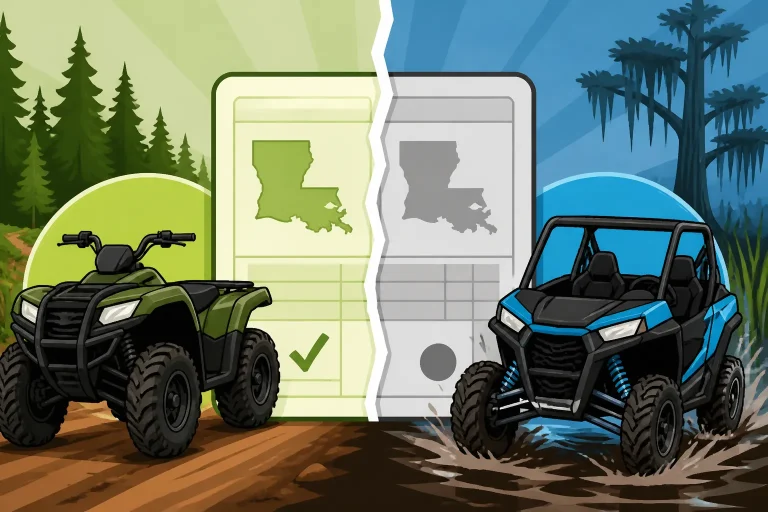
Louisiana 4-H offers ATV safety education through local Extension and 4-H networks. It is a voluntary learning opportunity for young riders and families—not a state license or a universal requirement before a child can ride. Local availability, scheduling and course details can vary, so the first step is to contact your parish Extension office or 4-H office and ask what is currently offered nearby.
A course can give a young rider a more structured introduction than a quick explanation beside the machine. It may cover safe riding practices, protective equipment, basic controls, hazard awareness and the responsibilities that come with operating an ATV. Ask the local organizer for the current course outline rather than assuming every session covers the same material or is delivered in the same format.
It is also worth asking whether the session includes hands-on practice, classroom instruction, or both. If it involves riding, find out what machine is used, whether participants need to bring their own, and what protective gear is required. Don’t assume that a course provides a helmet or that a child can use a family member’s machine during practice.
The 4-H program is useful because safety involves more than knowing how to steer. Young riders need to recognize when conditions are unsafe, understand the limits of their own skill and the machine, and know when to stop. Parents can use the class as a starting point for conversations about supervision, passengers, speed, terrain and what to do if a problem occurs.
A course is not the same as legal permission to ride wherever a family chooses. Louisiana has no mandatory safety course for ATV riders, but other rules may still apply based on the rider’s age, the machine, the location and the activity. For a broader look at voluntary options and requirements, see Louisiana Safety Course Options and Louisiana Has No Mandatory Safety Course.
How to Find a Class and Prepare
Because local offerings can change, contact the parish office directly rather than relying on an old event notice or assuming a course runs every year. Ask whether there is an upcoming class, who can enroll, whether a parent or guardian must attend, and how registration works. If the office does not have a current session, ask whether it can point you to another local 4-H or Extension contact.
Before enrolling, get clear answers to practical questions. Course names alone do not tell you what a session includes, how long it lasts or whether it is suitable for a particular child. These questions can help you decide whether the class fits your family’s needs:
- What ages or experience levels is the session intended for?
- Is it classroom instruction, a riding session, or a combination?
- Does the participant need to bring an ATV, helmet or other gear?
- Will a parent or guardian need to stay for the session?
- Is there a registration deadline or limited space?
- Does the participant receive documentation of completion?
- What topics are included, and what should the family review separately?
If a class provides a completion card or other record, ask what it represents and where it may be useful. Do not assume it is a license, a state-issued permit, or proof that a rider meets every requirement for a park or public riding area. Some private facilities may set their own age, supervision, helmet or training rules. Check those rules with the facility before you travel; Louisiana Private Park Age Minimums explains why park policies are a separate consideration.
Prepare your child by talking about the machine they will ride and the conditions they are likely to face. A youth ATV should be appropriately sized for the rider, with controls the child can reach and operate confidently. A child who cannot comfortably manage the controls should not be placed on a larger machine simply because an adult expects the child to grow into it. Training cannot make an unsuitable machine safe.
The same goes for protective equipment. Ask the course organizer what is required, then confirm that the child’s gear fits properly and is in good condition. A helmet that is damaged, loose or the wrong size is not a reliable substitute for one that fits. Review Louisiana ATV Helmet Rules as part of understanding the state-specific rules, and ask the local course contact about any additional gear for practice.
What the Program Can Teach—and What It Cannot Do
Safety instruction can help a young rider make better choices, but a class cannot remove the risks inherent in operating an ATV. A rider still needs close, age-appropriate supervision and a machine suited to their size and ability. Riding conditions matter, too: mud, standing water, steep ground, blind corners and changing surfaces can all demand more skill than a beginner has developed.
A course should not be treated as permission for a child to ride alone, carry a passenger or use a machine beyond their ability. In particular, passengers can affect balance and control, and many ATVs are designed for one rider. Follow the machine manufacturer’s instructions and the rules for the place where the child will ride. For Louisiana-specific questions about a younger rider, see [Louisiana Rules for a Ten-Year-Old Rider] and Louisiana Parent Riding With a Child.
| Question | What the 4-H program may help with | What you should confirm separately |
|---|---|---|
| Is a course required by Louisiana before riding? | It can provide voluntary safety education. | Check current state rules and any requirements set by a riding location. |
| Does a course make a child eligible to ride any ATV? | It can introduce safer habits and hazard awareness. | Match the machine to the rider and check age and supervision rules. |
| Does course completion allow road use? | It may teach general safety principles. | Road use is governed by separate laws and restrictions. |
| Does a course meet a private park’s rules? | It may be useful preparation. | Ask the park what it accepts and what equipment or age limits apply. |
| Does a course replace adult supervision? | It can support learning. | The parent or guardian remains responsible for supervision and safe decisions. |
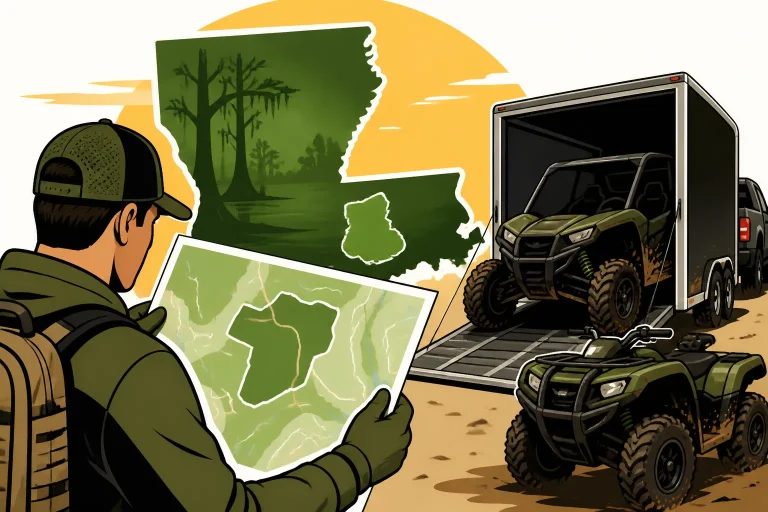
The course also cannot grant access to public land or private property. A family must still check the rules for the specific trail, park, Wildlife Management Area or other riding location. Public-land restrictions can include designated routes, machine limits, seasonal closures and permit requirements. Before planning a ride on a Wildlife Management Area, review Louisiana WMA Riding Rules for Quads and confirm current access conditions.
Road riding is a separate issue again. An ATV safety class does not make an off-road machine street legal, and an off-road decal should not be confused with road registration. Louisiana’s road rules are specific about where and when certain machines may operate. If the family is considering any public-road use, read Can You Ride an ATV on the Road in Louisiana? and check the rules that apply to the exact machine and route.
In practical terms, think of 4-H instruction as one layer of risk reduction. It can give a young rider a vocabulary for safer decisions and help parents identify topics to practice at home. It does not replace a suitable machine, protective gear, supervision, landowner permission or compliance with applicable laws.
Making the Course Part of a Safer Riding Plan
The best time to discuss rules is before unloading the ATV, not after a child has already reached a trail or riding area. Agree on where the child may ride, who must be present, how far the child may go, and what conditions mean the ride ends. Make the rules simple enough for the rider to remember and firm enough that adults apply them consistently.
Start with controlled practice in an appropriate area. A new rider can work on basic starts and stops, turning, shifting weight as appropriate for the machine, and recognizing obstacles at low speed. Keep practice short enough that fatigue or excitement does not take over. A child who is tired, frustrated or uncomfortable should stop; finishing a session is less important than making a sound decision.
Parents should also assess the actual route and conditions instead of assuming a child’s course experience transfers to every environment. A familiar yard is not the same as a public trail, deep mud or a crowded event. If the terrain, traffic or machine is beyond the rider’s current ability, choose an easier option or postpone the ride. For permitted riding areas, check the rules and status before setting out.
Build a brief pre-ride routine with the child. Check the machine for obvious damage, confirm that controls work, secure protective gear, and review the route and signals for stopping. Explain what to do if the rider becomes separated from the group or notices a mechanical problem. Keep a phone or other communication method available where practical, while recognizing that coverage may be limited in some riding areas.
A safety class can also be a useful prompt to revisit rules as the child grows. A rider’s height, strength, confidence and judgment change over time, but those changes do not automatically mean a larger machine or more independence is appropriate. Reassess the match between rider and ATV, and check current requirements rather than relying on what was allowed at a previous age. How Old Does a Louisiana Rider Have to Be? can help with the age-related questions, while Louisiana ATV Helmet Rules is relevant when reviewing protective equipment.
If you are planning a family ride, verify requirements with the actual organizer or land manager. Ask whether the 4-H session is intended as general instruction or addresses a particular type of riding, and do not assume that one class satisfies every venue’s policies. Keep any course record with your family’s riding documents, but treat it as evidence of learning only to the extent the organizer says it is. The core safety decisions still happen every time you choose a machine, route and riding conditions.
Disclaimer
This article is for general informational purposes only and does not constitute professional advice. Laws, prices and regulations vary by location and change over time. Consult a qualified professional for guidance on your specific situation.