Louisiana ATV Helmet Rules
It can feel like navigating a legal bayou when trying to figure out what gear you actually have to wear when you hop on your ATV or UTV in Louisiana. With so many different machines, places to ride, and varying rules, it’s easy to get confused about whether a helmet is a strict requirement or just a good idea. This guide is here to clear up the muddy waters around Louisiana's helmet laws for off-road vehicles, making sure you understand what's expected of you, and why.
The General Rule: Helmets for ATV Riders in Louisiana
Let's cut right to it for ATV riders: Louisiana law is pretty clear on helmets for all-terrain vehicles. If you're on an ATV, especially when operating on public lands or crossing designated public roads, you generally need to be wearing a helmet. This isn't just a suggestion; it's written into the statutes to protect riders from serious injury. The intent behind these laws is to mitigate the very real risks associated with these powerful, agile machines, particularly their propensity for rollovers or unexpected dismounts.
Youth Riders and the Absolute Requirement
When it comes to our youngest riders, Louisiana leaves no room for doubt: if you're under the age of 16 and riding an ATV, you must wear an approved helmet. This is an absolute rule, whether you're tearing up a private trail or carefully crossing a small parish road. Parents, this isn't just about avoiding a ticket; it's about safeguarding your child. A child's developing brain is particularly vulnerable to impact injuries, and a properly fitted helmet can mean the difference between a minor bump and a life-altering event. This rule reflects a broader state commitment to youth safety on these machines, often seen alongside [Louisiana ATV Age Requirements] and restrictions on passenger carrying. Many private parks and riding areas will also strictly enforce this age-based helmet rule, regardless of what state law might say, simply for their own liability and the well-being of their young visitors.
Adult Riders: When Helmets Are Still the Smart Move
Now, for adult ATV riders (those 16 and older), the law offers a bit more nuance, but don't let that fool you into thinking helmets are optional. While the statewide statute specifically mandates helmets for riders under 16, many local ordinances, especially in parishes that have designated roads for ATV use, may extend this requirement to all riders regardless of age. Furthermore, even if the law doesn't explicitly mandate it for adults in every single scenario, consider this: if you're riding on public lands, like those managed by the U.S. Forest Service (think Kisatchie National Forest), or in many private parks, you'll find that helmets are often required for all riders as a condition of entry.
Think about the sheer number of variables when riding an ATV – uneven terrain, unexpected obstacles, other riders, and wildlife. Even experienced riders can have an unexpected mishap. A quality helmet, like those offered by companies that specialize in off-road accessories, provides crucial protection. It's not just about avoiding a ticket; it's about protecting yourself from potential concussions, skull fractures, and other severe head injuries. When you're out there enjoying the thrill of the ride, that extra layer of protection is truly invaluable.
Why the Law Focuses on ATVs Specifically
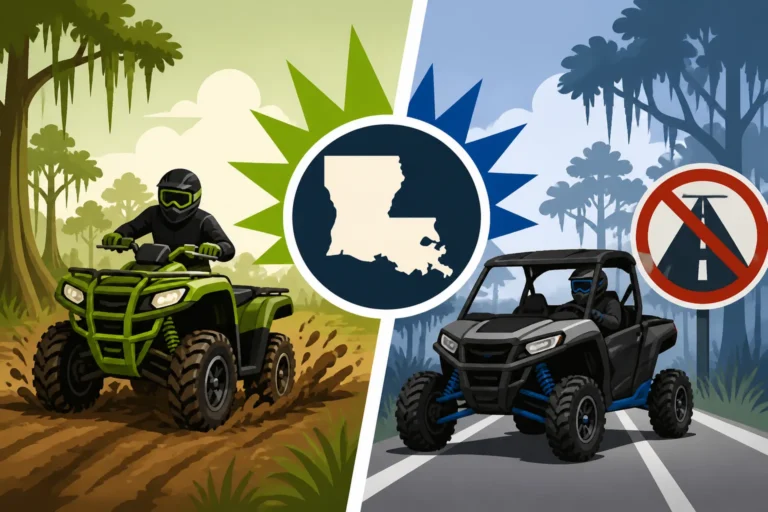
You might wonder why ATVs seem to get more specific attention when it comes to helmets compared to UTVs. The primary reason lies in the fundamental design and rider interaction with an ATV. ATVs are designed for active riding, where the rider shifts their weight, often stands, and is largely exposed to the elements and potential impacts. There's no roll cage, no seatbelt, and often no windshield to offer any structural protection. In the event of a rollover or an ejection, the rider is directly exposed.
This inherent design characteristic means that ATVs, by nature, carry a higher risk of direct head impact in a crash or tip-over. That's why the focus on helmets is so pronounced for these machines. It's a direct response to the physics of how ATVs handle and how riders interact with them, making the helmet the primary piece of safety equipment. This distinction is crucial in understanding different regulations you might encounter, whether you're navigating [Louisiana Rules for Riding a Shoulder] or exploring designated trails.
UTVs: A Different Set of Rules on Helmets
When you step up to a UTV, or Side-by-Side (SxS), the helmet rules in Louisiana change quite a bit, reflecting the different design and safety features inherent in these machines. Unlike ATVs, UTVs come equipped with many features akin to passenger cars, which significantly alters the risk profile and, consequently, the legal requirements for head protection. This distinction is important because many riders assume the rules are uniform across all off-road vehicles, leading to confusion.
Seatbelts and Enclosures as Alternatives
For UTVs, Louisiana law generally doesn't mandate helmets for adult riders when the vehicle is equipped with and the occupants are using a seatbelt, and the vehicle has a roll cage or similar occupant protection structure. This is a critical distinction. The thinking here is that the structural integrity of the UTV, combined with the restraint of a seatbelt, offers a substantial level of protection in the event of a rollover or collision. Many UTVs, especially those built by brands like Polaris, Can-Am, or Honda, include robust roll cages and three-point seatbelts as standard equipment. These features are designed to keep occupants contained within the safety cell of the vehicle, reducing the likelihood of ejection and providing a protective barrier against direct impacts.
So, for most adult UTV riders, buckling up is the primary safety requirement on public roads or designated trails under state law. If your UTV has a windshield and roof, those also add layers of protection, further differentiating it from an open-air ATV experience. However, it's vital to ensure that if these safety features are present, they are in good working order and actually used by all occupants. Simply having a seatbelt isn't enough; you must be wearing it. This aligns with [Louisiana UTV Road Rules Under 32:299.3], which often emphasizes proper use of safety equipment.
Passengers in UTVs: Who Needs Protection?
The same general principle applies to passengers in a UTV as it does to the driver: if the UTV has seatbelts and a roll cage, and the passenger is properly secured, a helmet is typically not required under state law for adults. For younger passengers, however, the rules can be a bit more stringent, mirroring the youth ATV helmet requirements. Many private parks and riding areas, often with an emphasis on [Louisiana Private Park Helmet Rules], will mandate helmets for all occupants under a certain age (e.g., 16 or 18), regardless of whether they are in an ATV or a UTV.
It's also worth remembering that some UTVs are designed with rear seats, allowing for multiple passengers. Each occupant, whether in the front or back, must have an available seatbelt and use it. The safety of all passengers is paramount, and while the UTV's design offers significant protection, common sense and a commitment to safety should always prevail. If you're carrying a passenger, especially a child, ensuring they are properly secured and considering a helmet even if not strictly mandated by law, is always the wisest choice.
When a UTV Helmet Might Still Be Required
Even with the built-in safety features of UTVs, there are specific scenarios where a helmet might still be a legal requirement, or at least a highly recommended piece of gear.
Firstly, if your UTV doesn't have a roll cage or seatbelts (which is rare for modern UTVs but might be the case for older or highly customized machines), then you generally lose the exemption from helmet laws. Without those core safety features, the UTV essentially reverts to a more "open" vehicle, increasing the risk of head injury.
Secondly, specific riding areas, whether public or private, often have rules that supersede state minimums. For example, some organized events or designated trails within [Kisatchie National Forest OHV Trails in Louisiana] might require helmets for all riders, regardless of vehicle type, to participate. Always check the rules of the specific park, event, or land management area you plan to visit.
Finally, consider the nature of your ride. If you're engaging in extreme off-roading, rock crawling, or high-speed mudding where the risk of impacts or rollovers is significantly elevated, a helmet—even in a fully caged UTV—provides an additional layer of protection that could be life-saving. Aftermarket parts from companies like SuperATV offer enhanced roll cages and safety accessories, but even with those, a helmet remains an invaluable piece of personal protective equipment for aggressive riding.
What Constitutes a Legal Helmet in Louisiana?
Okay, so you know when you might need a helmet. But what kind of helmet are we talking about? You can't just slap any old bicycle helmet on your head and call it legal. Louisiana, like most states, has specific standards for protective headgear when it's legally required for off-road vehicle use. Understanding these standards is key to ensuring you're not only compliant with the law but also genuinely protected.
DOT-Certification: The Gold Standard
The absolute most important thing to look for on any helmet intended for ATV or UTV use where a helmet is required by law, is a DOT certification sticker. This sticker, usually located on the back of the helmet, signifies that the helmet meets the safety standards set by the U.S. Department of Transportation. These standards evaluate a helmet's ability to withstand impacts, penetration, and retention system strength.
A DOT-certified helmet has undergone rigorous testing to prove it can offer a baseline level of protection in a crash. Without this certification, even if a helmet looks robust, it may not provide the necessary safety and certainly won't satisfy legal requirements. When a state trooper pulls you over for an [Louisiana Equipment Checks by Troopers], the first thing they'll look for if you're required to wear a helmet is that DOT sticker. Don't risk a ticket or, more importantly, your head, with a non-certified helmet.
Full-Face vs. Open-Face Helmets
Beyond the DOT certification, you'll encounter two main styles of helmets: full-face and open-face.
- Full-Face Helmets: These helmets offer the most comprehensive protection, covering your entire head, including your chin and jaw. They typically come with a visor that protects your eyes from dust, debris, and branches. For ATV riding, especially in forested areas or where debris is common, a full-face helmet is highly recommended. It guards against impacts from the front, sides, and top, and the integrated visor is a huge plus for comfort and safety. Many off-road specific full-face helmets also have larger eyeport openings to accommodate goggles, which are often preferred for mud and dust.
- Open-Face Helmets: Also known as 3/4 helmets, these cover the top, back, and sides of your head, but leave your face exposed. If you opt for an open-face helmet, you absolutely must pair it with appropriate eye protection, such as goggles or safety glasses. While they offer more airflow, the lack of chin protection is a significant trade-off in terms of safety, particularly on an ATV where front impacts are a real concern. They might be acceptable for some UTV scenarios (where less direct exposure is present), but for ATVs, the full-face option is generally superior.
Ultimately, the choice often comes down to personal preference and the type of riding you do, but always prioritize safety. A full-face helmet simply offers more complete protection.
Comfort and Fit for Louisiana's Climate
Louisiana's climate—hot, humid, and often muggy—plays a big role in helmet choice. A comfortable helmet is a helmet you'll actually wear. When trying on helmets, look for features that enhance comfort in warm weather:
- Ventilation: Good airflow is crucial to prevent overheating. Look for helmets with multiple vents that can be opened or closed.
- Moisture-Wicking Liner: Removable and washable liners made from moisture-wicking materials are a lifesaver. They help manage sweat and keep your helmet fresh.
- Proper Fit: This is non-negotiable. A helmet should fit snugly but not uncomfortably tight. It shouldn't shift around when you move your head. If it's too loose, it won't protect you; if it's too tight, it'll cause headaches and discomfort. Always measure your head and try on several sizes.
- Weight: A lighter helmet can reduce neck fatigue, especially on longer rides.
Investing in a high-quality, properly fitting, DOT-certified helmet that's designed for off-road use is one of the best safety decisions you can make. It protects your most important asset, allowing you to enjoy the bayous and trails without unnecessary worry.
Beyond the Law: Why Helmets Are Essential for All Riders
While understanding the letter of the law is important, truly embracing safety means looking beyond the minimum requirements. Even in situations where a helmet isn't legally mandated in Louisiana, wearing one for any ATV or UTV activity is a demonstration of good judgment and a commitment to your own well-being and that of those around you. It's a fundamental piece of personal protective equipment, just like good boots or sturdy gloves, that can prevent life-altering injuries.
The Dangers of Head Injuries
The human brain is incredibly delicate, and any trauma to the head can have devastating, long-lasting consequences. Even seemingly minor falls or impacts can lead to concussions, which accumulate in severity with repeated incidents. More severe impacts can result in skull fractures, traumatic brain injuries (TBIs), and internal bleeding. These aren't just abstract medical terms; they represent real-world suffering: memory loss, cognitive impairment, personality changes, chronic pain, and in the worst cases, permanent disability or death.
ATVs and UTVs, by their very nature, expose riders to environments where falls, rollovers, and collisions are distinct possibilities. Whether you're navigating rocky trails, splashing through deep mud, or simply misjudging a turn, the risk is always present. A DOT-certified helmet is specifically designed to absorb and dissipate impact energy, significantly reducing the forces transmitted to your skull and brain. It's not about being invincible, but about maximizing your chances of walking away from an accident with your mind intact. Thinking about [Louisiana Accident Reporting for an ATV Crash] after the fact is too late for prevention.
Setting an Example for Younger Riders
If you're an adult rider, especially a parent, grandparent, or mentor to younger riders, your actions speak volumes. Kids are incredibly observant, and they learn by watching the adults they look up to. If you consistently wear a helmet, even when the law might not strictly require it for you, you're instilling a crucial safety habit in them. You're showing them that safety isn't just about compliance; it's about valuing your life and health.
This role modeling is particularly important given that [Louisiana Has No Mandatory Safety Course] requirement for ATV operation. Parents are often the primary educators for their children on these machines. When a child sees an adult in their life—a parent, a seasoned rider from a group like SuperATV owners—always put on a helmet before riding, it normalizes that behavior and makes it second nature for them. It reinforces the idea that riding off-road vehicles is a privilege that comes with serious responsibilities.
Choosing the Right Helmet for Your Riding Style
With so many types of helmets available, finding the "right" one can feel daunting. But it really boils down to your specific needs and the kind of riding you do most often:
- Trail Riders: For general trail riding, especially in wooded or brushy areas, a full-face off-road helmet (often called a dirt bike helmet) is an excellent choice. Its extended chin bar offers protection, and the peak can deflect sun glare and roost. Always pair with good goggles to keep debris out of your eyes.
- Mud Riders: If you're tackling Louisiana's famous mud, ventilation becomes even more critical to prevent fogging and overheating. Look for helmets with aggressive venting and perhaps a breath box to direct your breath away from your goggles. Many mud riders also prefer helmets designed to easily shed mud. Brands like SuperATV often feature riders using specialized gear for extreme conditions.
- UTV Passengers (Non-Mandatory): Even if not required by law, a lightweight, comfortable helmet can provide peace of mind for UTV passengers, especially if the terrain is rough or speeds are higher. An open-face helmet with goggles or a full-face helmet could be good options, depending on preference.
No matter your choice, ensure it's DOT-certified, fits correctly, and is comfortable enough to wear for your entire ride. Your helmet is your ultimate guardian on the trail, and it’s always better to have it and not need it than to need it and not have it.
Disclaimer
This article is for general informational purposes only and does not constitute professional advice. Laws, prices and regulations vary by location and change over time. Consult a qualified professional for guidance on your specific situation.