12 Pounds of Pressure
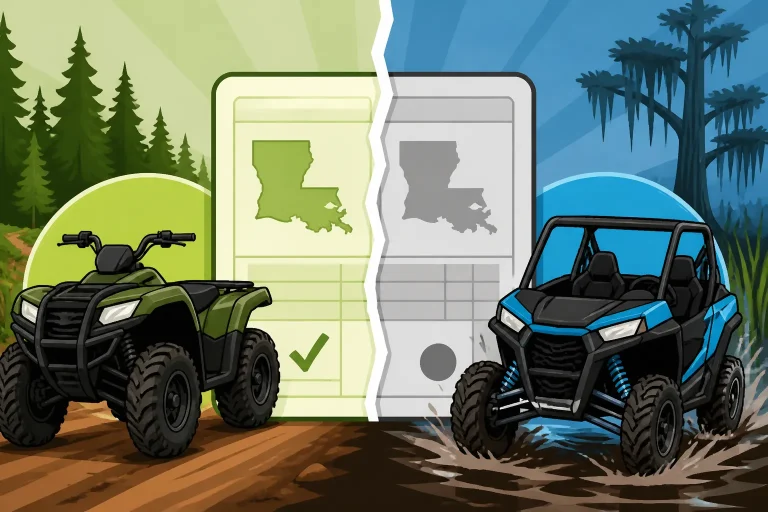
A tire that is legal on a private trail may not meet Louisiana Wildlife Management Area rules. For WMA riding, the 12-pound pressure limit is one part of a larger set of machine and access requirements. Here’s how to check tire pressure, understand the practical trade-offs, and avoid arriving at a trailhead with a setup that does not qualify.
What the 12-pound tire-pressure limit means
The 12-pound rule refers to tire inflation pressure, measured in pounds per square inch, or psi. For machines subject to Louisiana WMA riding requirements, tire pressure must not exceed 12 psi. It is a maximum, not a recommendation to inflate every tire to exactly 12 psi.
That distinction matters. A tire gauge reading of 12 psi is at the limit; a reading above it may put the machine outside the applicable requirement. At the same time, simply lowering pressure as far as possible is not a safe solution. The pressure still needs to be appropriate for the tire, machine, load, and conditions.
A WMA rule is also different from a tire manufacturer’s recommendation. The tire maker’s information helps you understand safe operating pressure. The WMA limit determines whether your machine meets the applicable access rules. If those requirements conflict with your machine’s safe operating range, do not assume that choosing one automatically makes the setup acceptable. Check with the relevant WMA or the Louisiana Department of Wildlife and Fisheries before hauling the machine there.
The pressure limit is only one check. WMA trail access can also depend on the machine’s type, weight, tire dimensions, tread, and whether the trail is designated for motorized use. A machine that meets the pressure rule may still fail another requirement. For an overview, see Louisiana WMA Tire Rules Explained and Louisiana WMA Riding Rules for Quads.
| Check | What to verify | Why it matters |
|---|---|---|
| Tire pressure | No tire exceeds the applicable 12 psi limit | Pressure above the limit may make the machine ineligible for WMA riding |
| Tire size | Confirm the tire dimensions meet current WMA requirements | A compliant pressure does not make an oversized tire acceptable |
| Tread | Check any applicable lug-height or tread restrictions | Aggressive tires can be restricted even when properly inflated |
| Machine | Confirm the ATV or UTV meets relevant type and weight rules | Different machine categories can have different requirements |
| Trail | Make sure motorized riding is allowed on that designated route | WMA access is not blanket permission to ride anywhere on the property |
| Access | Confirm permits and seasonal conditions | A machine can meet equipment rules while access is closed or incomplete |
Rules and access conditions can change. Before a trip, check the current information for the specific WMA and trail rather than relying only on a past visit, a friend’s setup, or a general description of statewide rules.
How tire pressure affects the machine
Pressure affects how a tire carries weight and meets the ground. At lower pressure, a tire generally flexes more and spreads its contact area. At higher pressure, it is firmer and may respond more sharply to steering input. Neither setting is automatically best for every surface or machine.
For a rider, those differences can show up as changes in comfort, traction, steering, and stability. A tire with more flex may feel less harsh over uneven ground. But a tire that is too soft for its load can flex excessively, feel vague in turns, or expose the sidewall to more damage. Too much pressure can make the ride harsher and reduce the tire’s ability to conform to irregular ground.
These are general tire effects, not a reason to experiment with pressure outside the limits for your machine or the rules for a WMA. The 12 psi maximum does not tell you what pressure is best for a particular tire. It only gives you a ceiling for the relevant access requirement.
Pressure and changing loads
A machine’s load can change from one trip to the next. A rider may add a passenger, cargo, hunting equipment, tools, or a rack load. A UTV may carry several occupants and supplies. Added weight can change how a tire behaves, so a pressure that seemed acceptable on a lightly loaded machine may not perform the same way when loaded.
Read the tire and machine manufacturer’s guidance for the intended load. If that guidance calls for a pressure above the WMA maximum for the way you plan to use the machine, treat that as a compatibility question to resolve before the trip. Do not assume that dropping pressure below the manufacturer’s safe guidance is a sound workaround.
The same caution applies to UTVs. More tires, more weight capacity, and a different chassis do not make a pressure limit irrelevant. Check the requirements that apply to your machine category, and consult Louisiana WMA Riding Rules for UTVs if you plan to take a side-by-side.
Pressure and terrain
A firm gravel access road, wet soil, roots, and soft ground do not feel the same under a tire. But the fact that a particular pressure seems useful on one surface does not make it suitable for the whole trip. Public-land rules and safe tire operation still apply across the route.
Avoid using a public WMA trail as a test course for unfamiliar pressure settings. If the machine feels unstable, the tire looks distorted, or steering becomes unpredictable, stop in a safe place and reassess rather than continuing simply because the gauge shows a number below the limit.
How to check pressure before you unload
A small, accurate tire gauge is one of the simplest ways to prevent a pressure-related problem at the trailhead. A gauge can be a dedicated digital or mechanical tool. Auto-parts stores carry them, and they are also available through retailers such as Amazon. Choose one that is easy to read and suitable for the valve stems on your machine.
A compressor or hand pump can help adjust pressure, but it does not replace a gauge. Gauges can differ, and an air pump’s built-in reading may not be precise enough for a close check. Keep a separate gauge with your riding gear and learn how its reading compares with another reliable gauge.
Use a repeatable process:
- Check the current rules for the specific WMA. Confirm that the trail is open to your machine type and that you have the required access documents.
- Inspect each tire. Look for cuts, bulges, embedded objects, damaged valve stems, and visible changes in shape. A pressure reading alone cannot show every tire problem.
- Measure all tires. Check each tire rather than assuming the pressures match. A spare, if carried and subject to the relevant requirement, should not be forgotten.
- Adjust carefully. If a tire is above the applicable limit, add or release air in small steps and recheck with the gauge.
- Check the full setup. Confirm the machine also meets applicable weight, dimension, and tread requirements before unloading.
- Recheck after adjustments. A final reading helps catch a valve that did not seal or a gauge connection that gave an incomplete reading.
- Keep the gauge accessible. A gauge in the tow vehicle or tool kit is more useful than one left at home.
If possible, check tire pressure before the ride rather than at the last moment. That gives you time to fix a leak, replace a damaged valve core, or decide that the machine should not be taken onto that WMA. Do not rely on appearance alone: a tire can look normal while its pressure is above the limit.
Pressure readings can vary with temperature and use. A tire that has just been driven or ridden may read differently from one that has been sitting. For a consistent baseline, follow the tire manufacturer’s instructions for checking pressure. If you are unsure whether a reading is acceptable under current WMA rules, ask the WMA contact or managing agency before riding.
The pressure limit is not the only WMA requirement
A common mistake is to focus on one easily checked rule and overlook the rest. Passing a tire-pressure check does not by itself authorize riding. Access may depend on permits, open dates, designated routes, machine size, tire dimensions, and other restrictions.
Louisiana WMAs are not all interchangeable riding areas. A trail shown on one map does not necessarily mean every WMA road or path is open to quads. Check the area’s current map and riding information. Louisiana WMA Designated Trails Only explains why route selection matters, while Louisiana WMA Season Closures covers the importance of checking when access is allowed.
Other machine limits may apply alongside pressure:
- Weight: Confirm the current weight rule for your machine category. See Louisiana WMA Weight Limits Explained.
- Tire dimensions: Tire width and overall dimensions may be limited. The 12 psi rule does not override those restrictions.
- Tread or lug height: A tire can meet the pressure requirement and still have tread that does not qualify. See What Happens If Your Lugs Top 1 Inch.
- Machine width and type: A UTV may be subject to different equipment requirements from an ATV. Check the rules for the exact machine.
- Trail designation: Ride only where motorized use is permitted and follow signs or closures.
- Access permits: Complete any required permits before entering the riding area. Filling Out a Self-Clearing Permit at the Gate explains one part of WMA access paperwork.
A valid Louisiana off-road decal, title, or registration document does not automatically replace a WMA access permit or make every trail available. Those documents serve different purposes. If you need to sort out the state decal rules, see Louisiana ORV Decals and Titles Explained. For riders coming from another state, Riding Louisiana Public Land on an Out-of-State Machine is a useful place to check how visitor status fits into public-land access.
Before the trip, make a checklist for the exact machine you are taking. Include its pressure, tires, weight, permits, and the planned route. If two sources seem to disagree, use current information from the agency responsible for that WMA rather than assuming the more permissive interpretation is correct.
Common mistakes and what to do instead
Setting every tire to exactly 12 psi
The rule is a maximum, not a universal target. Setting every tire to the ceiling without considering the tire, machine, load, and manufacturer guidance can produce a poor or unsafe setup. Use the applicable limit as a boundary, then determine whether the machine can operate safely within it.
Checking only one tire
Machines can have different readings across their tires, especially if one has a slow leak or was recently repaired. Check each tire independently. If one tire needs frequent adjustment, investigate the cause instead of repeatedly airing it up and heading out.
Relying on a dashboard or pump display
A built-in pressure display can be convenient, but it may not match a separate gauge. For a limit that is close to the reading, verify with a dedicated tire gauge. Replace a gauge if it has been damaged or gives inconsistent results.
Assuming all trails have identical access rules
A rider’s experience at one WMA may not apply at another. Access can be limited by specific routes, dates, closures, or equipment standards. Check the current information for the destination rather than treating “WMA open” as “all riding allowed.”
Treating low pressure as a universal traction fix
Lower pressure can change how a tire contacts the ground, but it is not a cure-all for mud or soft terrain. Too little pressure for the load can increase tire flex and raise the risk of handling problems or damage. If you cannot meet both the access rule and safe operating guidance, choose a different riding location or machine setup.
Waiting until arrival to find out the machine is ineligible
A trailhead is a poor place to discover that tires exceed a limit, a route is closed, or a required permit is missing. Check at home, then recheck after loading if the machine’s tires may have been affected during transport or setup.
The practical approach is straightforward: confirm the current area rules, measure all tires with a gauge, and do not ride if the machine cannot safely meet the applicable requirements. Keep the gauge and any necessary adjustment equipment with your riding gear, but do not use them as a substitute for checking the whole machine and the route.
Frequently Asked Questions
Is 12 psi the target pressure for every Louisiana WMA ride?
No. It is the stated maximum for the applicable WMA tire-pressure rule, not a universal target. Use the tire and machine manufacturer’s guidance to determine a suitable operating pressure within the relevant limit.
Should I check all four tires on a UTV?
Yes. Check each tire individually. Do not assume all tires have the same pressure, and confirm the current requirements that apply to your UTV and the WMA you plan to visit.
Does meeting the 12 psi limit mean I can ride any WMA trail?
No. You still need to meet other applicable equipment and access requirements, including trail designation, permit rules, closures, and any machine or tire restrictions.
What if the recommended pressure for my machine is above 12 psi?
Do not automatically lower pressure below the safe guidance for your machine. Contact the agency responsible for the WMA to clarify the applicable rule and whether your setup is suitable. If it cannot meet the requirements safely, choose another riding area or machine.
Disclaimer
This article is for general informational purposes only and does not constitute professional advice. Laws, prices and regulations vary by location and change over time. Consult a qualified professional for guidance on your specific situation.