Louisiana Fire Restrictions in Dry Months
Dry spells can turn a routine ATV or UTV ride into a fire risk, especially when machines, campfires and dry vegetation meet. Louisiana fire restrictions can vary by location and change with conditions, so the safest plan is to check current rules before you tow. Here’s how to find the restrictions that apply and reduce the chance your ride starts a fire.
Why dry-month riding calls for extra care
Louisiana’s warm, humid climate does not prevent dangerous dry periods. When rain is scarce, grasses, pine needles, leaves and brush can dry out quickly. Wind can then carry a small spark or flame into nearby vegetation, sometimes faster than riders can react.
An off-road machine can contribute to that risk in several ways. Hot exhaust components may contact dry grass or other debris. A damaged exhaust system or missing spark arrester may increase the chance of sparks escaping. A fire can also start at camp, from a trailer or from equipment used around a riding area. These are reasons to be cautious, not proof that every machine will ignite vegetation.
Fire rules may apply to more than campfires. A land manager or private park may restrict open flames, charcoal grills, smoking, fireworks, certain types of equipment or riding in particularly vulnerable areas. A local burn ban may also affect activities beyond the property where it was announced. The details depend on the current order and who manages the land.
Do not assume that wet ground at a trailhead means the whole riding area is safe. Conditions can differ across a property, and a dry week can change the risk quickly. Likewise, a recent rainfall does not automatically end an official restriction. Check the current notice rather than relying on appearances or an old social media post.
For Louisiana ATV and UTV riders, the practical takeaway is simple: treat fire restrictions as part of trip planning, alongside trail access, permits and machine requirements. If a route or activity is not clearly allowed under current rules, ask the land manager before proceeding.
How to check which fire rules apply
Start by identifying who manages the land. A public forest, wildlife management area, parish property, private riding park and private hunting lease may each have different rules. A general burn-ban notice may not answer whether riding, camping or cooking is allowed at your destination.
Check the official information from the relevant authority shortly before you leave. Depending on the location, that may mean a state or local government announcement, a land-management notice, or the riding area’s own website or office. If you cannot tell whether a restriction applies to the area or activity you have in mind, contact the manager directly.
Use a few specific questions rather than asking only whether the area is “open”:
- Is the property open to ATV or UTV riding on the planned date?
- Are any trails, roads, campsites or zones closed because of fire danger?
- Are campfires, charcoal cooking, propane stoves or other open-flame activities allowed?
- Are there restrictions on smoking, fireworks, generators or maintenance work?
- Does the property require a spark arrester or have other machine-related fire rules?
- What should visitors do if they see smoke or an unattended fire?
The answer to one question does not settle the others. A riding area may remain open while a campground has extra restrictions, or a manager may close a particular section without closing the entire property. Check the latest Louisiana Forest Trail Status Pages and Louisiana Trail Closures and Seasons when planning public-land riding. For a private park, review its current instructions and Louisiana Private Park Waivers and Rules before arriving.
| Where you plan to ride | Who to check with | What to confirm |
|---|---|---|
| Public forest or trail system | The land manager or official trail-status channel | Open areas, fire restrictions, equipment rules and closures |
| Wildlife management area | The agency or office responsible for that area | Whether riding is allowed, which routes are open and any seasonal restrictions |
| Private ATV or UTV park | The park operator | Current fire rules, camping restrictions, event notices and machine requirements |
| Private land or hunting lease | The landowner or lease manager | Permission to ride and any restrictions on fires, equipment or access |
| Road or trail crossing several jurisdictions | Each relevant land manager or authority | Which rules apply on each segment and where access changes |
A burn ban and a land manager’s fire policy are not necessarily the same thing. A ban may restrict outdoor burning within a defined area, while a property manager may impose additional precautions or close parts of a site. Conversely, a general announcement may not spell out every rule for a specific trail or campground. Read the complete notice and follow the stricter applicable direction.
If you are traveling to a park during an event weekend, check close to departure and again before setting up camp. Conditions and operating instructions can change after a notice is first posted. Ask the operator whether any planned activity has changed, especially if you expect to cook outdoors or use a generator.
Reduce fire risk around your machine and camp
A few checks before riding can help prevent a small problem from becoming a larger one. Look over the exhaust area and underside of the machine for dry grass, leaves, mud buildup or other debris. Clear material only when the machine is off and cool enough to handle safely. Keep hands, clothing and tools away from hot exhaust parts.
Check for obvious damage to the exhaust system and confirm that any required fire-safety equipment is installed and in usable condition. If the land manager requires a spark arrester, do not assume a stock or modified machine meets that rule without checking. Review Spark Arrestors at a Forest Gate and the property’s own requirements before a forest ride.
A practical pre-ride routine includes:
- Park on a clear, stable surface rather than in tall, dry grass.
- Let the machine cool before parking it close to vegetation, tents or other combustible material.
- Remove dry debris from around hot components after riding, once the machine is safe to inspect.
- Carry basic supplies appropriate to the trip and know how to contact emergency services.
- Keep a phone accessible where service is available, but do not depend on cell coverage in remote areas.
- Follow marked routes and closures; do not detour through dry brush to get around a blocked trail.
Camp practices matter just as much. Use only the cooking method allowed by the property and current restrictions. A campsite that permits a stove may still prohibit a wood fire or charcoal. Do not treat a portable stove as automatically permitted; confirm that the notice allows it. Keep cooking equipment stable and away from dry leaves, grass, tents and fuel containers. Never leave a flame or hot coals unattended, and make sure anything used is fully out before leaving, if its use is allowed at all.
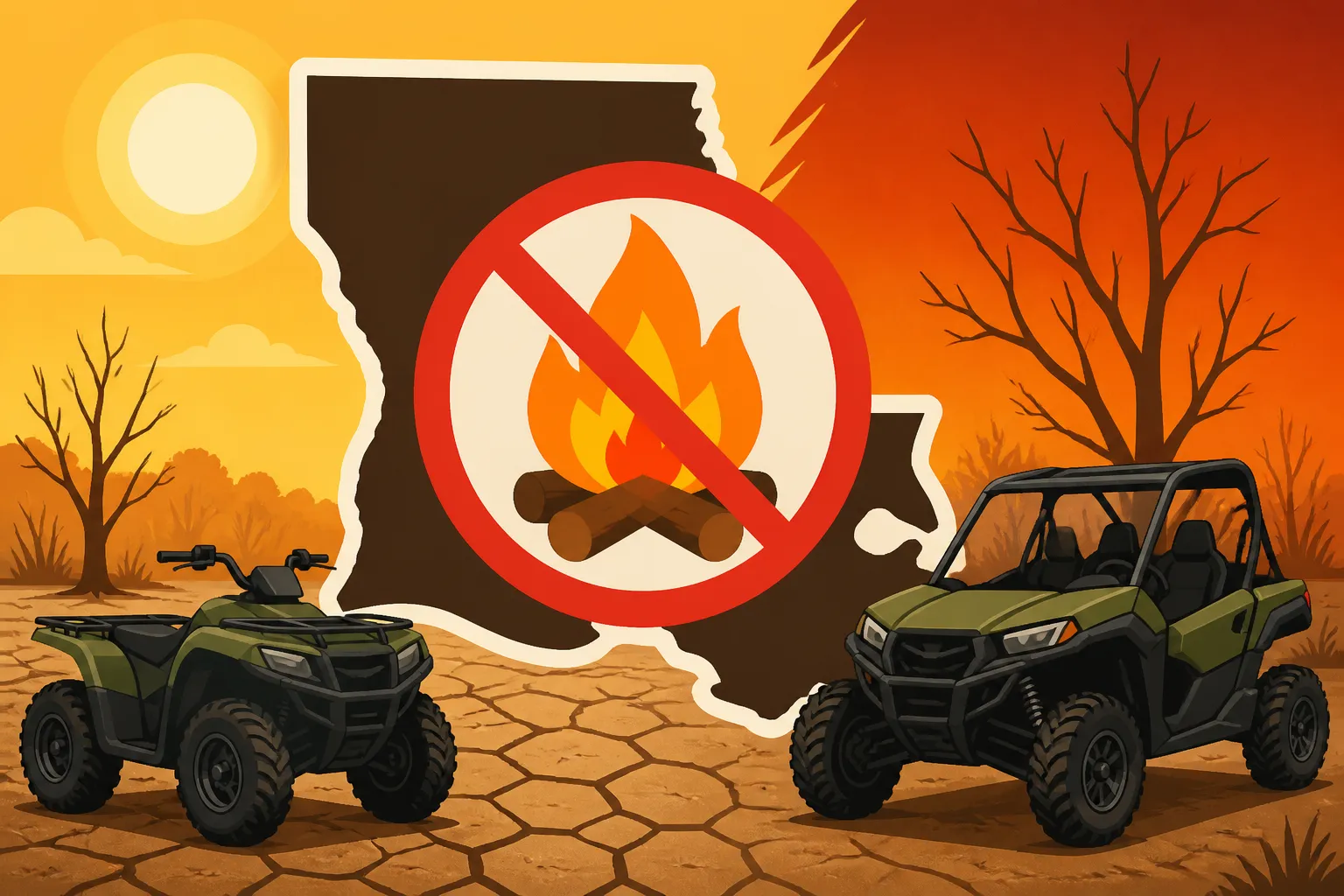
When rules permit a campfire, follow the site’s instructions for where and how to build it. Keep it small and attended, have water or other required extinguishing supplies at hand, and do not light it when wind or nearby vegetation makes conditions unsafe. If you cannot confidently put it out, do not start it. If a restriction prohibits fires, a personal judgment that the weather seems safe is not a reason to ignore the rule.
Generators, smoking materials and maintenance work can also create ignition risks. Place equipment only where the property allows it and keep it clear of dry vegetation. Do not discard cigarette butts on the ground. Avoid grinding, welding or other spark-producing work outdoors during dry conditions unless the land manager specifically permits it and suitable precautions are in place.
Rules and conditions can change between the time a trip is booked and the time you arrive. Recheck the park’s notices before unloading. If the site has a gate attendant or check-in office, ask whether there are updates that were not included in the information you reviewed earlier.
What to do if you see smoke or a fire
If you see smoke, flames or a smoldering area, move yourself and other riders away from immediate danger. Do not ride toward a fire to get a better look, and do not block access roads that responders may need. Follow directions from park staff, land managers or emergency personnel.
Report the location as clearly as you can. Useful details include the trail or road name, a nearby landmark, the direction of travel and whether people or structures may be at risk. If there is an immediate emergency, call 911 when you can do so safely. In a remote area, use the park’s posted emergency contact or radio procedure if one is provided.
Do not attempt to fight a fire unless it is small, you have a safe escape route, and you have the appropriate training and equipment. Wind, dry fuels and uneven terrain can make a fire behave unpredictably. If the fire is spreading, producing heavy smoke or blocking your exit, leave the area and warn others only when doing so is safe.
After a close call or suspected machine-related ignition, stop riding and tell the property manager. Do not hide or minimize what happened. The operator may need to check the area, close a route or contact responders. Prompt, accurate information can help protect other visitors and reduce further damage.
Plan for restrictions, not just the ride
Fire safety does not end when a restriction is lifted. Dry vegetation can remain hazardous, and a new order may be issued with little notice if conditions worsen. Build a quick status check into the day-of routine: confirm the area is open, review fire rules, inspect the machine, and make a different plan if the conditions or instructions are unclear.
If the ride includes overnight camping, check both trail and campground policies. Some restrictions concern access, while others concern flames or equipment. Keep the relevant notices available on your phone or as a saved screenshot, but use the official source for updates. A screenshot is useful for remembering what you checked; it is not a substitute for a newer order.
When a destination closes or prohibits an activity, do not assume a nearby property has the same rules or is automatically a suitable alternative. Confirm that the substitute area accepts your machine, is open to visitors and permits the activity you plan to do. For help with planning beyond fire notices, see Louisiana Trail Etiquette Locals Expect and Louisiana Forest Trail Use Passes.
A dry-month trip can still be enjoyable with a little flexibility. Choose routes that are open, leave campfires out of the plan unless they are clearly permitted, and be prepared to postpone if the risk is high. The right decision may be to ride another day. Protecting the trail, neighboring property and other visitors is worth more than salvaging a weekend plan.
Disclaimer
This article is for general informational purposes only and does not constitute professional advice. Laws, prices and regulations vary by location and change over time. Consult a qualified professional for guidance on your specific situation.