Louisiana ORV Decals and Titles Explained
It's easy to get tangled up in the red tape when you first acquire an off-road vehicle (ORV) in Louisiana, whether it's a shiny new quad from the dealership or a well-loved side-by-side from a private seller. Many folks find themselves scratching their heads over the difference between a title and a decal, or even worse, making multiple frustrating trips to the Office of Motor Vehicles (OMV) only to be told they're missing crucial paperwork. This comprehensive guide is here to untangle those knots, clarifying Louisiana's specific requirements for ORV titles and decals so you can confidently hit the trails, hunting camp, or farm fields without fear of fines or impoundment.
Understanding the Two Key Pieces of Paperwork
When it comes to off-road vehicles in Louisiana, there are two distinct pieces of documentation you'll hear about: the title and the decal. It's really important not to confuse them, as they serve entirely different purposes and are both critical for legal ownership and operation. Think of them as two separate keys that unlock different aspects of your off-road adventures here in the Bayou State.
Titles: Proving Ownership Beyond a Shadow of a Doubt
A title for your ATV or UTV in Louisiana is exactly what it sounds like – it's the official, legal document that establishes you as the rightful owner of the machine. Just like with your car or truck, this piece of paper is crucial. It contains vital information about your off-road vehicle, including the Vehicle Identification Number (VIN), the make, model, year, and often engine size, along with your name and address as the registered owner. It’s essentially your ORV’s birth certificate and deed rolled into one.
The OMV is the state agency responsible for issuing these titles, not the Department of Wildlife and Fisheries or any other body [Louisiana Titles ATVs Through the OMV]. This might seem counterintuitive to some, especially if they associate off-road riding with hunting or fishing, but the OMV handles all vehicle titles, regardless of whether they're street legal or not. Having a title is paramount for several reasons: it's your definitive proof of ownership if the machine is ever stolen, it's absolutely necessary when you decide to sell your machine to another individual, and it's a prerequisite for obtaining a decal or even insurance in many cases. Without a clear title in your name, you're essentially in a legal gray area, which can lead to a heap of trouble down the line.
Decals: Permission to Ride on Designated Public Lands
Now, let's talk about the decal. This is where a lot of riders get confused. The ORV decal is not a form of registration that makes your machine street-legal, nor does it replace the title. Instead, it's a small sticker you affix to your ATV or UTV that signifies you've paid the required fee and, in some cases, met certain criteria for operating your machine on designated public lands. It's essentially a use permit, a small contribution towards the maintenance and management of the public trails and areas where off-road vehicles are allowed.
The decal tells law enforcement and park rangers that you're authorized to be on those specific public areas. [Louisiana's Yearly Off-Road Decal] is a modest fee, but it's a critical component for legal riding outside of private property. For instance, if you plan on exploring the trails in Kisatchie National Forest or hitting a Wildlife Management Area (WMA) during certain seasons, you absolutely must have this decal properly displayed. Without it, even with a valid title, you could face penalties. It's a common misconception that if you have a title, you're good to go everywhere, but the decal is the specific permission slip for public access, clearly illustrating [Why an ATV Needs Both a Title and a Decal].
Titling Your Off-Road Machine in Louisiana
Getting your ATV or UTV titled correctly in Louisiana is a process that varies slightly depending on whether you're buying a brand-new machine from a dealer or a used one from a private party. Each scenario has its own set of documents and steps, and understanding them beforehand can save you a significant amount of time and frustration at the OMV.
New Machines: The Manufacturer's Statement of Origin (MSO)
When you purchase a brand-new ATV or UTV from an authorized dealer in Louisiana, your journey to a title begins with a document called the Manufacturer's Statement of Origin, or MSO. This is essentially the factory's "birth certificate" for your machine, proving that it's new and has never been titled before [Louisiana Requires an MSO for a New Machine]. The dealer will provide you with this crucial document, along with a bill of sale.
Your dealer typically handles much of the initial paperwork for you, including collecting sales tax and forwarding the necessary documents to the OMV. However, it's still essential for you to review everything. Your bill of sale should be an [Louisiana Itemized Dealer Invoices], clearly showing the purchase price, any trade-in credits, sales tax collected, and any other fees. This transparency is important, as the OMV will use these figures to confirm sales tax payment. Once the OMV processes the MSO and your application, they will issue a new title in your name. Make sure you keep copies of all your documentation until the official title arrives in the mail.
Used Machines: The Assigned Title and Bill of Sale
Buying a used off-road machine from a private seller introduces a different set of challenges and responsibilities. In this scenario, the most critical document you'll receive is the previously issued title, which the seller must "assign" to you. This means the seller fills out the transfer section on the back of the existing title, signing it over and providing their printed name, the sale date, and the purchase price [Louisiana Requires an Assigned Title for a Used One]. It’s vital that their signature matches the name printed on the front of the title exactly.
In addition to the assigned title, a comprehensive bill of sale is highly recommended, and often legally necessary. While the title transfer section provides some basic details, a separate [Louisiana Notarized Bills of Sale] offers a more detailed record of the transaction. This document should include the full names and addresses of both buyer and seller, the VIN, make, model, year, and engine size of the machine, the agreed-upon sale price, and the date of sale. A notary's seal on the bill of sale adds an extra layer of legal validity, making it harder for disputes to arise later. What if the title is missing, or the seller has a title but didn't sign it properly? These are common headaches. If you find yourself facing [Louisiana Title Without a Bill of Sale] or [What Happens When a Title Is Missing a Signature], you’re looking at a much more complicated process, potentially requiring affidavits, surety bonds, or even court orders. Always insist on a properly assigned title and a detailed, notarized bill of sale to protect yourself.
Special Scenarios: Inherited, Auction, or Out-of-State Purchases
Life sometimes throws us curveballs, and you might find yourself owning an ORV under circumstances other than a straightforward purchase. Each of these special scenarios requires specific documentation and processes to secure a Louisiana title in your name. It’s never as simple as just taking possession; the OMV needs a clear paper trail.
If you've inherited an ATV or UTV after a loved one has passed, the titling process will depend on whether the estate went through probate and if there was a will. You’ll typically need a copy of the death certificate, the original title (if available), and legal documents like Letters of Testamentary or an Affidavit of Heirship to prove your right to ownership [Louisiana Titles for an Inherited Machine]. This can be a sensitive time, but getting the title transferred correctly is important for future use or sale. For those who snag an ORV at an auction, particularly a public one, the paperwork might come in the form of an auction receipt and perhaps a bill of sale from the auction house. Titling a machine bought this way can sometimes be tricky because the chain of ownership might be less direct than a private sale. You'll definitely need that receipt and be prepared to show [Louisiana Tax on an Auction Buy] was collected or pay use tax yourself.
Finally, if you're bringing an ORV into Louisiana that you previously owned and titled in another state, or if you purchased it out-of-state and are bringing it home, you'll go through a "new resident" titling process. You'll need your out-of-state title, proof of Louisiana residency, and proof that any applicable sales or use tax has been paid in Louisiana [Louisiana Titles for an Out-of-State Purchase]. This often means paying a [Louisiana Tax on an Out-of-State Purchase] if you haven't already paid at least Louisiana's equivalent sales tax in the other state. The OMV is very particular about this, so gather all your documents meticulously.
Navigating Sales Tax Before You Get Your Title
Here's a piece of advice that cannot be stressed enough: in Louisiana, sales tax is king, and it often dictates when and how you can actually get your off-road vehicle titled. Many riders, especially those new to the state or used to other states' processes, get caught off guard by this requirement. Understanding it up front will save you immense headaches.
Why Sales Tax is the First Hurdle
Louisiana operates under a specific policy that requires proof of sales tax payment before the OMV will even consider issuing a title for your ATV or UTV [Louisiana Requires Proof of Sales Tax First]. This isn't just a suggestion; it's a non-negotiable step in the titling process. The state wants its share of the purchase price, and they’ve structured the system to ensure that happens early on. This means that simply having a signed-over title or an MSO in hand isn't enough to walk out of the OMV with a new title; you must also present evidence that the sales tax has been satisfied.
So, what are we talking about in terms of cost? Louisiana has a statewide sales tax rate [Louisiana's 5 Percent State Sales Tax], but on top of that, individual parishes add their own local sales taxes [Louisiana Parish Sales Tax Add-Ons]. This means the total sales tax you pay can vary significantly depending on which parish you purchased the machine in or, for private sales, where you reside. These combined rates can sometimes push the total sales tax well over ten percent of the purchase price, which can be a significant chunk of change. The absolute key document to prove you've done this is [The Tax Receipt That Unlocks Your Title]. Without it, you’ll be turned away at the OMV counter, plain and simple.
Dealer Sales vs. Private Party Sales Tax
The way sales tax is handled differs significantly depending on where you bought your ATV or UTV. If you bought your machine from a licensed dealer in Louisiana, they are generally responsible for collecting the appropriate state and local sales taxes at the time of purchase. They then remit these funds to the state on your behalf. When you go to the OMV, you'll present a copy of your dealer's invoice or a specific tax receipt they provide, which serves as your proof of payment. This is usually the smoothest path, as the dealer takes care of the calculation and payment.
However, if you purchased your ORV from a private party, the responsibility for paying sales tax falls squarely on your shoulders. In this scenario, you'll be paying a "use tax" directly to the OMV or a public tag agent. This use tax is calculated based on the purchase price you declared on your bill of sale, and it will include both the state and your resident parish's local sales tax rates. It's crucial not to underestimate this amount when budgeting for a used machine. Many private sellers, especially those who aren't familiar with the OMV process, might not even mention sales tax, leaving the buyer to discover this surprise expense at the OMV counter. You'll need to present your [Louisiana Sales Tax on a Private ATV Sale] proof.
Out-of-State Purchases and Use Tax
Bringing an ATV or UTV into Louisiana from another state requires careful attention to the use tax rules. If you bought your machine in a neighboring state like Texas or Mississippi, and you didn't pay sales tax equivalent to Louisiana's combined state and local rate, you're going to owe the difference to the OMV when you try to title it here. For example, if you purchased a quad in Texas and paid their sales tax, you'll need to show that receipt at the OMV. [Using a Texas Sales Tax Receipt at the OMV] can reduce or even eliminate your Louisiana use tax obligation, but only if the amount paid was equal to or greater than what you'd owe in Louisiana.
If you paid less, or no sales tax at all (which can happen with private sales in some states), you'll be responsible for paying the full Louisiana use tax at the OMV counter. This means you’ll be [Getting a Use Tax Bill at the OMV Counter] and settling it right then and there. It's a common mistake for riders to buy an ORV out of state, assuming that since they paid tax there, or because it was a private sale, they're off the hook. Always factor in potential Louisiana use tax when budgeting for an out-of-state purchase. It’s also important to have all your paperwork, including the out-of-state title and bill of sale, perfectly in order to facilitate this process.
Getting Your Louisiana ORV Decal
Once you’ve successfully navigated the titling and sales tax labyrinth, the next step for many riders is to secure their Louisiana ORV decal. While the title establishes ownership, the decal grants you the privilege of riding on designated public lands. It's a small sticker with a big purpose, and understanding how to get one and keep it current is vital for legal trail access.
The Application Process for a New Decal
Obtaining a new ORV decal in Louisiana is a relatively straightforward process once you have your title and proof of sales tax in order. You can apply for a decal at any OMV office or a public tag agent's location [How to Get a Louisiana ORV Decal]. These are often independent businesses authorized by the OMV to handle certain transactions, and they can sometimes offer shorter wait times. When you go, you’ll need to bring your newly issued title or your dealer's MSO (if it's a new purchase and the dealer is submitting your title application concurrently), along with proof that you paid sales tax, and your valid photo ID.
The decal itself is surprisingly affordable. [Louisiana Charges $3 a Year for a Decal], which is quite a bargain for access to public riding areas. What's interesting about Louisiana's decal system is that while you pay annually, the actual decal runs on a four-year cycle [Louisiana Decal Cycles and Their Length]. This means you'll typically get a new physical sticker every four years, even though you renew the validity and pay the fee yearly. It’s a system that helps manage the physical distribution of the decals.
Decal Renewal and Replacement
Keeping your ORV decal current is crucial. Louisiana decals are issued on a staggered basis, so your specific renewal month will depend on when you first obtained it. However, you'll receive a renewal notice in the mail when your decal is due to expire [When a Louisiana ORV Decal Comes Up for Renewal]. This notice will guide you on how to renew, which can typically be done online, by mail, or in person at an OMV office or public tag agent. Renewing is usually quicker than the initial application since your machine is already titled in the system.
What happens if your decal gets damaged, falls off, or your machine gets a new fender that obscures the old one? You'll need to apply for a replacement decal. While it's not a common occurrence, it's certainly possible, especially with the wear and tear off-road machines endure. The OMV can issue a duplicate if you provide proof of ownership and a valid ID [Louisiana Decal Replacement If Lost]. When you do get your new decal, make sure you understand [Louisiana Decal Placement on a Machine]. It needs to be clearly visible, typically on the front or rear of the machine, or on a prominent location like a fender or frame, so that it can be easily seen and verified by enforcement officers.
Common Decal Misconceptions and Penalties
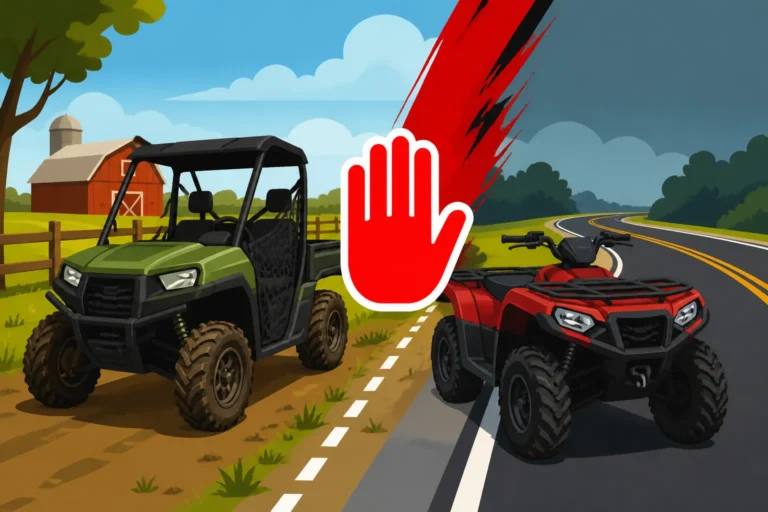
It's absolutely critical to understand that the Louisiana ORV decal is not a license for street-legal operation. This is perhaps the most common and dangerous misconception among off-road riders. Even with a valid title and decal, your ATV or UTV is generally restricted from public roads and highways, unless explicitly allowed by specific local ordinances or narrow agricultural exemptions [Louisiana Penalties for Illegal Road Riding]. The decal is purely for designated off-road areas, such as trails, mud parks, and some WMA land, and does not grant you permission to ride on the street. Attempting to do so can result in significant fines and other legal repercussions.
Ignoring the decal requirement can lead to trouble. If you’re caught riding on public land that requires a decal without one, you could face penalties [Louisiana Penalties for No Decal], which might include a fine or even the impoundment of your machine. It’s simply not worth the risk. One important exception to note is [Louisiana's Agricultural Registration Exemption]. Certain off-road machines used exclusively for bona fide agricultural purposes within a specific radius of farm property may be exempt from the decal requirement for specific road crossings. However, even these machines are still typically required to carry [The Decal a Farm-Exempt Quad Still Has to Carry], often an agricultural affidavit decal, to denote their exempt status, so don't assume a full pass.
The OMV Visit: What to Expect
Let’s be honest, a trip to the Office of Motor Vehicles isn’t usually at the top of anyone’s fun list. Long lines, confusing forms, and the fear of missing that one crucial document can make the experience daunting. However, with a little preparation and a clear understanding of what to expect, your OMV visit for your ATV or UTV title and decal can be as smooth as possible.
Preparing for a Smooth Transaction
The absolute best way to ensure a seamless OMV visit is to prepare thoroughly. Before you even leave the house, create a checklist of every single document you might need. This includes your MSO or assigned title, a notarized bill of sale (for private sales, especially), your proof of sales tax payment (either the dealer's invoice or your use tax receipt), and your valid Louisiana driver's license or state-issued ID [Louisiana Photo ID at the Counter]. If you're coming from out of state, gather any old titles, registration, and proof of residency. Having everything neatly organized in a folder will not only make it easier for the OMV clerk but will also reduce your own stress.
Additionally, take some time to pre-fill any forms you can. The OMV website usually has downloadable copies of common applications, such as [What to Fill In on the OMV Vehicle Application]. Filling out your personal information, the machine's VIN, make, model, and other details at home eliminates errors under pressure at the counter. Double-check everything for accuracy, ensuring names are spelled correctly and VINs match precisely. A simple typo can trigger delays and require additional visits, so precision is key.
Understanding Fees and Payment Methods
No OMV visit is complete without discussing fees, and for titling and decals, there are a few to be aware of. The primary cost you'll encounter is the [Louisiana Title Fee of $68.50]. This is the standard fee for issuing a new title in your name. On top of that, you'll typically pay an [Louisiana Handling Fee of $8] to the OMV. This small administrative charge covers the processing of your paperwork. If you’re getting a decal at the same time, remember to add the [Louisiana Charges $3 a Year for a Decal] to your total. These fees are generally consistent across OMV locations.
When it comes to payment, OMV offices usually accept various methods, including cash, checks, money orders, and often debit or credit cards. However, it’s always a good idea to confirm acceptable payment methods with your specific OMV branch beforehand, especially if you plan to pay with a card, as some locations might have restrictions or additional processing fees for card payments. Having a clear idea of the [Louisiana Title and Decal Costs] will help you budget accurately and avoid any surprises at the counter. Remember, any sales or use tax you owe will be a separate, often much larger, payment that must be settled before these titling fees are even accepted.
Post-Visit: Processing Times and What to Look For
After you've submitted all your documents and paid the necessary fees, the waiting game begins. While you might receive a temporary registration or receipt on the spot, the official physical title typically won't be issued immediately. [Louisiana Title Processing Time] can vary, but generally, you can expect your new title to arrive in the mail within a few weeks. It's not an instant gratification process, so plan accordingly if you need the official title for any immediate transactions or purposes.
Once your title does arrive, don't just tuck it away into a drawer without a quick review. Take a moment to carefully examine every detail on the document. Check that your name is spelled correctly, your address is accurate, and most importantly, that the VIN, make, model, and year of your off-road machine match exactly what's on the title. Look for any lienholders if you financed the machine; ensure they are correctly listed. If you find any discrepancies, contact the OMV immediately to get them corrected. It's much easier to fix an error shortly after issuance than months or years down the road when you try to sell the machine.
Common Pitfalls and How to Avoid Them
Even with all the right intentions, riders often stumble into common traps when dealing with Louisiana's ATV and UTV titling and decal requirements. These pitfalls can range from minor annoyances that lead to extra trips to the OMV, to serious legal issues that can cost you time, money, and even your machine. Let's look at some of the most frequent problems and how you can steer clear of them.
Issues with Bills of Sale and Signatures
One of the biggest headaches, especially in private sales, revolves around the bill of sale and the signatures on the title. People often hastily fill out a generic bill of sale they found online, or worse, skip it entirely. A properly drafted and comprehensive bill of sale is not just a formality; it’s a crucial legal document that protects both buyer and seller. It should clearly state the buyer and seller's full names and contact information, the complete VIN of the machine, the agreed-upon price, and the date of sale. Any omissions or ambiguities can lead to disputes or problems at the OMV.
Beyond the content, the presence of a notary public can make all the difference. [Why Your Bill of Sale Needs a Notary] in Louisiana for an ORV sale cannot be overstated. A notary verifies the identities of the signatories and witnesses their signatures, adding a layer of authenticity that the OMV often requires and always appreciates. Without a notarized bill of sale for a private transaction, the OMV might reject your application, requiring you to track down the seller again, which can be impossible if they've moved or become uncooperative. Services like LawDepot can provide excellent, legally sound templates for bills of sale, ensuring you have all the necessary fields and proper formatting, which can then be taken to a notary for sealing.
The Decal Deadline and Impoundment Risks
Louisiana takes its decal requirements seriously, especially for machines operating on public lands. There’s a specific window of time to get your decal affixed. [Louisiana's 30-Day Decal Deadline] means that after you acquire an ORV, you generally have about a month to get that decal in place. Missing this deadline isn't just a minor infraction; it can lead to tangible consequences if you're caught riding on designated public areas without the proper sticker.
The risks associated with not having a valid decal are significant. If a state trooper, game warden, or park ranger stops you on a public trail or WMA and you don't have a current decal, you could face [Louisiana Penalties for No Decal]. These penalties might include a fine, which can quickly add up, but in more severe or repeated cases, your machine could even be subject to [Louisiana Impoundment for No Decal]. Imagine having your prized ATV towed away from a remote trail, incurring towing and storage fees on top of the initial fine. It’s a scenario no rider wants to face, and it's easily avoidable by simply adhering to the decal requirements.
Agricultural Exemptions: Don't Get Caught Off Guard
Louisiana offers certain exemptions for off-road vehicles used strictly for agricultural purposes. This can be a lifesaver for farmers and landowners who use ATVs and UTVs as workhorses on their property. However, this exemption is often misunderstood and can lead riders into trouble if they assume it covers all situations. [Louisiana's Agricultural Registration Exemption] applies to machines used primarily for farming, timber harvesting, or similar agricultural activities. But the devil, as always, is in the details.
The exemption typically means you don't need a full recreational ORV decal for certain types of road crossings or limited shoulder use when directly related to agricultural work. However, even farm-exempt machines often need to display [The Decal a Farm-Exempt Quad Still Has to Carry], which is usually an affidavit decal affirming its agricultural use. More importantly, this exemption does not extend to recreational riding. If you use your "farm quad" for a weekend mud ride or take it on a public trail for fun, the exemption is void, and you're subject to all standard titling and decal rules. Misinterpreting this distinction can easily result in fines or other penalties, so be absolutely clear about the boundaries of the agricultural exemption.
Beyond the Basics: Advanced Titling Considerations
While the core processes for titling and decaling are fairly standard, there are always unique situations that can make things a bit more complex. These "advanced" considerations often involve multiple owners, financial liens, or machines with unusual histories, and understanding them can prevent future headaches.
Multi-Owner Titles and Lien Records
If you're purchasing an ATV or UTV with a spouse, family member, or business partner, you might want to consider [Putting Two Names on One Louisiana Title]. This is perfectly permissible and essentially grants co-ownership to both individuals. However, it's crucial to understand the implications. Typically, if "AND" is used between the names, both parties must sign for any future transactions, like selling the machine. If "OR" is used, either party can transact independently. Make sure you discuss these preferences and understand the legal ramifications before the title is issued. This also applies to situations where a machine is owned by a business, requiring specific business documentation and signatures for title transfer.
Another important aspect, especially if you're financing your off-road machine, is the recording of a lien. When you take out a loan to purchase an ATV or UTV, the lender (a bank, credit union, or dealership's finance arm) will typically want their interest in the machine recorded on the title. [How a Lien Shows Up on an ATV Title] is usually as a specific notation or a separate section on the document, listing the lienholder's name and address. This serves as public notice that a financial institution has a claim on the machine until the loan is paid off. Once the loan is satisfied, the lienholder will issue a release, which you'll then need to submit to the OMV to have the lien removed from your title, giving you clear ownership. [Financing an Off-Road Machine in Louisiana] through a dealer or a credit union will always involve this step.
VIN Verification and Missing Information
The Vehicle Identification Number (VIN) is the unique identifier for your ATV or UTV, just like a fingerprint. It's paramount that the VIN on your physical machine matches the VIN on your MSO, title, and all application forms. Discrepancies can halt the titling process dead in its tracks. Sometimes, a VIN might be damaged, obscured, or, in rare cases, even missing entirely [Louisiana Title When the VIN Is Gone]. If you encounter a situation where the VIN is unreadable or absent, you'll need to contact the OMV for specific guidance. This often involves a physical inspection by law enforcement or OMV personnel to verify the machine's identity, and in some cases, a new VIN might be assigned.
When buying a used machine, it's always wise to [Photographing the VIN Before You Sign the Title Over]. This creates an undeniable record of the VIN at the time of purchase, which can be invaluable if any questions arise later. In unfortunate cases where you've acquired a machine with absolutely no prior paperwork – no title, no bill of sale, nothing – the process becomes significantly more challenging [Louisiana Machines With No Paperwork]. You're looking at a much more involved procedure that might require proving prior ownership through affidavits, obtaining a surety bond, or even pursuing a court order to establish your legal rights to the machine before a title can be issued. This is why always insisting on proper paperwork upfront is so important.
Understanding the OMV Vehicle Application Form
The core document for almost any OMV transaction related to your ATV or UTV title is the OMV Vehicle Application Form (often referred to as Form DPSMV 1799). It’s the centralized place where all the information about you and your machine comes together. [Louisiana Form DPSMV 1799 Explained] isn’t just a blank page; it’s a detailed blueprint that guides the OMV in accurately processing your title and decal requests.
Taking the time to understand each section of this form before your OMV visit will save you a world of trouble. You'll need to provide your personal details, including your driver's license number, full address, and contact information. Then, there's a section for the vehicle's specifics: the VIN, make, model, year, and often engine size or cubic centimeters (CCs). If you're applying for a decal, there's usually a box to check for that as well. The form also has sections for purchase information, including the date and price, which helps the OMV confirm sales tax. Lastly, your signature and date are crucial, attesting to the accuracy of the information provided. Any blanks or errors can lead to immediate rejection of your application, necessitating another trip and more waiting. Fill it out completely and accurately, and you're already halfway to success.
Disclaimer
This article is for general informational purposes only and does not constitute professional advice. Laws, prices and regulations vary by location and change over time. Consult a qualified professional for guidance on your specific situation.