Louisiana WMA Access Permits
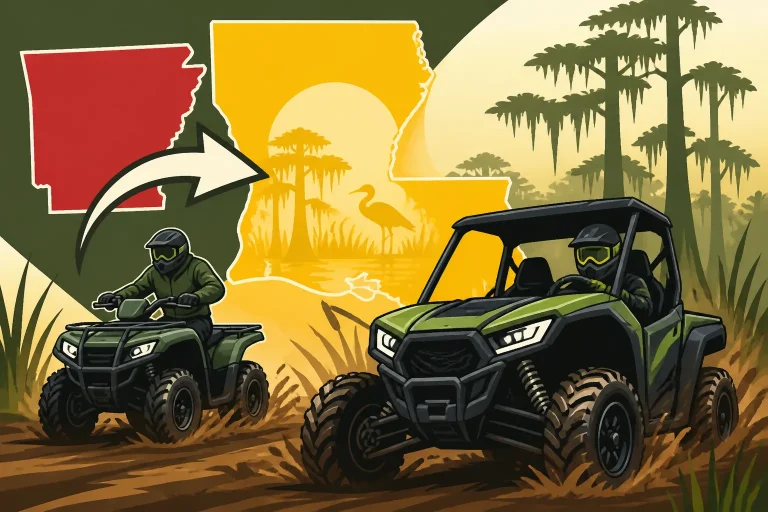
Planning an ATV or UTV ride on Louisiana wildlife management area land can get confusing fast: the permit, the self-clearing form, trail access, and machine restrictions are separate pieces of the puzzle. This guide explains how to prepare, what to check before unloading, and how to avoid assuming that a permit automatically makes every road or trail open to riding.
Understand what a Louisiana WMA access permit does
A permit is not blanket permission to ride
A WMA access permit or self-clearing permit is part of the process for using certain wildlife management areas. It helps document who is entering and what activity they plan to do. It does not, by itself, grant permission to ride an ATV or UTV anywhere on the property.
That distinction is easy to miss. A rider may have completed the required permit but still be outside the rules if the particular WMA does not allow motorized access on the route they want to use. Even where riding is allowed, it may be limited to marked trails, designated routes, or specific seasons.
Think of the permit as one checkpoint, not the whole checklist. You still need to confirm that the area is open, that your activity is allowed, and that your machine meets any applicable restrictions. For a closer look at the permit’s role, see Why Louisiana WMAs Need a Self-Clearing Permit.
Permits, decals, and passes serve different purposes
A WMA permit is not the same thing as a Louisiana off-road decal, an ATV title, or a Kisatchie National Forest pass. These requirements can overlap during a ride, but they cover different things and may be issued by different agencies.
For example, a machine might need the appropriate paperwork for its ownership or off-road use while its rider separately needs to satisfy WMA entry requirements. If a trip also includes a national forest trail, that trail may have its own pass or use rules. Having one document does not automatically replace another.
| Requirement | What it generally relates to | What to confirm |
|---|---|---|
| WMA self-clearing permit | Entry or activity reporting on a wildlife management area | Whether it is required for your visit and how to complete it |
| ORV decal or title | Machine paperwork under Louisiana rules | Whether the machine needs a title, decal, or both |
| Forest pass or trail fee | Use of a specific national forest trail system | Which pass applies to that trail and visit |
| Trail or area rules | Where and when a machine may be operated | Open routes, season dates, and equipment restrictions |
Before a ride, identify every property you will enter and check its rules separately. A route that crosses from a WMA to a forest trail can involve more than one permit system. The overview in [Louisiana WMA Permit Requirements] can help you think through the permit question without treating it as a substitute for trail authorization.
Check the exact property before making plans
“Louisiana WMA” is not one single riding area with one universal set of conditions. Each wildlife management area can have its own access points, closures, designated routes, and activity restrictions. Rules may also change with habitat work, weather, fire danger, hunting seasons, or other management needs.
Start with the name of the specific WMA, not just the parish or nearest town. Then look for that area’s map, access notice, and any current closure information. If you are meeting friends, send them the same area name and route details; “we’re riding around Kisatchie” can mean very different places and rules.
This is particularly important when a trailhead, road, or parking area sits near a boundary. A route that appears continuous on a general map may pass from public to private land or from one managed property to another. Do not assume the same permit or riding rules continue after crossing a boundary.
Complete the self-clearing permit carefully
Find the correct permit process for your visit
Louisiana WMA self-clearing permits are commonly connected to reporting use of the area. The exact process and the instructions available to visitors can depend on the property and the activity. Check the official directions for the WMA you plan to visit rather than relying on an old form, a photo shared online, or a friend’s memory from another area.
Some access points may have a permit box or posted instructions. Other permit processes may be available through an official online option. If the instructions tell you to use a particular form or process, follow that method and check whether there are separate steps for entering and exiting.
For the practical sequence, see Louisiana Self-Clearing Permit Steps. Read every field before filling it out. If you are riding with a group, make sure each person understands whether the permit is individual or whether a group process is specified. Do not assume the lead rider’s paperwork covers everyone.
Complete the form before you get distracted
It is tempting to wait until you are standing at the trailhead, with a trailer blocking the lot and everyone asking when the ride starts. That is exactly when people overlook a date, select the wrong activity, or leave a required portion unfinished. If possible, review the form and instructions before leaving home.
Use the correct WMA name and visit date, and answer the activity questions accurately. If a form has an entry and exit portion, follow the posted instructions about which part to submit and which part to keep. Never guess at a field that affects the meaning of your visit; pause and ask an official contact or use the instructions provided for that property.
Keep any required receipt, permit portion, or confirmation accessible during the visit. A photo may be useful as a backup, but it should not replace a required physical form or the specific method the area tells visitors to use. If you are unsure what to retain, follow the permit’s own directions.
Make the permit part of your ride-day routine
Build the permit check into the same routine as checking tie-downs, fuel, and the trailer lights. For example, a family leaving from Lafayette can confirm the WMA name, review the entry instructions, and place the necessary documents with the machine paperwork before driving north. That is much less stressful than trying to sort it out at a remote gate.
A simple checklist helps when the group includes several riders:
- Confirm the WMA and the intended entry point.
- Read the current permit instructions for that property.
- Complete the required permit steps accurately.
- Keep any required portion or confirmation where you can access it.
- Check the map and riding rules separately from the permit.
- Recheck for closures before unloading.
For a broader preparation routine, Planning an OMV Counter Visit So It Takes One Trip is about a different kind of paperwork errand, but the same basic habit applies: know what the process asks for before you arrive, and organize documents in advance.
Confirm that ATV and UTV riding is allowed
A valid permit does not open every trail
Some WMAs have designated motorized routes, while other areas may restrict or prohibit ATV and UTV riding. Even in an area where machines are allowed, riding may be limited to mapped trails or specific access routes. A two-track path visible on the ground is not automatically an authorized trail.
Use the official WMA map and its written rules together. A map can show designated routes, while a notice may explain seasonal closures or restrictions not obvious from the map. If a route is not marked or the rules are unclear, do not treat silence as permission. Ask the managing authority before riding it.
This is where a permit can create a false sense of security. A rider completes the self-clearing process, sees a broad trail network on a phone, and assumes the entire network is open. But the permit addresses entry or reporting; the map and specific land rules determine where you may travel.
Separate WMA riding from forest trail access
Louisiana has several kinds of public land and trail systems. A WMA route and a Kisatchie National Forest OHV trail may be close to each other, but they do not necessarily use the same permits, closures, or vehicle standards. Confirm the land manager and rules for each segment of your route.
This matters when planning a weekend with multiple stops. You might ride on one permitted route in the morning, then tow to a separate trailhead in the afternoon. Do not assume that a permit used at the first location is valid at the next one, or that a WMA vehicle limit carries over to a forest trail.
Before setting out, compare your route with Louisiana WMA Designated Trails Only and [Louisiana Forest Trail Use Passes]. These topics address different settings, and keeping them separate helps prevent a common mistake: carrying the right paperwork for one place while entering another under the wrong assumptions.
Respect closures, signs, and gates
A trail may be closed temporarily even if it is normally open. Rain can make a route vulnerable to damage, maintenance crews may need access, or wildlife management work may require a temporary restriction. A closed sign or barrier should be treated as a boundary, not a suggestion to find a way around it.
Pay attention to signs at the entrance and along the route. If a posted notice appears inconsistent with an older map, use the more current site-specific direction and seek clarification before proceeding. Do not move a barrier, ride around a locked gate, or follow tire tracks through a closed area.
If your planned route is blocked, turn back and use an authorized alternative only if the map and rules confirm it is open. That may feel frustrating after a long tow from Baton Rouge or Shreveport, but a changed plan is better than a citation, resource damage, or getting stranded beyond a closure.
Check machine limits and riding conditions
Verify weight, size, and tire rules for the WMA
Some Louisiana WMA rules set equipment limits for off-road machines. The listed restrictions can include machine weight, tire dimensions, lug height, or tire pressure. These are not details to guess at based on how a machine looks or what another rider used last season.
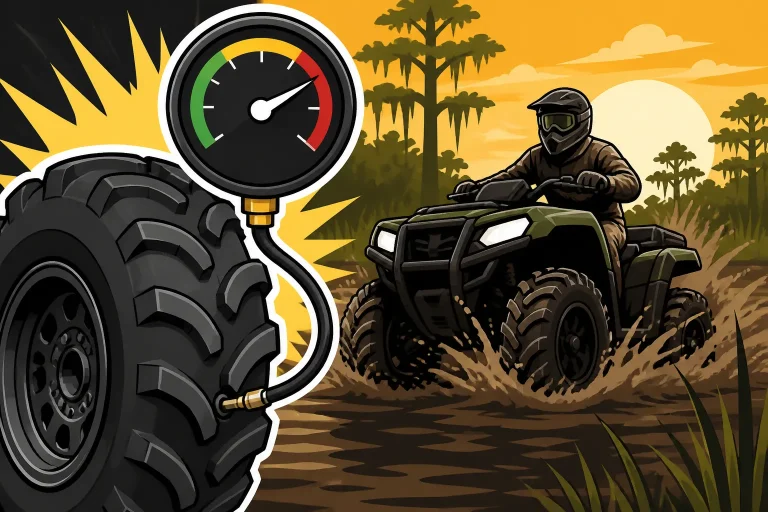
The figures associated with WMA rules include limits for machines under 750 pounds and UTVs under 1,900 pounds, along with tire requirements that may involve a maximum size of 26 by 12 inches, lug height of one inch, and pressure of 12 PSI. Treat these as prompts to verify the exact rule for the specific WMA and the type of machine you plan to bring. Do not assume every property applies each limit in precisely the same way.
Check your owner’s manual for the machine’s weight and tire specifications, and review the WMA’s official rules before loading. If the limit is defined by a particular measurement or machine category, use that definition rather than a seller’s shorthand. Details about these restrictions are covered in Louisiana WMA Weight Limits Explained and Louisiana WMA Tire Rules Explained.
Seasonal rules can change your plans
A route that is legal during one part of the year may be closed to machines during another. Louisiana WMA riding restrictions can include seasonal bans, and wildlife, habitat, or hunting management can affect when specific trails are available. Do not rely on the fact that a friend rode there last month or that a trail appears open on a general map.
The WMA rules listed for Louisiana include a seasonal riding ban that can run from March through August, with exceptions or area-specific conditions that need to be checked. The key practical point is to confirm the dates and exceptions for the property itself. A statewide-sounding rule may have details that matter to your specific route.
Check both the permit or access notice and the WMA’s trail information as your trip approaches. Louisiana WMA Seasonal Riding Ban explains why season dates deserve their own check rather than being treated as a minor footnote. If a closure applies, choose another legal location instead of trying to reinterpret the rule at the gate.
Daylight and route conditions matter too
Even where a machine is permitted, the allowed riding hours and access conditions may be restricted. Night riding rules can differ between land types and activities. The conditions of a trail also matter: a route that is open may still be unsafe after heavy rain, flooding, or storm damage.
Plan to arrive with enough daylight to complete the route and return to the staging area. Avoid starting a long ride late in the afternoon if you do not know the trail network well. A phone battery can die, a machine can get stuck, and a marked turn can be easy to miss in unfamiliar woods.
For route-condition planning, Louisiana Trail Closures After a Storm is a useful companion topic. It is also sensible to carry a paper map or a downloaded map, since cell service can be weak in wooded areas. A waterproof map case from Amazon can help keep a printed map readable if the ride turns wet, but it does not replace the official map or posted notices.
Bring the right paperwork and practical supplies
Keep documents protected and easy to reach
A ride-day document pouch can prevent a small problem from becoming a frustrating search through a muddy truck cab. Keep your permit or confirmation, any required machine paperwork, and relevant area information together. Make sure the documents remain accessible without leaving them loose where they can blow out of a side-by-side or get soaked.
It can help to store a digital backup of important information on a phone, but do not assume a digital copy is acceptable if the rules call for a completed form or a specific paper portion. Save the WMA map and notices before you leave home, especially if you expect limited service.
A waterproof pouch, a small notebook, and a pen are simple additions. Amazon is one place riders may look for a waterproof document pouch, but the point is to have a dependable way to protect the paperwork—not to buy a particular product. Check that the pouch closes securely and is easy to reach when you are wearing gloves.
Prepare for a check or a change of plan
A land manager or law enforcement officer may ask questions about where you are riding and whether you have followed the area’s rules. Keep your route clear in your mind and be ready to show the paperwork the area requires. If you are not sure whether a particular trail is authorized, stop and clarify rather than arguing from assumptions.
If a route is closed or your machine does not meet the rules, have a backup plan. That could mean switching to another activity, using a different authorized area, or turning the day into a scouting trip rather than riding. A flexible plan is especially useful for groups that have driven several hours and are eager to unload.
Carry ordinary safety items as well: drinking water, basic first aid, a charged phone, and tools appropriate for your machine. A tire gauge is useful if the WMA has a pressure limit. Riders sometimes browse Amazon for a compact gauge or a small first-aid kit, but make sure any equipment suits your machine and the conditions you expect.
Explain the rules to every rider in the group
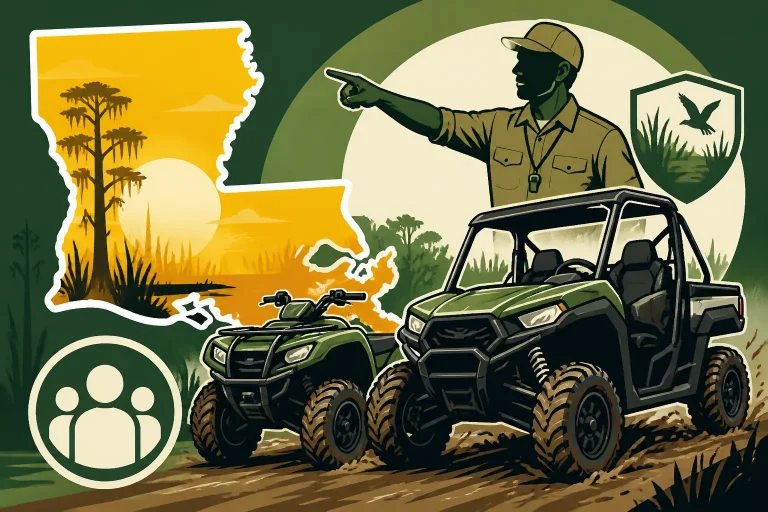
The person who handled the permit may not be the only person responsible for following the rules on the trail. Before the group leaves the staging area, make sure every rider knows the permitted route, any closure boundaries, and the plan for regrouping if someone gets separated.
This matters particularly when a group includes mixed machines. A youth quad, full-size ATV, and UTV may not share the same equipment limits or access conditions. The lead rider should not assume that a route suitable for one machine is acceptable for the whole group.
Agree on basic group habits before starting: stay on marked routes, do not ride around barriers, stop at junctions if the group becomes separated, and turn back if conditions are unsafe. Louisiana Trail Etiquette Locals Expect offers further guidance on keeping shared routes safe and considerate for other users.
Avoid common WMA permit mistakes
Confusing entry permission with machine authorization
One of the most common errors is completing the permit and then assuming that the machine is automatically allowed. The permit and machine rules answer different questions. A form may document the visit, while a separate rule determines whether a specific ATV or UTV may use a particular trail.
Before unloading, ask yourself two separate questions: “Have I completed the required entry process?” and “Is this machine allowed on this route today?” If you cannot answer both confidently, do not start the ride until you have checked the official information.
That distinction also applies to decals and titles. Louisiana off-road paperwork does not turn a WMA trail into an authorized route, just as a WMA permit does not replace machine paperwork. Why an ATV Needs Both a Title and a Decal explains another common paperwork mix-up, though WMA access remains a separate issue.
Relying on old information or word of mouth
Rules remembered from a previous visit may not reflect a current closure or a property-specific change. Social media posts can be helpful for general impressions, but they may refer to another WMA, another date, or a different type of vehicle. A picture of an open gate is not proof that the route is open now.
Use official information close to your visit, especially for seasonal access and trail closures. If an online page is unclear, contact the managing agency or ask at the official access point before riding. When you do get an answer, note the property and route it applies to; a rule for one area should not be generalized to another.
A small amount of checking can save a long drive. A group leaving Monroe for a weekend ride can confirm the area, route, machine limits, and closures before loading. That is more efficient than reaching a gate and discovering that the trail is closed or the vehicle is outside the allowed category.
Treating tire tracks as proof of access
Fresh tire tracks can make an unauthorized route look established. They might be from maintenance staff, a permitted activity, or someone who ignored the rules. Tracks do not replace a marked trail, official map, or written authorization.
If a path is not clearly shown as an approved motorized route, do not use it simply because it looks well traveled. Stay off road edges, habitat areas, and closed sections. Avoid creating new ruts or widening a route to get around mud; those actions can damage the land and make access harder for everyone.
If the correct route is muddy or blocked, use the official guidance for that property. Do not create a detour through brush or around a gate. When in doubt, stop, consult the map, and choose a permitted route—or end the ride.
A practical checklist before you leave home
Work through the access questions in order
A reliable WMA ride plan starts with the property, not the machine. Identify the exact WMA, the entrance you intend to use, and the trail or route you plan to ride. Then read the access and permit instructions for that specific location.
Next, confirm whether ATV or UTV riding is allowed there and whether the route is currently open. Check seasonal restrictions, vehicle categories, and equipment limits. If your trip includes more than one public land area, repeat those checks for each property.
Finally, complete the required self-clearing permit process and keep the necessary paperwork accessible. Do not rely on a friend’s completed form or assume that a group leader’s paperwork covers you. Use Louisiana Self-Clearing Permit Steps as a reminder to follow the process the property specifies.
Use a final pre-ride check at the trailhead
When you arrive, pause before unloading. Read entrance signs and posted notices, confirm you are at the correct access point, and compare the route with your map. If a notice conflicts with something you read earlier, stop and resolve the conflict before riding.
Check that your machine fits the applicable restrictions and that you have the required permit information with you. Make sure everyone in the group knows which route is authorized and what to do if the group gets separated. A quick conversation in the parking area can prevent confusion once riders are spread out in the woods.
If the trailhead is closed, the route is unclear, or your machine may not qualify, do not try to improvise. Call or consult the relevant official information, choose a different authorized area, or save the ride for another day. A missed ride is disappointing; a preventable violation or damaged trail is worse.
Keep a simple record for future visits
After the trip, note which property you visited, which access point you used, what permit process applied, and any signs or closures you encountered. Record the date, since seasonal rules and access conditions may differ from one visit to another. Avoid treating those notes as a replacement for checking again next time.
This short record is especially helpful if you ride several areas. It can prevent you from mixing up a WMA’s permit process with a forest pass or assuming a trail is open because it was open on your last visit. Keep old maps clearly marked as historical so you do not mistake them for current instructions.
The most dependable approach is straightforward: verify the area, complete its permit process, confirm the route and machine rules, and follow posted restrictions. That preparation makes the ride less stressful and helps protect continued access for other Louisiana riders.
Disclaimer
This article is for general informational purposes only and does not constitute professional advice. Laws, prices and regulations vary by location and change over time. Consult a qualified professional for guidance on your specific situation.