What Paperwork a Louisiana Mud Machine Needs
Trying to figure out all the paperwork for your Louisiana mud machine can feel like slogging through the deepest gumbo hole without a snorkel. It's frustrating when you just want to hit the trails, but the Office of Motor Vehicles (OMV) has its own set of rules, and mud can make essential details, like your VIN, disappear faster than a hot dog at a family barbecue. This guide is here to walk you through every piece of paperwork your Louisiana mud machine needs, making sure you're legally ready to ride and avoid any unwanted hassles.
The Essential Louisiana Off-Road Vehicle Title
When you invest in an ATV or UTV for tearing up the mud, the very first thing you need to understand is the title. This isn't just a formality; it's the bedrock of your ownership. Without a proper title, you can run into a swamp of trouble, whether you're trying to sell your machine, prove it's yours if it ever gets stolen, or even just dealing with legalities.
Proving Ownership: Why a Title Matters for Your Mud Machine
Imagine you've just shelled out good money for a powerful side-by-side, perfect for the bogs and bayous of Louisiana. You've got the machine, the keys, and a handshake deal. But what you really need is the official paper that says "this machine belongs to you." That's your title. It's a certificate issued by the OMV that establishes legal ownership. For off-road vehicles (ORVs) like ATVs and UTVs, Louisiana absolutely requires a title. This is crucial for new machines, which come with a Manufacturer's Statement of Origin (MSO), and equally important for used machines, which require an [Louisiana Requires an Assigned Title for a Used One] from the previous owner. Without it, you might find yourself stuck in a legal quagmire, unable to sell or even transport your machine without questions.
Think about it: if your prized mud machine is ever stolen, law enforcement will use the VIN on your title to track it down. Without that official documentation, proving your ownership can become a nightmare, often leaving you out of luck. Even if you only ride on private land, having a clear title protects your investment. It’s a bit like having the deed to your house; it proves it’s truly yours, regardless of where you decide to park it.
Navigating the OMV for Your Mud Machine's Title
Getting your title squared away usually involves a trip to the Louisiana OMV. For a new machine, you'll generally present the MSO provided by the dealer, along with proof of sales tax payment. For a used machine, things can get a little trickier, especially if you're buying from a private seller. You'll need the previous owner's properly assigned title. This is where attention to detail really pays off. Make sure all names are spelled correctly, signatures match, and all sections of the title transfer are completely filled out. Any errors or omissions can send you right back to square one, which is incredibly frustrating when you’ve already spent half a day at the OMV.
You'll also need to be prepared with additional documentation like a valid photo ID, proof of address, and funds for the [Louisiana Title Fee of $68.50] and the [Louisiana Handling Fee of $8]. It's always a good idea to call ahead or check the OMV website for a list of required documents to ensure you only have to make one trip. The OMV has specific procedures for off-road machines, and understanding them before you go can save you a lot of headache.
What If Your Mud Machine Has No Paperwork?
This is a scenario many riders face, especially when buying older machines or those that have changed hands multiple times without proper documentation. Maybe you bought a "bargain" that came with a handwritten bill of sale but no title, or perhaps the original owner simply never titled it. This can be a huge hurdle. Louisiana requires proof of ownership to issue a title. If you don't have an MSO or an assigned title, you're essentially starting from scratch.
In some cases, you might be able to apply for a "bonded title" or a "title of record," but these processes are often complex, time-consuming, and can require affidavits, certified inspections, and sometimes even a court order. It's usually much easier and less expensive to ensure your machine comes with proper paperwork from the start. If you’re considering a purchase with no title, proceed with extreme caution, and factor in the potential costs and headaches of getting one. Sometimes, a "deal" without a title can quickly become a very expensive problem. It's often wiser to walk away or insist the seller gets the title sorted before you hand over any cash.
The Louisiana ORV Decal: Your Ticket to Designated Riding Areas
Beyond the title, every off-road vehicle in Louisiana needs an ORV decal. While the title proves ownership, the decal proves that your machine is registered to ride on designated public lands. Think of it as your machine's permission slip for many of Louisiana's fantastic trails.
The Annual Decal and Its Importance
The [Louisiana ORV Decals and Titles Explained] is a small, sticky rectangle, but it carries significant weight. This decal is your official proof that your ORV is registered with the state for off-highway use. It’s not a license plate, and it certainly doesn’t make your machine street-legal, but it's vital for legal riding. The state charges a nominal fee for this decal, and it runs on a specific cycle. While the state statute allows a minimal fee, the small cost helps manage and maintain the trails you love to ride.
Without this decal, you could face penalties, including fines or even the impoundment of your machine, if you're caught riding on designated public areas like the trails in Kisatchie National Forest or certain Wildlife Management Areas (WMAs). Even if you mostly ride on private land, having the decal is a good practice, as you never know when you might want to visit a public park or if an emergency might require you to briefly use a road shoulder that would otherwise be off-limits. It's a small expense for peace of mind and access to legal riding spots.
Placement and Care for Your Mud Machine's Decal
Once you get your shiny new decal, you need to affix it correctly. The OMV has specific guidelines for [Louisiana Decal Placement on a Machine], usually on a visible, permanent part of the machine, like the front fender or frame. The idea is that it should be easily seen by law enforcement or park rangers. For a mud machine, this presents a unique challenge. Mud, water, and debris can quickly obscure or even peel off a poorly placed decal.
My advice: clean the area thoroughly before application, make sure it’s a flat surface, and maybe even add a clear protective sticker over it if you're really serious about mudding. You don't want to get a ticket because your decal is caked in mud or missing entirely. If your decal is lost or damaged, perhaps by a particularly aggressive tree branch or a deep mud hole, you'll need to apply for a [Louisiana Decal Replacement If Lost] through the OMV. It's another small hassle, but essential to stay legal.
Avoiding Penalties for No Decal
The consequences of not having a current ORV decal can range from a polite warning to a hefty fine and even having your machine impounded. Law enforcement officers, whether state troopers or park rangers, are trained to look for these decals. If you're on a public trail or even a parish road designated for incidental crossings, they can and will ask to see your proof of registration. [Louisiana Penalties for No Decal] are real, and nobody wants their mud machine towed away or to spend their riding budget on court costs.
Always make it a habit to check your decal before heading out. Is it still there? Is it still legible? Is it current? The decals typically run on a cycle, and you'll need to renew it when it comes up. Understanding the [Louisiana Decal Cycles and Their Length] will help you stay on top of renewals. Don't let a simple oversight turn a fun day of riding into an expensive headache.
Key Documents for Buying and Selling Mud Machines
Whether you're bringing home a new-to-you mud machine or passing yours on to another enthusiast, there are a few critical pieces of paperwork that make the process smooth and legally sound. Skipping these steps can lead to severe complications down the road.
The Notarized Bill of Sale: Your Best Friend in Private Sales
When you're buying or selling a mud machine privately, a simple handshake just won't cut it. You absolutely need a clear, comprehensive bill of sale. For Louisiana, making that bill of sale [Louisiana Notarized Bills of Sale] is a smart move that adds an extra layer of legal protection for both buyer and seller. A notary public verifies the identities of the people signing the document, which can prevent disputes later on regarding who sold what to whom, or if the signature is legitimate.
A good bill of sale should include:
- The full names and addresses of both buyer and seller.
- The date of the sale.
- A clear description of the machine, including make, model, year, and crucially, the Vehicle Identification Number (VIN).
- The agreed-upon purchase price.
- A statement that the machine is sold "as is" (if applicable).
- Signatures of both parties.
Using a template, perhaps from a reputable source like LawDepot, can help ensure you don't miss any critical details. It formalizes the transaction and provides indisputable proof of the transfer of ownership, which you'll need at the OMV for titling.
Sales Tax Proof: Don't Forget This Critical Step
This is one of the most common pitfalls for new owners. Before the OMV will even think about issuing you a title, you absolutely must prove that sales tax has been paid on your machine. [Louisiana Requires Proof of Sales Tax First]. If you buy from a licensed dealer, they will typically collect the sales tax and provide you with a receipt. Easy peasy.
However, if you buy from a private party, you're responsible for paying the sales tax directly to the OMV. This is often referred to as "use tax" when bringing an item into the state or purchasing it privately. The OMV clerk will calculate the tax based on the purchase price listed on your bill of sale. Sometimes, if the sale price seems unusually low, they might refer to a standard valuation guide. It's a non-negotiable step, and if you arrive at the OMV counter without proof of sales tax payment (either a receipt from a dealer or the cash/check to pay it then and there), you will be sent home without your title. This can be a real pain if you've already taken a day off work and driven a long way.
Dealer Invoices vs. Private Party Purchases
The paperwork difference between buying from a dealer and a private party is significant. When you buy from a dealer, you'll receive an [Louisiana Itemized Dealer Invoices] that clearly lists the purchase price, sales tax collected, any trade-in credits, and other fees. This invoice is invaluable for your OMV visit as it contains all the information they need to process your title and decal. Dealers often even handle the title and registration paperwork for you, making the process much smoother.
With a private sale, you're responsible for gathering all the necessary documents yourself. This includes the properly assigned title from the seller, your notarized bill of sale (which you can easily generate using resources like LawDepot), and the funds for sales tax. While private sales can sometimes offer better deals, they place a much greater burden on you to ensure all paperwork is correct and complete. Missing any one piece can lead to delays and multiple trips to the OMV, turning a "bargain" into a bureaucratic nightmare.
Special Considerations for Mud Machine Paperwork
Mud machines face some unique challenges when it comes to paperwork. The very nature of their use – splashing through water, grinding through grit, and generally getting incredibly dirty – can impact crucial identification elements.
Protecting Your VIN on a Mud Machine
The Vehicle Identification Number (VIN) is the unique identifier for your mud machine, just like a Social Security number for a person. It's usually stamped into the frame in a specific location. For mud machines, however, this VIN can be notoriously difficult to keep clean and legible. Constant exposure to mud, water, and debris can cause corrosion or simply make the numbers impossible to read. This is a huge problem because the VIN is central to your title and registration.
When you go to title your machine, the OMV clerk might need to physically inspect the VIN to ensure it matches the paperwork. If the VIN is obscured or unreadable, you could face delays or require an official inspection to verify the machine's identity. My advice: make it a habit to clean the area around your VIN after every muddy ride. Consider applying a clear protective coating or even taking clear photos of the VIN when it's clean and legible, just in case. Knowing [Serial Numbers the OMV Will Accept on a Title] can save you a lot of grief.
Insuring Your Investment: Beyond Just a Title
While the title and decal are about legal ownership and registration, insurance is about protecting your financial investment. Many riders assume that because their machine isn't street-legal, they don't need insurance. This is a dangerous misconception. While Louisiana doesn't mandate insurance for off-road use, it's highly recommended. Your homeowner's policy might offer very limited coverage, but a dedicated [Does Louisiana Require Insurance on an Off-Road Machine?] policy provides much more comprehensive protection.
Imagine a scenario: you're out at [Muddy Bottoms ATV Park in Louisiana], and you accidentally collide with another rider, causing significant damage to both machines and possibly injury. Without specific ORV insurance, you could be on the hook for thousands of dollars. An ORV policy can cover damage to your machine, liability if you injure someone or damage their property, and even theft. Even if you only ride on your own land, theft is a very real concern. While it's not a piece of "paperwork" you carry, the policy documents are crucial for financial protection and peace of mind.
Out-of-State Purchases and Mud Machines
Buying a mud machine from a seller in a neighboring state like Texas or Mississippi can sometimes open up more options or better prices. However, it also adds a layer of complexity to the paperwork process. When you bring an out-of-state machine into Louisiana, you'll still need to title it here. This means you'll typically need the properly assigned title from the previous state.
More importantly, you'll be responsible for paying [Louisiana Tax on an Out-of-State Machine] when you bring it home. The OMV will collect Louisiana's state and parish sales tax, even if you paid sales tax in the other state, though you may receive a credit for tax paid there. It’s vital to bring all your sales documents, including the original bill of sale and any proof of tax paid in the other state. Without these, you might end up paying sales tax twice. This is another area where using a standardized document, perhaps from LawDepot, can simplify the process by ensuring all necessary details are captured for both states. Don't let the allure of a good deal across state lines blind you to the potential paperwork headaches.
Table of Essential Mud Machine Paperwork
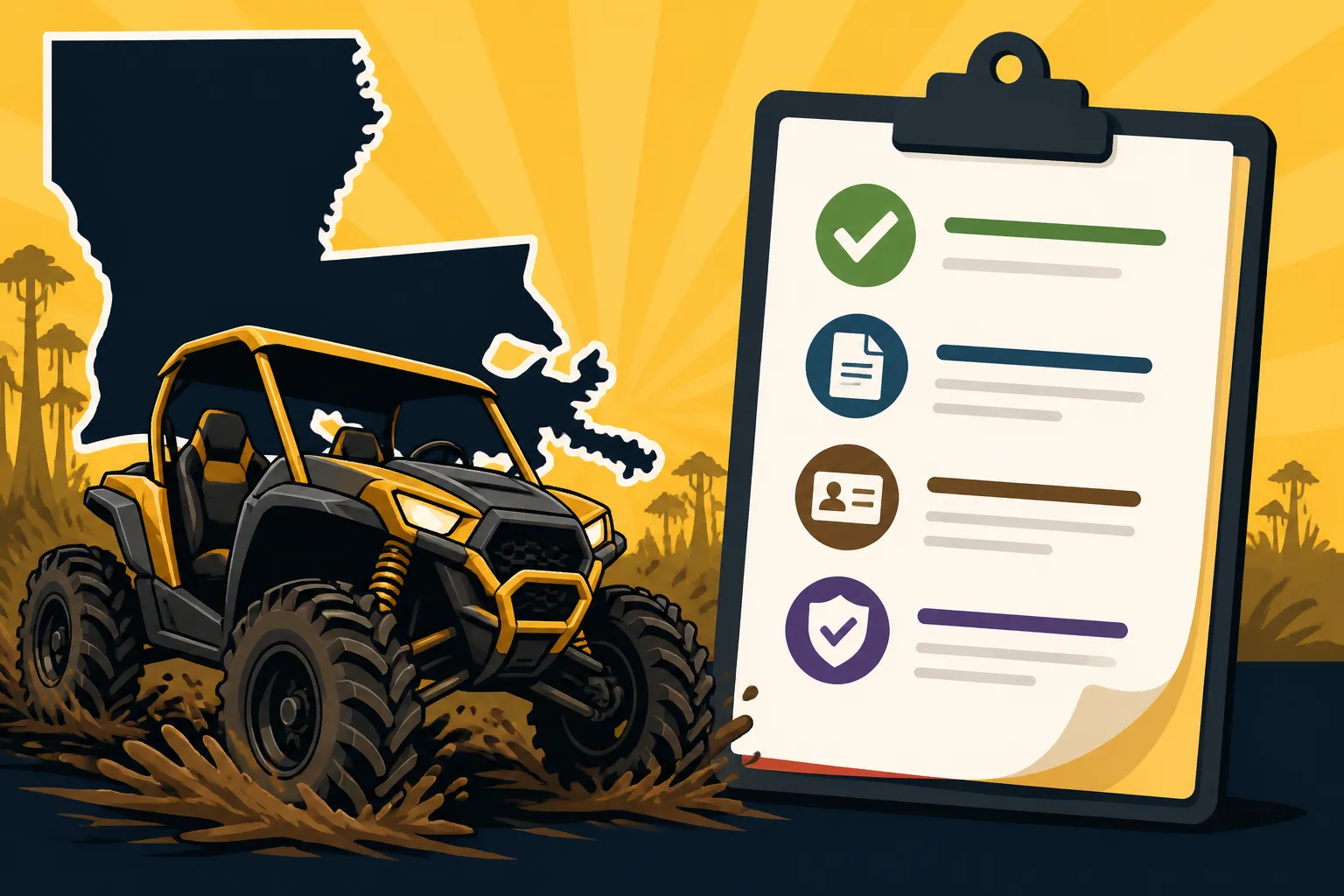
To help keep everything straight, here's a quick rundown of the essential paperwork for your Louisiana mud machine:
| Document Type | Purpose | Where to Get It (or Pay It) | Key Considerations for Mud Machines |
|---|---|---|---|
| Title (MSO or Assigned) | Legal proof of ownership | Dealer (new) / Previous owner (used) | Essential for all ORVs; check VIN for legibility; transfer properly. |
| Notarized Bill of Sale | Proof of purchase & price for private sales | Seller/Buyer (use templates from LawDepot) | Crucial for OMV title transfer; protects both parties. |
| Sales Tax Payment Proof | Shows state & local sales tax has been paid | Dealer (new) / OMV (private sale) | Mandatory before title issuance; pay at OMV if bought privately. |
| Louisiana ORV Decal | Required for riding on designated public land | Louisiana OMV (renewal required) | Affix properly; keep clean and visible; renew regularly. |
| Photo ID & Proof of Address | Confirms identity & residency for OMV | State ID/Driver's License & Utility Bill/Mail | Always required for OMV transactions. |
| Insurance Policy (Optional but Recommended) | Financial protection for damages, theft, liability | Private insurer | Covers accidents, theft, property damage; crucial for peace of mind. |
Getting your mud machine’s paperwork in order doesn't have to be a confusing, muddy mess. By understanding what you need, where to get it, and paying attention to the details, you can ensure your pride and joy is legally ready for all the bayou adventures Louisiana has to offer. Don't let a missing signature or an unreadable VIN keep you from the fun.
Disclaimer
This article is for general informational purposes only and does not constitute professional advice. Laws, prices and regulations vary by location and change over time. Consult a qualified professional for guidance on your specific situation.