Does a Farm-Only Quad Need a Louisiana ORV Decal?
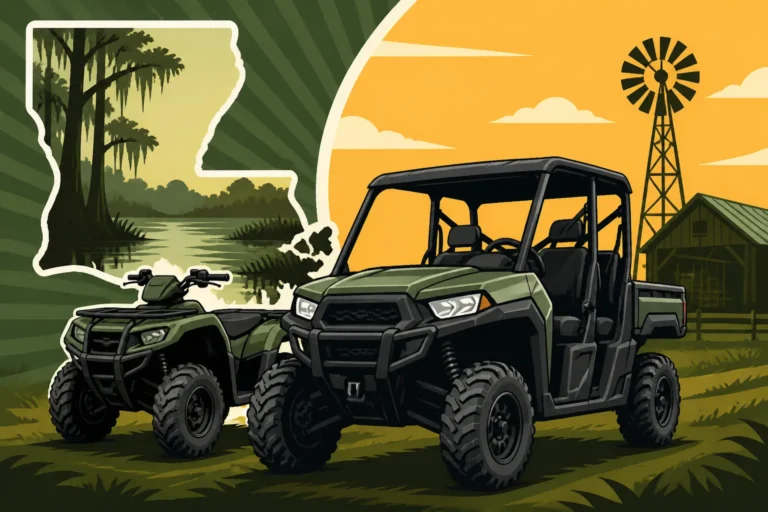
It can be incredibly confusing trying to navigate all the rules and regulations around ATVs and UTVs here in Louisiana, especially when you're just trying to use your machine for legitimate farm work. Many folks assume that if their quad never leaves private agricultural land, it automatically gets a pass on every piece of paperwork. But does a farm-only quad really need a Louisiana ORV decal? We're going to break down this common point of confusion so you can ride confidently and stay on the right side of the law.
The General Rule for Louisiana ORV Decals
Let's start with the basics before we dive into the specifics of farm exemptions. The state of Louisiana has a framework in place for titling and decaling off-road vehicles, and it’s important to understand the intent behind it.
Why the State Requires Decals in the First Place
You might wonder why the state bothers with a little sticker for your ATV or UTV, especially if you rarely see state-funded trails around your parish. The primary reason Louisiana established the ORV decal program is multifaceted. First, it helps the state keep a better record of these machines, which can be useful for tracking ownership, recovering stolen vehicles, and understanding the sheer volume of off-road enthusiasts we have here. The Office of Motor Vehicles (OMV) is the agency tasked with handling all these details, not the wildlife department, which is a common misconception. [The OMV Titles ATVs, Not the Wildlife Department]
Another key aspect, though perhaps less obvious to the average rider, is the potential for funding. While dedicated ORV trails might not be as plentiful as in some other states, the fees collected from these decals can, in theory, contribute to trail development, maintenance, and safety programs. It's a small fee, often just a few dollars a year, but it adds up. Think of it as a way for the state to acknowledge your machine's existence and its potential impact, whether that's on a public trail or just crossing a parish road. [Louisiana Charges $3 a Year for a Decal] The decal also operates on a four-year cycle, meaning you’ll renew it less frequently than some other registrations. [Louisiana Decal Cycles and Their Length]
Who Needs a Decal and Where
Generally speaking, if your ATV or UTV will be ridden on any public land, including designated public trails within places like Kisatchie National Forest, Wildlife Management Areas (WMAs), or even if you plan to use it to cross a public road, you absolutely need that ORV decal. This isn't just about hard-core recreational riding; it's about any interaction your machine has with public spaces. It's a fundamental step in ensuring your machine is recognized as legitimate by the state. [Louisiana ORV Decals and Titles Explained]
The decal acts as a visible sign that your machine has met the basic state requirements for off-highway use. It’s a bit like having a license plate on a car, but specifically for off-road environments. Without it, even a quick trip across a paved parish road, if done improperly, could lead to questions from law enforcement. Many riders get confused about the distinction between a title and a decal, but both serve different, important purposes for your machine. [Why an ATV Needs Both a Title and a Decal]
Understanding the Farm Exemption for Decals
Now, let's get to the heart of the matter for our farming community. Louisiana law does offer some specific exemptions for machines used in agriculture, but these come with very important caveats.
The Letter of the Law: When a Decal Isn't Required
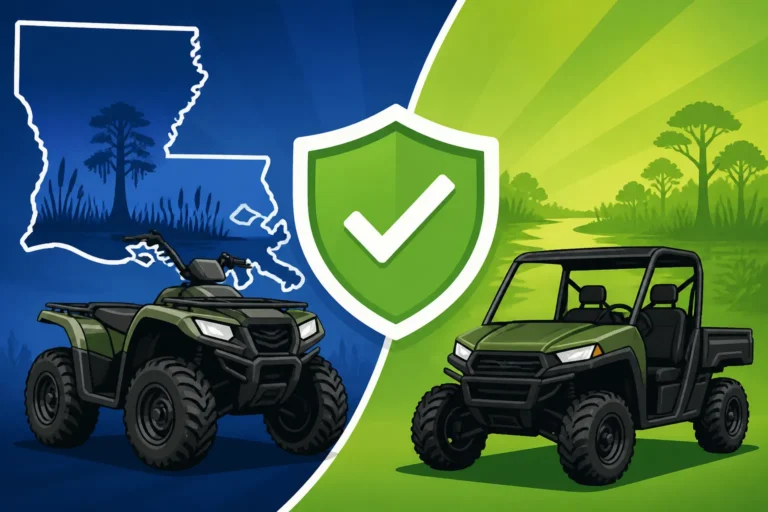
Here's where it gets tricky. Louisiana law generally states that an ORV decal is not required for machines used "exclusively for agricultural purposes upon private land." That word "exclusively" is doing a lot of heavy lifting here. It means your quad or UTV is solely dedicated to tasks like hauling feed, checking fences, spraying crops, moving tools, or tending livestock—all within the boundaries of private property. It's not for hunting, it's not for joyriding, and it's certainly not for taking the kids out for a spin on the weekend. It's purely a piece of farm equipment.
To qualify for this exemption, the OMV usually requires you to submit a sworn affidavit attesting to this exclusive agricultural use. This document is your formal declaration to the state that your machine meets the specific criteria for exemption. It’s a serious declaration, and you should only sign it if your machine truly fits the "exclusively agricultural on private land" definition. [Louisiana Agricultural Affidavits for an ATV] The form makes it clear that you are making a legal declaration under penalty of perjury, so honesty is paramount. Many land owners consider using a service like LawDepot for custom affidavit templates to ensure they have all their bases covered when documenting specific uses, although you’d use an OMV-specific form for this particular requirement.
The "Shoulder Riding" Caveat
This is arguably the most misunderstood part of the farm exemption, and it’s critical for many rural Louisiana residents. Even if your machine is primarily used for farming, if it ever touches a public road, even the shoulder, for farm-related travel, it still needs an ORV decal. Yes, you read that right.
The law includes a provision that allows farm-exempt machines to be ridden on the shoulder of a public road, within a five-mile radius of the farm property, but only if it has an ORV decal. This is a concession to farmers who need to move their equipment between fields separated by a public road, or make a short trip to a nearby barn or an adjacent parcel of land. Without the decal, even this limited shoulder-riding privilege is off-limits. [Louisiana Shoulder Riding Still Needs a Decal] This nuance is often a source of frustration because it feels contradictory—you're exempt for farm use, but not for all farm use. [Why the Farm Exemption Stops at the Shoulder] The five-mile radius is measured from the primary farm entrance, so it's a very specific zone of allowed travel. [The 5-Mile Farm Radius on a Shoulder]
Nuances and Practical Realities of "Farm-Only" Use
The devil is truly in the details when it comes to the farm exemption. What might seem like a straightforward use case often has complexities that can lead to headaches if not understood.
Defining "Exclusively Agricultural" and "Private Land"
Let's dive deeper into what "exclusively agricultural" really means. Imagine you use your side-by-side to check on your cattle every morning, haul feed, and mend fences. That sounds purely agricultural. But what if, on a slow Saturday afternoon, you take that same machine for a quick spin down the dirt road that cuts through your property, just for fun? Or what if you let your nephew ride it around the pasture when he visits? Technically, that might cross the line from "exclusively agricultural." The intent is key. If the machine is used for any recreational purpose, even on private land, it likely doesn't qualify for the decal exemption.
The definition of "private land" is also important. If you operate on a hunting lease that happens to have some agricultural activity, it's crucial to confirm whether your specific use falls under the "exclusively agricultural" umbrella or if the primary purpose veers into recreational hunting. Many hunting clubs or large land parcels have roads that feel private but are, in fact, accessible by others or connect to public easements. Using a service like LawDepot can be helpful for landowners to draft clear internal usage policies or lease agreements that define what constitutes private land access and machine use for various purposes, helping to avoid ambiguity. These are the kinds of situations where it’s always better to err on the side of caution.
The Role of the Agricultural Affidavit
The agricultural affidavit is not just a piece of paper; it's a legal document that formally declares your machine's use to the state. When you apply for a title for a farm-only machine and claim the decal exemption, the OMV will require this affidavit. It’s how the state records your intention and understanding of the law. You’ll typically need to have this document notarized, adding another layer of formality and legal weight. [Swearing an Affidavit That a Quad Is Farm-Only]
It’s your responsibility as the owner to ensure the information on the affidavit remains accurate. If your machine's usage changes—say, you decide to start using it for hunting or recreational trail riding—then your exemption would no longer be valid, and you would need to obtain an ORV decal. This affidavit is crucial for the OMV to understand why your machine isn't carrying a decal, but it doesn't give you a free pass on other rules, like road-use restrictions or titling requirements.
Here's a quick comparison of various quad uses and their decal requirements:
| Scenario | Primary Use | Decal Required? | Notes |
|---|---|---|---|
| Pure Farm-Only | Exclusively agricultural on private land | No | Must sign an agricultural affidavit. Cannot touch any public road, even the shoulder. |
| Farm Use with Shoulder Riding | Agricultural use on private land, occasional shoulder riding within 5-mile radius | Yes | Decal required for legal shoulder use. Affidavit still important for other exemptions (e.g., specific road-use provisions if applicable). |
| Hunting/Recreation on Private Land | Recreational, even if on your own property | Yes | If machine is titled, and used recreationally, best practice is to get a decal. |
| Public Land/Trail Riding | Any use on public lands (WMAs, Kisatchie, etc.) | Yes | Absolutely required for all public land access. |
| Camp Machine | Stored at a camp, used for recreation/transport around camp | Yes | Unless exclusively on clearly defined private land with no public access points. |
What Happens If You Get It Wrong?
Ignoring the decal requirements, even unintentionally, can lead to consequences that no one wants to deal with, especially when you're just trying to get your work done.
Potential Penalties for No Decal When Required
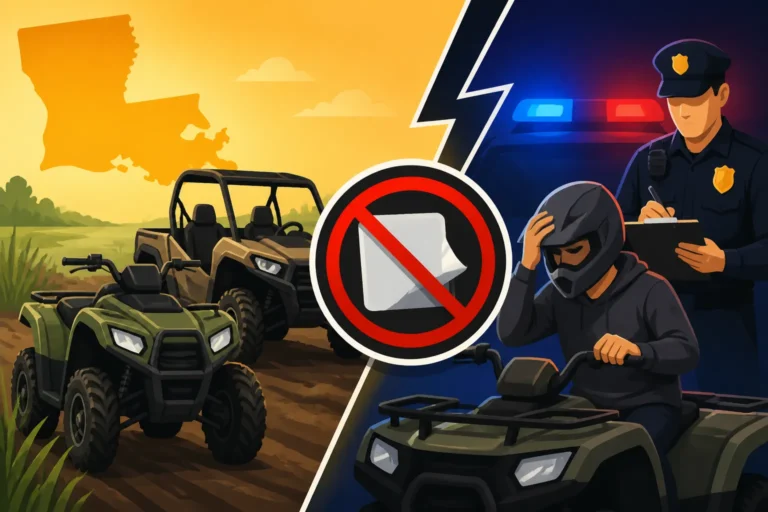
If you're stopped by a state trooper or parish deputy on a public road or even a WMA, and your machine should have a decal but doesn't, you could face penalties. The most common immediate consequence is a fine for operating a machine without the required registration or decal. These fines can vary depending on the jurisdiction and the specific circumstances, but they are certainly more than the nominal cost of the decal itself. [Louisiana Penalties for No Decal]
Beyond a fine, in more severe or repeated cases, your machine could even be impounded. Imagine being in the middle of a remote field, needing to move a heavy load, and having your quad seized because of a missing decal. It's a logistical nightmare that can disrupt your farm operations and cost you a significant amount in impoundment and release fees. Law enforcement officers, especially in rural areas, are very familiar with these rules and will often stop riders to check for proper documentation. [Louisiana Impoundment for No Decal] They know what to look for and what questions to ask to determine if your machine's use aligns with its registration status. [What a Louisiana State Trooper Can Ask to See]
Best Practices for Farm Machine Owners
Given the nuances, the simplest advice for any farm machine owner in Louisiana is this: When in doubt, get the decal. It costs so little—just a few dollars a year—and saves you a mountain of potential hassle, fines, and even impoundment. It’s a small price to pay for peace of mind and legal compliance.
Always carry your proof of ownership, agricultural affidavit (if applicable), and any other relevant documentation when operating your machine, even on private land near public access points. This can help clear up any misunderstandings with law enforcement quickly. If you eventually decide to sell your farm-only machine, be aware that the new owner might not qualify for the same exemption, especially if their use isn't purely agricultural. It's always best practice to discuss the machine's history and documentation with any potential buyer. [Selling a Titled Machine in Louisiana] For creating comprehensive sales agreements, services like LawDepot can provide robust templates that cover all contingencies, including the machine's current registration status and any declarations made by the seller. This ensures both parties are clear on what's being transferred.
Ultimately, the goal is to make sure your important farm equipment can do its job without unnecessary legal interruptions. Understanding these specific rules for Louisiana ATVs and UTVs ensures you can keep working the land without worry.
Disclaimer
This article is for general informational purposes only and does not constitute professional advice. Laws, prices and regulations vary by location and change over time. Consult a qualified professional for guidance on your specific situation.