Recording a Lien Costs $15 at the OMV
Navigating the world of financing a new or used ATV or UTV in Louisiana can feel like you’re trying to ride through deep mud without a snorkel. Between the excitement of getting your new machine and the mountain of paperwork, it's easy to get bogged down, especially when terms like "lien" come into play. This guide will help you understand exactly what a lien is, why it's recorded on your off-road machine's title, and specifically how the Louisiana OMV handles the $15 fee for recording it, ensuring you’re prepared for every step of the process.
Understanding What a Lien Is on Your Off-Road Machine
When you're excitedly picking out that shiny new side-by-side or a robust used ATV, it's thrilling. But for many of us, that purchase isn't paid for with cash upfront. We finance it, and that's where the concept of a lien comes into play. It's not a scary thing, but it's a really important piece of the puzzle for both you and your lender.
Why Lenders Require Liens
Think of a lien as a lender's way of saying, "Hey, we helped you buy this awesome machine, and we have a legal interest in it until you pay us back." When you borrow money from a bank, credit union, or even the dealership itself, they're taking a risk. That ATV or UTV is the collateral for your loan. If, heaven forbid, you couldn't make your payments, the lien gives the lender the legal right to repossess the machine to cover their losses. It’s a standard practice across the board for any kind of secured loan, whether it’s for a car, a house, or your new off-road toy. Without this protection, lenders would be much less likely to offer financing for these types of purchases, making it harder for many of us to get into the saddle.
It’s crucial to understand that the lien is directly tied to the specific machine you’re financing. It’s not a general claim on all your assets, but a very specific legal right against that particular ATV or UTV. This means that if you have multiple machines, a lien on one doesn't automatically affect the others. It ensures clarity and protects the lender’s investment directly in the item being purchased. When you’re signing those stacks of papers at the dealership, part of what you’re agreeing to is allowing this lien to be placed on your title until the loan is satisfied.
How a Lien Protects the Lender
The protection a lien offers goes beyond just the right to repossess. It also ensures that the lender is notified and has a say if you try to sell the machine before the loan is paid off. Imagine trying to sell your UTV, and it still has a lien on it. The OMV won't allow a clear title to transfer to a new owner until that lien is satisfied and formally released. This prevents a situation where someone could sell a machine, keep the money, and leave the lender with nothing. The lien effectively acts as a red flag on the title record, informing anyone who checks that there’s an outstanding debt associated with the vehicle.
This protection is why lenders insist on being listed as the "lienholder" on your official certificate of title. It's a public record that anyone, including potential buyers or other financial institutions, can access to see if there are any claims against the machine. For instance, if you get a loan from a local credit union for your quad, they will send the necessary paperwork to the OMV to ensure their interest is recorded. Without this official record, the risk for lenders would be much higher, potentially leading to higher interest rates or more stringent lending requirements for everyone wanting to [Finance a Quad Through a Shreveport Dealer] or through any other institution. Companies like LawDepot can provide templates for various legal documents, but for a lien on a vehicle, the lender will typically have their own standardized forms for submission to the OMV.
The Louisiana OMV's Role and the $15 Lien Recordation Fee
The Louisiana Office of Motor Vehicles (OMV) is the central authority responsible for titling all motor vehicles, including ATVs and UTVs, in the state. This means they handle not only the initial issuance of your title but also the recording and eventual release of any liens associated with your machine. Their role is to maintain an accurate public record of ownership and any financial encumbrances, ensuring transparency and legal clarity for everyone involved.
Breaking Down the OMV Fee Structure for Liens
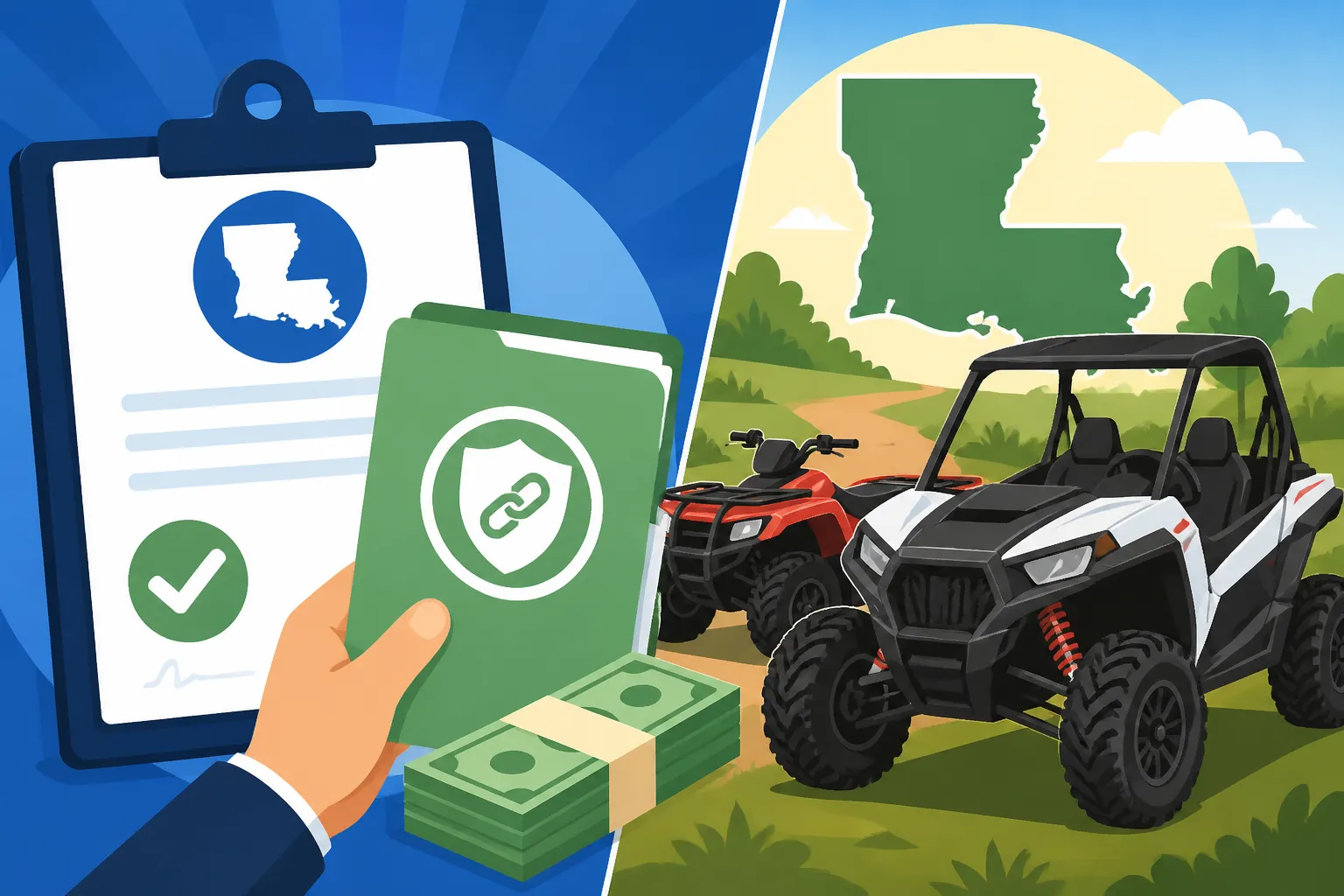
When it comes to getting your ATV or UTV titled, there are several fees you'll encounter at the OMV, and it's easy to get them mixed up. The $15 fee specifically covers the service of recording a mortgage or lien on your off-road machine's title. This is a distinct charge from other fees you'll pay. For example, the actual cost to issue your title, regardless of a lien, is generally [Louisiana Title Fee of $68.50]. There's also typically an [Louisiana Handling Fee of $8] that covers the administrative processing of your transaction. The $15 lien recordation fee is a separate line item, charged specifically for the administrative act of officially noting the lender's interest on the vehicle's title record.
This fee ensures that the OMV can maintain a robust and searchable database of all active liens, which is critical for legal purposes, lender protection, and future transactions. It’s a small but essential part of the overall cost when financing your machine. Understanding these individual charges helps you budget accurately and avoid any surprises when you're at the OMV counter. You might be focused on the larger costs, like the sales tax you pay (remember, [Louisiana Requires Proof of Sales Tax First]), but these smaller, specific fees are equally mandatory for getting your machine legally registered and titled.
When the Lien Recording Fee Applies
The $15 lien recording fee comes into play any time a new lien is placed on an ATV or UTV title in Louisiana. This most commonly occurs when you finance the purchase of a machine, either new or used. Whether you're buying from a dealership or securing a loan for a private sale, if a financial institution is lending you money and taking the machine as collateral, they will require their lien to be recorded. The fee is usually paid as part of the total transaction at the OMV, either directly by you or often bundled into the paperwork if the dealership handles the title and registration process for you.
It's important to remember that this fee is per lien recorded. While most machines will only have one lien at a time, if for some reason a second lien were to be placed (which is less common for ATVs/UTVs but can happen with other vehicles), each would incur its own recordation fee. This fee is a one-time charge for the act of recording that specific lien. It's not an annual fee, nor does it recur when your [Louisiana ORV Decals and Titles Explained] comes up for renewal, unless a new lien is being added or an existing one is being re-recorded under unusual circumstances.
The Process of Recording a Lien at the OMV
Recording a lien isn't something you typically do on your own if you're financing through a traditional lender. Usually, the lender or the dealership (if you bought through one) will handle the submission of the necessary documents to the OMV. However, understanding the process is empowering, ensuring you know what's happening with your new machine's official paperwork.
Required Documents for Lien Recordation
To record a lien, several key documents must be submitted to the OMV. The primary one is the official Certificate of Title Application, or a similar form provided by the OMV, where the lienholder's information will be clearly listed. This form requires specific details about the ATV or UTV, including its VIN, make, model, and year, along with your personal information as the owner. Critically, it will also identify the lending institution by name and address as the secured party.
In addition to the application, the lender will provide a security agreement or a similar document that legally establishes their interest in the machine. This document confirms the loan terms and the agreement for the lien. If you purchased from a dealer, they will also submit an [Louisiana Itemized Dealer Invoices] which shows the sales price and tax collected. If it was a private sale, you'll need a properly executed and often notarized bill of sale, especially if you want to avoid issues when it comes to [Louisiana Notarized Bills of Sale]. All these documents collectively provide the OMV with the necessary information to accurately update the public record and issue a title that clearly displays the lienholder's name.
Steps to File at the OMV
Typically, when you finance an ATV or UTV through a dealership, they will manage the entire title and lien recordation process on your behalf. They will collect all required documents from you and the lender, fill out the necessary OMV forms, collect any applicable fees (including the $15 lien recordation fee, the title fee, sales tax, etc.), and submit everything to the OMV. This is a huge convenience, as it means you generally only deal with the dealership, not the OMV directly for this initial step.
If you are handling the process yourself, perhaps after getting a [Louisiana Credit Union Loans for a Quad] for a private purchase, you would gather your completed [What to Fill In on the OMV Vehicle Application], proof of sales tax payment, the security agreement from your lender, and your [Louisiana Photo ID at the Counter]. You'd then visit a local OMV office. At the counter, a clerk would review your documents, process the various fees, and input the lienholder information into their system. It’s important to make sure all forms are filled out correctly and completely to avoid delays in [Louisiana Title Processing Time]. Companies like LawDepot can sometimes assist with understanding general legal forms, but the specific OMV applications are usually unique and provided by the state.
Common Pitfalls to Avoid
One of the biggest pitfalls when dealing with lien recordation is incomplete or incorrect paperwork. Missing signatures, misspelled names, or incorrect VINs can all lead to significant delays and frustration. Always double-check every document before submission. Another common issue is not having the required proof of sales tax payment. Remember, the OMV won't issue a title or record a lien until [Why Tax Proof Comes First]. Make sure you have your sales tax receipt from the dealer or are prepared to pay the use tax at the OMV counter if it was a private sale.
Also, be aware of deadlines. While the lien recording itself doesn't have a strict deadline for the lender, you as the owner typically have a limited time (often 30 days) to register and title your machine after purchase. Failing to do so can result in penalties. Keeping clear communication with your lender and dealership about the status of your paperwork can save you a lot of headaches. It's also wise to keep copies of all documents submitted, so you have your own record. This can be invaluable if questions arise down the line about [Louisiana Title and Financing Documents].
What Happens After the Lien is Recorded and Eventually Released
Once the OMV processes all your paperwork and the $15 fee for lien recordation, they will issue your official certificate of title. This document is crucial because it publicly declares who legally owns the ATV or UTV and, importantly, who has a financial interest in it.
How a Lien Appears on Your Title
After successful processing, your Louisiana ATV or UTV title will be printed with the lienholder's name and address clearly listed on it. This is how [How a Lien Shows Up on an ATV Title]. Instead of receiving a "clean" title directly, you'll get a title that shows this encumbrance. Often, the physical title document itself is mailed directly to the lienholder (your bank, credit union, or the financing arm of the dealership), and they will hold onto it until the loan is fully paid off. You, as the registered owner, might only receive a registration card or a notice that the title has been issued with the lien noted.
This practice provides an extra layer of security for the lender. By holding the physical title, they ensure that the machine cannot be easily sold or re-titled without their knowledge and explicit release of the lien. It serves as a constant reminder that there's an outstanding financial obligation tied to the machine. While this might feel a little inconvenient, it's a standard and necessary part of financing these types of valuable assets.
Releasing a Lien When the Loan is Paid Off
The day you make that final payment on your ATV or UTV loan is a fantastic feeling! It means you're officially the sole owner, free and clear. At this point, your lender is legally obligated to release their lien. They will typically send you a lien release document, often a notarized letter or a specific OMV form, confirming that the loan has been satisfied and they no longer have a financial interest in your machine.
Once you receive this official lien release, you'll need to take it to the OMV. You will then apply for a new, "clean" title that no longer shows the lender as a lienholder. There might be a small processing fee for this new title issuance, but it won't be another $15 lien recordation fee since you're removing a lien, not adding one. It's absolutely critical to follow through with this step. If you ever want to sell your machine or use it as collateral for a different loan, having a clean title is essential. Otherwise, you'll run into significant hurdles. You can always check with the OMV about [Louisiana Title Questions OMV Hears] to clarify any steps.
The Importance of a Clean Title
Having a clean title – one with no liens listed – is paramount for any vehicle owner. It signifies clear ownership and makes future transactions much smoother. When you eventually decide to sell your ATV or UTV, a prospective buyer will want to see a clean title to ensure they are getting clear ownership. If a lien is still showing on the title, even if the loan is paid off, it can complicate the sale and even deter buyers who don't want to deal with the extra hassle.
Beyond selling, a clean title gives you complete control over your asset. You won't need lender permission for major modifications or to take your machine out of state for an extended period. It truly means the machine is 100% yours, free from any financial encumbrances. While the $15 fee for recording a lien is a necessary step in the financing process, the ultimate goal is always to get that clean title in your hands once your financial obligations are fulfilled. It's the ultimate proof that your hard work and payments have paid off.
| OMV Fee Type | Cost (Typical) | Purpose | When It Applies |
|---|---|---|---|
| Lien Recordation Fee | $15 | To officially record a lender's financial interest on a title. | When financing an ATV/UTV; paid to OMV by lender or buyer. |
| Certificate of Title Fee | $68.50 | To issue the official ownership document. | Any time a new title is issued (new purchase, transfer, duplicate). |
| OMV Handling Fee | $8 | Covers administrative costs for processing transactions. | Applied to most OMV counter transactions. |
| Mortgage Recordation Fees | Varies | For recording property mortgages (not directly for ATV/UTV liens). | When recording a mortgage on real estate, not off-road vehicles. |
| Sales Tax | Varies | State and local tax on the purchase price of the machine. | Paid at purchase (dealer) or OMV (private sale) before title can issue. |
Disclaimer
This article is for general informational purposes only and does not constitute professional advice. Laws, prices and regulations vary by location and change over time. Consult a qualified professional for guidance on your specific situation.