Using a Louisiana Credit Union Loan for a Quad
It’s a common scenario in Louisiana: you’ve been eyeing that perfect ATV or UTV, imagining tearing through the Kisatchie National Forest trails or tackling the mud at Muddy Bottoms. But then reality hits – the price tag. For many of us, dropping a huge chunk of cash upfront simply isn't feasible, and navigating financing can feel like a maze. This guide is here to demystify the process of using a Louisiana credit union loan to get you on that quad, helping you understand your options and make informed decisions.
Why a Louisiana Credit Union Might Be Your Best Bet for an ATV Loan
When you start looking at financing options for an ATV or UTV, it’s easy to feel overwhelmed. You might automatically think of the dealership’s finance office or a big national bank. But in Louisiana, a local credit union can often be a game-changer, offering a personalized approach that those larger institutions sometimes miss.
The Credit Union Advantage: More Than Just a Bank
Credit unions are different from traditional banks in a fundamental way: they are not-for-profit financial cooperatives owned by their members. This member-first philosophy often translates into benefits for you, the borrower. Think about it – instead of focusing on maximizing shareholder profits, a credit union's goal is to provide the best possible services and rates to its members. For an ATV loan, this can mean a more competitive interest rate, lower fees, and a more flexible approach to lending than you might find elsewhere. They're often deeply rooted in the local community, understanding the recreational passions of folks right here in Louisiana.
When you walk into a credit union, especially one with a strong local presence like many in Shreveport, Baton Rouge, or Lafayette, you’re often greeted by people who live and work in your area. They understand the local economy, the demand for off-road vehicles, and perhaps even the specific challenges or opportunities that come with living in Louisiana. This local knowledge can make a big difference when you're discussing your financial needs for a new or used machine. They’re less likely to treat you as just a number and more likely to see you as a neighbor they want to help get out on the trails.
Comparing Credit Unions to Other Financing Options
Let's be realistic, you have choices. You can go through the dealership, a large bank, or even try a personal loan. Each has its pros and cons, but here’s why a credit union often stands out for ATV and UTV financing specifically.
Dealership Financing: This can be convenient, as it’s often a one-stop shop where you pick out your machine and arrange financing. Dealers often have relationships with various lenders and can offer promotional rates. However, sometimes these rates are conditional, or they might push you towards a loan that benefits them more than you. It's always a good idea to have pre-approval from another lender (like a credit union) before you walk into the dealership to give yourself leverage. Knowing your options empowers you to get the best deal. You might find that [Financing a Quad Through a Shreveport Dealer] comes with certain rates or terms that are less favorable than what a credit union can offer, especially if your credit isn't absolutely perfect.
Traditional Banks: Large banks offer competitive rates for well-qualified borrowers, and they have extensive online services. But they might not have the same personal touch or understanding of niche markets like off-road vehicle financing that a local credit union might. Their approval processes can sometimes feel more rigid, adhering strictly to algorithms without much room for individual circumstances. They also might not be as flexible with things like shorter loan terms or lower loan amounts for older, used quads.
Personal Loans: While you could get a personal loan to buy a quad, these typically have higher interest rates than secured loans (like an auto loan, or in this case, a specific ATV loan where the vehicle acts as collateral). That's because a personal loan is unsecured, meaning there's no asset for the lender to reclaim if you default. For an off-road machine, a dedicated ATV loan from a credit union is almost always the more cost-effective choice in the long run.
Credit unions, on the other hand, often offer secured loans specifically for powersports vehicles. This means the quad itself serves as collateral, which generally results in a lower interest rate for you. They understand the value of these machines and are equipped to handle the titling and lien processes involved. Plus, the rates, as discussed in [Louisiana Credit Union Loan Rates], can be very attractive because of their member-focused structure.
Navigating the Credit Union Loan Application Process
So, you're leaning towards a credit union. Great choice! But how exactly do you go about getting that loan? The process is usually pretty straightforward, but there are a few key steps and documents you'll need to have in order. Being prepared can significantly speed things up and reduce any stress you might feel.
Becoming a Member First
One crucial difference between a credit union and a bank is that you typically need to be a member to get a loan. Don't let this intimidate you; it's usually very easy to join. Most credit unions have broad eligibility requirements, such as living, working, or worshipping in a specific parish, being related to a current member, or joining a specific association (sometimes for a small, one-time fee).
For example, a credit union serving the Baton Rouge area might require you to live in East Baton Rouge Parish or be employed by a certain company. Other credit unions might have more open community charters, allowing anyone in the state to join. Start by visiting the websites of credit unions in your area or giving them a call. They'll be happy to explain their membership requirements and guide you through the quick process of opening an account, usually with a small deposit into a savings account. This initial step is your gateway to accessing their loan products, so don't skip it.
Gathering Your Essential Documents
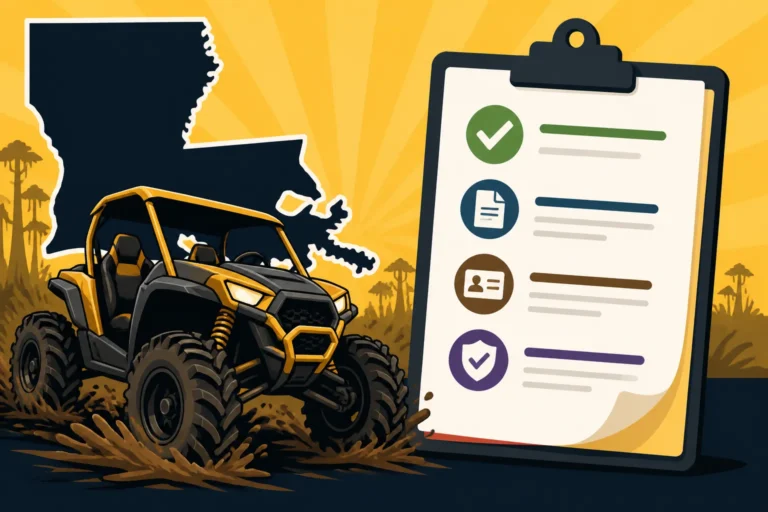
Once you're a member or in the process of becoming one, it's time to gather the paperwork. Lenders, including credit unions, need to verify your identity, income, and the details of the machine you want to buy. Here's a typical checklist of what you'll need:
- Proof of Identity: A valid driver's license (like a Louisiana Class E license) or state-issued ID.
- Proof of Residence: A utility bill, lease agreement, or other official document showing your current address. This is important for confirming your eligibility for a local credit union.
- Proof of Income: Pay stubs from your employer (usually the last two or three), tax returns if you're self-employed, or other documentation demonstrating your ability to repay the loan.
- Social Security Number: For credit checks and identification.
- Information on the ATV/UTV: If you've already found your dream machine, you'll need its details. For a new machine, this means the Manufacturer’s Statement of Origin (MSO) and an [What an Itemized Dealer Invoice Must Show]. For a used machine, you'll need the title (if it's already titled in Louisiana) or a notarized bill of sale, especially if buying from a private seller. Sometimes a credit union will even want to inspect the machine or see photos, especially if it's an older model or one with custom modifications.
This is where understanding documents like [Louisiana Title and Financing Documents] becomes crucial. The credit union will need to ensure the vehicle has a clear title or can be legally titled in your name, as it will be listed as a lienholder on the title. If you're buying from a private seller, having a properly drafted bill of sale is essential. Tools like LawDepot can be incredibly helpful here, allowing you to create a professional, legally sound bill of sale that includes all the necessary details and prompts for notarization, which many lenders (and the OMV) will require for a private sale. This way, you ensure all parties are protected and the credit union has the documentation it needs to secure its interest.
The Application and Approval Process
With your membership secured and documents in hand, you can submit your loan application. This can often be done online, in person, or sometimes over the phone. The credit union will review your application, run a credit check, and assess your debt-to-income ratio to determine your eligibility and the loan amount they can offer.
Credit Score: Your credit score plays a significant role in the interest rate you'll be offered. A higher score generally means a lower rate, saving you money over the life of the loan. If your credit isn't perfect, don't despair. Credit unions are sometimes more willing to work with members than larger banks, and they might offer solutions like a co-signer or a slightly higher interest rate.
Pre-Approval: Many credit unions offer pre-approval. This is a fantastic step to take before you even start serious shopping. Pre-approval gives you a clear idea of how much you can borrow and at what interest rate, allowing you to shop with confidence and negotiate like a cash buyer. Imagine walking into a dealership knowing exactly what you can afford – it changes the dynamic entirely!
Once approved, you'll sign the loan documents, and the credit union will disburse the funds directly to you, the seller, or the dealership. Then, it's off to the OMV to get that quad titled in your name with the credit union as the lienholder. Don't forget that [Louisiana Requires Proof of Sales Tax First] before you can even think about getting your title, and the credit union will need to see this documentation.
Understanding Your Loan Terms and What to Expect
Getting approved for a loan is just the first part. Understanding the terms of your loan is paramount to making sure your quad ownership experience is enjoyable and not a financial burden. Nobody wants to regret their purchase because they didn't understand the fine print.
Demystifying Interest Rates and APR
When you receive a loan offer, you'll see an interest rate and an Annual Percentage Rate (APR). While often similar, they’re not always the same thing.
- Interest Rate: This is the percentage charged on the principal amount of your loan, typically expressed annually. It's the cost of borrowing money, plain and simple.
- Annual Percentage Rate (APR): The APR gives you a more comprehensive picture of the true cost of your loan, as it includes not just the interest rate but also any fees associated with the loan (like origination fees, though credit unions often have fewer of these). Always compare APRs when looking at different loan offers, as it provides the most accurate "apples-to-apples" comparison.
Credit unions are generally known for competitive APRs, especially for secured loans like those for ATVs. It's wise to get quotes from a couple of different credit unions to ensure you're getting the best deal. Don't be afraid to ask questions about how the interest is calculated – is it simple interest (calculated only on the principal remaining) or compound interest (calculated on the principal and accumulated interest)? Most auto and powersports loans are simple interest, which is generally more favorable for you.
Loan Terms, Payments, and Collateral
Beyond the rate, the length of your loan (the "term") and your monthly payment amount are critical factors.
- Loan Term: This refers to the duration over which you will repay the loan, typically expressed in months (e.g., 36, 48, 60 months). A longer loan term generally means lower monthly payments, which can be appealing if you're trying to keep your budget tight. However, a longer term also means you'll pay more interest over the life of the loan because you're borrowing the money for a longer period. Conversely, a shorter term will have higher monthly payments but save you money on interest in the long run. It's a balancing act between affordability now and total cost later.
- Monthly Payments: Your monthly payment is determined by the loan amount, the interest rate, and the loan term. It's crucial to choose a payment that fits comfortably within your monthly budget, taking into account all your other expenses. Don't just focus on the lowest possible payment; consider the total cost of ownership.
- Collateral: For an ATV or UTV loan, the machine itself typically serves as collateral. This means if you fail to make your payments as agreed, the credit union has the right to repossess the vehicle to recover the outstanding loan amount. This is why a clear title is so important, as the credit union will record a lien on it. Once you pay off the loan, the lien is removed, and you receive a clear title. Understanding how [How a Lien Shows Up on an ATV Title] is essential for any financed purchase.
Some credit unions might also offer optional add-ons, like payment protection insurance, which can cover your payments in case of disability or involuntary unemployment. While these can offer peace of mind, they also add to the total cost of your loan, so evaluate carefully if they are truly necessary for your situation.
Making Smart Financial Choices for Your Louisiana Quad
Purchasing an ATV or UTV with a loan is a big step, and it requires careful financial planning beyond just the loan payment. Thinking through the full cost of ownership will help you avoid unwelcome surprises down the road and ensure you can truly enjoy your machine.
Budgeting Beyond the Purchase Price
The quad itself is just one part of the financial picture. Many new owners, especially first-timers, can underestimate the additional costs involved in owning and operating an off-road vehicle in Louisiana.
- Sales Tax and Fees: Don't forget that you'll owe [Louisiana ATV Sales Tax Rate] on your purchase, which includes state and local parish sales taxes. This can be a significant amount, often adding thousands to the total cost, and it's usually due before you can title your machine. You'll also have a title fee and a small annual decal fee. The [Louisiana Title Fee in Your Budget] and [Louisiana Decal Cost in Your Total] are small, but they add up.
- Insurance: While not always mandatory for off-road use on private land, insurance is a wise investment. If you plan to ride on any public roads (where permitted under specific conditions), [Louisiana UTV Insurance Minimums] or ATV insurance will absolutely be required. Even for strictly off-road use, comprehensive and collision coverage can protect your investment against theft, damage, or accidents. Consider the potential [Louisiana ATV Insurance Costs] in your annual budget.
- Maintenance and Repairs: ATVs and UTVs require regular maintenance, especially if you're hitting the mud parks or aggressive trails. Oil changes, tire replacements, belt changes, and unexpected repairs can quickly add up. Budgeting for these helps keep your machine running smoothly and safely.
- Gear and Accessories: Helmets, protective clothing, goggles, and gloves are not just recommended; they are essential for safety. Beyond safety gear, you might want to invest in winches, upgraded tires, light bars, or storage boxes. These accessories can enhance your riding experience but also represent additional costs.
- Riding Fees and Permits: If you plan on riding at places like Kisatchie National Forest or private mud parks, you'll incur fees. Consider the [Louisiana Forest Pass Costs Added Up] or [Louisiana Mud Park Fees Added Up] as part of your annual recreational budget. These can be daily, annual, or event-based.
Taking all these elements into account will give you a much more realistic picture of the [Louisiana Cost of Ownership Year One] and for subsequent years.
Protecting Your Investment and Your Finances
Once you have your loan and your quad, smart financial habits become even more important.
- Read Everything Carefully: Before you sign any loan documents, read every single line. If something is unclear, ask questions until you fully understand it. Don’t rush this process. This includes understanding all the terms, conditions, and any penalties for late payments.
- Make Payments on Time: Consistently making your loan payments on time is critical. It helps build a strong credit history, avoids late fees, and ensures you don't risk repossession of your machine. Set up automatic payments if possible, so you never miss a due date.
- Consider Early Payoff: If your loan allows it without prepayment penalties (most credit union vehicle loans do not have them), consider making extra payments or paying off the loan early. Even small extra payments can significantly reduce the total interest you pay and get you to a clear title faster.
- Maintain Your Machine: Keeping your ATV or UTV in good condition not only ensures safer riding but also helps maintain its resale value. Should you ever decide to sell, a well-maintained machine with a clear title will fetch a better price. On that note, consider how [Why a Quad With No Title Sells for Less] because it’s much harder for a future buyer to secure financing for an untitled machine.
- Legal Documents and Protections: Even if you're buying from a dealer, having certain documents notarized or reviewing key contracts is a good habit. For private sales, a properly drafted and notarized bill of sale is non-negotiable. Again, services like LawDepot can be invaluable here. They provide templates and guidance to ensure your bill of sale includes all necessary details – purchaser and seller information, vehicle description, VIN, sale price, and transfer of ownership. A [Louisiana Notarized Bills of Sale] protects both buyer and seller and ensures the OMV and your credit union have the verifiable paperwork they need.
By combining the member-focused benefits of a Louisiana credit union with diligent financial planning and smart document management, you can transform that dream of owning an ATV or UTV into a fun, sustainable reality. Enjoy the trails!
Disclaimer
This article is for general informational purposes only and does not constitute professional advice. Laws, prices and regulations vary by location and change over time. Consult a qualified professional for guidance on your specific situation.