Serial Numbers the OMV Will Accept on a Title
Trying to get your beloved ATV or UTV titled here in Louisiana can sometimes feel like you're trying to solve a riddle, especially when it comes to the nitty-gritty details of your machine's identification numbers. It’s not just about having a number; it’s about having the right number, in the right place, and matching your paperwork perfectly. This guide is all about demystifying those serial numbers the Louisiana Office of Motor Vehicles (OMV) will actually accept on a title, helping you avoid headaches and multiple trips to the counter.
Understanding the Crucial Role of Your Machine's Serial Number
When you head to the OMV to get a title for your off-road machine, whether it's a brand-new side-by-side or a trusty old quad, the serial number is arguably the most important piece of information they'll be looking for. It's the unique identifier that tells the state exactly what machine you own and helps establish its legal history. Skipping this step or having issues here can bring your titling process to a screeching halt.
Why the Vehicle Identification Number (VIN) is the Heart of Titling
Think of the Vehicle Identification Number, or VIN, as your off-road machine's unique fingerprint. Just like no two human fingerprints are exactly alike, no two machines are supposed to share the same VIN. This 17-character alphanumeric code, standardized for vehicles manufactured after 1981, contains a wealth of information about your ATV or UTV, including its manufacturer, year of production, model, and specific features. For older machines, the serial number might be shorter, but it serves the same critical purpose.
The OMV relies heavily on this VIN to officially record your ownership. It's how they link you to the machine in their database, allowing them to track its legal history, ensure it hasn't been reported stolen, and confirm that all necessary taxes and fees have been paid. Without a clear, legitimate VIN, the state simply can't issue a title, leaving you in a tricky spot where you technically own the machine but can't legally prove it in the eyes of the law. This can be incredibly frustrating, especially if you've just made a private purchase and are eager to hit the trails.
Moreover, the VIN is crucial for deterring theft. If a machine is stolen, its VIN is entered into national databases, making it incredibly difficult for thieves to sell or title it legally elsewhere. This system protects both buyers and sellers, providing a layer of security in the transaction process. When you present your machine for titling, the OMV clerks will meticulously check this number against their records, ensuring everything lines up.
Distinguishing Between Different Serial Numbers on Your Off-Road Machine
It's common for ATVs and UTVs to have a couple of different serial numbers stamped on various parts of the machine, which can sometimes lead to confusion. You might find a serial number stamped on the engine block, separate from the primary VIN located on the frame. For titling purposes in Louisiana, the OMV is almost always interested in the Vehicle Identification Number (VIN), which is typically found on the frame or chassis of your ATV or UTV. This is the overarching identifier for the entire machine, not just a specific component like the engine.
While an engine serial number is important for parts and warranty claims, it generally isn't what the OMV uses to issue a title. The frame VIN is considered the permanent identifier for the vehicle itself. However, it's worth noting that some very old off-road machines, especially those manufactured before the federal VIN standards were universally adopted, might have a simpler serial number that serves as the primary identifier. In these rarer cases, the OMV will still need a clear, unique number to process your title, and sometimes that might indeed be an engine number if it's the only comprehensive identifier present and consistently documented.
The key takeaway here is consistency. Whatever serial number your [Louisiana Requires an MSO for a New Machine] or [Louisiana Requires an Assigned Title for a Used One] displays, that exact number is what the OMV will expect to find clearly visible on your machine. Any discrepancy between the paperwork and the machine itself will raise a red flag, potentially requiring additional documentation or even an inspection. So, always confirm that the number on your documents precisely matches the one physically stamped on the vehicle's frame to avoid unnecessary delays.
Navigating Common Serial Number Scenarios at the OMV
Bringing your ATV or UTV to the OMV for titling means you'll encounter clerks who have seen it all. From pristine, clearly stamped VINs to those that have seen better days out in the Louisiana swamps, they deal with a variety of conditions. Knowing what to expect and how to present your machine's identification can make a huge difference in how smoothly your visit goes.
Standard VIN Plates and Where to Find Them
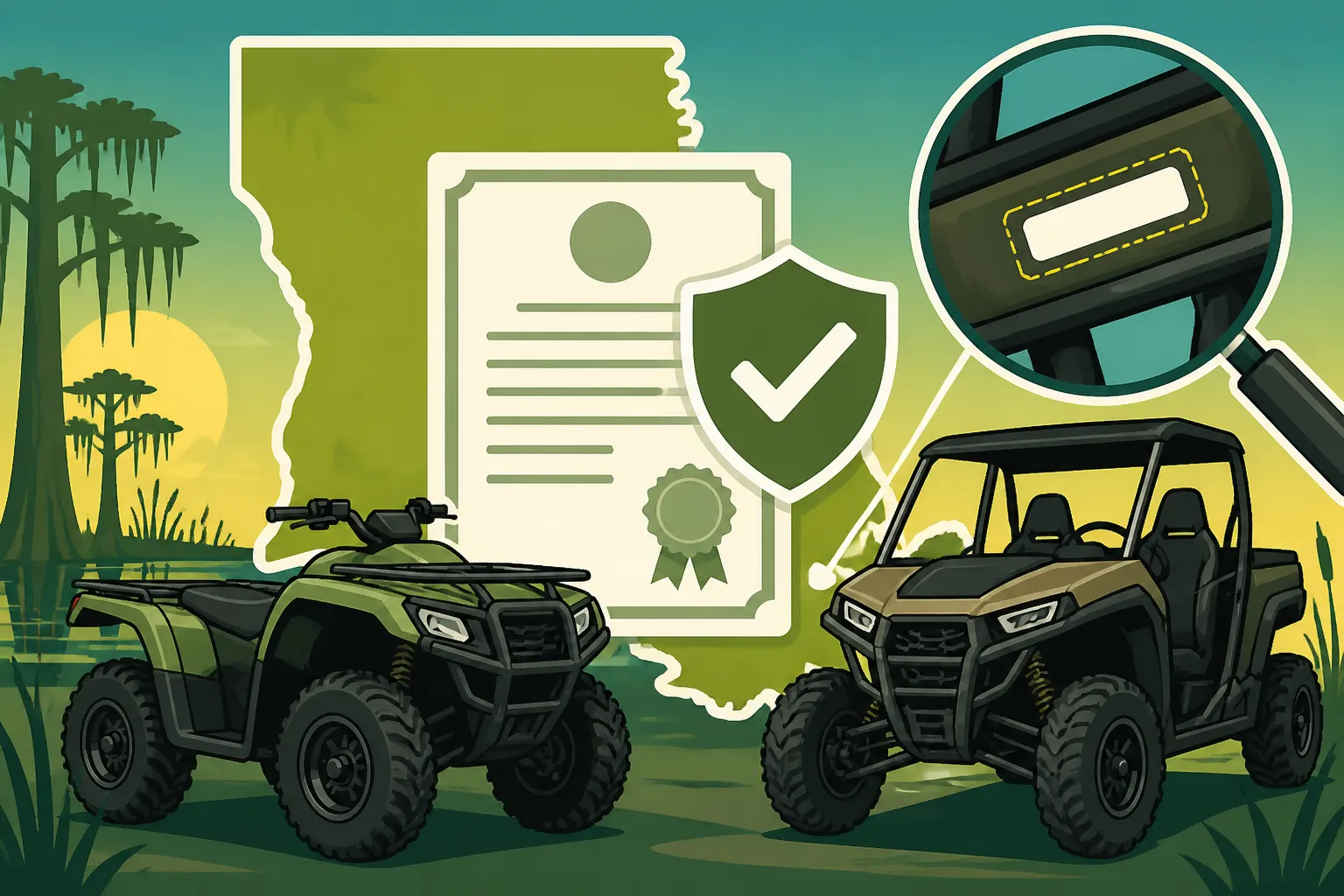
For most modern ATVs and UTVs, the VIN plate or stamping is pretty straightforward. It's usually a clearly legible 17-character code, etched or stamped directly onto the frame. Common places to look include the front part of the frame, near the steering neck, on a frame rail accessible from one side, or sometimes even under the seat or footwell, often on the lower left side of the machine. The manufacturer places these in relatively accessible locations, though years of mud, rust, or trail debris can certainly obscure them.
Before you even think about heading to the OMV, take a few minutes to locate and clean your machine's VIN. Use a brush and some degreaser if necessary to ensure every single character is perfectly legible. Imagine the OMV clerk trying to squint through a layer of caked-on mud to read a faint stamping – you want to make their job as easy as possible to avoid any complications. If the VIN is on a plate, ensure it's firmly attached and not peeling or damaged.
While the 17-character VIN is standard for machines made after 1981, don't panic if your older quad has a shorter serial number. Many vintage models used simpler, shorter sequences. The important thing is that whatever number is present, it's consistent with any prior titles or bills of sale, and it's clearly identifiable as the machine's primary identifier. Just be prepared to explain that it's an older model if the clerk seems surprised by the shorter number.
When Your Machine Has More Than One Identifying Number
As we touched on earlier, it's not uncommon for ATVs and UTVs to feature multiple serial numbers. For instance, the engine itself will almost certainly have its own distinct serial number stamped on it. This number is unique to that specific engine and is used by manufacturers for tracking parts, warranties, and recalls. However, for titling your vehicle in Louisiana, the OMV focuses on the primary Vehicle Identification Number (VIN), which is found on the machine's frame or chassis.
The frame VIN is the number that identifies the entire unit as a complete vehicle. This is the number that gets recorded on your title and is used by law enforcement and insurance companies to identify the ATV or UTV as a whole. While the engine serial number is certainly an important detail about your machine, it's rarely the one the OMV uses for title issuance unless you have an exceptionally old machine where the engine number is the only viable identifier or if there's been an engine swap and specific documentation accompanies it.
If your paperwork, such as your [Louisiana Notarized Bills of Sale] for a private sale or the original Manufacturer's Statement of Origin (MSO), only references the frame VIN, then that’s the number you should highlight for the OMV. If, however, you're dealing with an unusual situation, perhaps an antique ATV or a custom-built machine where the engine number is the primary identification on all existing documents, then you’ll need to clearly communicate this to the OMV clerk. Having all your supporting documentation ready and organized, perhaps even creating an affidavit using a service like LawDepot if original paperwork is scarce, will be crucial in such unique scenarios.
What to Do When Your Serial Number is Compromised or Missing
This is where things can get a bit more complicated, and frankly, quite stressful. Finding out your ATV or UTV has an unreadable or missing serial number can feel like a dead end, but there are often steps you can take, albeit potentially challenging ones. The OMV takes serial numbers very seriously, and for good reason—they are the primary defense against vehicle theft.
Tackling Missing, Illegible, or Damaged Serial Numbers
Imagine pulling your vintage quad out of the shed, ready to finally get it titled, only to find the frame's serial number completely rusted over or worn smooth. This is a common and incredibly frustrating scenario for off-road enthusiasts in Louisiana. The OMV needs a clear, verifiable identifier to issue a title. If the number is simply hard to read due to dirt or grime, a good cleaning can often solve it. But if it's truly illegible due to wear, rust, or damage, you're looking at a significant hurdle.
In such cases, the OMV might require an inspection by a law enforcement officer to verify the machine's identity. This is not a quick process and can involve a detailed examination to ensure no tampering has occurred. You may also need to provide additional proof of ownership, like old registration documents, past bills of sale, or even sworn affidavits from previous owners. A platform like LawDepot could be invaluable for drafting these kinds of legal affidavits, adding a layer of professionalism and clarity to your submission. Be prepared for a longer process and possibly multiple visits if you're in this boat.
If the serial number plate is completely missing or the stamping is gone, the situation becomes even more complex. In rare circumstances, the OMV might consider assigning a new VIN, but this is an extensive process that typically involves law enforcement investigation to rule out theft, a thorough application, and potentially a bond. It's not a path to be taken lightly, and it's always best to try and locate or clarify the original number if at all possible. This process underscores why thoroughly inspecting a machine's VIN before purchase, especially in a private sale, is absolutely critical.
Suspected Tampering and Theft Checks
This is a scenario no one wants to encounter, but it's vital to be aware of the implications. If the OMV clerk, or a law enforcement officer during an inspection, suspects that the serial number has been tampered with—meaning it looks altered, scratched out, or re-stamped—they will not proceed with titling. Instead, this will trigger a serious investigation. Tampering with a VIN is a criminal offense, and any machine with a suspected altered VIN will likely be impounded pending investigation.
The OMV has protocols in place to identify these red flags, and they will work with law enforcement to determine if the machine is stolen or if the VIN has been illegally modified. This is precisely why it's so important for buyers to conduct their own due diligence before purchasing a used ATV or UTV. Always visually inspect the VIN yourself, looking for any signs of grinding, re-stamping, or plates that look like they've been removed and re-attached incorrectly. If something looks off, walk away from the sale.
You can also leverage online services or even contact law enforcement to perform a VIN check before you buy. For instance, [Checking Whether a Used Quad Is Reported Stolen] is a smart move that can save you immense heartache and legal trouble down the road. It ensures that the machine you're about to invest in has a clean history and a legitimate identity. Avoiding a machine with a compromised serial number isn't just about smooth titling; it's about protecting yourself from inadvertently becoming involved in a criminal situation.
Ensuring Your Paperwork Flawlessly Matches Your Serial Number
Getting the serial number on your ATV or UTV right is only half the battle. The other, equally critical half, is making absolutely certain that this number is accurately reflected on all of your supporting documentation. Any discrepancy, no matter how minor it might seem, can send you right back to square one at the OMV.
The Critical Match: Your Paperwork and the Machine
When you present your title application at the OMV, every piece of paper you provide—from the Manufacturer's Statement of Origin (MSO) for a new machine, to a bill of sale for a used one, or even a previous title—must have a serial number that precisely matches the VIN stamped on your off-road vehicle. We're talking about an exact, character-for-character match. A single digit or letter out of place can be enough for the OMV clerk to reject your application. It’s a painstaking process for them, but it’s how they maintain accuracy and prevent fraud.
Imagine you've bought a used side-by-side, and the seller quickly scribbled down the VIN on a generic bill of sale, accidentally swapping two numbers. You arrive at the OMV, excited to get your new title, only to be told the VIN on your paperwork doesn't match the machine. Suddenly, your afternoon plans are derailed, and you're left trying to track down the seller for a corrected bill of sale. This is a common frustration many riders face, and it highlights the importance of meticulous review.
This is where a well-drafted document, like a [Louisiana Notarized Bills of Sale], truly shines. Using a reputable service like LawDepot to generate a professional bill of sale ensures that all necessary fields, including the VIN, are clearly presented and legally sound. A notary's signature adds another layer of verification, making it harder for simple clerical errors or fraudulent claims to slip through. Always double-check every character on every document before you even step foot in the OMV.
Preparing for Your OMV Visit with Confidence
There’s nothing worse than making the trip to the OMV, waiting in line, and then finding out you're missing a crucial piece of information. When it comes to serial numbers, preparation is your best friend. Before you even leave the driveway, locate the VIN on your ATV or UTV, clean it thoroughly, and perhaps even take a clear, well-lit photograph of it. This photo can serve as a backup if for some reason the clerk has trouble reading the physical stamping, though they will always prefer to see the actual number on the machine or during an inspection.
Next, gather all your relevant documents: your MSO, previous title, [Louisiana Notarized Bills of Sale], and any other proof of ownership. Ensure the VIN on each of these documents is identical to the one on your machine. Also, remember to bring your [Louisiana Photo ID at the Counter], as this is non-negotiable for any OMV transaction. If you're using the [What to Fill In on the OMV Vehicle Application] form, make sure the VIN section is filled out accurately and clearly corresponds to all other paperwork.
In some situations, perhaps you inherited a machine and the original title is missing, or the bill of sale isn't as robust as the OMV might prefer. In these cases, preparing an affidavit of ownership can be extremely helpful. Online platforms like LawDepot provide templates and guidance for creating legal documents like affidavits, which can help strengthen your case and provide the OMV with additional assurances about the machine's history and your rightful ownership. Taking these extra steps can transform a potentially stressful OMV visit into a smooth, one-and-done experience, getting you closer to hitting those Louisiana trails legally.
| Issue Type | Description | OMV Requirement/Action Needed |
|---|---|---|
| Standard, Clear VIN | Easily located, legible 17-character VIN on frame. | VIN must match MSO or previous title exactly. Generally, no additional actions needed. |
| Older Machine Serial | Shorter VINs (pre-1981) or simpler serials. | Must be clearly visible and match documentation. May require additional proof of ownership (e.g., affidavit). |
| Illegible/Worn VIN | Numbers are hard to read due to rust, wear, or damage. | Clean thoroughly. If still unreadable, OMV may require law enforcement inspection or specific affidavit. |
| Missing VIN Plate | Plate has fallen off or was intentionally removed. | Significant hurdle. Requires law enforcement investigation. May lead to OMV-assigned VIN process, which is lengthy. |
| Suspected Tampering | Numbers appear altered, ground, or re-stamped. | Automatic referral to law enforcement. Machine may be impounded. Investigation for theft/fraud is mandatory. |
| Paperwork Discrepancy | VIN on title/bill of sale doesn't match machine's VIN. | Corrected paperwork (e.g., new, accurate bill of sale or corrected title application) is mandatory. |
Disclaimer
This article is for general informational purposes only and does not constitute professional advice. Laws, prices and regulations vary by location and change over time. Consult a qualified professional for guidance on your specific situation.