Louisiana Title Fee of $68.50
If you've just bought a shiny new (or new-to-you) ATV or UTV here in Louisiana, you're probably buzzing with excitement to hit the trails or get to work on the farm. But before you can really enjoy that machine, there's a bit of paperwork to tackle at the Louisiana Office of Motor Vehicles (OMV), and one of the first things that usually pops up is that mysterious title fee. It can feel like a maze trying to figure out exactly what costs what, why certain fees exist, and when everything needs to be paid. This guide is here to walk you through the specifics of the Louisiana ATV and UTV title fee, breaking down what that $68.50 covers, what other costs you'll encounter, and how to navigate the entire titling process without unnecessary headaches.
Demystifying the Louisiana ATV and UTV Title Fee
Let's get straight to the point: that $68.50 title fee is a core piece of the puzzle when you're making your off-road machine legitimate in the eyes of the Pelican State. It's a standard charge, and understanding its purpose can help ease some of the frustration often associated with government fees. This isn't just a random number; it's tied directly to the legal ownership of your ATV or UTV.
What the $68.50 Title Fee Actually Covers
Think of the title fee as the cost of formally documenting your ownership of the vehicle. When you pay this $68.50, you're essentially paying for the OMV to process and issue an official Certificate of Title in your name. This document is incredibly important because it's the legal proof that you are the rightful owner of your ATV or UTV. Without it, you could face all sorts of headaches down the road, from proving the machine is yours if it's stolen to being able to sell it legally when the time comes.
This fee ensures that your off-road vehicle is properly registered in the state's database, establishing a clear chain of ownership. It's a system designed to protect both buyers and sellers, preventing fraud and making it easier to track vehicles. Just like your car or truck has a title, your ATV or UTV needs one too. It's a common misconception that because these machines aren't typically street legal, they don't need the same kind of official paperwork. But in Louisiana, an ATV needs both a title and a decal, making that $68.50 fee a foundational element of legal ownership.
The Louisiana Certificate of Title includes vital information about your machine: its Vehicle Identification Number (VIN), make, model, year, and, most importantly, your name as the legal owner. It also notes any liens against the vehicle, which we'll discuss a bit more later. This official document is your ultimate proof of property rights, and the $68.50 fee covers the administrative costs associated with maintaining these records, printing the physical title, and ensuring the integrity of the state's vehicle ownership system.
Who Collects This Fee and When It's Due
The Louisiana Office of Motor Vehicles (OMV) is the sole authority for titling ATVs and UTVs in our state. While you might interact with local dealerships or even third-party notaries to prepare your paperwork, the final processing and collection of the title fee will always be handled by the OMV, either directly at one of their field offices or through a licensed public tag agent. It’s important to remember that the OMV titles ATVs, not the Wildlife Department, which handles hunting and fishing licenses but not vehicle ownership.
The title fee comes due after a purchase, typically as part of the initial registration process. Whether you're buying a brand-new quad from a dealer in Shreveport or picking up a used side-by-side from a private seller near Lafayette, you'll need to submit the necessary paperwork and pay this fee to get the title transferred into your name. For new machines, the dealer often handles this entire process for you as part of their service, incorporating the title fee into your total purchase price. However, if you're buying privately, the responsibility for getting that title in your name and paying the fee falls squarely on you.
It's usually best to take care of this as soon as possible after acquiring your machine. While Louisiana doesn't have a strict "days to title" penalty for off-road vehicles in the same way it does for cars, delaying the process can lead to complications, especially if you plan to get the annual off-road decal or ever need to prove ownership quickly. Think of it as wrapping up the legal loose ends; the sooner you get that title in your name, the sooner your machine is truly yours, free and clear, in the eyes of the state.
Understanding Additional Costs Beyond the Core Title Fee
While the $68.50 title fee is a significant part of the titling process, it's rarely the only fee you'll encounter. There are other associated costs that can pop up, and being prepared for them will save you from sticker shock or having to make multiple trips to the OMV. Understanding these additional charges is key to budgeting accurately for your new ATV or UTV.
The OMV Handling Fee and Mortgage Recordation
When you visit an OMV office or use a public tag agent to process your title, you'll almost certainly encounter an OMV handling fee. This is a standard administrative charge that covers the cost of the office's services, like reviewing your documents, entering data into the system, and generally facilitating the transaction. In Louisiana, this handling fee is typically $8, and it's applied to most OMV transactions, not just ATV/UTV titling. It's a small fee, but it's one more item to add to your mental checklist when you're preparing your budget. [What the $8 OMV Handling Fee Covers]
Another cost that often comes as a surprise, especially if you're financing your off-road machine, is the mortgage recordation fee. If you've taken out a loan to purchase your ATV or UTV, the lender (the bank or credit union) will want to record their lien on the vehicle's title. This legally protects their interest in the machine until the loan is paid off. The OMV charges a fee to process and record this lien. Typically, recording a lien costs $15 at the OMV. However, there are instances where the fee might be $10 rather than $15, usually when certain conditions are met, such as if the lien is being recorded simultaneously with other specific OMV actions. [Louisiana Mortgage Recordation Fees] and [Louisiana Title and Lien Records] are crucial topics for anyone financing their ride. Make sure to confirm the exact amount with your lender or the OMV, as these fees directly affect how a lien shows up on an ATV title.
These fees are standard practice and ensure that all parties—you, the OMV, and your lender—have a clear, legal record of who has what claim on your machine. Ignoring or trying to bypass these fees can lead to serious legal complications down the line, including issues with selling the machine or even having it repossessed if loan payments aren't met. So, while they add to the total, they serve an important function in the legal framework of vehicle ownership and financing.
The Importance of Sales Tax First
Here's a big one that often catches people off guard: you absolutely, positively must prove that you've paid sales tax on your ATV or UTV before the OMV will issue a title in your name. [Louisiana Requires Proof of Sales Tax First]. This isn't just a suggestion; it's a hard rule. The OMV needs to see that the sales tax has been accounted for, either by a dealer or by you directly, before they proceed with the title application. This is a common point of confusion, and it can certainly lead to extra trips to the OMV if you're not prepared. [Why Tax Proof Comes First] is a question many people ask, and it boils down to the state's revenue collection policies.
Louisiana has a state sales tax rate, which often fluctuates, but it's a significant percentage that applies to the purchase price of your machine. On top of the state rate, nearly every parish adds its own local sales tax. This means the combined sales tax can be quite substantial, often pushing the total rate well over 8% or even 9% in some areas. If you buy from a dealer, they typically collect and remit both the state and parish sales tax on your behalf, and provide you with an itemized invoice that serves as your proof of payment. For private sales, however, the responsibility to pay this use tax falls on the buyer. You’ll pay it directly to the OMV when you apply for your title, or sometimes to your local parish tax collector. [Louisiana's 5 Percent State Sales Tax] and [Louisiana Parish Sales Tax Add-Ons] explain the breakdown.
What about if you bought your machine out of state? Let's say you found a great deal on a side-by-side just across the Sabine River in Texas, or up near the Mississippi border. Even if you paid sales tax in that other state, Louisiana will assess a "use tax" if the rate paid in the other state was lower than Louisiana's combined state and local rate. You'll owe the difference. You'll need to present proof of sales tax paid at the counter, which could be an itemized dealer invoice, a receipt from a private seller (which might still require you to pay use tax), or proof of payment from another state's tax authority. [Louisiana Tax on an Out-of-State Purchase] and [Louisiana Use Tax on a Machine Brought Home] are important considerations. Make sure you have this documentation in hand, or be prepared to pay the tax at the OMV counter, before you even think about submitting your title application.
Navigating the Titling Process: Paperwork and Preparation
The actual act of submitting your title application might seem simple, but it requires a very specific set of documents. Missing even one piece of paper can lead to frustrating delays and extra trips to the OMV. Being prepared with all the right paperwork is the best way to ensure a smooth, one-trip experience.
Essential Documents for a Smooth Titling Experience
For a brand-new ATV or UTV purchased from a dealership, the most critical document you'll need is the Manufacturer's Statement of Origin (MSO), sometimes called a Manufacturer's Certificate of Origin (MCO). This is essentially the birth certificate of your machine, certifying that it's new and hasn't been titled before. [Louisiana Requires an MSO for a New Machine]. The MSO will be signed over to you by the dealer.
If you're buying a used ATV or UTV, things are a little different. You'll need the previously issued Louisiana Certificate of Title, which must be properly assigned to you by the seller. This means the seller must sign and date the "assignment of title" section on the back of the physical title document. Without their signature, the OMV cannot transfer ownership to you. [Louisiana Requires an Assigned Title for a Used One]. It sounds simple, but you'd be surprised how often people overlook this crucial step.
In both new and used sales, a bill of sale is highly recommended, and often required. For private sales, Louisiana law typically requires a notarized bill of sale. This protects both buyer and seller by clearly stating the details of the transaction: the sale price, date, VIN, and signatures of both parties. [Louisiana Notarized Bills of Sale] and [Why Your Bill of Sale Needs a Notary] highlight its importance. While not strictly mandatory for a dealer sale, an itemized dealer invoice is your official record from the dealer, detailing the purchase price, taxes paid, and any other fees. [Louisiana Itemized Dealer Invoices] and [What an Itemized Dealer Invoice Must Show] are crucial here. If you need a reliable bill of sale template for a private sale, resources like LawDepot offer customizable legal documents that can help ensure you have all the necessary fields covered and are ready for notarization.
Finally, don't forget your identification. When you visit the OMV counter, you'll need a valid, government-issued photo ID, such as your Louisiana driver's license. This is to confirm your identity as the person applying for the title. [Louisiana Photo ID at the Counter] is a non-negotiable requirement. Make sure all names on your documents match your ID exactly to avoid any delays.
Common Titling Scenarios and Their Specific Requirements
The titling process can vary slightly depending on how you acquired your off-road machine. Understanding these nuances can save you a lot of hassle.
When buying from a private seller in Louisiana, you'll be responsible for submitting all the paperwork yourself. This means having that properly assigned title, the notarized bill of sale, and proof of sales tax payment (which you might pay directly at the OMV if you haven't already). It's a common scenario, and being meticulous with your documentation is key. [Buying From a Private Seller in Louisiana] covers this in detail.
If you've purchased your ATV or UTV out of state, the process is similar but with the added complexity of potential use tax. You'll need the title (or equivalent ownership document) from the previous state, properly assigned, along with your bill of sale. You'll also need to prove sales tax payment or be ready to pay the difference in use tax to Louisiana. [Louisiana Titles for an Out-of-State Purchase] outlines these steps.
Inheriting a machine after the owner dies also has specific requirements. You'll typically need the death certificate, proof of heirship (like a small succession affidavit or court order), and the original title. The OMV will guide you through the process of transferring ownership from the deceased owner to the heir(s). [Louisiana Titles for an Inherited Machine] covers these often sensitive situations.
Even titling a quad bought at a Louisiana auction comes with its own set of rules. You'll usually receive an auction bill of sale, and the OMV will need to ensure there's a clear chain of title from the previous owner (or the entity that put the machine up for auction). Sometimes, these can be more complex if the previous title isn't readily available or has issues. It’s always best to inquire about the titling documents before bidding. [Titling a Quad Bought at a Louisiana Auction] provides more insights. In all these scenarios, having properly formatted and legally sound documents is crucial. Tools like LawDepot can be invaluable for creating customized legal forms like bills of sale or affidavits, which can provide an extra layer of confidence when dealing with the OMV.
| Document Type | For New Machine (Dealer Purchase) | For Used Machine (Private Sale) | For Inherited Machine | For Auction Buy |
|---|---|---|---|---|
| Manufacturer's Statement of Origin (MSO) | Required (signed by dealer) | Not applicable | Not applicable | Potentially, if never titled |
| Previous Title (Assigned) | Not applicable | Required (signed by seller) | Required (with heirship proof) | Required (if available) |
| Bill of Sale | Dealer Invoice (itemized) | Required (notarized) | Not applicable | Auction Bill of Sale |
| Proof of Sales Tax Payment | Dealer Invoice | OMV Payment / Parish Tax Rec. | Not applicable | OMV Payment / Auction Rec. |
| Valid Photo ID | Required | Required | Required | Required |
| Lienholder Information (if financed) | Required | Required (if applicable) | Not applicable | Required (if applicable) |
Avoiding Pitfalls: Delays, Penalties, and Incorrect Information
Even with all your documents in order, small mistakes can lead to big headaches at the OMV. Understanding common pitfalls can help you sidestep unnecessary delays, potential penalties, and the frustration of having your application rejected. A smooth process is often about anticipating where things might go wrong and preventing them.
The Cost of Delays and Errors
While the Louisiana OMV doesn't typically impose hefty late penalties specifically for titling ATVs and UTVs (unlike passenger vehicles which have strict deadlines), delaying the titling process can still cost you time and money. For instance, if you purchase a machine and put off getting it titled, you won't be able to get your annual [Louisiana ORV Decals and Titles Explained]. This can lead to penalties for no decal if you're caught riding on designated public lands or crossing certain roads. The biggest cost of delay, however, is often the inconvenience. The longer you wait, the greater the chance that paperwork gets lost, signatures fade, or key people become unavailable.
Errors on documents are a common cause of rejection at the OMV counter. A misspelled name, an incorrect VIN, or a missing signature on the title can send you right back to square one. [What Happens When a Title Is Missing a Signature] is a particularly frustrating scenario, as it often requires tracking down the previous owner, who might be difficult to reach. If you realize there's a misspelled name at the OMV, you'll need to go through a correction process, which might involve affidavits or returning to the seller for new documents. These errors not only waste your time but can also delay your ability to legally operate your machine.
It’s always a good idea to double-check every single piece of information before you head to the OMV. Make sure the VIN on your bill of sale matches the VIN on the title and on the machine itself. Ensure all names are spelled correctly and that every required signature is present and legible. It's tedious, yes, but far less tedious than making a second or third trip to the OMV or trying to track down a seller who's moved on.
Ensuring Your Title Reflects Accurate Ownership
One area where accuracy is absolutely paramount is in ensuring your title correctly reflects all owners and any liens. If you're purchasing an ATV or UTV with another person—a spouse, a family member, or a business partner—you'll need to make sure both names are properly listed on the title. [Putting Two Names on One Louisiana Title] is a straightforward process, but it requires both parties to be present or to have properly executed power of attorney forms. The OMV will print both names on the title, often with an "and/or" designation that dictates how the machine can be sold or transferred in the future. [Louisiana Title With Two Owners] can impact future transactions, so understand the implications.
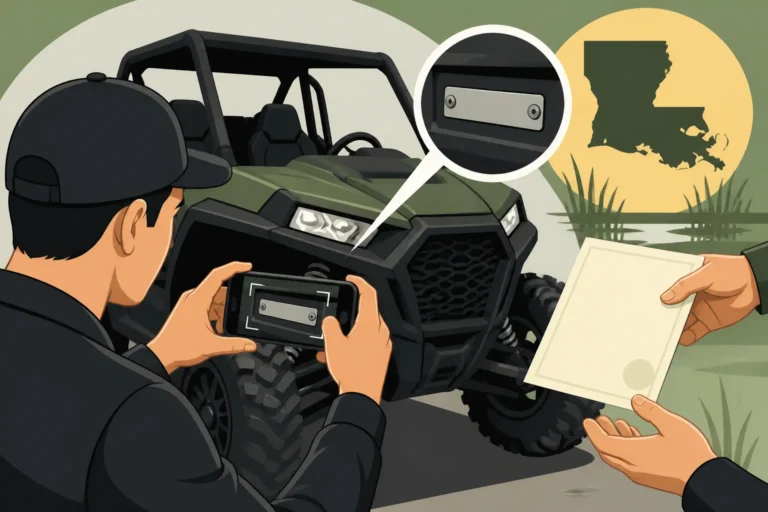
Before you finalize any purchase of a used machine, it's incredibly important to verify the Vehicle Identification Number (VIN). Not only should it match all your paperwork, but you should also photograph the VIN before you sign the title over or complete the transaction. This simple step provides proof in case there's a dispute later. Also, consider running a VIN check to see if the machine has been reported stolen or has any undisclosed liens against it. This can save you from inadvertently buying a problematic machine.
If you've financed your ATV or UTV, the lienholder's information will be recorded directly on your title. This is how a lien shows up on an ATV title, making it clear to anyone reviewing the document that a financial institution has an interest in the machine. It's essential that this information is accurate, as an incorrect lien record can cause major problems when you try to sell the machine or when you've paid off your loan and need to get a clear title. Make sure you understand how your financing documents translate to the title. If you're involved in complex ownership situations or want to create specific agreements between co-owners, resources like LawDepot can assist in drafting legally sound co-ownership agreements to ensure clarity and protection for all parties involved.
The Bigger Picture: Beyond the Title Fee
While securing your title is a major hurdle, it's just one part of truly making your ATV or UTV ready for action in Louisiana. There are other ongoing requirements and considerations that contribute to the overall cost and legal use of your machine. Thinking holistically about these expenses from the outset will prevent surprises down the road.
The Annual Off-Road Decal and Its Purpose
Once you've got your title in hand, the next critical step for most riders is obtaining the annual off-road decal. This small sticker, which costs [Louisiana Charges $3 a Year for a Decal], is mandatory for ATVs and UTVs that will be ridden off private property, including designated public trails and during authorized road crossings. [Louisiana's Yearly Off-Road Decal] is a separate, but equally important, requirement from your title.
So, what does that $3 yearly off-road decal buy? It's essentially your permit to ride on approved public lands and to legally cross certain public roads under specific conditions. This fee contributes to the state's efforts to manage and maintain off-road riding areas, ensuring that these opportunities remain available for enthusiasts. It signifies that your machine is recognized by the state for recreational or utility use beyond private land. [What the $3 Yearly Off-Road Decal Buys] is more than just a sticker; it's your key to accessing many of Louisiana's great riding spots.
The decal runs on a four-year cycle, meaning you’ll usually buy one that’s valid for four years at a time, making the total cost $12 upfront. [Louisiana Decal Cycles and Their Length] explains this system. This makes it easier for riders, as you don't have to remember to renew every single year. Once you receive your decal, there's also a specific spot where you're supposed to place it on your machine, typically in a visible location on the left rear fender for ATVs or in a similar easily seen spot on a UTV. [Louisiana Decal Placement on a Machine] is important to avoid issues with law enforcement or park rangers.
Planning for the Full Cost of ATV/UTV Ownership
Beyond the initial title and decal fees, owning an ATV or UTV in Louisiana involves several other costs that you should factor into your budget. One of the most important is insurance. While Louisiana doesn't mandate insurance for off-road machines used exclusively on private property, if you plan to ride on public roads (even authorized crossings or shoulders under farm exemptions), you'll need at least the state's minimum liability coverage. Even if not required, comprehensive coverage protects your investment from theft, damage, or accidents. [Does Louisiana Require Insurance on an Off-Road Machine?] delves into this.
Then there are trail passes and park fees. If you love riding in places like Kisatchie National Forest or private mud parks such as Muddy Bottoms, you’ll encounter these. Kisatchie requires a [Louisiana Forest Pass Cost] (either a daily or annual pass), while private parks have their own [Louisiana Mud Park Fees Added Up], often charging per person or per machine for event weekends. These costs, while not part of titling, are essential for accessing riding areas.
Finally, don't forget maintenance and repairs. Off-road riding, especially in Louisiana's challenging terrain and mud, can be tough on a machine. Regular oil changes, tire replacements, belt wear, and occasional repairs are inevitable. [Louisiana Maintenance Costs Per Year] can vary widely based on how often and how aggressively you ride. Budgeting for these ongoing expenses, along with fuel and storage, gives you a much more realistic picture of the [Louisiana Cost of Ownership Year One] and beyond. By [Adding Up Every Fee a Louisiana Rider Pays], you'll have a clear financial roadmap for enjoying your ATV or UTV responsibly and without unexpected financial bumps.
Disclaimer
This article is for general informational purposes only and does not constitute professional advice. Laws, prices and regulations vary by location and change over time. Consult a qualified professional for guidance on your specific situation.