Louisiana Penalties for Riding Without a Decal
Riding your ATV or UTV through Louisiana's scenic trails or working your land is one of the true joys of living here, but nothing can throw a wrench into that freedom faster than facing a penalty for a missing off-road vehicle (ORV) decal. Many riders simply don't realize the gravity of failing to properly register their machines, often leading to frustrating and costly encounters with law enforcement. This guide is designed to walk you through everything you need to know about Louisiana's ORV decal requirements, the serious penalties for non-compliance, and practical steps you can take to keep your machine legal and your rides worry-free.
Understanding Louisiana's Off-Road Vehicle Decal Requirements
Before we dive into the nitty-gritty of penalties, it's crucial to understand what the Louisiana ORV decal actually is and why it's such an essential piece of your machine's legal identity. It's not just a sticker; it's your official stamp of approval from the state that your ATV or UTV is registered for off-road use. Ignoring this small, inexpensive item can lead to big headaches down the line.
What is the ORV Decal and Its Purpose?
The Louisiana ORV decal is a small, numbered sticker issued by the Louisiana Department of Public Safety and Corrections, Office of Motor Vehicles (OMV). Its primary purpose is to identify your off-road machine as properly registered within the state. Think of it like a mini license plate for your ATV or UTV, but strictly for off-highway use. It's distinct from a title, which proves ownership, but both are vital. We often get questions like [Louisiana ORV Decals and Titles Explained] and it's important to differentiate these two crucial documents. The decal shows you've paid your annual (or multi-year) dues for the privilege of riding on designated public lands or operating on private property as permitted by law.
This decal is a key part of Louisiana's effort to manage and track off-road vehicles, ensuring they meet certain standards and that their owners contribute to the system. While it might seem like a small detail, it helps fund various state programs related to trails, enforcement, and administration. Essentially, it's a way for the state to keep tabs on the growing number of ATVs and UTVs out there. The cost is quite minimal, with [Louisiana's Yearly Off-Road Decal] running just a few dollars, which is a small price to pay for compliance and peace of mind. Without it, you're operating outside the legal framework, which can quickly turn a fun day of riding into a stressful and expensive ordeal.
Who Needs a Decal? Exemptions and Special Cases
Generally speaking, if you own an ATV or UTV in Louisiana, you need an ORV decal. This applies whether you're tearing up trails at a private park, exploring designated routes in the Kisatchie National Forest, or simply using your machine for recreation on your own land (though enforcement might be less direct on strictly private property, the requirement still exists). However, there are some specific situations and exemptions that riders often ask about. For instance, many assume that agricultural use automatically exempts them from everything, but that's not always the case.
One common area of confusion revolves around farm machines. While Louisiana does offer some flexibility for vehicles used exclusively for agricultural purposes, it's not a blanket exemption from the decal. For machines used solely on private farmland, primarily for agricultural tasks, there can be exemptions. But even then, if that machine so much as touches a public road shoulder – even for a short hop between fields – the rules change. We get questions all the time about [Does a Farm-Only Quad Need a Louisiana ORV Decal?] and the answer is usually "yes, if it leaves the farm." This is a nuance many riders miss, leading to unexpected tickets. Similarly, while you might be riding a shoulder to move between fields, [Louisiana Shoulder Riding Still Needs a Decal] if you don't meet specific, very narrow agricultural exemptions for road use, which are far more stringent than merely owning a farm.
The key takeaway is this: unless your machine never leaves private property and is exclusively used for agricultural purposes, or you meet another rare, specific exemption, you likely need that decal. Don't assume you're exempt without checking the precise language of the regulations. It's always better to be safe than sorry, especially when the cost of the decal is so low compared to potential fines.
Where to Get Your Decal and How Long It Lasts
Getting your Louisiana ORV decal is a fairly straightforward process, typically handled through the Office of Motor Vehicles (OMV). You'll need to present proof of ownership (your title), proof of sales tax payment, and a valid ID. Many dealers will help you with the initial registration and decal application when you purchase a new machine, but for renewals or private sales, it's usually up to you. You can find detailed instructions on [How to Get a Louisiana ORV Decal] on the OMV website or by visiting a local office.
Once you have your decal, it's usually valid for a multi-year cycle, though the OMV often refers to it as a "yearly" decal because the fee calculation is yearly. The state uses a four-year cycle, so you'll typically get a decal that's valid for several years, paid for upfront or annually depending on how you arrange it. It’s important to understand [Louisiana Decal Cycles and Their Length] to know when your renewal is due. Don't just stick it on and forget about it; make a note of the expiration date. Failing to renew on time is just as bad as never having one. You can find out [When a Louisiana ORV Decal Comes Up for Renewal] by checking the dates printed on the decal itself or contacting the OMV directly. Staying on top of these dates is a simple step to avoid future penalties.
The Steep Cost of Non-Compliance: Penalties for Riding Without a Louisiana ORV Decal
Now for the part nobody wants to hear about, but absolutely needs to know. The state of Louisiana takes its ORV registration seriously, and riding without the proper decal can lead to a cascade of expensive and frustrating penalties. These aren't just minor slaps on the wrist; they can hit your wallet hard and even result in losing your machine temporarily.
Immediate Consequences: Tickets and Fines
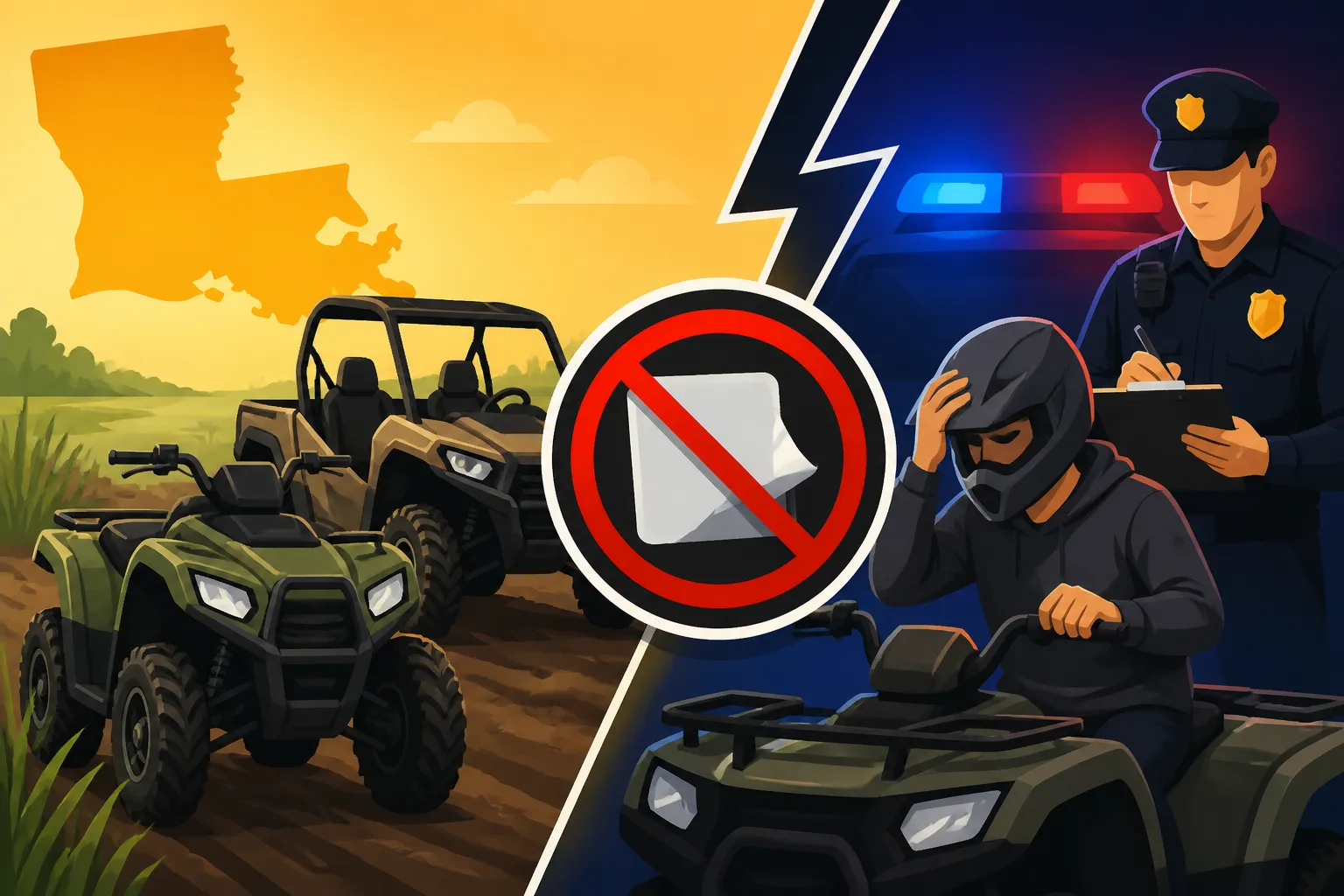
The most immediate and common penalty you'll face for riding an ATV or UTV without a valid Louisiana ORV decal is a traffic citation, resulting in a fine. When a state trooper, sheriff's deputy, or local law enforcement officer pulls you over or encounters you on public land (or even just outside a designated riding area on what looks like private property), the first thing they'll likely check, after asking for your license, is for your decal. If it's missing, expired, or improperly displayed, you'll be ticketed. The specific amount of the fine can vary, but it's typically a few hundred dollars for the first offense. This is outlined under various statutes, and these [Louisiana Penalties for No Decal] are designed to deter non-compliance.
Beyond the initial fine, remember that you're not just paying for the violation itself. There are often additional court costs and administrative fees tacked onto the base fine, which can significantly inflate the total amount you owe. Imagine you're out enjoying a weekend ride at a local park or on a parish road you thought was okay, and suddenly you're handed a citation. That fun day just turned into a several hundred-dollar lesson. These [Louisiana Ticket Costs for Road Riding] are much higher than the nominal fee for the decal itself, making proactive registration the far more economical choice. It's a bitter pill to swallow when a simple $3 decal could have prevented the whole ordeal.
Potential Vehicle Impoundment and Recovery
Fines are bad enough, but imagine having your pride and joy, your ATV or UTV, seized by law enforcement. Yes, vehicle impoundment is a very real possibility if you're caught riding without a decal, especially if it's not your first offense or if you're also violating other laws. Officers have the discretion to impound machines that are being operated illegally, and an unregistered or undeclared ORV falls squarely into that category. This means your machine could be towed away on the spot, leaving you stranded and facing an even larger financial burden.
Getting an impounded machine back is rarely a quick or cheap process. First, you'll have to pay any outstanding fines and court costs associated with your citation. Then, you'll be responsible for towing fees, storage fees (which can accumulate daily), and potentially administrative fees from the impounding agency. You'll also have to prove ownership and likely get the decal issue resolved before they'll release your vehicle. Many riders are shocked to learn [Louisiana Impoundment for No Decal] can happen, but it's a serious tool law enforcement uses. The process of figuring out [How to Get an Impounded Quad Released] can be confusing and time-consuming, often involving multiple trips to the police department, OMV, and the impound lot. It's a massive inconvenience and expense that far outweighs the minimal effort of getting your decal in the first place.
The Ripple Effect: Insurance, Legal Fees, and Future Issues
The consequences of riding without a decal can extend far beyond immediate fines and impoundment, creating a ripple effect that impacts other aspects of your life as a rider. One major area of concern is insurance. If you're involved in an accident while operating an unregistered machine, your insurance policy might not cover damages or injuries, even if you have collision or liability coverage. Insurance companies can deny claims if the vehicle was being operated illegally at the time of the incident. This means you could be personally on the hook for thousands, or even tens of thousands, of dollars in medical bills or property damage. [Louisiana Accident Reporting for an ATV Crash] becomes much more complicated and potentially disastrous without proper registration.
Furthermore, if your case goes to court, you might find yourself needing legal representation, adding attorney fees to your growing pile of expenses. These [Louisiana Court Costs for a Citation] can quickly skyrocket, making that initial small decal fee look like pocket change. Repeated offenses could lead to more severe penalties, potentially even impacting your driving record, depending on how the local municipality processes the violation. It's a situation that can snowball rapidly, turning a recreational activity into a prolonged legal and financial nightmare. Staying legal isn't just about avoiding a ticket; it's about protecting yourself from potentially catastrophic financial and legal repercussions.
Ensuring Compliance: Steps to Avoid Decal Penalties
Nobody wants to face fines, impoundment, or legal hassles. The good news is that avoiding these penalties is entirely within your control. It comes down to understanding the requirements and taking proactive steps to ensure your ATV or UTV is always in compliance with Louisiana law.
Timely Application and Renewal
The most fundamental step to avoid penalties is to ensure you apply for your ORV decal promptly after purchasing a machine and keep it renewed. When you buy a new ATV or UTV from a dealer, they often handle the initial registration paperwork for you, but it’s still your responsibility to make sure it gets done. For private sales, the onus is entirely on you. Louisiana law generally gives you a grace period after a purchase to get your decal affixed. Specifically, [Louisiana's 30-Day Decal Deadline] means you have a limited window to get everything in order. Don't procrastinate; that deadline can sneak up on you faster than you think, especially with other life responsibilities pulling at your attention.
Once you have your decal, mark your calendar for its expiration date. While the decal itself is often for a multi-year cycle, it’s vital to know [You Have 30 Days to Affix the Decal] once it’s issued and to monitor its expiration. Set reminders on your phone, write it on your calendar, or even create a recurring task to check your machine's registration annually. The OMV might not always send out explicit renewal notices, or they might get lost in the mail, so it's up to you to be vigilant. Renewing on time is a simple, stress-free process compared to dealing with a citation. Make it a habit to check all your vehicle registrations at least once a year.
Proper Decal Placement and Maintenance
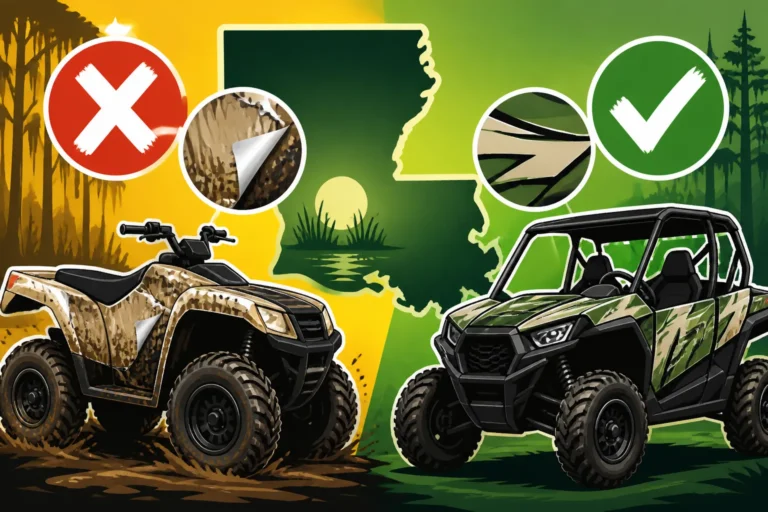
It's not enough to simply have a decal; it must be properly displayed on your machine. The OMV has specific guidelines for [Louisiana Decal Placement on a Machine], usually requiring it to be clearly visible on the left-hand side of the vehicle. This means no obscuring it with mud, stickers, or aftermarket accessories. If an officer can't easily see and read your decal, it's as good as not having one at all, and you could still receive a citation for improper display. Take a few minutes to clean the area where the decal will go, ensuring it adheres well and won't peel off.
Decals can take a beating from the elements, mud, branches, and even pressure washers. Routinely check the condition of your decal to make sure it's still legible and securely attached. If it becomes damaged, faded, or falls off, you'll need to obtain a replacement. Fortunately, getting a replacement decal is possible. You can find information on [Louisiana Decal Replacement If Lost] through the OMV. Don't wait until you're pulled over to realize your decal is gone or unreadable. A quick visual inspection before each ride can save you a lot of trouble and potential fees. It's a small but crucial part of maintaining your machine's legality.
Essential Paperwork and Documentation
Even with a decal properly displayed, it's always wise to carry supporting documentation with you, especially when riding on public lands or parish roads. This includes a copy of your machine's title (or at least proof of ownership like a bill of sale), and any registration receipts. While you might not always be asked for it, having it readily available can resolve questions quickly and prevent an officer from needing to do further checks, which can prolong a stop.
For private sales, ensure your bill of sale is comprehensive and legally sound. A good bill of sale should include the buyer's and seller's information, the vehicle's VIN, sale price, and the date of sale. In Louisiana, for certain transactions or if you want to avoid future disputes, a notarized bill of sale is highly recommended. Many riders often underestimate the importance of [Louisiana Notarized Bills of Sale]. A notary provides an extra layer of verification, confirming the identities of the parties signing the document. Platforms like LawDepot can be incredibly helpful for generating state-specific, legally sound documents such as a notarized bill of sale, ensuring all the necessary clauses and fields are included. Having a professional template ensures you don't miss any critical information that could cause issues with the OMV or in a legal challenge later. This can be especially important if you're trying to prove ownership or establish the date of purchase. For a deeper dive into why this is so important, check out [Why Your Bill of Sale Needs a Notary].
Here's a quick overview of what to remember:
| Action | Description | Why It's Important |
|---|---|---|
| Apply Timely | Get your decal within 30 days of purchase. | Avoids initial fines and establishes legal status immediately. |
| Renew on Schedule | Mark expiration dates; don't rely solely on OMV reminders. | Prevents riding with an expired decal, a common infraction. |
| Proper Placement | Affix decal clearly on the left side, visible and legible. | Ensures compliance with display rules, avoiding "improper display" tickets. |
| Maintain Decal | Check regularly for damage; replace if unreadable or lost. | A damaged decal is as bad as no decal. |
| Carry Documentation | Keep title copy, registration receipt, or notarized bill of sale handy. | Expedites interactions with law enforcement and proves compliance. |
| Use Legal Templates | Utilize resources like LawDepot for robust legal forms. | Ensures your paperwork is complete and meets state requirements. |
Beyond the Decal: Other Important Louisiana Off-Road Vehicle Regulations
While the decal is a major focus for compliance, it's just one piece of the larger puzzle when it comes to legal ATV and UTV operation in Louisiana. There are several other crucial regulations that riders need to be aware of to ensure they stay safe and legal on all their adventures. Ignoring these can lead to additional penalties, regardless of whether your decal is in perfect order.
Title Requirements and Sales Tax
Before you can even get a decal, you'll need a title for your ATV or UTV. The title is the official document proving ownership, and it's distinct from the decal which registers the machine for use. In Louisiana, [Why an ATV Needs Both a Title and a Decal] is a common question, and the answer is that they serve different legal functions. You can't register for a decal without first having a title. This process often involves paying sales tax on your purchase. Louisiana law mandates that [Louisiana Requires Proof of Sales Tax First] before a title will be issued. This means if you buy a machine from a private seller, you’ll typically need to pay sales tax directly to the OMV.
The cost for titling a machine is separate from the decal fee. Understanding [Louisiana ATV Title Cost] is important for budgeting your initial purchase. Whether buying new from a dealer or used from a private party, ensure you get a clean title. If the seller doesn't have one, or if there are any questions about outstanding liens, you could be in for a very difficult time getting your machine properly titled and consequently, legally decaled. Always prioritize securing a clear title as the first step in bringing a new-to-you machine into compliance.
Road Use Restrictions and Age Limits
One of the most frequently misunderstood aspects of ATV and UTV laws in Louisiana pertains to road use. In general, ATVs are not street legal in Louisiana. You cannot simply ride your ATV down a public road, street, or highway. The question [Can You Ride an ATV on the Road in Louisiana?] often leads to lengthy discussions, but the straightforward answer for most recreational riders is no. There are very limited, specific exceptions, such as for agricultural use within a certain radius of a farm, but these are narrow and come with strict conditions like daylight-only operation and proper signage. For UTVs, the rules are slightly different, with parishes having the option to designate roads for their use, but this isn't widespread. These regulations are laid out in statutes like [Louisiana ATV Road Rules Under 32:299].
Age limits are another critical factor. Louisiana has specific minimum age requirements for operating ATVs and UTVs. For instance, younger riders are typically restricted from operating certain sizes of machines, and there are rules about supervision. Furthermore, while you don't necessarily need a traditional "driver's license" just to operate an ATV off-road on private property, if you plan to utilize any of the very limited road-use exceptions (like for UTVs on designated parish roads), you absolutely will need a valid driver's license, typically a Class E. This answers the question: [Do You Need a License for an ATV in Louisiana?]. Never allow an underage or unlicensed individual to operate a machine on public property or in situations where a license is required, as this can lead to severe penalties for both the rider and the owner.
Safety Gear and Operational Rules
Beyond registration and road rules, Louisiana also has requirements and recommendations for safety gear and how you operate your machine. While not every state mandates helmets for all ATV riders, Louisiana does have specific [Louisiana ATV Helmet Rules], particularly for younger riders and in certain situations. It's always a good idea to wear an approved helmet, eye protection, sturdy footwear, and long sleeves/pants to protect yourself from potential injuries, regardless of the law. Safety gear isn't just a recommendation; it's a critical layer of protection that can prevent serious injury or save your life.
Finally, be mindful of passenger rules. ATVs are generally designed for a single rider, and carrying a passenger can dangerously affect the machine's balance and handling, especially on uneven terrain. [Louisiana Rules for a Child Passenger] are strict and designed to prevent accidents. UTVs, with their multi-seat design, are typically built to carry passengers safely, but always ensure everyone is seated properly and wearing seatbelts. Operating your machine safely, following all manufacturer recommendations, and respecting local regulations on noise, speed, and environmental impact will ensure your riding experiences remain enjoyable and problem-free for everyone.
Disclaimer
This article is for general informational purposes only and does not constitute professional advice. Laws, prices and regulations vary by location and change over time. Consult a qualified professional for guidance on your specific situation.