Muddy Bottoms ATV Park in Louisiana
A Louisiana mud ride can turn into a long, frustrating tow if the park is closed, your machine is not suited to the terrain, or you arrive without the right gear. Muddy Bottoms ATV Park near Sarepta offers a big-park experience, but planning matters. This guide covers how to prepare, what to expect, and how to make the most of a ride weekend.
What to know about Muddy Bottoms ATV Park
Location and the scale of the riding area
Muddy Bottoms ATV Park is near Sarepta in Webster Parish, in northwestern Louisiana. Its appeal is the feeling of having room to explore: the park is commonly described as spanning about 5,000 acres, with a mix of riding terrain and event facilities. That scale can make a visit feel very different from riding a short, clearly marked trail loop.
A large property does not mean every acre is open to every rider at every moment. Routes, access, and permitted riding areas can vary with conditions, event setup, maintenance, and park rules. Before unloading, check where riders are allowed to go and whether there are marked routes or restricted areas. Do not assume a trail that was open on a previous visit is still available.
If you are trying to understand the scope of the property before choosing your weekend, [Muddy Bottoms' 5,000 Acres in Louisiana] is a useful related topic. For navigation, an off-road mapping app such as onX Offroad can help you keep track of your own route and location. Treat any app as a planning aid, not permission to enter an area the park has closed or marked off.
A park visit may revolve around an event weekend
Muddy Bottoms is known for event weekends, and its schedule may not work like a public trail system that is open for casual riding every day. That distinction matters. A park can be open for a scheduled event and closed to general riding at other times, or it may offer different access arrangements for different dates.
Check the park’s own calendar before making plans, and confirm the details directly if anything is unclear. Look for the dates, gate opening and closing information, riding access, camping arrangements, and any special rules for the event. The page [Muddy Bottoms' Event Calendar in Louisiana] can help frame what to check, but always use the park’s current instructions when deciding whether to tow.
This is especially important if you are driving from Baton Rouge, Lake Charles, Monroe, or farther away. A long trip with a trailer is hard to rearrange at the last minute. Confirm the event is still scheduled, whether advance arrangements are needed, and what happens if weather changes the plan. Do not rely on an old social post or a friend’s memory as your only confirmation.
Choosing the right machine and riding plan
Match your machine to the terrain and your group
Muddy Bottoms is a destination for riders who enjoy mud and off-road conditions, but “mud riding” can mean anything from shallow, firm trails to deep, water-filled ruts. Your machine’s tires, ground clearance, power, cooling system, and recovery setup all affect how comfortably you can ride. A machine that performs well on a dry forest path may struggle when the ground becomes saturated.
Think about who is coming with you. A confident rider on a capable machine may want to explore more challenging terrain, while a newer rider or a family group may prefer to stay on easier routes and ride at a relaxed pace. A side-by-side can make it easier to bring passengers and gear, but its size may limit where it can go. Check the park’s vehicle rules and route suitability rather than assuming every trail accommodates every machine.
Before the trip, inspect tires, brakes, steering, battery connections, cooling components, belts, and recovery points. If your ride plan includes deep mud, consider the practical preparation covered in [Tires for Deep Southern Mud]. The goal is not to modify your machine for every possible obstacle. It is to arrive with a setup that suits the terrain you actually intend to ride.
Set a realistic pace and agree on group rules
A large park can tempt a group to spread out and explore in different directions. That can work if everyone knows the meeting points, has a way to communicate, and understands what to do if a machine breaks down. It can become stressful quickly if riders disappear into different trails without a plan, particularly in wooded areas or during busy event weekends.
Before the first ride, agree on a few simple rules: who leads, who rides sweep, where the group stops, and what pace the least experienced rider is comfortable maintaining. Make sure everyone knows the park’s emergency procedures and has a charged phone or other suitable communication method. Cell coverage can be unreliable in rural or wooded areas, so do not treat a phone signal as guaranteed.
Keep the group size manageable for the terrain and the experience level of the riders. If you have a large party, split into smaller groups and choose a clear time and place to regroup. Use onX Offroad or another mapping tool to help orient the group, but have a backup plan for navigation if a device loses power or service. A paper map or saved route information can be useful when screens are hard to read through mud, rain, or glare.
Planning your visit and overnight stay
Decide whether camping, an RV site, or a cabin fits
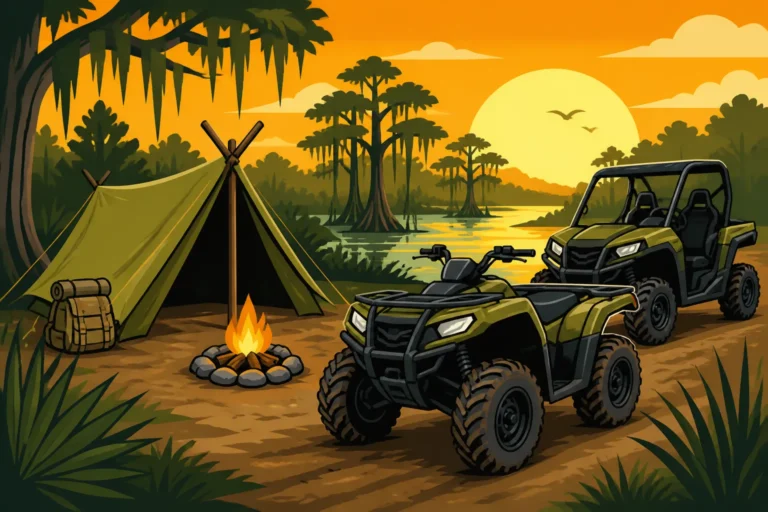
An overnight stay can make an event weekend feel less rushed, especially when you are hauling machines from several hours away. Muddy Bottoms has been associated with primitive camping, RV sites, and cabins, but availability and arrangements can differ by event. Check the current options before you leave home instead of assuming a past setup will apply to your dates.
Choose lodging based on your group’s needs rather than just the number of beds or parking spaces. A primitive campsite may suit riders who are comfortable bringing their own essentials and managing without the conveniences of a cabin. An RV site may be more practical if you need a place to dry gear, store supplies, or keep children comfortable between rides. Review [Muddy Bottoms' RV Sites in Louisiana] and [Muddy Bottoms' Cabins in Louisiana] as starting points, then verify the current booking details and rules with the park.
Ask about the practical details that affect your weekend: vehicle access, hookups or lack of them, bathroom and shower access, quiet hours, pets, generators, fires, and how close the site is to riding areas. Do not assume a cabin includes the same equipment or amenities as a hotel. If your group has special needs, such as accessible facilities or space for multiple trailers, confirm those arrangements in advance.
Prepare for the realities of a Louisiana weekend
Weather can change the feel of a riding weekend. Rain may make terrain more challenging or lead to changes in access, while hot and humid conditions can make even a short ride tiring. Pack for the forecast and for the possibility that the day turns wetter, hotter, or cooler than expected. Extra dry clothes, sealed bags, towels, and a way to keep essential items clean are small comforts that can make a big difference.
Think through your arrival and departure, too. Know where you will park the tow vehicle and trailer, how you will unload without blocking traffic, and where the machine will be secured when you are not riding. Bring drinking water, snacks, basic personal medications, and a plan for keeping food safe. A park trip can be physically demanding even if you only ride for part of the day.
For a more detailed look at overnight options and facilities, see [Muddy Bottoms' Bathhouse, Pro Shop and Amenities]. Use that information alongside the park’s current event instructions. The most comfortable setup is the one that matches your group: a family with young children may value easy bathroom access, while an experienced group may be fine with a simpler campsite and more self-sufficiency.
| Planning choice | What to confirm | Why it matters |
|---|---|---|
| Event date | Whether riding access is available on your selected dates | The park may not operate like a daily public trail system |
| Machine type | Size, passenger, and access rules | Not every route may suit every ATV or UTV |
| Camping or lodging | Availability, facilities, and booking requirements | Options can vary by event and may fill early |
| Weather plan | Rain-related changes and heat preparation | Conditions affect both safety and ride difficulty |
| Trailer setup | Parking, unloading, and secure storage | A poor arrival plan can create avoidable delays |
| Group communication | Meeting points and backup navigation | Cell service may not be dependable throughout the property |
Riding safely in mud and wooded terrain
Read the mud before committing
A muddy opening can look shallow and harmless from the seat, while hiding a deep rut, submerged obstacle, or soft shoulder. Stop and assess unfamiliar holes before riding into them. Look for signs of previous traffic, water movement, abrupt changes in depth, and places where the ground may be firmer along the edge. If you cannot judge the depth or see a safe exit, choosing another route is a sensible decision, not a failure.
Do not follow another machine blindly into a hole. The first rider may have different tires, more clearance, a winch, or experience that you do not have. Even a successful pass by one vehicle does not prove that the same line will work for a heavier side-by-side or a less experienced rider. Keep enough space to avoid a collision if the rider ahead stops or needs help.
If a machine gets stuck, pause before spinning the tires aggressively. Spinning can dig the machine deeper, damage the trail, and make recovery harder. Turn off the engine if there is a safety concern, keep people clear of moving cables and wheels, and use recovery equipment only as intended. The advice in [Reading a Mud Hole Before You Ride Into It] can help riders think through this decision before they are sitting in the mud with a buried machine.
Protect yourself and the people riding with you
Wear a helmet and appropriate riding gear, even when the park is private and the trail looks familiar. Eye protection, gloves, boots, and clothes that can handle mud and abrasion are practical essentials. Side-by-side occupants should use the vehicle’s restraints and follow the manufacturer’s guidance. A passenger should not lean out or ride in a position that puts them at risk during a sudden stop or rollover.
Set boundaries with children and newer riders before the machines start moving. Explain where they may ride, which areas are off limits, how to stop safely, and what to do if they lose sight of the group. Give less experienced riders a chance to get comfortable on easier terrain before attempting challenging routes. A short skills check in a safe area can reveal issues with braking, turning, or throttle control before they become serious.
Heat and dehydration can sneak up during an active ride day. Take regular breaks, drink water before you feel exhausted, and watch for unusual fatigue, dizziness, confusion, nausea, or headache. Stop riding if someone appears unwell and seek appropriate help. For a dedicated packing guide, [Packing for Humid Heat] covers the kind of details that are easy to overlook when the main focus is getting the machines ready.
Packing, maintenance, and recovery preparation
Bring the gear that solves likely problems
A good packing list starts with the ride you plan to do. At a minimum, consider helmets, eye protection, gloves, sturdy boots, water, basic first aid, a phone charger or power bank, and a way to protect documents and electronics from moisture. Add tools and spare parts that match your machine and your mechanical ability. Carrying equipment is only useful if someone in the group knows how to use it safely.
For mud riding, recovery equipment may include a suitable winch, rated straps, shackles, and gloves for handling dirty gear. Keep people away from a loaded winch line and never improvise with equipment that is not rated for the task. A tow strap is not a substitute for a proper recovery plan, and a machine should not be pulled from an unstable position without assessing the risks to the rider and helpers.
Pack for downtime as well as riding. A broken belt, loose connection, puncture, or overheated machine can turn a quick stop into a long wait. Bring a first-aid kit, basic repair supplies, extra drinking water, and a way to contact your group. [First Aid at a Mud Park] is a useful companion topic for thinking about what belongs in the kit and how to keep it accessible.
Clean and inspect the machine after riding
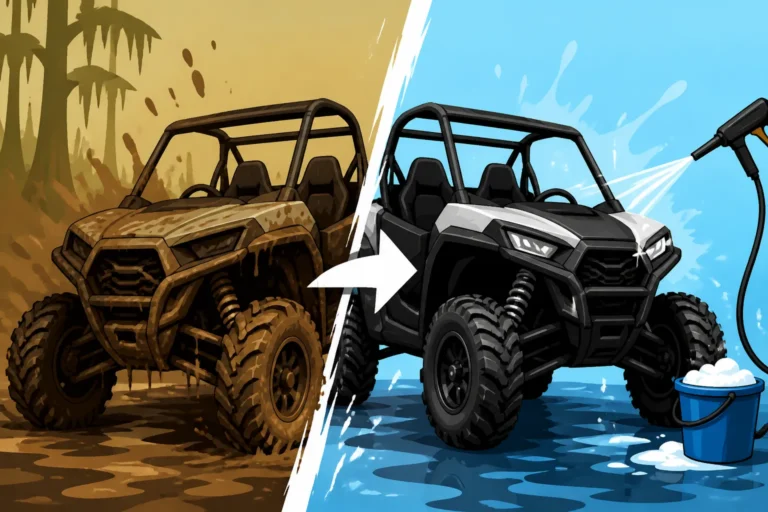
Mud and water can leave a machine looking dramatic while hiding small problems. After riding, rinse mud from the undercarriage, suspension, brakes, and other areas where buildup can interfere with movement or inspection. Avoid directing high-pressure water at seals, bearings, electrical connections, or other sensitive components unless the manufacturer’s instructions allow it.
Once the machine is clean enough to inspect, look for damage, loose fasteners, unusual belt smell, fluid leaks, trapped debris, and signs of water intrusion. Pay attention to the radiator area and any screens or guards that may have collected grass and mud. If you have crossed deep water, consult the owner’s manual and inspect the machine carefully before assuming it is ready for another ride.
Give the trailer attention, too. Check tie-downs, ramps, lights, tires, and the condition of any mud-covered equipment before heading home. Rinse and dry straps when appropriate, and store them so they are ready for the next trip. [Washing a Machine After a Mud Weekend] offers a more detailed checklist for cleaning and post-ride care.
Getting there and making the weekend run smoothly
Treat towing and unloading as part of the trip
The ride starts before the first trail. Check your trailer tires, bearings, lights, coupler, safety chains, and load distribution before leaving. Secure machines at approved tie-down points and confirm that the ramps are stable before unloading. Muddy boots and slick surfaces can make a routine step risky, so take your time rather than rushing to join the group.
Plan fuel and rest stops with the trailer in mind. Rural roads can be narrow, and it may not be easy to turn around at every station or store. Make sure your tow vehicle and trailer are suitable for the combined load, and keep heavier gear distributed securely. If your group is traveling in several vehicles, agree on a meeting place near the destination instead of trying to follow each other through unfamiliar roads.
For more on preparing a machine and trailer for a park trip, see [Trailering to a Mud Park]. Before departure, confirm the park’s entrance instructions and any arrival windows. A GPS route may take you to an entrance that is not intended for event traffic, so follow the park’s directions rather than choosing a shortcut through private or restricted property.
Keep expectations flexible
A good trip plan leaves room for changes. Rain can alter trail conditions, event arrangements can shift, and a machine issue can shorten a ride. Decide in advance what your group will do if a trail is closed, someone needs a break, or a repair takes longer than expected. Having a backup activity or a comfortable campsite can keep one problem from derailing the entire weekend.
Agree on a simple check-in routine. For example, set a return time, a meeting point, and a plan for what to do if a rider is late. Keep at least one person in the group aware of the route and the names of everyone riding. If a rider leaves the group, make sure the others know where they are going and when they expect to return.
Be considerate of other riders and staff. Keep speeds appropriate to visibility and traffic, give way when needed, avoid damaging marked areas, and follow instructions around event activity and recovery work. Muddy Bottoms is a shared recreation space, and a little patience at busy trail intersections or facilities helps everyone have a better day.
Common mistakes to avoid at Muddy Bottoms
Assuming the park is open whenever you want to ride
One of the most avoidable disappointments is arriving without checking whether the park is open for the kind of visit you have in mind. An event date, a camping reservation, and access to every riding area are not necessarily the same thing. Confirm the schedule and the rules for your specific visit rather than relying on general descriptions of the park.
A related mistake is treating a past visit as a guarantee. Event layouts, access, and conditions may change. Ask about the current check-in process, where to park, whether a waiver is required, and what areas are available. Keep confirmation details handy so the person handling arrival can resolve questions without searching through old messages.
Another common misstep is underestimating the time needed for towing, unloading, registration, and setup. If you arrive late, you may feel pressured to rush through safety checks or head straight onto the trails. Build in time to get organized, especially if you are bringing children, first-time riders, or several machines.
Overestimating what your machine or group can handle
A powerful machine does not make every route safe, and a group’s ability is limited by its least-prepared rider. Attempting deep mud because another group made it through can lead to damaged equipment, difficult recovery, or injuries. Choose a route based on the machine, rider experience, weather, and visibility—not on pressure to keep up.
Do not overload a vehicle or use passenger positions that the manufacturer does not allow. Keep cargo secure and avoid carrying loose items where they could fall into a wheel or become a hazard. Check park rules for passengers and equipment, and give each rider clear instructions before moving.
Finally, do not leave cleanup and inspection until “sometime later.” Mud left packed around important parts can conceal damage or create problems before the next ride. A brief post-ride check while the trip is still fresh is easier than trying to remember what happened after the machine has been parked for weeks. A careful finish helps make the next visit safer and less expensive.
Disclaimer
This article is for general informational purposes only and does not constitute professional advice. Laws, prices and regulations vary by location and change over time. Consult a qualified professional for guidance on your specific situation.